
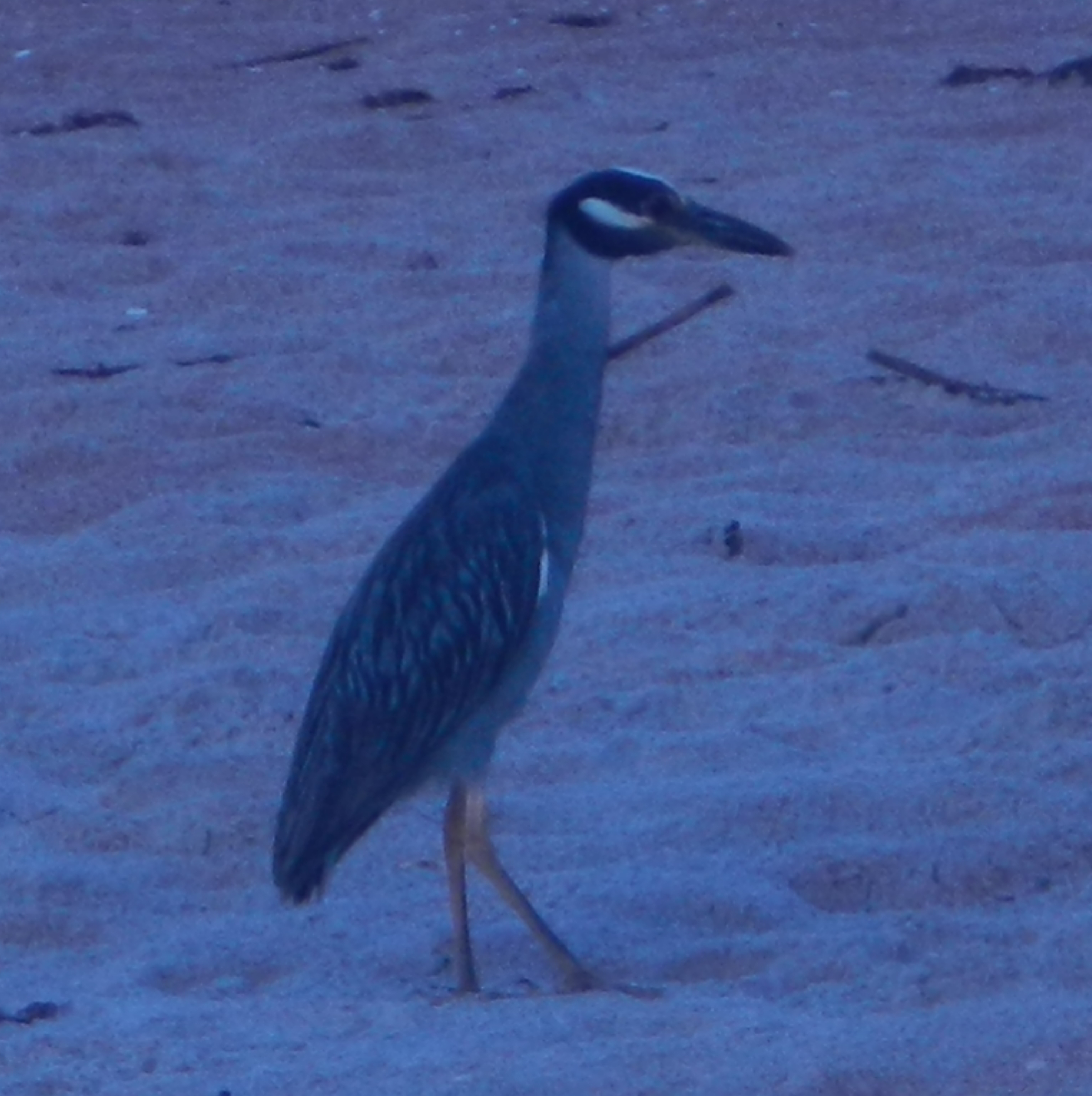
 One of the many joys of living in close proximity to the great Atlantic is the opportunity to observe the several species of shorebirds that forage and nest along the beach. Watching their feeding and behavior patterns has been a source of amusement, wonder, and profound instruction. They are like the ocean itself, always changing, but constant at the same time. The following story has had legs, if you will, for two years, but I haven’t been able to get it out because the behavior of the subjects, Limpy and Pie Wei, while following age-old patterns, seemed at times, in my ignorance, erratic, inexplicable, and then insignificant, and I gave up on it several times. But the recent sighting of one of the subjects, after a lengthy absence, brought it all into focus. I will explain.
Pei Wei
Pei Wei is a sandpiper, indistinguishable from the hundreds of others of his species found everywhere on the beach here, except that, since the early spring of 2011, he could be seen foraging in the shallows every day right out in front of the Little Hacienda. These are very territorial little birds; they stake out a section of beach some fifty yards wide and vigorously defend it against others of their kind. Their diet consists of small sand fleas and other crustaceans, and their diminutive stature, short legs and beaks keeps them from venturing any deeper than a few inches in the ocean. They have adapted to finding food in the wet sand of a retreating wave, and are, therefore, not in competition with any of the larger birds. That said, we have witnessed numerous spirited confrontations between sandpipers contesting a particular section of sand. They puff out their feathers, hunch their little shoulders, and scold in a high-pitched, staccato. Pei Wei has been consistent and persistent, and we are certain it is the same bird because of the territory, and because of his unique relationship with Limpy.
Limpy
There is no mistaking Limpy. He is a Willet who we first noticed about the time we did Pei Wei, in early spring, and is distinguishable from all the other Willets by his crooked left leg, which causes him to walk with a distinct limp. He flies perfectly well, but walks with a limp, probably the result of a fracture. Early on, we weren’t sure he would make it, but toughed it out through that summer, fall, and into 2012.
The long legs and long beak adaptations of the Willet allow it to venture farther out into the surf than the sandpiper, in search of the fat sand fleas that burrow several inches deep in the surge. The sandpipers feed on much smaller crustaceans in the wet sand. For months, every time we would be down on the beach, from early morning to late afternoon, we would invariably see these two working the same stretch of beach, apparently oblivious to each other, but to our eye, compadres.
Then, in mid-summer, Limpy was nowhere to be seen, along with nearly all the other Willets, and for the first time, we became aware of their seasonal movements. Most of the sandpipers left as well, and without Limpy to define Pei Wei, the remaining few were indistinguishable, and I figured that was the end of the story. Knowing both the Willets and sandpipers would return in cooler weather, I did not believe the same birds would return to the same beach.
But they did. In early spring we spotted Limpy, on the same stretch of beach as always, and within a few days, in his wake, a scampering little sandpiper. Shortly after these sightings my health calamities became a distraction, and I lost track of the little birds. When I regained some sense of time, place, and health some six weeks ago, and returned again to the beach for walks, they were gone. But here’s the news flash: Barbara reported earlier this week that she had seen Limpy, right where he should be, and some fifty yards away, a solitary sandpiper. I have yet to confirm the sighting, but I do not doubt it. Female sea turtles return year after year to the exact beach on which they were hatched to lay their own eggs, and I guess Willets return, for perhaps the same reason, to the same beach, year after year. Had it not been for Limpy’s unfortunate deformity, I would never know this, all Willets being more or less identical. For our purposes he was tagged in this way so that we might have a better understanding of the behavior of these beautiful, timeless creatures. Limpy’s disability has apparently not caused him any long-term problems– he hobbles perfectly well and successfully after sand fleas, and fights off territorial challenges from more fit Willets– and it has given us a sweet insight into this particular aspect of nature, and graced us with an even deeper understand of the interrelatedness of all things than we already had. As to Pei Wei, while we have no empirical evidence he is consistently the same bird, we choose to believe he is, and that feels good, too.
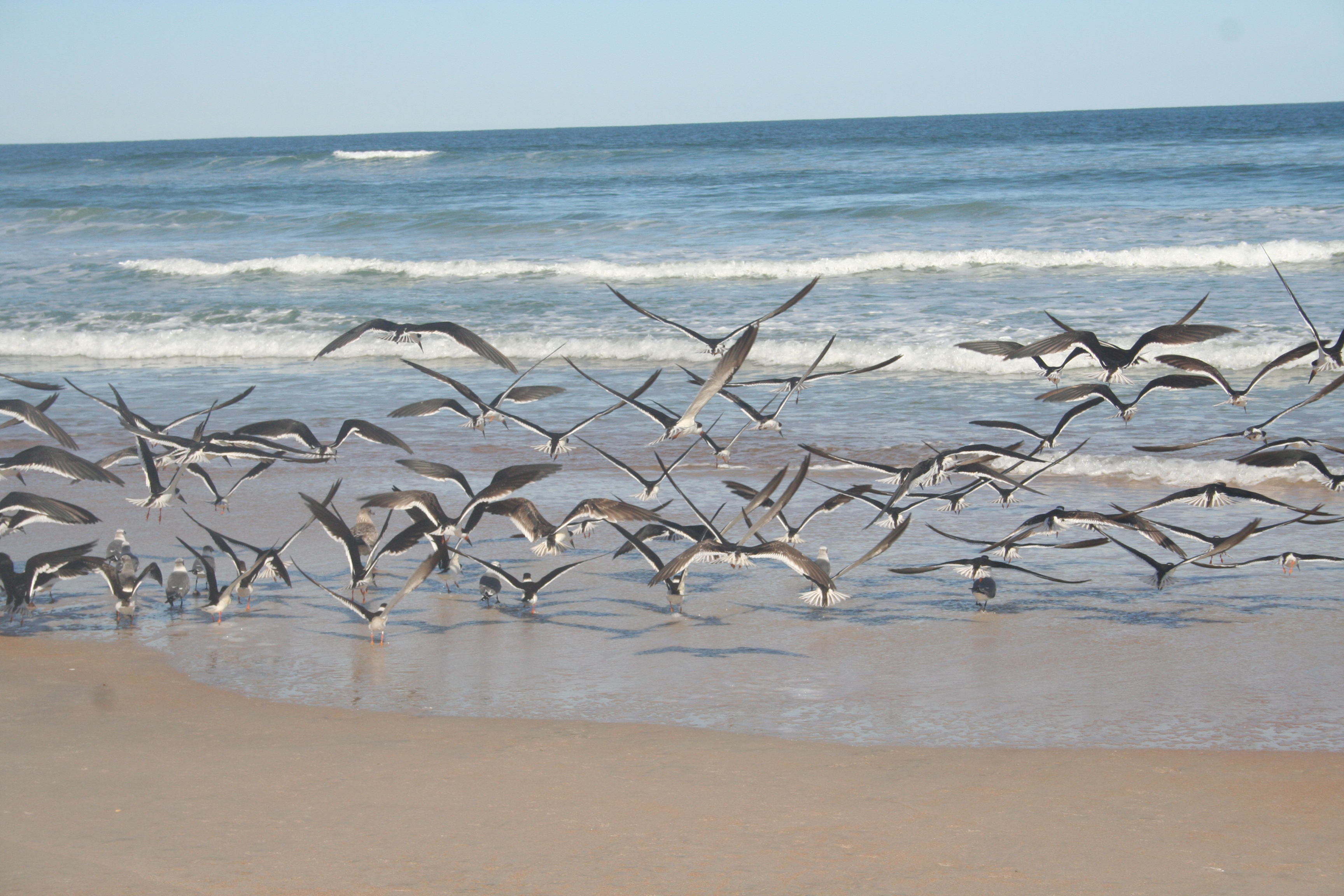
Skimmers

 The Skinny Island Post
What is that bird in the top picture? I filmed him a couple of times down in the Shores last month, and like you, I choose to believe that he is the same bird! 🙂
That’s a night heron