
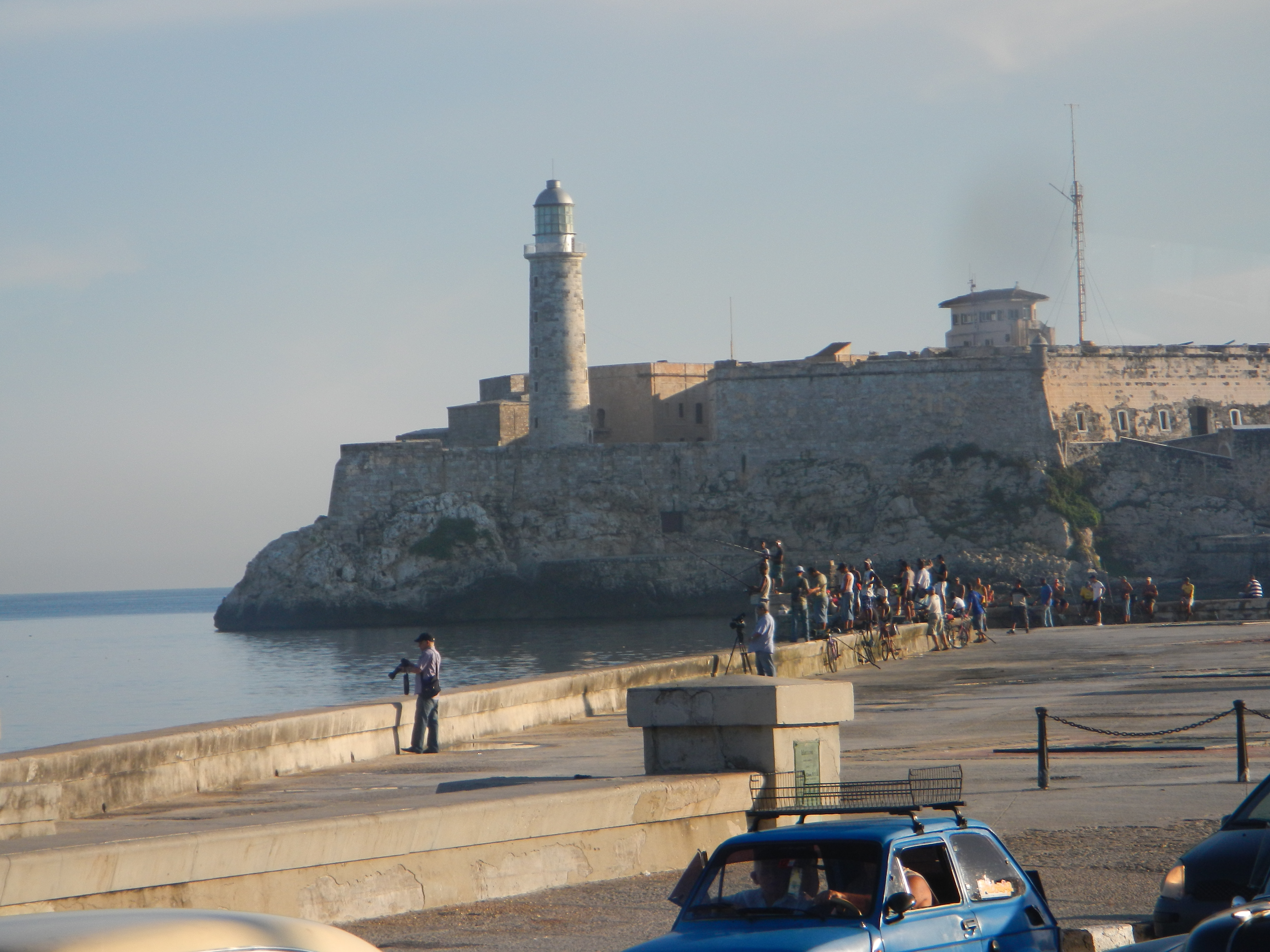
Last Look at the Malacon and El Morro
After our last breakfast in the wonderful Quinta Avienda in Havana we were on the bus at 0830 for a 3 hour drive east to Santa Clara, in the center of the country. We cruised the Malacon one last time, most likely for good, and we had our last look at El Morro, then utilized a tunnel under the bay and surfaced on the other side of the fort on a nice 4-laner. At the halfway point we stopped for a bathroom break and coffee at a little roadside restaurant and gift shop. I had this wonderful Cuban coffee, sweetened by a stick of sugar cane.
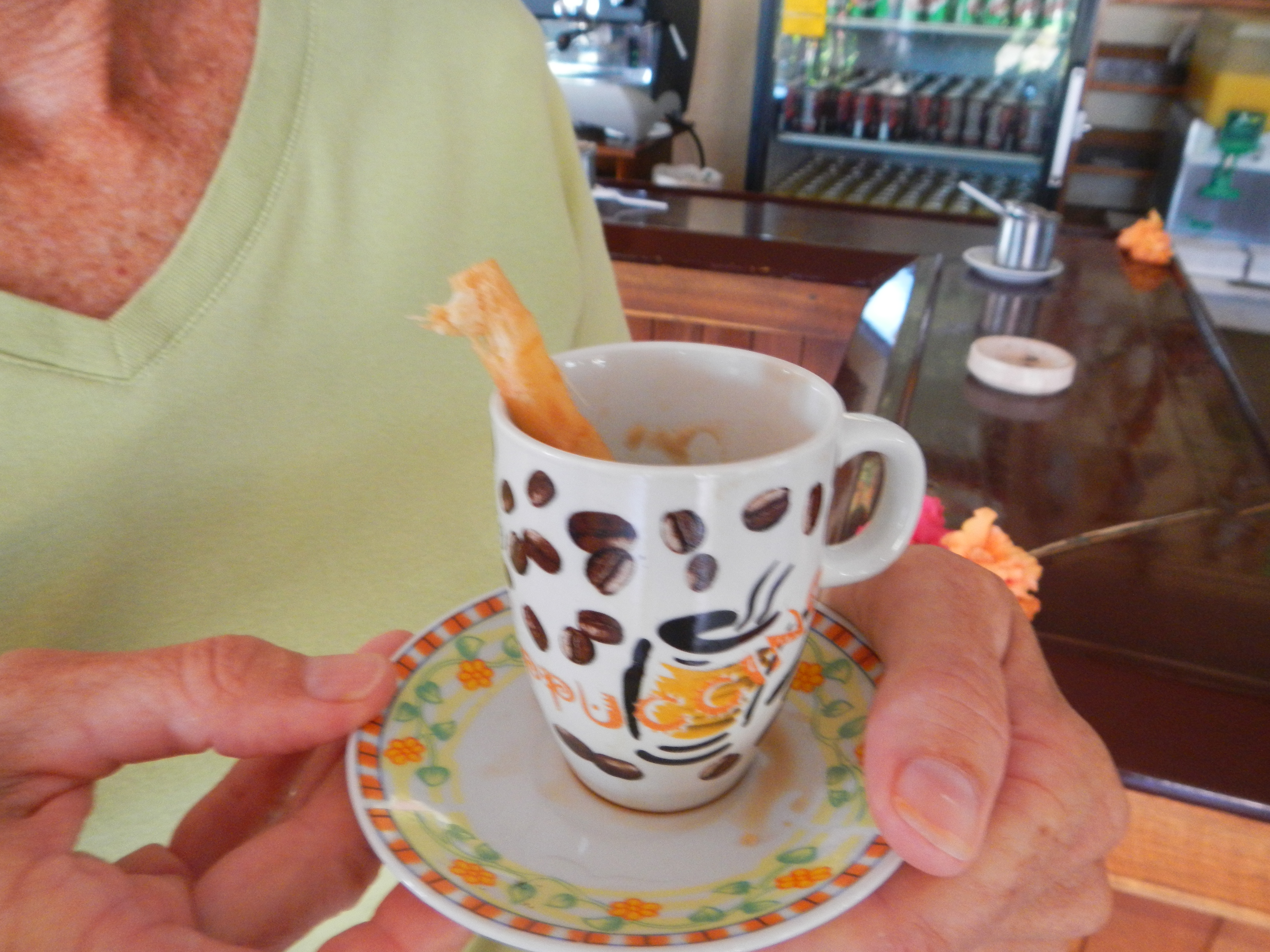
Cuban Coffee
There was a large stand of bananas nearby, and a local in the parking lot selling small bunches. One of our group bought several bunches and passed them out as we reboarded the bus. Underway again, Enedis popped a DVD on the life of Ernesto Che Guevara in the player, as promised the day before, and we watched it as we cruised to our next stop, the Guevara Memorial outside Santa Clara.
Che was quite an interesting character, as I will now briefly summarize. An Argentine, he grew up middle-class and matriculated as a physician. While treating poor folks in his native country, he decided to see the continent via motorcycle, and became quite radicalized by what he saw, as told in the wonderful book, “The Motorcycle Diaries.” He came to believe, at quite a young age, that revolution was the only answer to the ills of the society he encountered in South and Central America. Meanwhile, a young law student in Havana, Fidel Castro, was arriving at the same conclusions in his native Cuba, a country ruled by a ruthless, callous dictator, backed by U.S. money and might. Fidel organized an attack on a military installation in Santiago de Cuba, which failed, and resulted in his being jailed for two years. Upon his release, he went to Mexico, where he met Che Guevara, who was essentially looking for a revolution, and the two began planning a return to Cuba to organize a people’s uprising, naming themselves the “26th of July Movement,” after the abortive attack on the barracks in Santiago de Cuba. The yacht Granma arrived in Cuba on 2 December, 1956, carrying Fidel and Raul Castro, Che, and 80 others. All but twenty-two of their number were killed by Batista’s forces while making their way to the Sierra Maestra mountains, but with peasant sympathizers, this group organized and began taking it to government forces in guerrila combat. After an aborted coup attempt on Batista in Havana by students, the U.S. imposed an economic embargo, but the government had continued support from the Mafia and U.S. businessmen. In the mountains, rebel forces under Che Guevara and Raul Castro were successful in attacking small government garrisons and gaining the people’s support. In 1958 a radio network was set up in the mountains, allowing Fidel to broadcast his message nationwide. The mountains came under Castro’s control, even though his army numbered only 200 at best, against a government force of 40,000. A U.S. arms embargo further weakened Batista, and he was forced to take bold action against the rebels in the mountains. In the Battle of Las Mercedes, his forces pinned down, Castro asked for and received a cease-fire, during which his small army slipped away, leaving Batista with nothing. In August of 1958 Castro began his own offensive, taking control of several towns in the eastern provinces. Meanwhile the 8th column, under Che Guevara, fought toward Santa Clara. On 31 December, 1958, Guevara attacked and derailed a munitions train in Santa Clara, and took the city, capturing some 400 Batista troops. Batista fled the country for the Dominican Republic on 1 January, 1959. Hearing of this victory, Fidel began negotiations to take over Santiago de Cuba, which was surrendered without a fight. Che entered Havana on 2 January, and Fidel on the 8th. The revolution had succeeded.
Che assumed a number of key roles in the new government, including reviewing appeals for war criminals, instituting agrarian reforms as minister of industries, spearheading a national literacy campaign, serving as national bank president, and traveling the globe as spokesman for Cuban Socialism, including speeches at the U.N. Divorcing a woman he had married in Mexico, with whom he had one child, he married again, this time to a woman with whom he had fought alongside in the mountains, and they had three more children. Exceptionally intelligent, he studied economics, set theory, and social theory, and tried to apply these to the revolution. In 1965, having grown tired of diplomacy and bureaucracy, the revolutionary Che left Cuba to ferment revolution abroad, first in the Congo, and then in Bolivia, where he was killed by the CIA in 1967. Revered and reviled, he remains one of the most influential people of the 20th century. A 1960 photograph of Che, by Alberto Korda, showing a beautifully intense, long-haired young man in a beret, has been called the most famous photograph in the world, and is the model for thousands of t-shirts, posters, and billboards, not only in Cuba, but throughout the world. We saw Che t-shirts hawked all over Spain and Italy. In a letter written from Bolivia to his children, feeling the end near, he encouraged them to “study hard, and be good people.” He was 39 years old. This image, after the famous photograph, rode in the windshield of our bus, and a smaller one to the left of our driver Miguel’s seat.
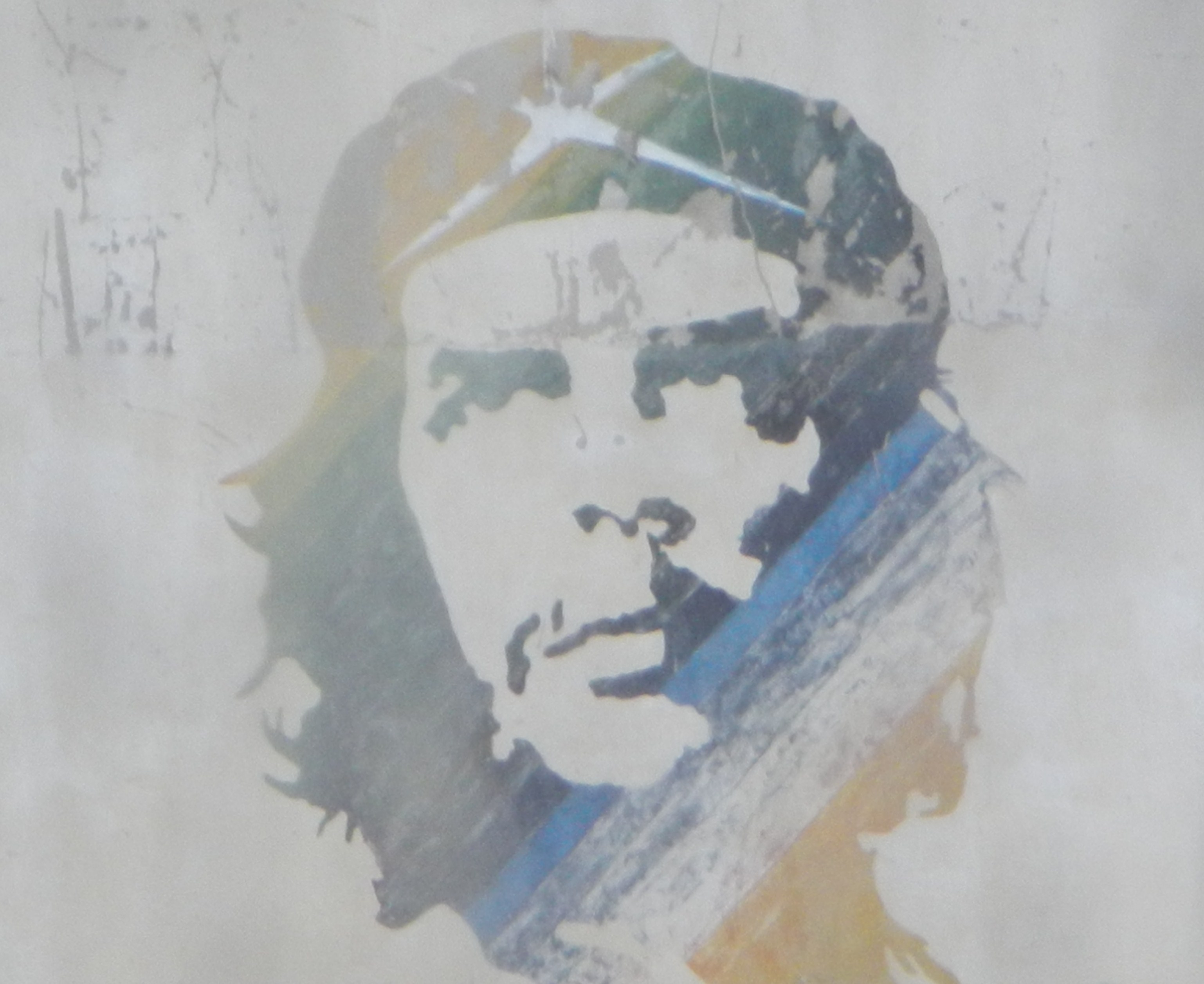
Che

Che Guevara Memorial
Shortly after the video, we arrived at Che’s memorial and mausoleum outside Santa Clara. It was a Monday, and we had originally been scheduled to visit on Tuesday, but the tour management had changed things around a bit. Well, turns out the place is closed on Mondays, so we didn’t get to go in to the mausoleum where Che is buried. We did get a close-up look at the very impressive memorial, which stands next to the highway, across from which is a large open square. Fidel has given a number of speeches at this site, and in one not long ago, fell down the steps.
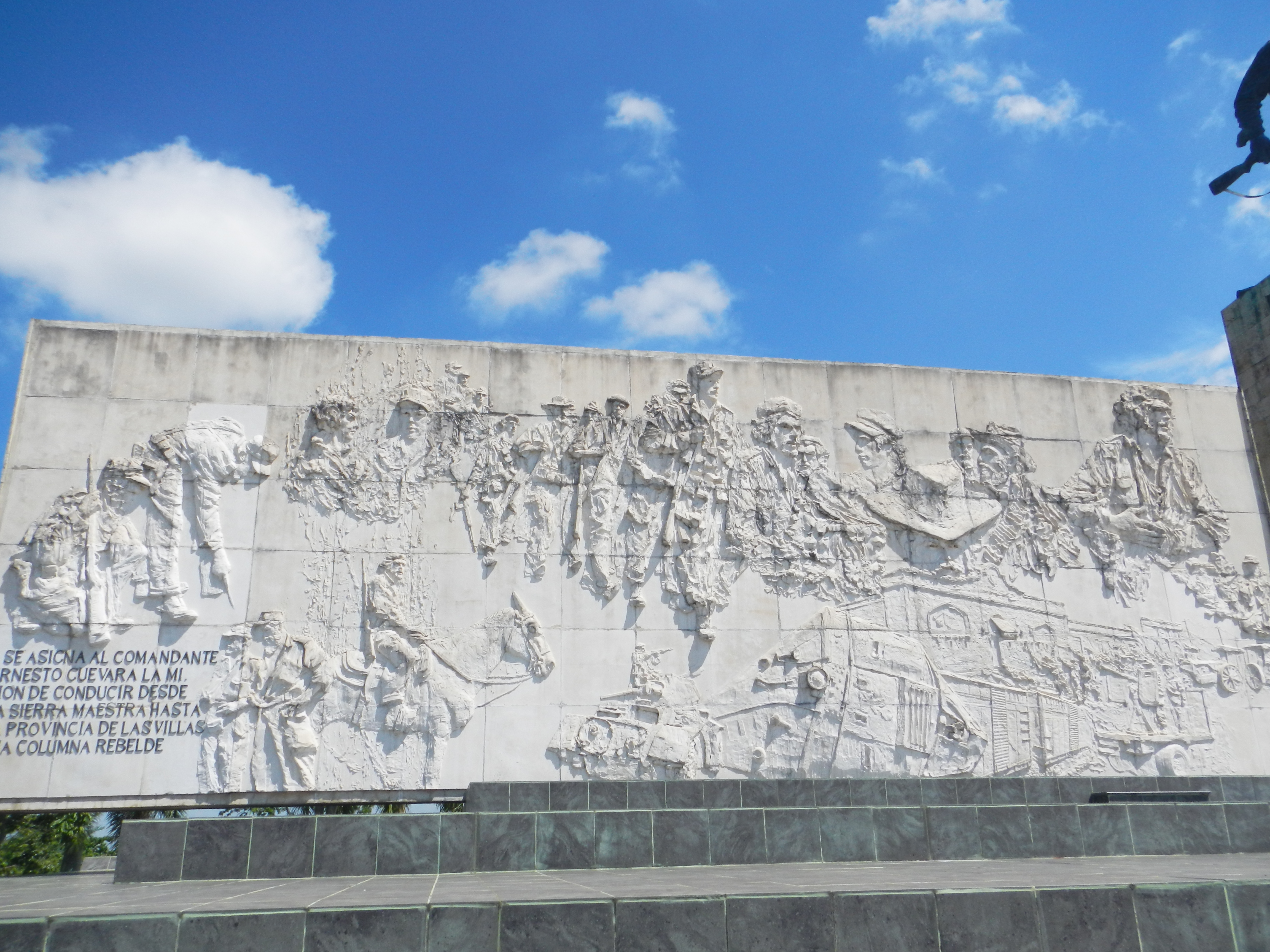
Wall Depicting Che’s Battles
Part of the memorial consists of a large marble wall on which are carved scenes depicting Che’s revolutionary exploits. The 22 foot tall statue of Che shows him in full military gear, including carbine. Santa Clara was chosen as the site for his mausoleum and memorial, because of the decisive battle.

Che Guevara statue
Apparently the history lessons and national memorials were not sitting too well with some of our group. While waiting to board the bus we were passed by a couple from south central Florida. In a loud voice, and clearly seeking our concurrence, the woman said, “I’m getting sick of having Fidel Castro pushed down my throat.” We declined comment, but it made me wonder why they had come on this trip. Maybe she missed the part about a revolution in Cuba, and that we were guests of the government established as a result of that revolution, a government that remains in control, whatever our own politics and ideology might be.

Second Hand Shop
We moved on to Santa Clara, where Enedis took us on a short walking tour around the main square. We visited a hardware store, one of the rare places in country where Cubans can spend CUCs. Next door was a small, very busy second-hand store, and across the street a pharmacy. You must have a doctor’s prescription to get a medicine, but, like all health care in Cuba, it is free. One of our group experienced this national health-care first-hand, as we shall later relate.
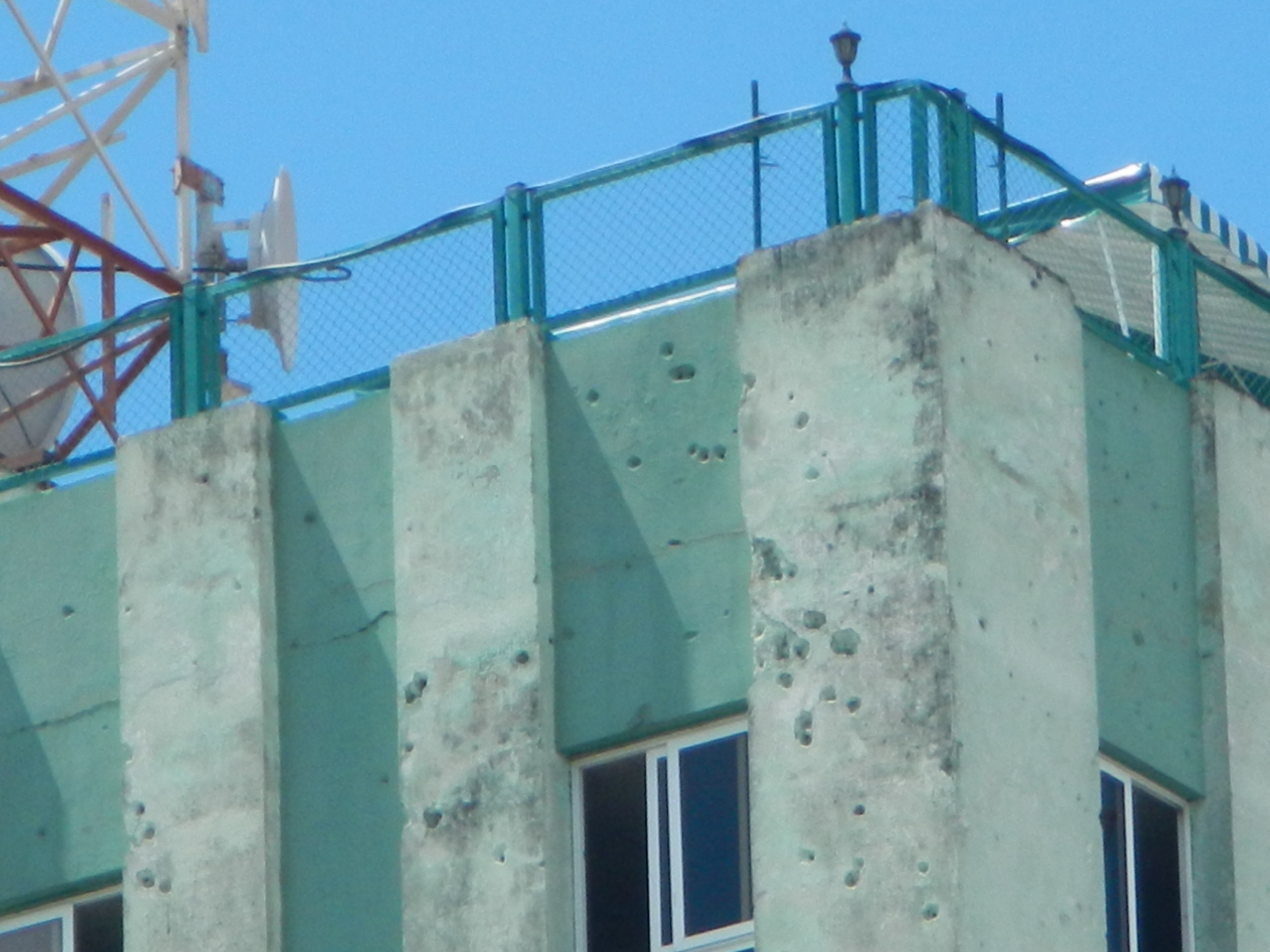
Hotel Santa Clara Libre
One of the highlights of the main square is the Hotel Santa Clara Libre, which, during the revolution, was the region’s government army headquarters. It was taken by Che Guevara’s little band in the battle for the city, and the bullet marks remain. The square itself contained a gazebo and many shade trees. It was noon, and very active, in and around the square, with street vendors selling sandwiches, and fruits and vegetables. I saw a man riding up to the square on a bicycle, a basket on the handlebars filled with herbs, and this fruit vendor was on the sidewalk near our bus.

Santa Clara Produce

Los Tainos Restaurant
We had lunch on the outskirts of Santa Clara at a government restaurant and mini-resort called Los Tainos, after the Tainos, the aboriginal people of the island. There are no Tainos left, though some of their genes certainly survive in the descendants of early Spanish settlers. The original explorers brought no women with them, so many took Tainos women as wives. Others were incorporated into the slave work force, and many others died of smallpox and other diseases carried from Europe, against which they had no immunity.
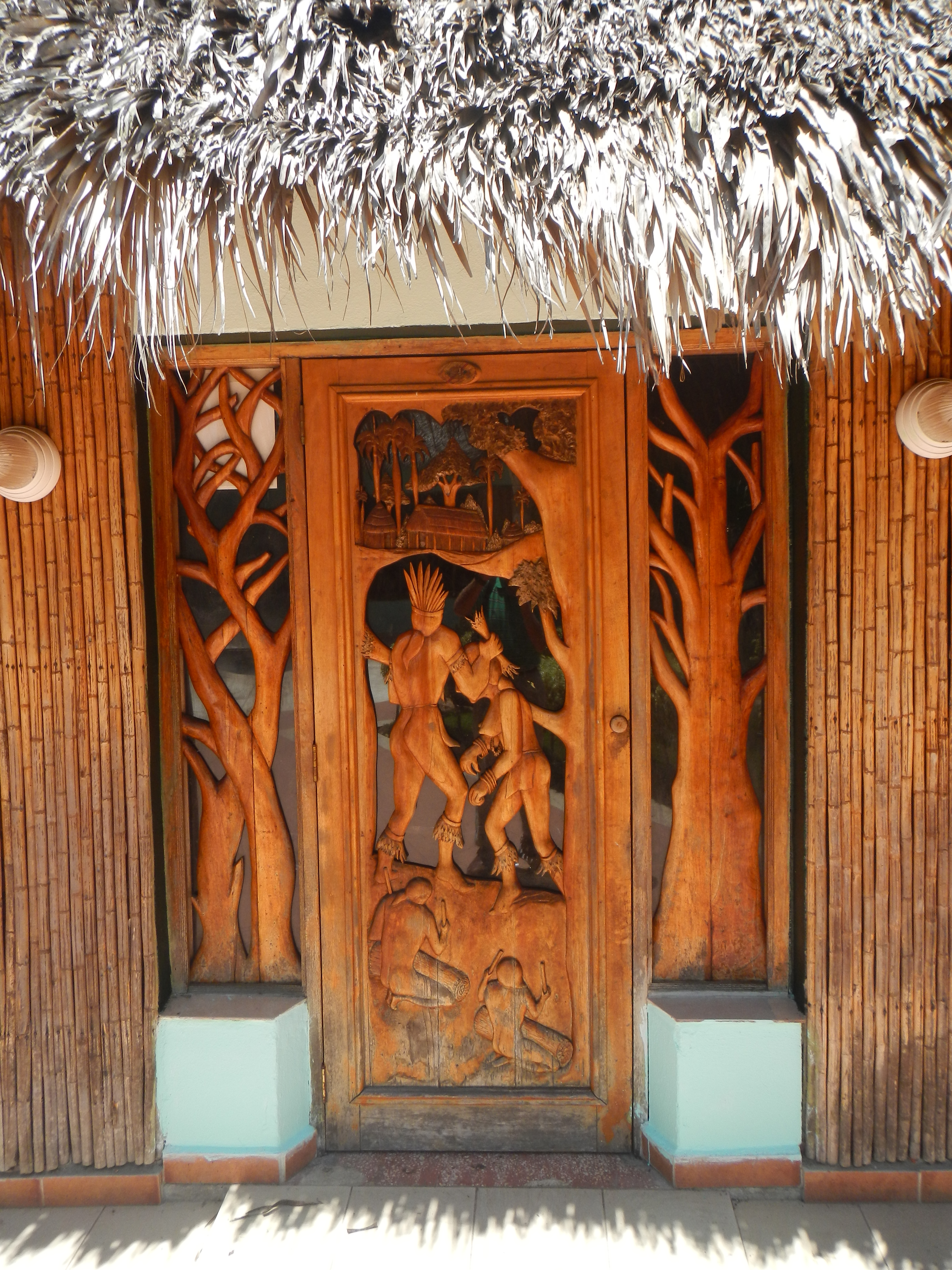
Carved Door, Los Tainos
Anyway, nothing remains of the Tainos but drawings and paintings of their villages, art work, and dress, on which this place was modeled. We enjoyed a wonderful buffet lunch, (with live music,) andtook a walk around this classy-looking place. Like many of the places we had been taken, this was clearly new and built for tourists. The Master Plan is heavily relying on increased tourism. It is a growth industry in Cuba, with many visitors coming from South America, Italy, and Germany, but the vast majority from Canada. The U.S market is what they really want, though, and the Cuban people are very interested in the outcome of our upcoming presidential election, and are very savvy. On one of our drives Enedis asked if these kinds of tours would continue under a Romney administration, and our response appeared equally divided, yes and no, but for all the Cuban people we met who addressed this issue, there was unanimous support for Obama. Make of that what you will.
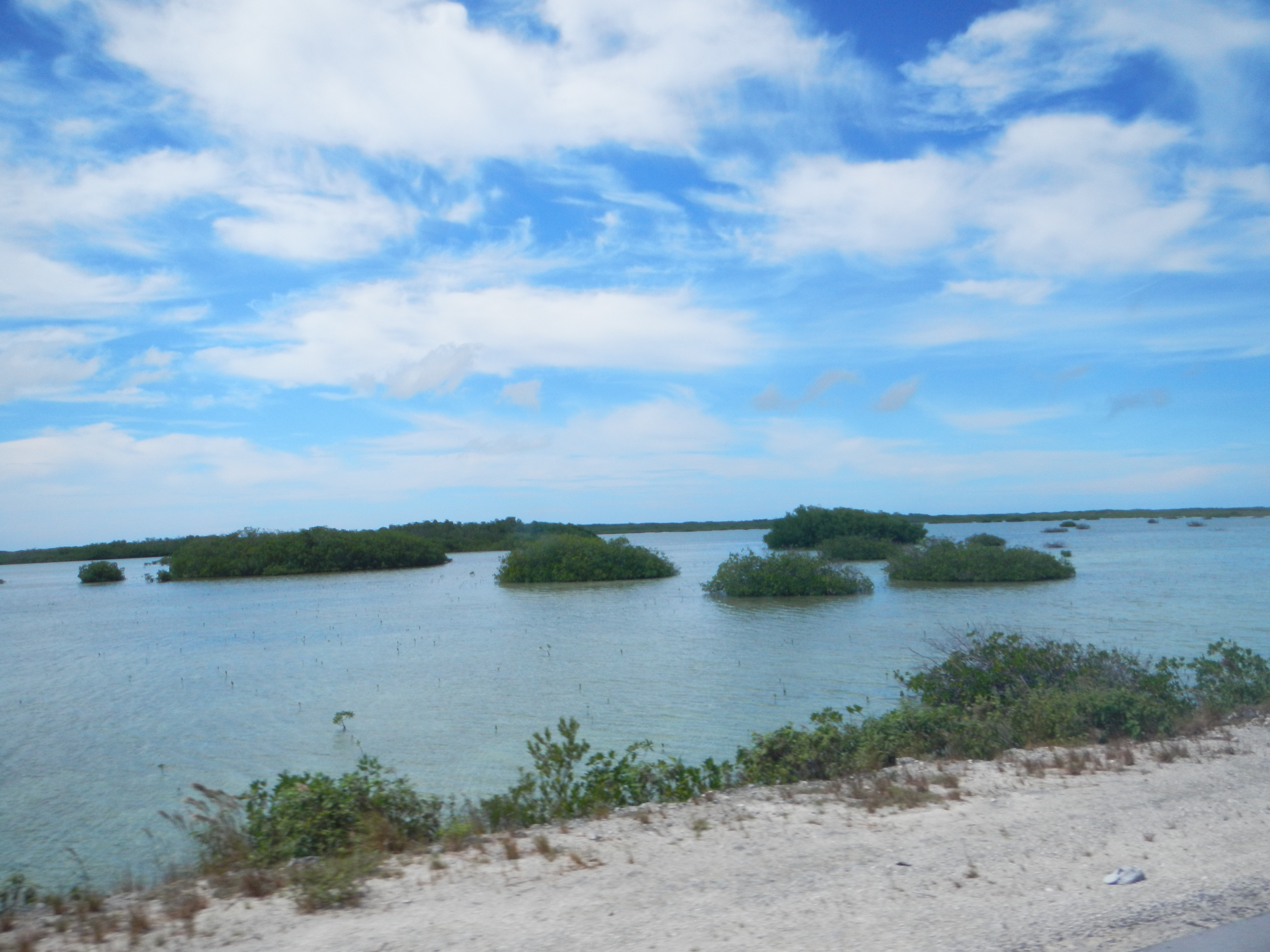
Causeway to Cayo Santa maria
We got back on the bus for our last trek of the day, a 30 mile drive out a causeway to Cayo Santa Maria, where we would spend the last two days of the trip. This was a drive very reminiscent of the Overseas Highway to the Keys, with mangrove islands all along the way. Built in the 90s, the road was undergoing repairs of its many bridges. It looked like good bird habitat and I asked Enedis about that. She said there were occasional flamingo sightings, but all we saw was one heron and a few egret.
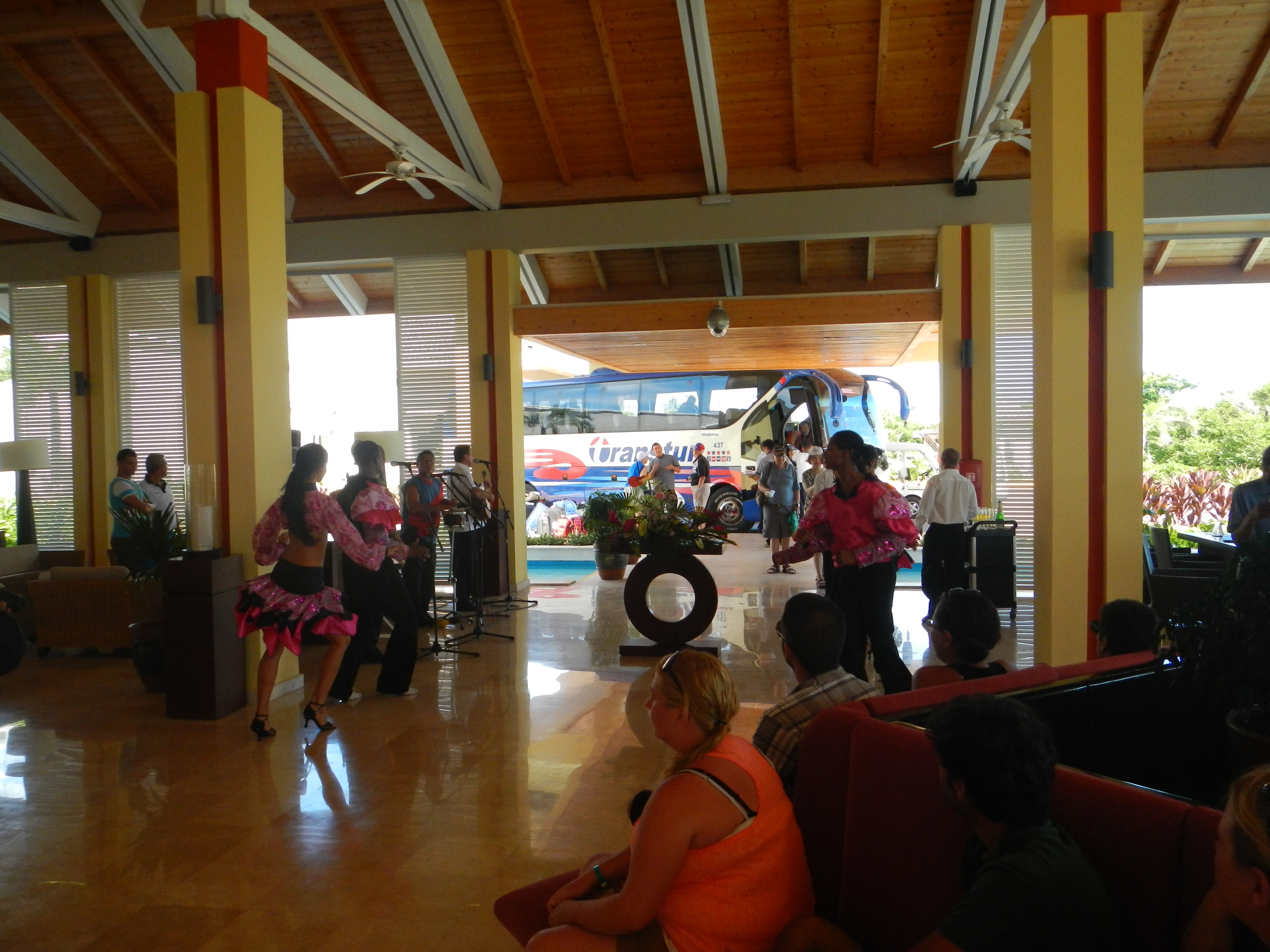
Welcoming Committee, Playa Cayo Santa Maria
Enedis had given us a head’s up in Havana that our hotel on the Cay was even grander than our Havana digs, but we were completely unprepared for what we found. Greeted by a band, dancing girls, and Champaign, we were ushered into a meeting room, where we each received a little packet of information about the hotel, and a blue wrist band, which turned out to be our ticket to all manner of delights in this all-inclusive hotel. There were five restaurants, seven bars, a show pavilion, three pools, and, of course, the Atlantic. Cayo Santa Maria is one of several small islands, or Cays, off Cuba’s north shore, and it appeared this area was being groomed exclusively for tourism. We noted several other similar resorts near ours. It was an exceptionally beautiful and comfortable place, a true five-star resort, and further emphasized what a great deal we had gotten on this trip. I don’t think, as regular guests, we could have afforded the two nights we spent there for what we paid for the whole trip. They want our business, folks, and we were most fortunate to have found this tour. More on that in a summation.
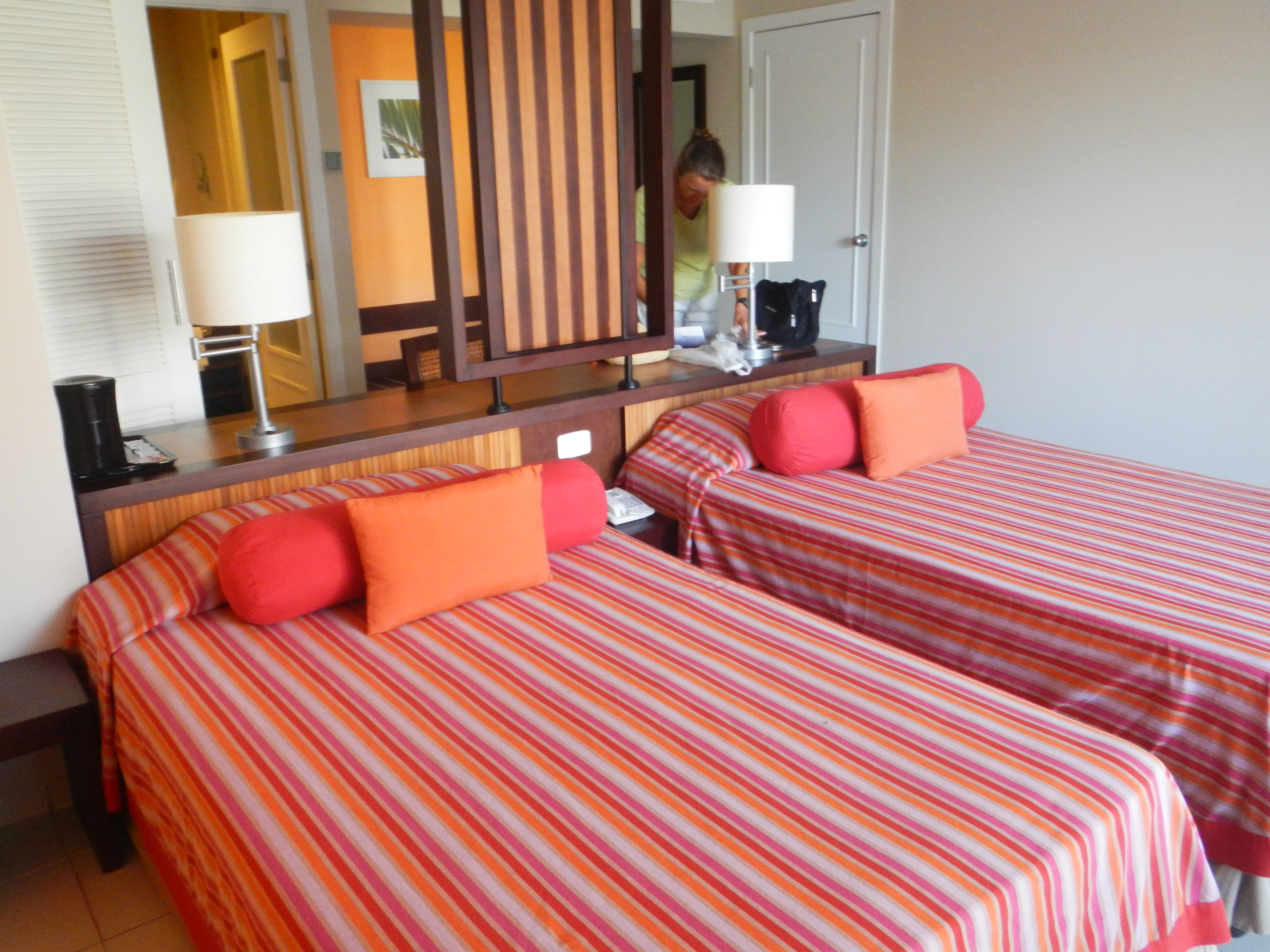
Our Room
The rooms were in individual two-story buildings called “bungalows,” there being 14 such bungalows scattered over some 5 acres. We were in bungalow 8, with most of the rest of our group, and were taken there by golf cart. A ground floor room, ours opened onto a small patio with table and chairs, and was a short walk from two pools and the snack bar. We waited impatiently for our bags to arrive, anxious to dig out our swimsuits and hit the beach. We were apparently the last to receive our luggage, but at last it arrived and we were out the door.
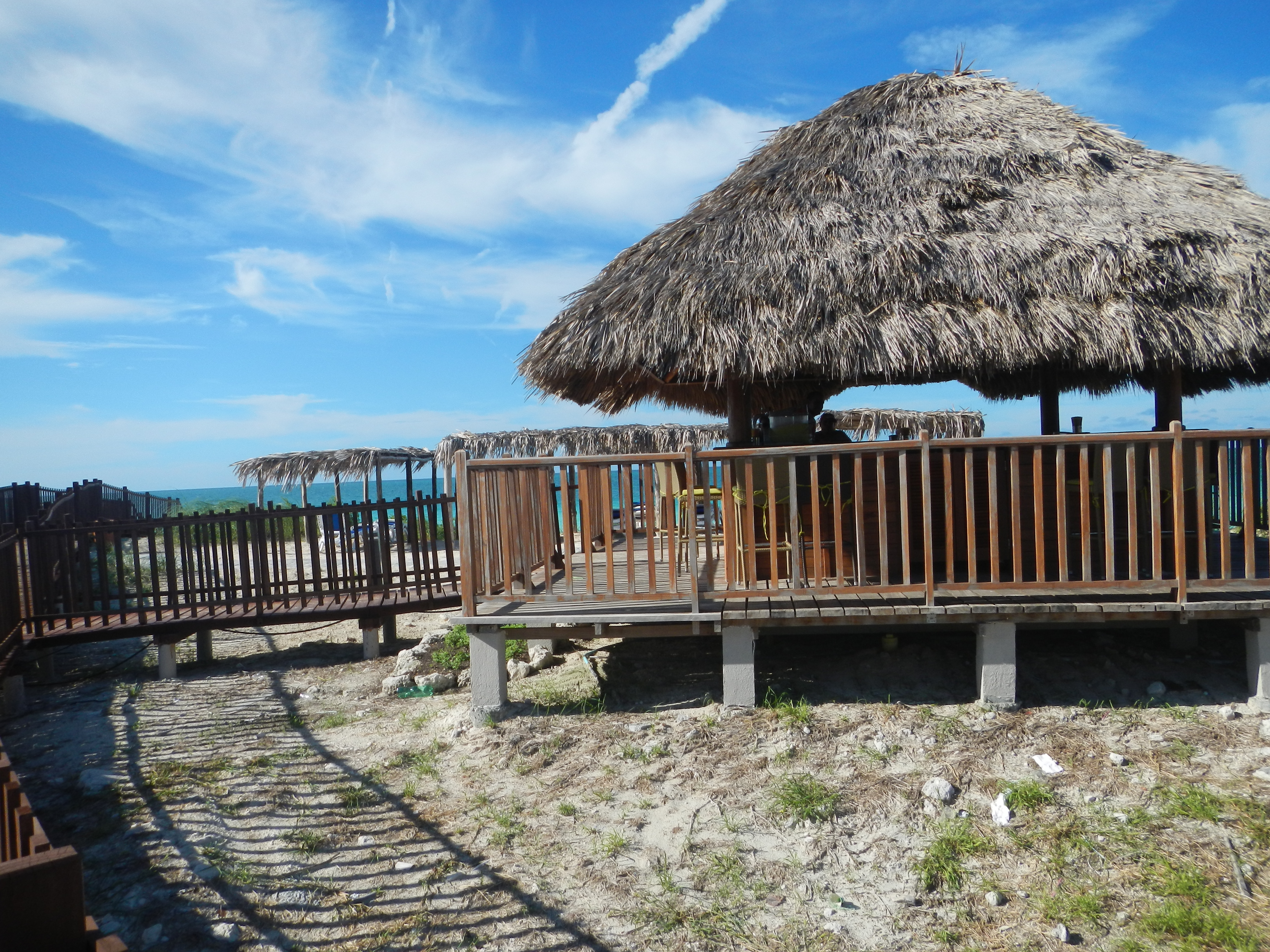
Beach Bar
Skirting the West Pool, a 50 meter glistening paradise, we found the sidewalk to the beach and reconnoitered the beach dining room, and beach bar, each constructed in a lovely, open, thatched roof style, then descended the sand to a sweet little thatched roof cabana, complete with loungers, and this view of the Caribbean colored Atlantic. I felt like I was in a Corona commercial!
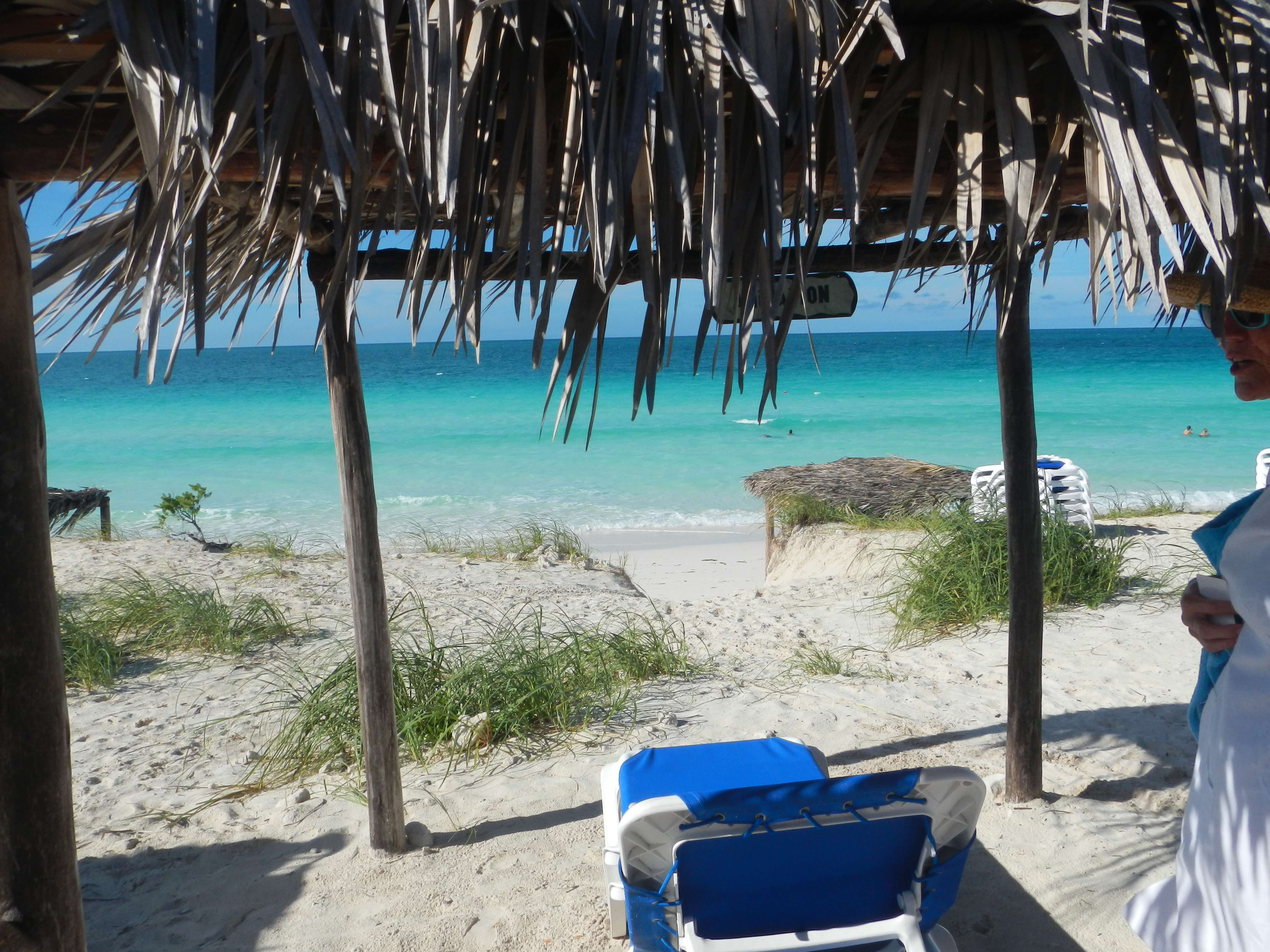
Da Beach
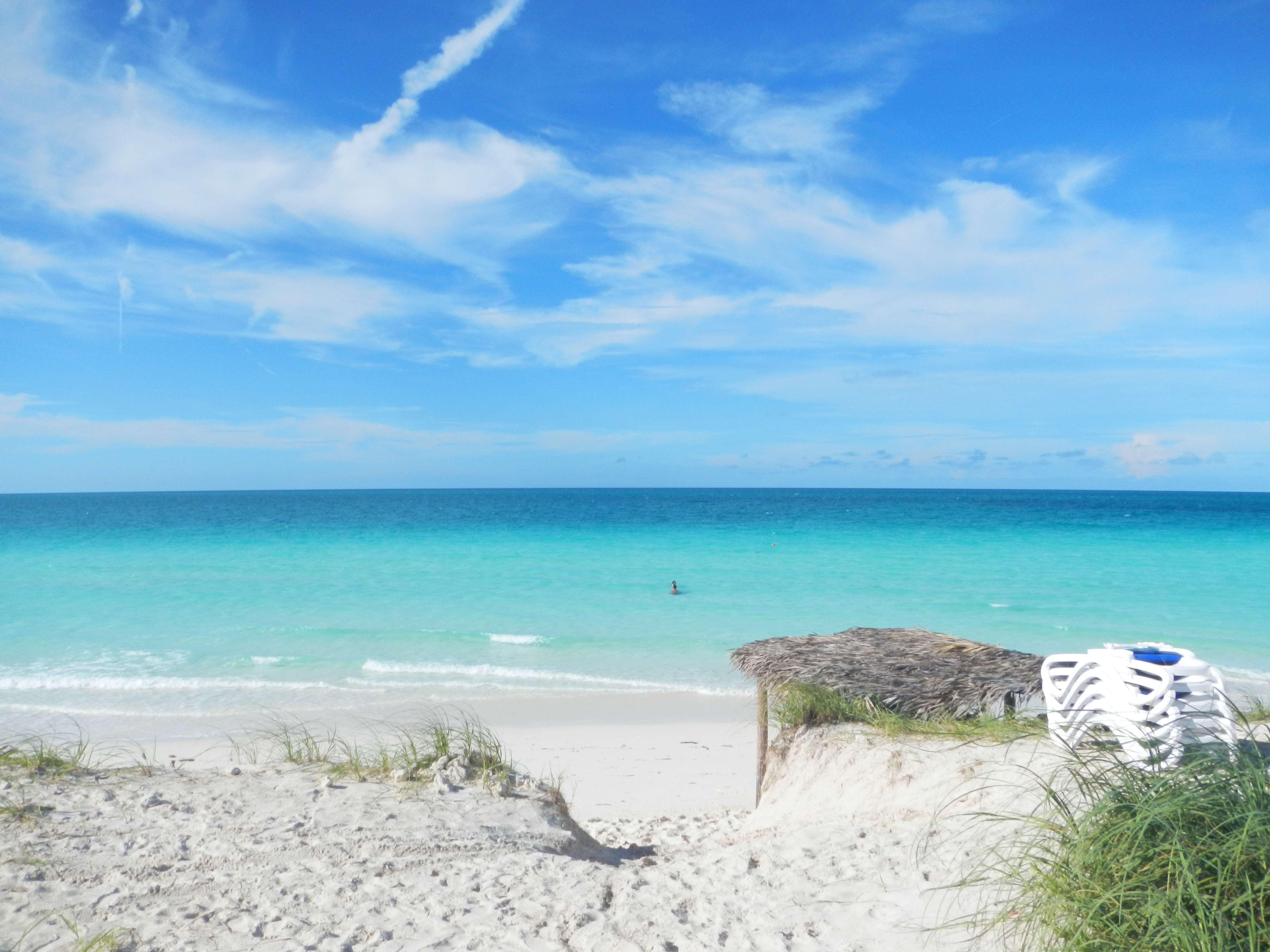
The Atlantic
We put our towels in the chairs and went for a swim in the gin-clear water, which was very salty, more like the Gulf than the Atlantic we are used to. Joined by our new friends from California, who were shaking their heads in disbelief as well, we enjoyed the warm, calm water for 30 minutes, then decided to lounge in the cabana and see just how “all-inclusive” this place really was. I went up to the beach bar and asked if drinks were included, and the very congenial bar man answered, “Of course, amigo.” Mojitos in hand, I returned to the cabana. This was truly decadent and, as I remarked to Barbara, my kind of communism.

Our Cabana

The West Pool
Dinner was at 7, it was pushing 5, so after the mojito we decided to go back up and try the pool nearest our room. Somewhat giddy from the experience, (and mojito,) like a couple of kids in a candy store, and knowing this would be our only stay at an all-inclusive resort, we ordered a pina colada at the very handy pool bar, and settled into loungers poolside. We ultimately managed a leisurely swim there, then went to the room to dress for a walk-about and dinner.

Lady with Cigar
Of course, before proceeding to the buffet, we had to give the lobby bar a look, just off the main entrance. Like everything but the rooms, it was a large open space without walls. I never could quite figure out what they did when a storm blew in. We ordered dry martinis, like we are wont to imbibe at The Little Hacienda on occasion. These were at least half vermouth, not dry, but not bad, either. While sipping, a young man approached and asked where we were from. When we told him he was very interested and we engaged in a somewhat lengthy conversation. He said he was one of the entertainers, and hoped we would attend the show later that evening, where we would hear some good, “real” Cuban music. Like others we had met, he expressed a seemingly heart-felt desire that our two countries find a way to normalize relations. He was very sweet, with a kind of unaffected innocence, and said he hoped we could talk more later.

Afro-Cuban Band
We ranged through the extensive buffet of salad, chicken, lamb, fish, vegetables, cheeses, and many breads, then had a delicious, Cuban-style pizza, with thin crust and peppers, made to order, after we had consumed virtually everything else on the line. We walked this off for some time on the beautiful grounds, then made our way to the Pavillion, where the warm-up act, a five-piece Afro-Cuban band, was into their set. They were over-the-top good, and we could have listened to them all night. A brief intermission, and then the main show started.

Flamenco Show
This was a Flamenco program, five dancers backed by a band consisting of guitar, violin, bass, and a percussionist playing a large wooden box, who produced the most amazing array of sounds. Our young friend from the bar appeared, sat with us, and explained that this was a show honoring the Spanish cultural influence. A separate show highlighted the African heritage. The musicians were wonderful, the dancers flawless. Tired as we were, we couldn’t tear ourselves away, and stayed until the end. Tomorrow, back to the mainland and the town of Remedios, one of Cuba’s oldest cities, established in 1514.

In the Pool

 The Skinny Island Post
Great job!