
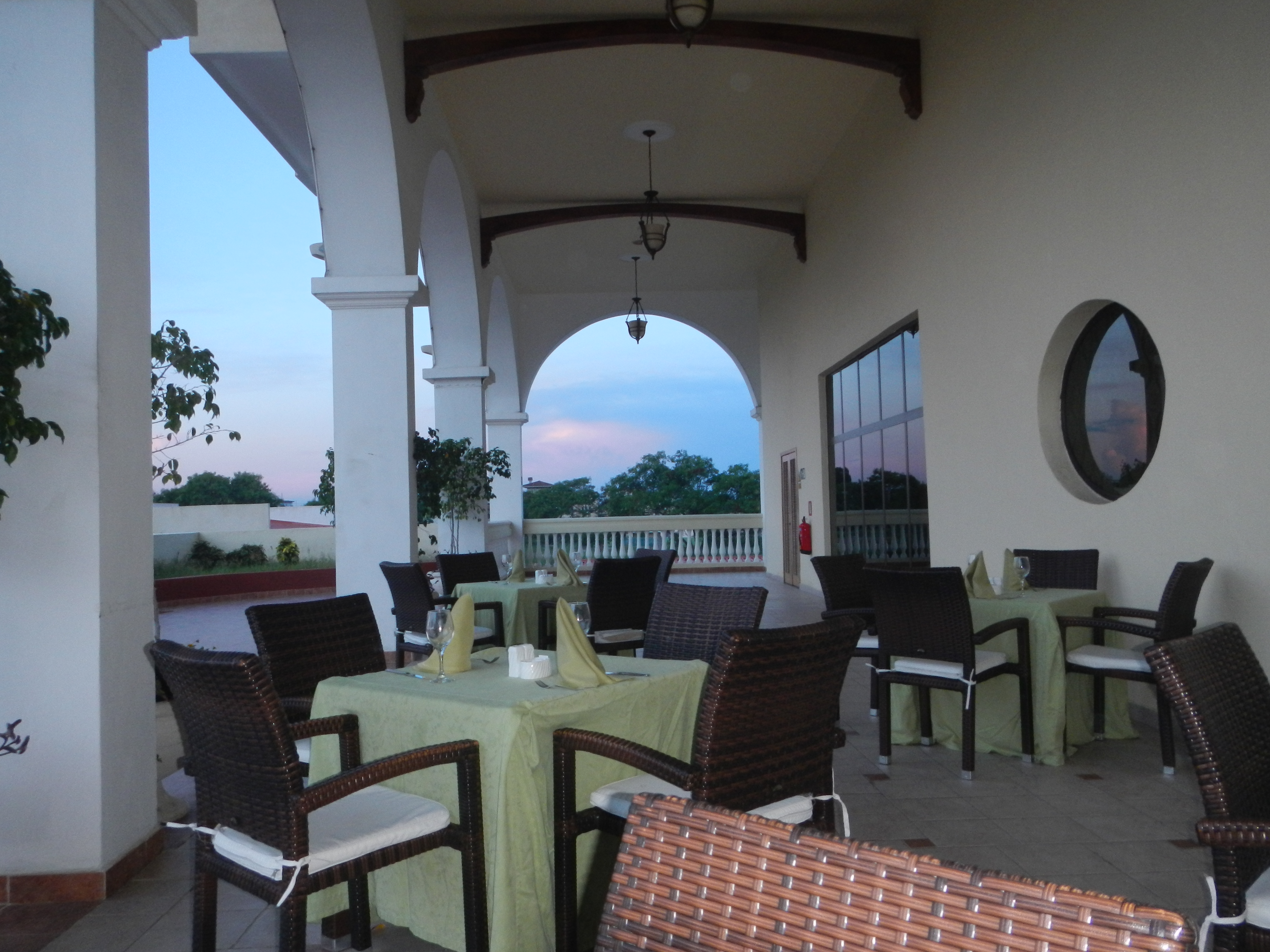
Breakfast Table
Breakfast was included in the package every day, and we are never ones to miss breakfast. We opened the place every morning at 7, and established ourselves at a table on the patio, having a leisurely coffee first, then ranging through the buffet. The eggs were generally cold, but there was a wonderful variety of foods from which to choose, including pancakes, chorizo, bacon, cereals, pastries, potatoes, croquettes, fish, several breads, and orange, papaya, and guava juice.
Of all the admonitions thrown our way our night in Miami, the only one that really seemed

Elephant Walk
to have teeth concerned water. We were told to not ever drink the water, and while she tried to soft-peddle it a little, our guide Enedis concurred, saying there were some problems with filtration in the water supply throughout the country. We were told to only drink bottled water. We had some in our room fridge, but we thought it best to try and round up some more, so after breakfast we hiked a short distance from the hotel to a little shopping square near the ocean. We found a small store, but it wasn’t open yet, so we took a walk around the square. These elephants were passing through at the same time. This appeared to be a fairly upscale shopping area, especially compared to what we’d seen of downtown Havana, probably owing to the fact that there were several hotels nearby. Hotels near the ocean are fairly swanky, and cater pretty much exclusively to foreigners. A lot of locals were in the square at that hour, and we appeared to be the only tourists. The shop guy arrived and opened the door to a man who was standing nearby. We followed him in. The patron made a purchase and left, but the shop guy indicated he wasn’t opened and ushered us out before we could even ask for water. Not sure what to make of that yet, but it was one of the only incidents where we didn’t feel welcome.
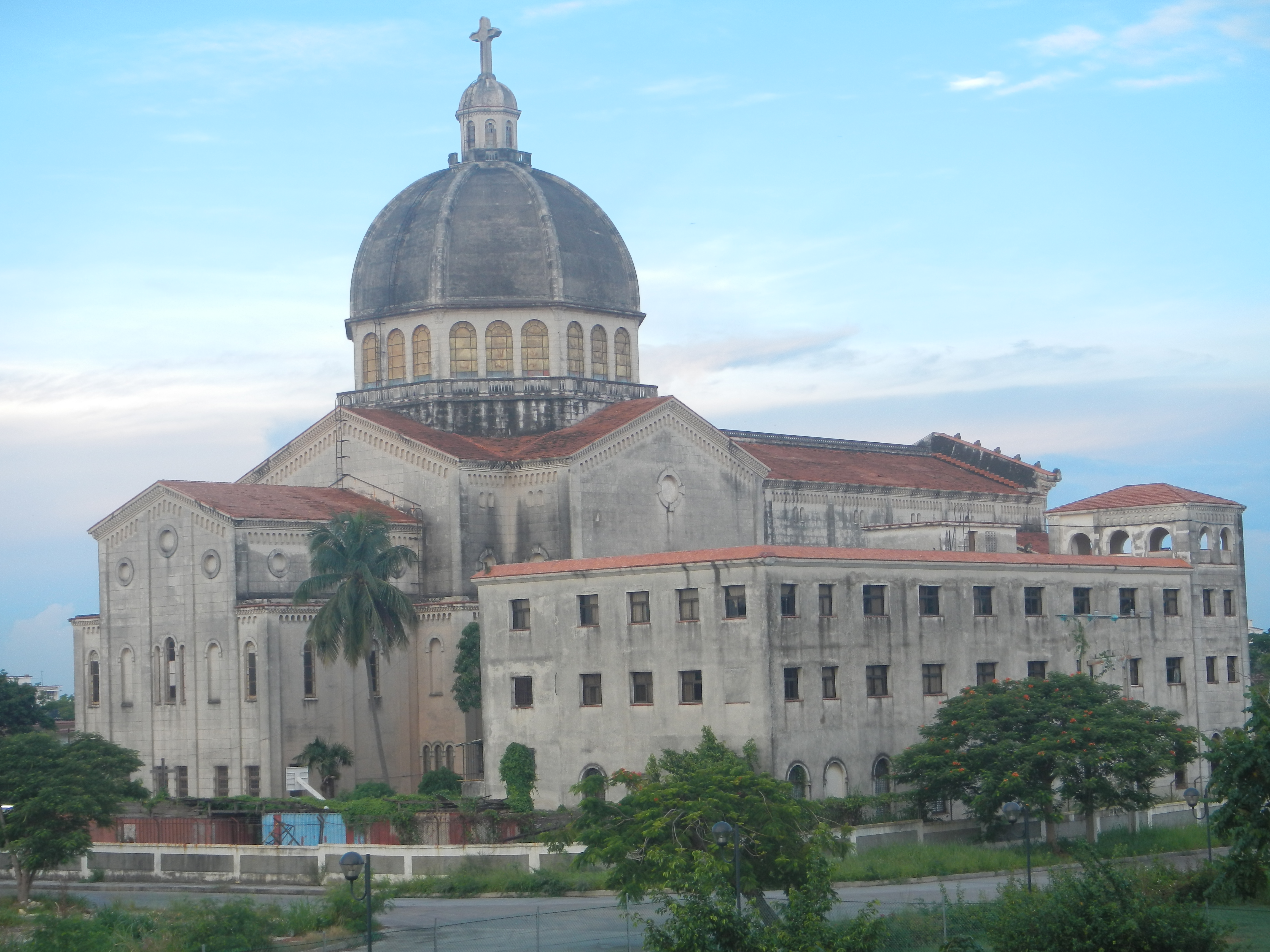
Church Next Door
There was an old and rather substantial church right next to the hotel, so on the way back up we stopped for a look, hoping to see inside. A sign on the gate said Mass was celebrated Saturdays and Sundays, so we knew it was in use. We walked around trying all doors but couldn’t get in. Part of the building resembled a dormitory, so I think it may have housed a monastery or convent at one time. Over our stay we saw quite a few locals wearing crosses, and we learned that restrictions on expression of religion have been relaxed significantly over the past few years.
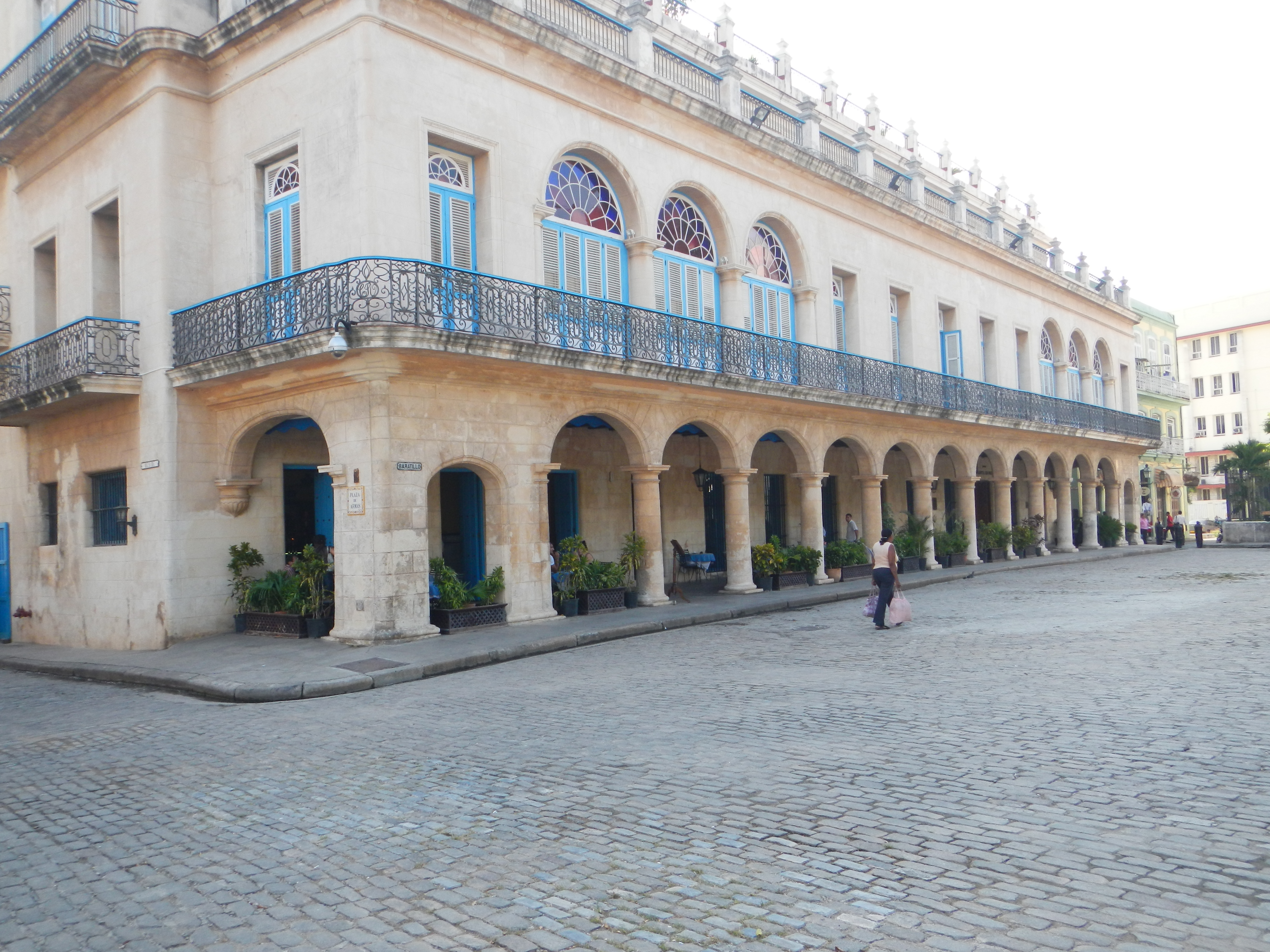
Plaza de Armas
The bus left the hotel promptly at 9 and we rode back into the city along the beautiful Malacon. The road turns away from the ocean just across from the old Morro Castle, and follows the narrow inlet into the Havana Bay. Across the inlet is a fort from the 17th century, and a large statue of Jesus, commissioned by Mrs. Batista in gratitude for her husband surviving a coup attempt in the 40s. We were let off near one of the old gate to the city and strolled behind Enedis into Plaza de Armas, one of Old Havana’s four main squares. They all resemble squares in the major cities of Spain, on a slightly smaller scale, and are in various states of renovation. The purpose of our tour today was to learn about this renovation, a huge project, and to meet with the architect in charge of the project.
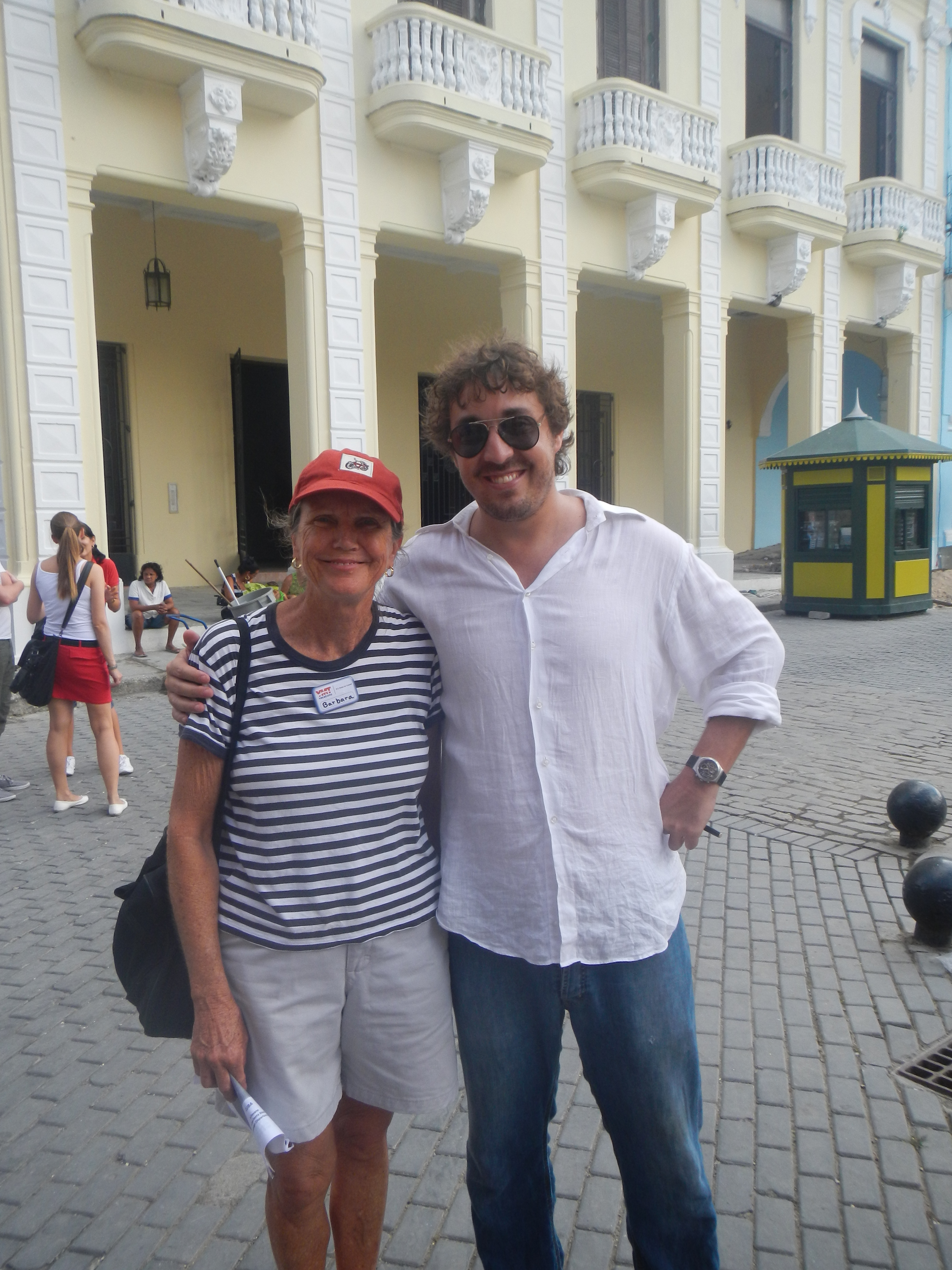
Barbara and Daniel
We met Daniel just off Plaza de Armas. A handsome, gregarious young man who spoke very good English, he explained that we would be going first to a building that housed an elaborate scale model of Old Havana, where we would learn some of the history of significant buildings, and how the project was proceeding. We would then continue our walking tour of the squares, ending at Plaza Viejas, where some of the renovations had been completed. As we walked to the model Daniel pointed out that people lived in these very old buildings, but that they had to move out in order for the work to take place. There was a unit of Social Workers, he said, assigned to convince people of the necessity of that move. The government had constructed, and was continuing to build, apartments on the outskirts of the city, to house these people while the renovations took place. In the buildings where work had been completed, some had moved back and some had decided not to.
The scale model was incredible, but unfortunately, no photographs were allowed. It was approximately 20 x 20 feet, and depicted Old Havana in minute detail, down to arched doorways and Baroque facades. I asked Daniel who had done the work and he told me a family of artists in Havana. Using a laser pointer Daniel, and often, Enedis as well, pointed out significant structures and gave something of the history. As stated, Havana is a very, very old city, and many of the building dating back to the early days of the capital remain. There are buildings from the 1560s still standing. The Spaniards knew how to construct solid buildings in hurricane-prone places, but, as we would learn, there had nevertheless been significant storm damage to some of the buildings over the years. A good many hurricanes have hit the island in the past 400 years or so.

Mural in Old Havana
We continued our walking tour of the squares of Old Havana, which is pedestrian only, and passed this mural on a wall that depicted an array of national heroes. It was done in sand, mixed with an adhesive, and was quite extraordinary. We continued on to an old church called San Francisco de Asis, originally constructed in the early 1600s, the building was seriously damaged by storms in 1680 and 1692, eventually losing its bell tower to a hurricane. It then was the site of a convent for many years, was a popular burial site for Spanish elite, and remains a coveted internment site. Mother Teresa visited the convent at one time, and there is a small statue of her in the lovely garden behind the church.
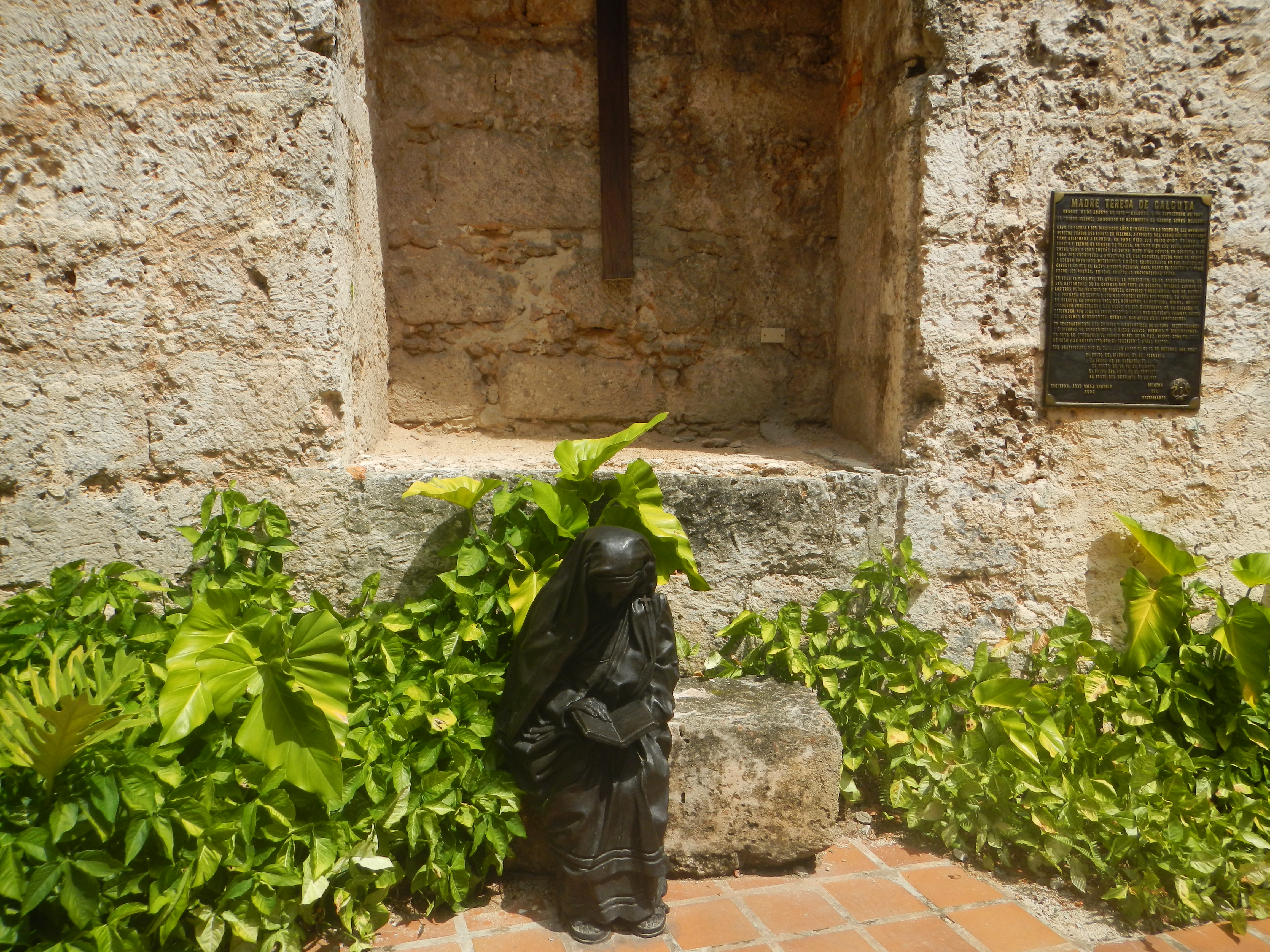
Mother Teresa

Havana Cathedral
We then went to Cathedral Square, dominated at one end by the Cathedral of the Virgin Mary of the Immaculate Conception, started in 1748 and finished in 1777. Daniel explained that it is done in Cuban Baroque, meaning it followed Baroque style, but without much of the elaborate ornamentation of European Baroque, owing to the nature of native stone, which, being softer, would not allow detailed carving. Plaza Viejas was spectacular. Much of the renovation had
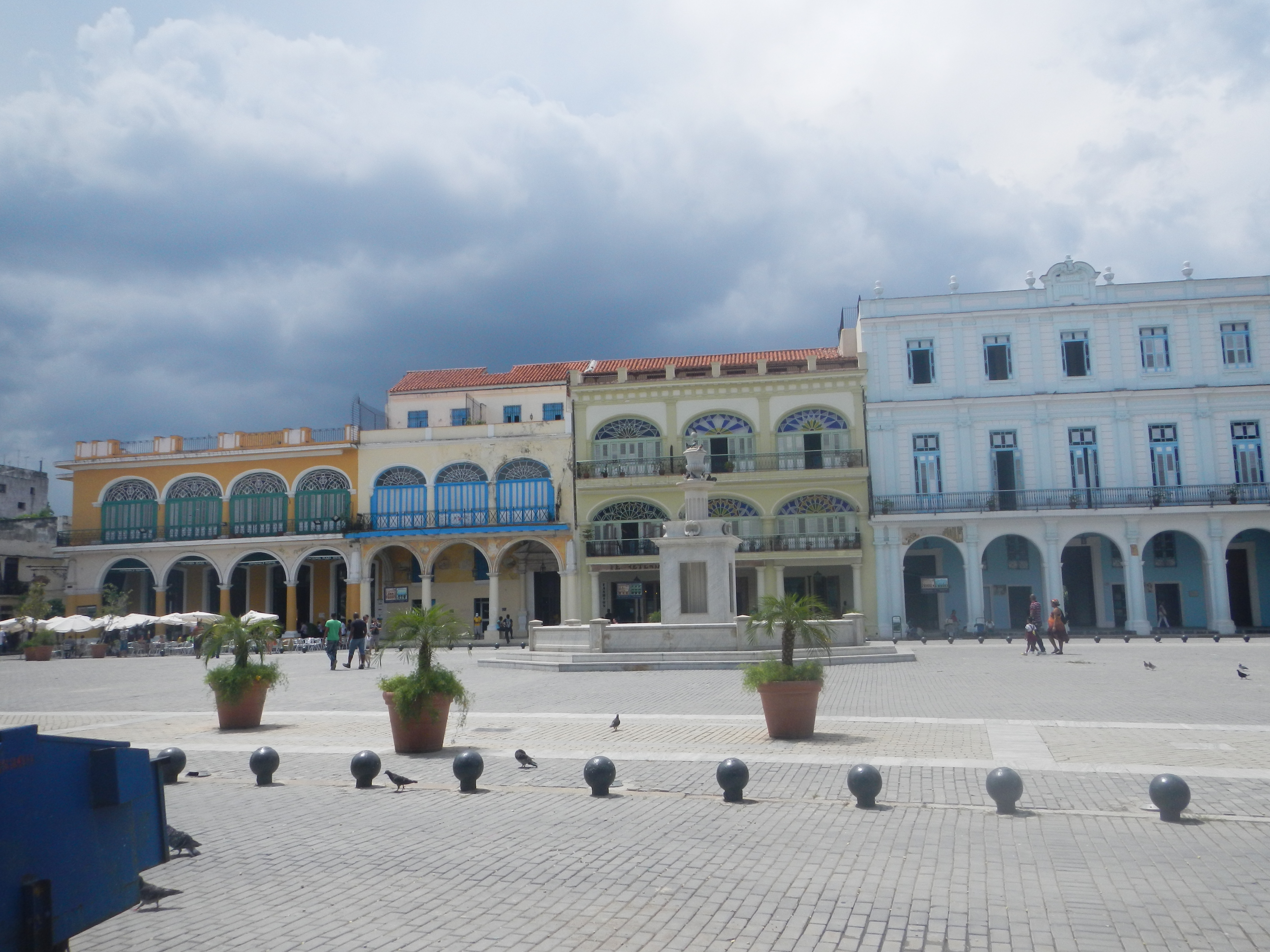
Plaza Vieja
been completed here, and Daniel was justifiably proud of the results. I remarked that the square looked very much like Plaza Major in Madrid, and he agreed, but I don’t know whether he had been there or not. Travel abroad for most Cubans is restricted. At one corner of the square was a completed restoration that really stood out. Finished in bright yellow paint, with blue trim, it stood in stark, but happy contrast to all the old, crumbling, grey buildings you see everywhere else in Havana.
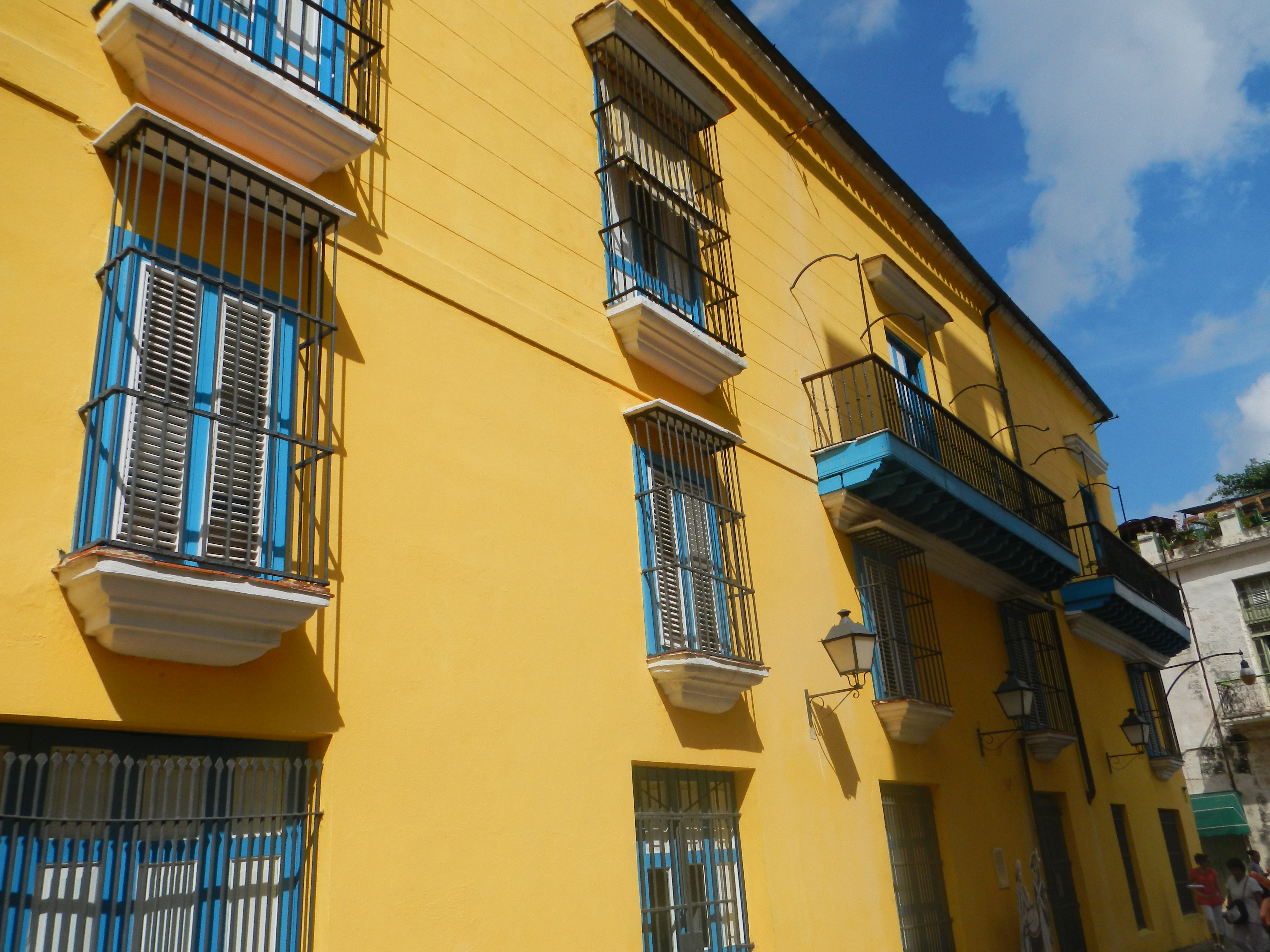
Restoration Success
Barbara asked Daniel if the goal of the restoration was not only the preservation of these exceptional buildings for national pride, but to lure tourism as well, and he quickly responded that the main goal was tourism. We saw and heard this refrain many times. As Enedis had put it on our ride in that morning, as we passed more dilapidated buildings, “We are trying. Our problems are economic, not political.” An argument can no doubt be made that the economic problems are due to the politics, but we were struck by the sincerity expressed in hope for a better future, (including more interaction with the U.S.,) that we heard, not only from government employees, like Enedis and Daniel, but artists, musicians, waiters and housekeeping folk we later met. In our second day in country, we were becoming aware of what a complex, not easily defined place Cuba is, a place of dichotomy, irony, and delicate balance, a conflicted place really, where desire for integration with the modern world often clashes with a true socialist mind-set. Enedis may have expressed it best on the bus one day early in the week. “”I want to go to McDonald’s and Wal-Mart,” she said, and in virtually the next breath was telling us how a certain percentage of her earnings as a guide went for support of the Children’s Cancer Hospital, and that she was happy to do it. State rhetoric? Maybe, but as we got to know this remarkable, intelligent, and happy woman, and she us, her frankness and willingness to answer increasingly delicate questions about life in Cuba, and at times, to poke a little fun at the State, led us to believe she was shooting straight, and from the heart.

Lunch on Plaza Vieja
Lunch was not included that day, so Barbara and I made for a cafe/brewery at one corner of the square, in search of an authentic Cuban Sandwich. We were joined by the couple from California, and enjoyed the sandwich, which was delicious, and a Buccanero. Of course, a four-piece combo playing Salsa and Afro-Cuban music was part of the scene. After a set, someone from the band, and this was true everywhere, came around with a CD asking if we wanted to buy. Watching our money, we never did, but I would liked to have come back with an arm-load. The music was incredible everywhere, with at least one guitarist in each group absolutely phenomenal.
A bit about currency before we move on to the afternoon’s activities. Cuba has two currencies, essentially one for foreigners and one for the Cuban people. There is the Cuban convertible peso (CUC, pronounced by everyone as Kook,) and the Cuban Peso. Foreigners can exchange their money for CUCs in the country in hotels and banks, and the rate is fixed at about 13%. You cant spend foreign currency in Cuba, only CUCs, and the Cuban people can only spend Cuban pesos, with a few exceptions. They are trying to get to a single currency, but in the meantime, it is a good way to keep track of what foreigners are spending in country. No American dollars can be spent; no credit card purchases. Most things, including food in restaurants, was quite reasonable, if not downright cheap. Wages are very low in Cuba, across the board. Doctors make about 50 Cuban Pesos a month, and many of them hitch-hike to work. More on transportation later. We could purchase just about anything we wanted in country, but there are restrictions on what you can bring back into the U.S. You can only bring back books, works of art, posters, CDs and photographs. No cigars, kids. Bummer.
After lunch we reconvened as a group and followed Enedis off the square to a silk screen studio, run by a half-dozen young people. A little sprite of a girl, who again spoke good English, showed us around and had one of the men demonstrate a technique developed by the artist who actually owned the business. They screened his art work there, and also movie posters and advertisements. It was kind of hot in the space, and we were beginning to lose some of the older and disinterested members of our group, the first inkling of a trend that would become a little irritating, and lead me to question just why they had come on this trip in the first place. No strangers to heat and humidity, and still retaining something of a childlike curiosity and naivety, Barbara and I were always the first off the bus and within a few feet of whatever guide we had, while an increasing number of folks found a bench on which to sit, or stood about and groused. Anyway, the kids in the studio were enthusiastic and pleasant and eager to show their stuff. It was delightful.
While inside a thunderstorm had rolled in, but raining only lightly at that point, so we made
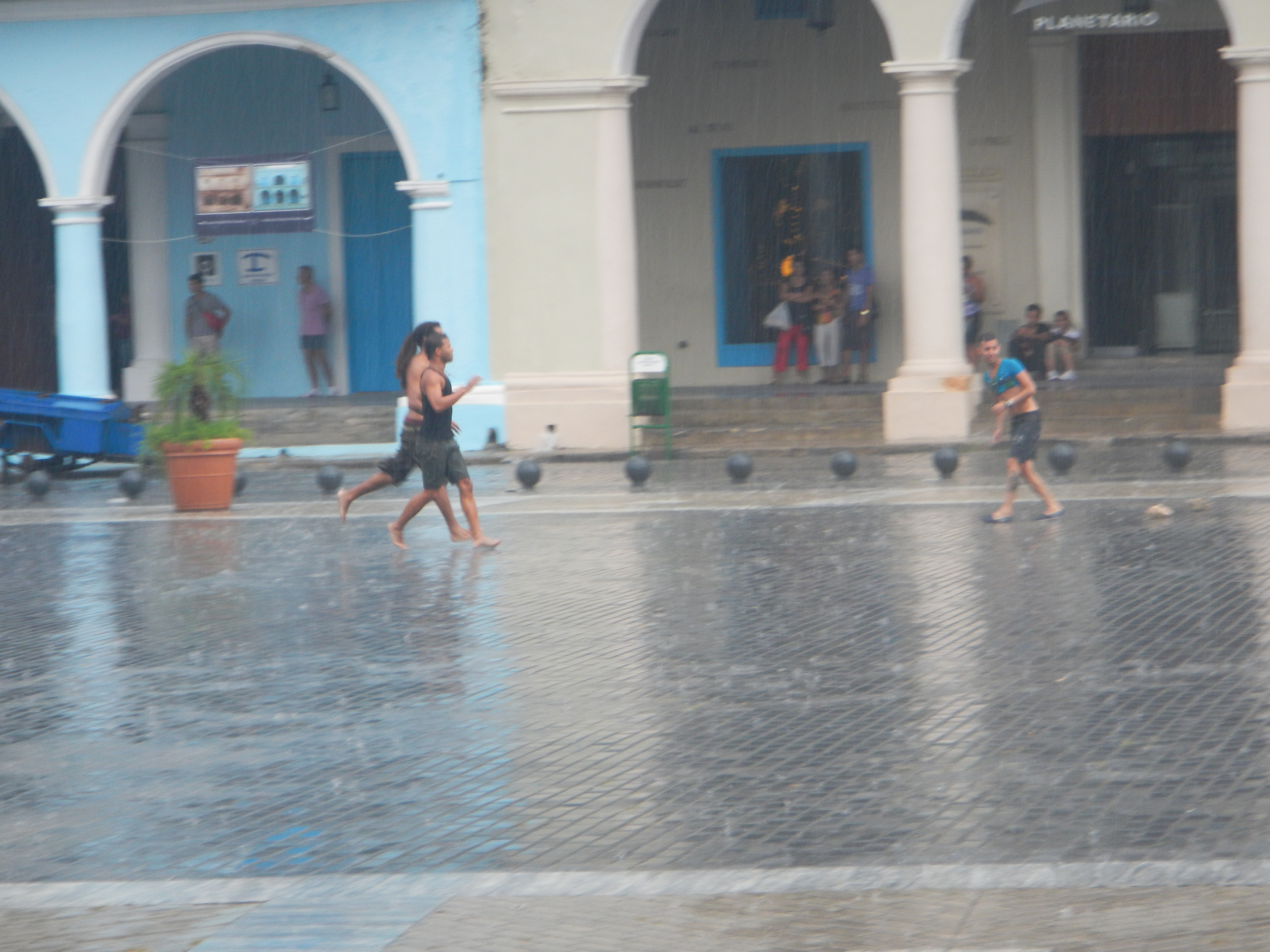
Football in the Rain
our way down the narrow street and around the corner with the purpose of going to another cultural presentation. A downpour ensued, so we all ducked inside a tiny shop, all 33 of us, more or less, graciously invited in by the shopkeeper. It was a curious little place that specialized in lead figurine miniatures of the War of Independence (including Teddy and the Rough Riders,) some scarves, and other knick-knacks. Several purchases were made, so I think it was worth it to her. We expected the rain to let up soon, but it continued for a half-hour. We stood in the doorway and watched the uninhibited play of some kids in the downpour. At length Enedis decided we should make our way back to Plaza Viejas, and then to the bus. We made it to the square, but the rain picked up again and we couldn’t forge on to the bus, since most were without an umbrella. We watched an impromptu soccer game take place out in the square, complete with young men who took turns playing and acting as referee. It rained almost every afternoon we were there, and we got used to seeing young people get out and play in it with beautiful abandon. It was as regular as the rain. A few days later, trapped again by an afternoon thunderstorm on one of the porticos of Cathedral square, we saw a skinny black dog joyously tear up and down one of the side streets, so it wasn’t just kids.
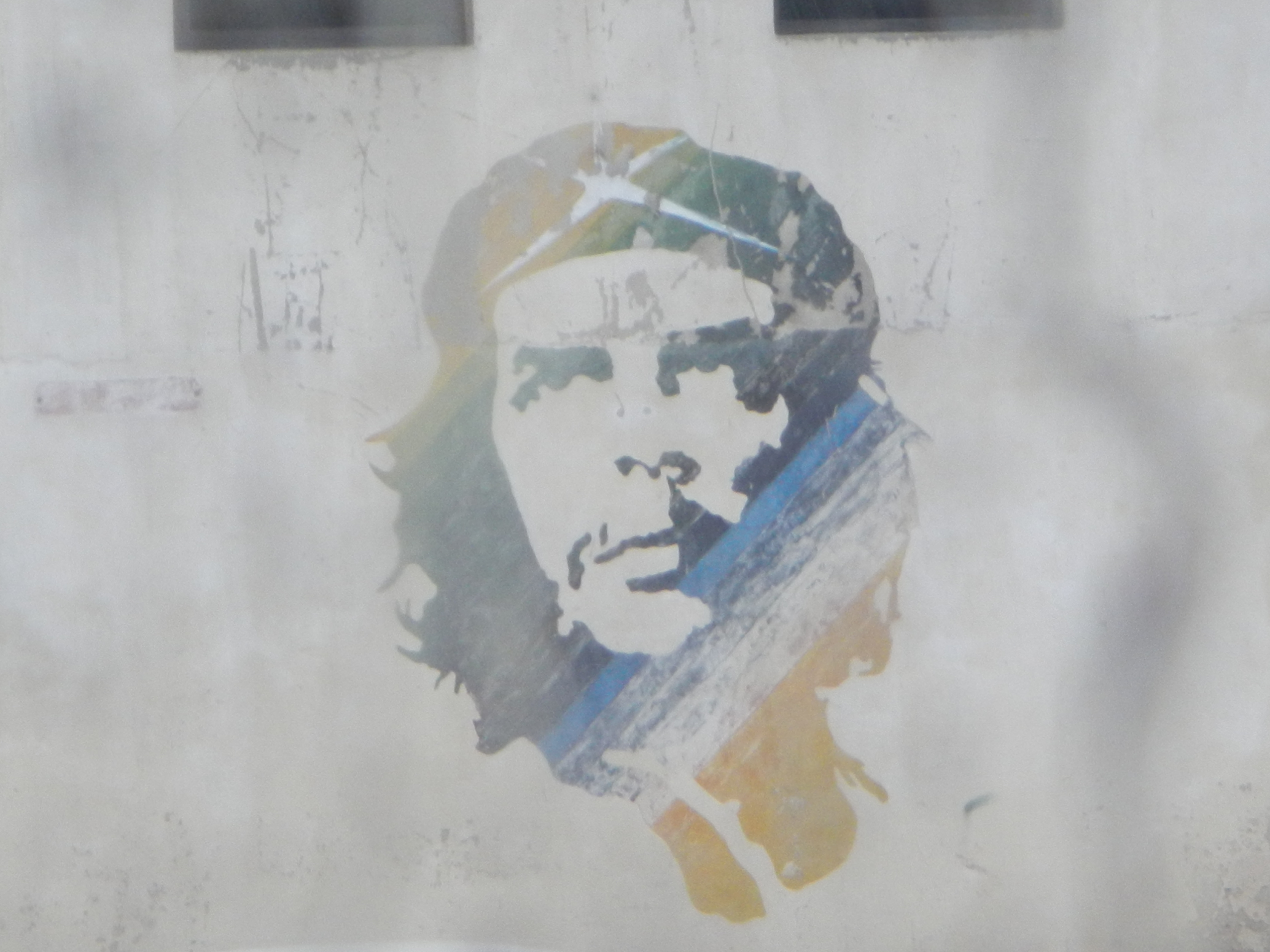
Che on Wall
We finally said the hell with it, and employing our little umbrella, Barbara and I struck out for the bus, which was waiting some three blocks away. We got completely soaked but made it fine and climbed aboard. A few minutes later more members of the group arrived in the ubiquitous bicycle powered pedicabs, equipped with canvas covers. It was quite a sight. This painting of Che adorned a wall opposite the bus.
Back at the hotel we had a hot shower and got dressed for dinner. It was also not included this day, but 18 of us, at the suggestion of Enedis, had decided to go back into town to try a highly recommended Palador, a privately owned restaurant, usually in someone’s home. Since we were a good number we could use the bus. Paladors have become quite common since the relaxation in self-employment restrictions, and some of the best food in Cuba can be had in these places.

View from La Moneda Cubana
Ours was called La Moneda Cubana, and was back down in the edge of Old Havana, near the inlet to the bay across from the old fort. We had to climb up some fifty stair steps inside, with three turns then were led out to a beautiful open area with covering overlooking the water. It was still raining lightly. Enedis made sure we were all accounted for, then left, saying she would be back around nine to escort us back to the hotel. We all sat at one long table, had a drink and ordered from a menu with four main entrees. Barbara and I ordered the fish combination. It was lobster, a huge chunk of fish, (which I could not identify,) vegetables, and bread, all perfectly prepared. At 9 we were witness to a very old Havana tradition, the firing of a cannon from the fort. It was originally done to signal that the gates of the walled city were closing, but now it is a custom. One shot, boom, that’s it. It was a very lovely meal.
Enedis arrived shortly after the cannon-shot, we descended the stairs without injury, and boarded the bus for a wonderful drive back home along the Malacon, which by then was thick with people. Havana folks love to come out at night to converse, argue, and play and listen to music on the Malacon. We turned back up into Miramar, and were soon at the hotel. When we passed the old church next door I saw a light in one of the windows high up in the dormitory.
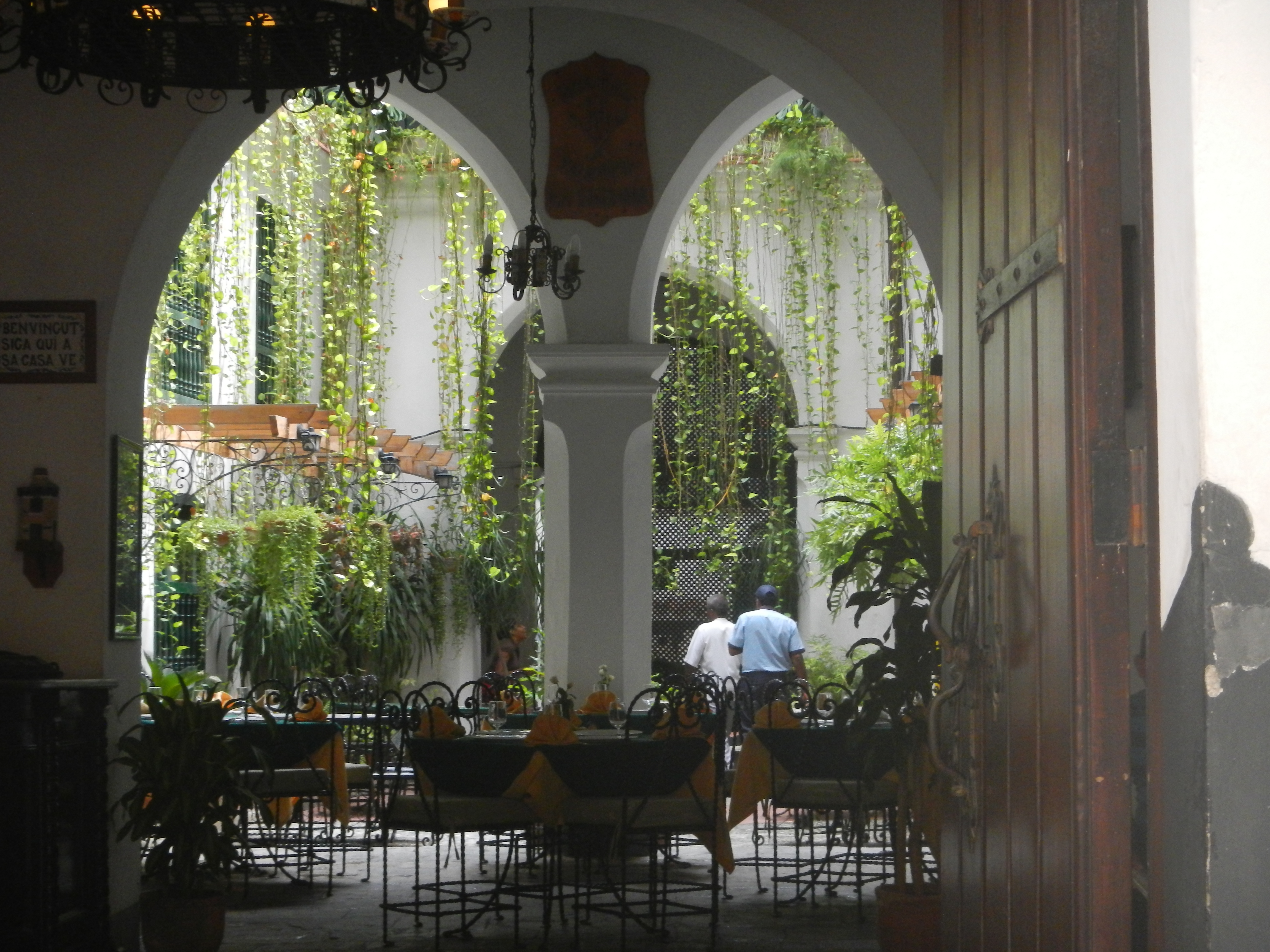
A Restaurant on Plaza Vieja

 The Skinny Island Post
Sam, We have got the hot set up now. I just put Frannie to sleep while reading your day 2 post to her. Actually she heard ever word, thoroughly enjoying the reading. She could not see the pictures as I read so I devised a way to read and show pictures at the same time. I hooked up to our LCD projector. Now when she wakes up, I will read and project images of Day 3, of course going back to show her the day 1 and 2 pictures on the big screen. This is quite a rare opportunity. Thank you so much for sharing your journalistic adventures with us. Tell Barbara we are glad they did not detain her any longer than they did at the airport. Dean
Glad you are following, buddy! More to come. Wake her up!
I am definitely up for trip to Cuba, now! I had a cousin who worked for the U.S. government at the American embassy in Havana during Fulgencio Batista’s last years. Will have to get particulars from you on how to arrange a visit.
Shirley, I will be writing about some of the particulars in a future post. It is a delicate and tenuous issue, still, but progress has been made.