Day 8: Cordoba, La Mancha, Madrid

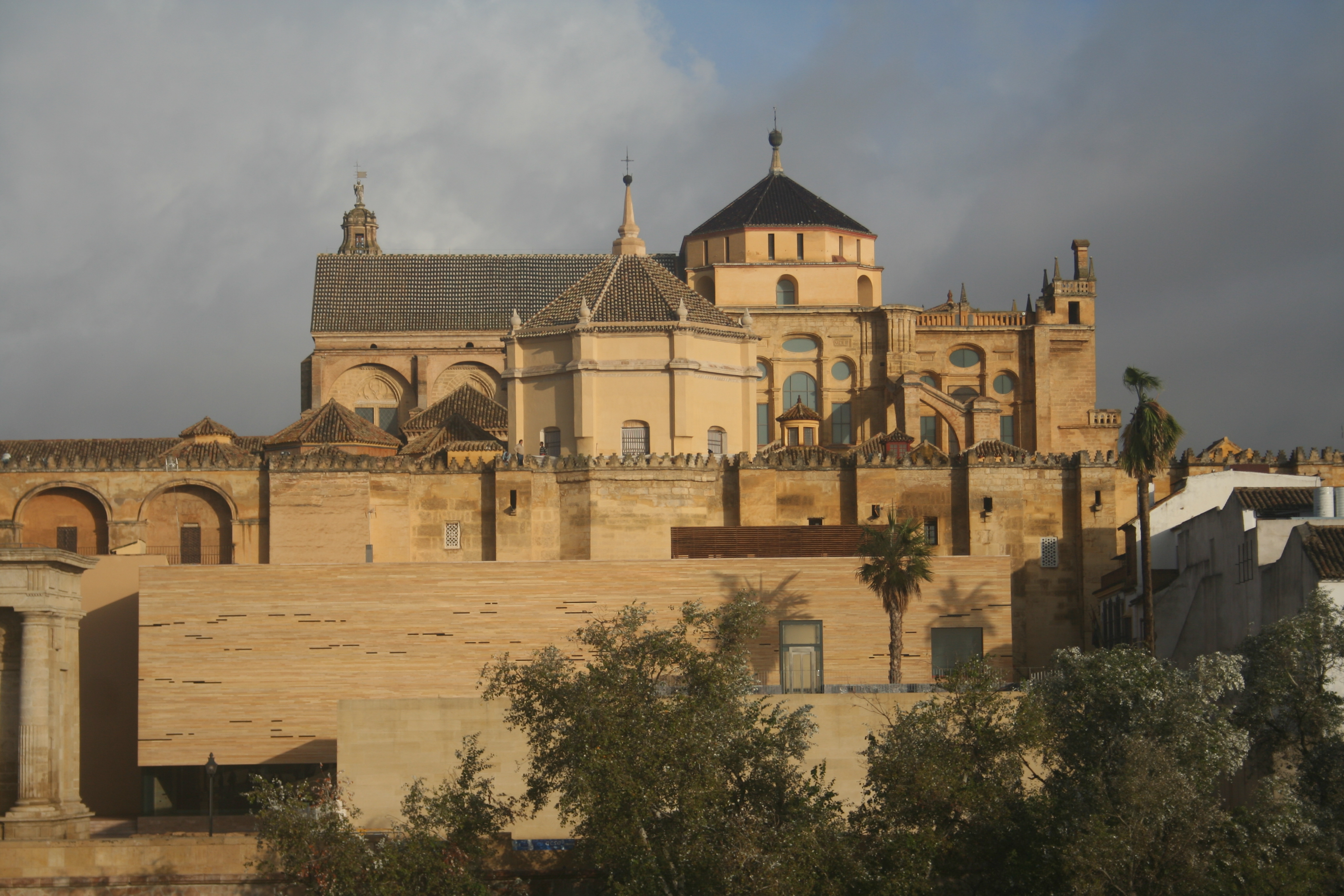
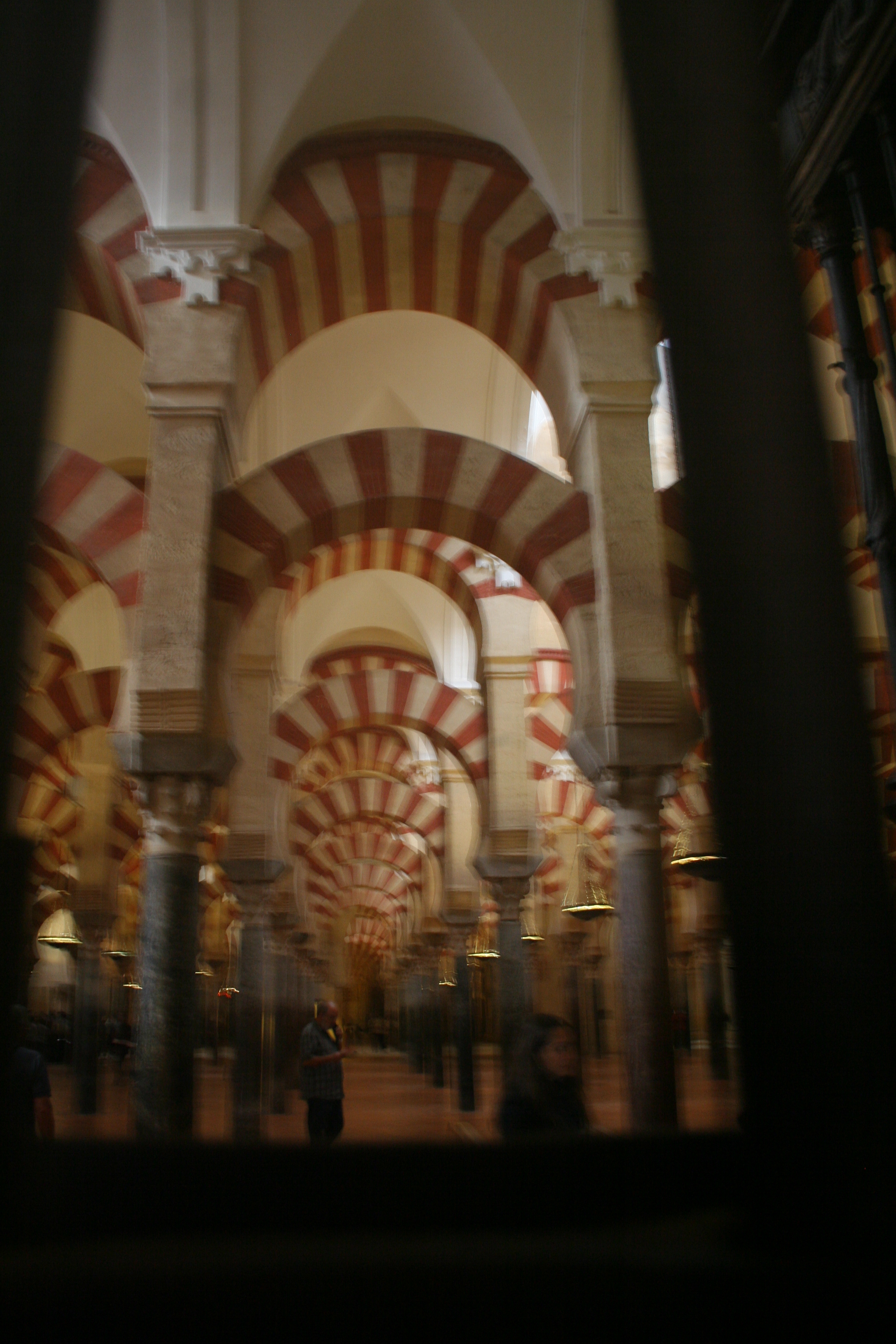
Pushing north now after a huge hotel breakfast, first stop, Cordoba, which, historically and visually, is one of the most interesting places we’ve ever visited.  It is very old; pre-historic remains have been discovered there; and the Romans, Visigoths, and Moors all established thriving cultures.  In the late 10th and early 11th centuries, Cordoba was believed to be the most populous city in the world, a center of culture, literature, art, and philosophy.  During this time it was known as the intellectual center of the world. You approach old Cordoba from across the Guadalquivir River, the same river that flows through Seville, and you access the town by means of a spectacular Roman bridge, complete with fortress tower.  Much of the old city walls remain, including an impressive arched gate. The most imposing structure, and the most famous, is just inside the old city gates, the Great Mosque of Cordoba, which is also a Cathedral. The site was originally a pagan temple, then a Visigothic Christian  Church, and then a Moorish Mosque, and finally a Catholic Cathedral, actually inserted in the middle of the Mosque.  It is a remarkable building architecturally, and quite huge, with large open garden areas, multiple Moorish and Gothic arches, and enormous gold-plated doors.  Since 2000, a concerted effort by Spanish Muslims to be allowed to pray in the Mosque has been underway, but has been rejected multiple times by both Spanish Authorities and the Vatican.  In 2010 there was a violent incident over the matter.  We saw no violence or any petitioners, just several Gypsy women outside the Mosque, hustling tourists.
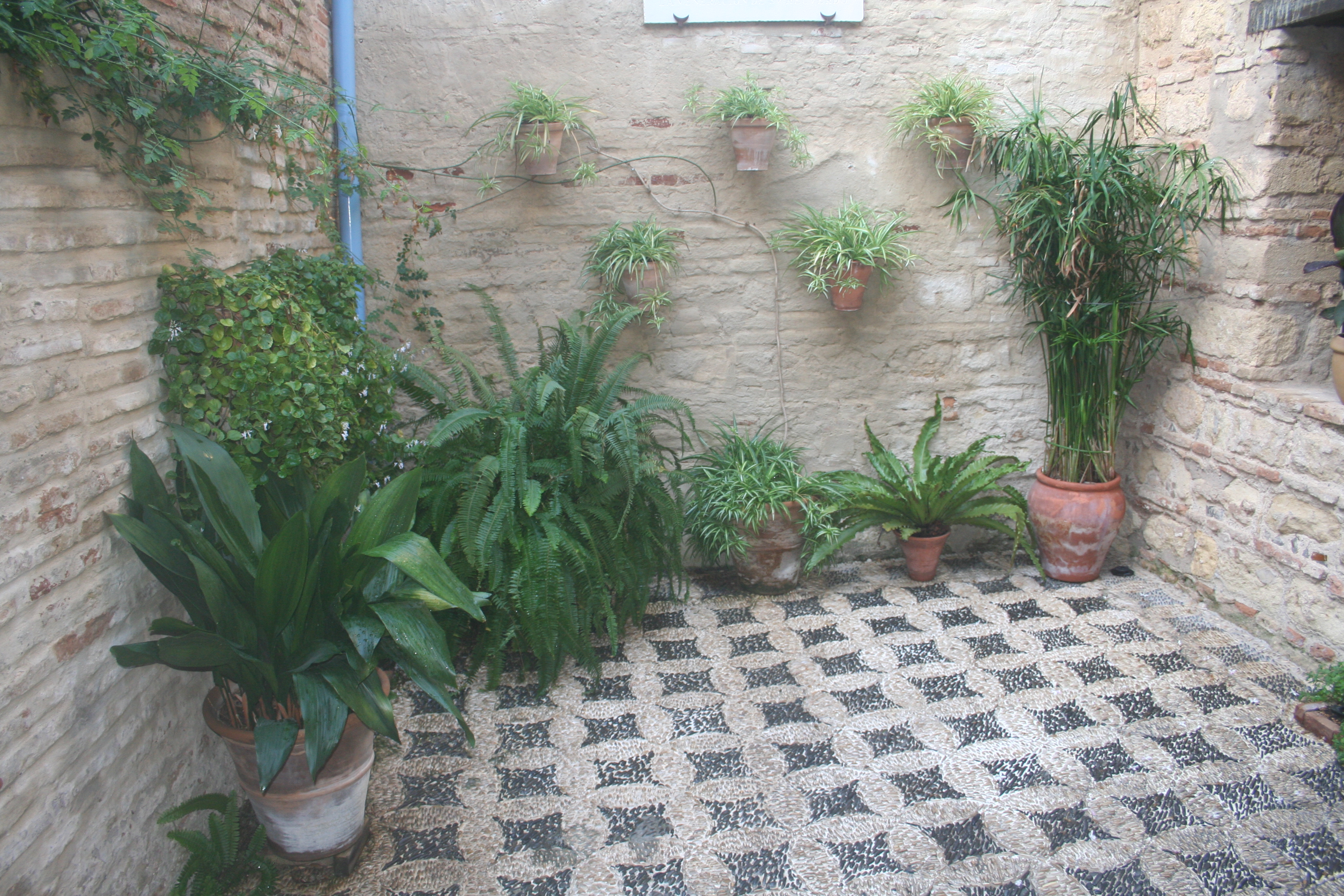
Further evidence of Cordoba’s long and storied diversity is the Jewish quarter, near the Mosque, which includes a Synagogue, built in the Mudejar style in 1315.  It consists of a courtyard accessed from the street, a hallway, and a prayer room with three decorative arches, over which are faint inscriptions from the Psalms.  It is a beautifully simple, quiet, reverential place.  We explored some of the streets and shops in the Jewish quarter, then went looking for the famous Calleja de las Flores, or Street of Flowers, which we almost missed because there weren’t many flowers in evidence.  It is famous for its shops and views down its narrow length of the Mosque.  The street ends in a small square surrounded by shops catering to tourists.  We entered one to ask where we might find the famous Cordoba guitars we’d heard about, and happened on a most gregarious shopkeeper, who spoke fairly good English.  Between our mangled Spanish and his better English we made known our wish to see some guitars, and he asked how much we were willing to spend.  We were hesitant, so he whipped out a calculator, entered some numbers, and showed it to us.  It read 25000.  “Euros,” the man said.  “The best players in the world come here to buy.”  Yeah, and a little over our head.  He went on to say there were places in the newer part of the city where we could get one for about 400 Euros.  Better, but still too much.  He then asked if we were Americans, and when we replied we were, he motioned us to follow him into the back of his shop, where, there in a hole in the tile floor was a deep shaft, down which we could see water and a patch of fern growing.  “A well,” he said.  “22 meters deep, and 1200 years old!”  Very proud, he was, and with good reason.  It was amazing, and we were the only ones in our excursion to see it.
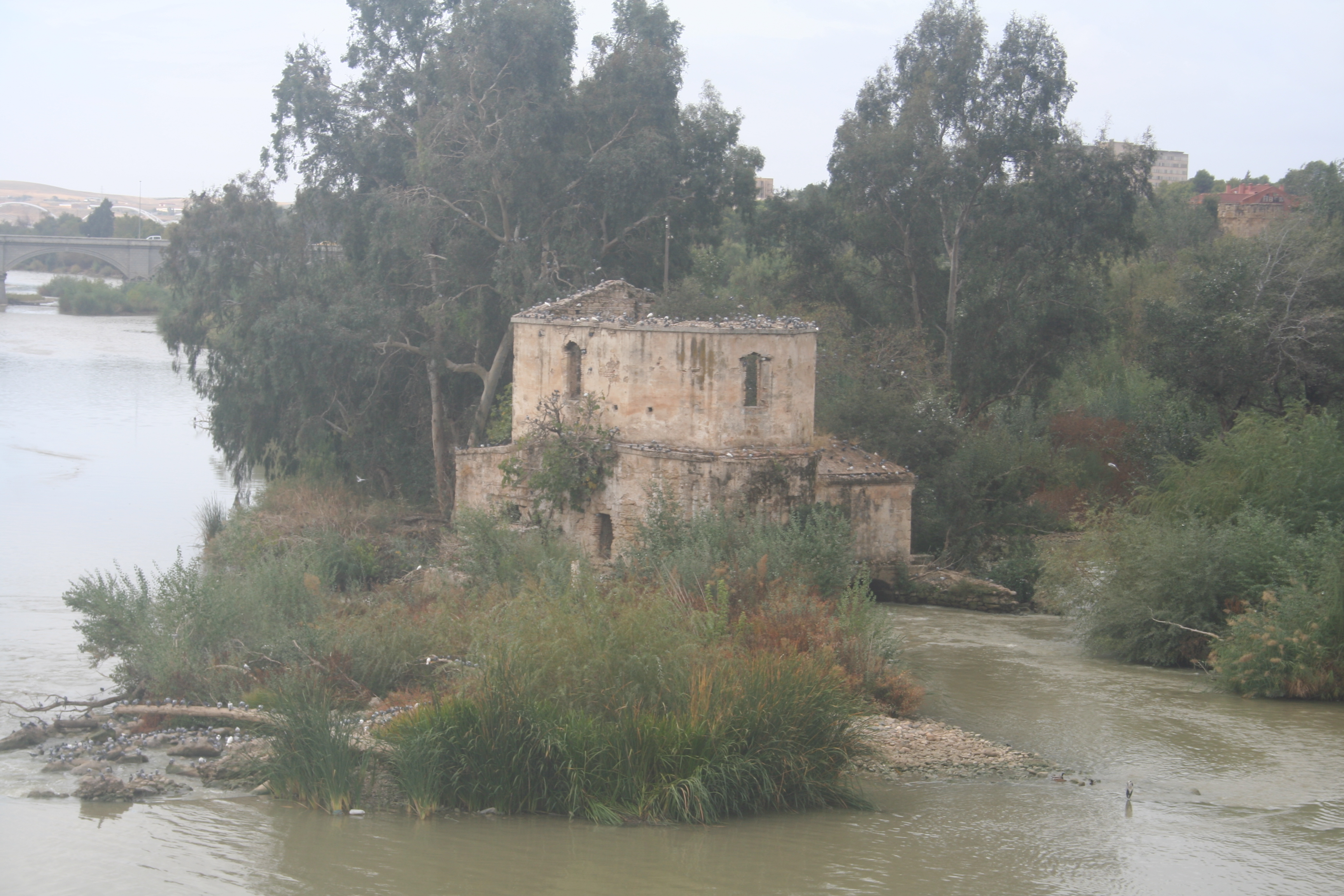
Leaving the Street of Flowers, we did a circumnavigation of the great Mosque and found a sidewalk cafe for a Cafe con Leche, then did a little people watching before starting back to the bus and our appointed departure time.  From the Roman bridge water mills from Moorish times can be seen on both sides of the river.  Very sturdy structures, these, to have survived so long, and ingeniously designed, with openings at the base channeling and accelerating the river’s flow to turn a wheel inside, which turned a stone for grinding grain.  Looking back on the town from the middle of the bridge we were struck by how it was now lit against advancing storm clouds.  The ancient walls were golden, a truly remarkable sight.

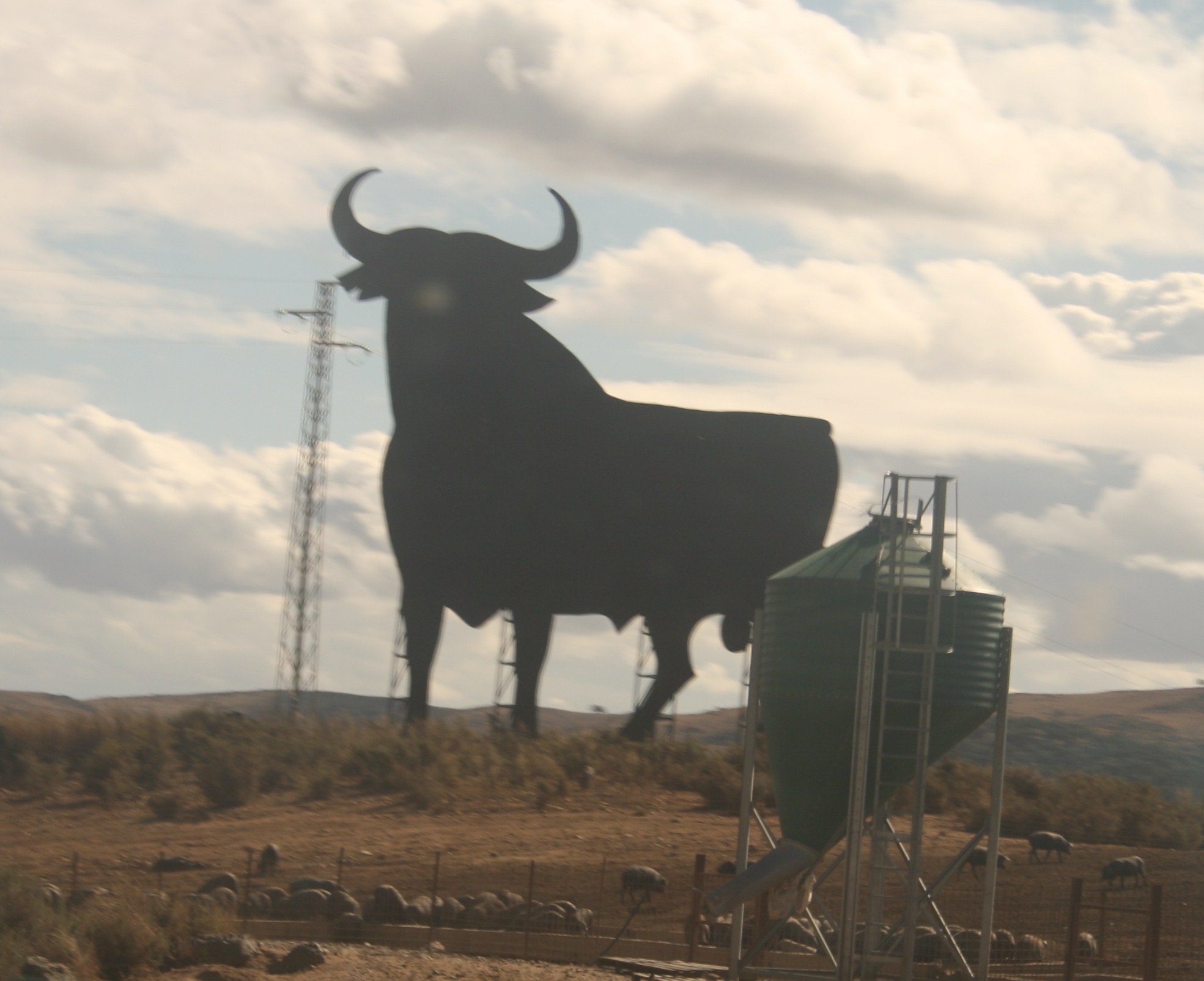
We had to wait a few minutes for some stragglers from our group, but soon departed for the drive back to Madrid, our last stop.  On the way, Luis said, we would be passing through the province of Castille de la Mancha, made famous by Cervantes in his novel Don Quixote.  We would see several of the windmills dating from that period which were integral to the story.  It wasn’t long before we saw our first one, near the highway, and now serving as a restaurant.  Several more appeared on the hills, an amazing sight.  We saw this guy several time, too, on the way to Madrid, and earlier in the trip, heading to Coimbra.  Luis explained that years ago the bull was the advertising image for a liquor company, and the signs were everywhere, along with the name of the company.  At one point the government decided liquor should not be advertised on the highways, kind of a mixed message, I guess, so the company name was painted over, while most of the bulls remained standing.  Of course, Luis said, everybody remembers what the bull stood for, so when they see the sign they instantly think of the liquor.  Pretty good bang for the buck, I’d say.
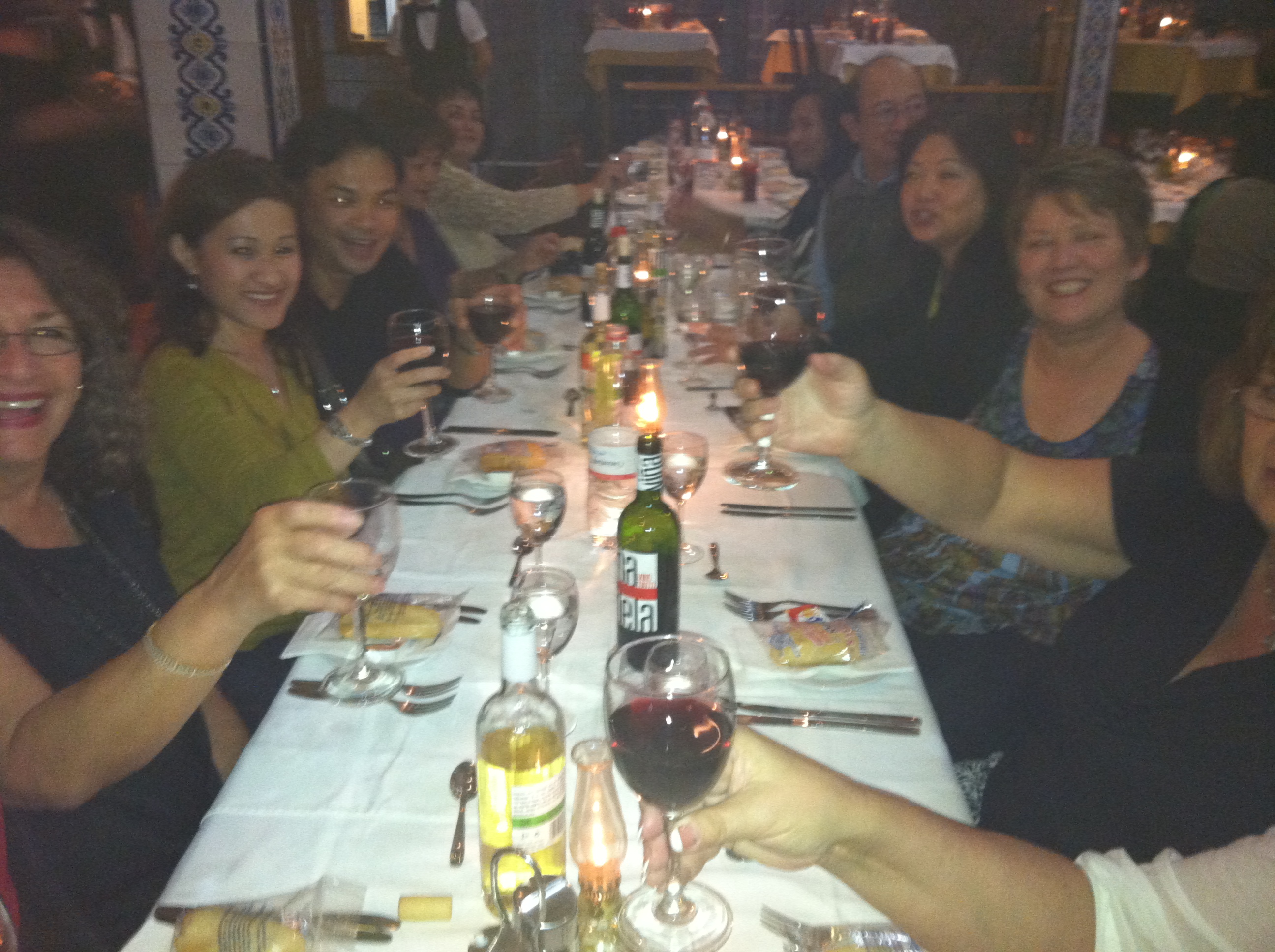
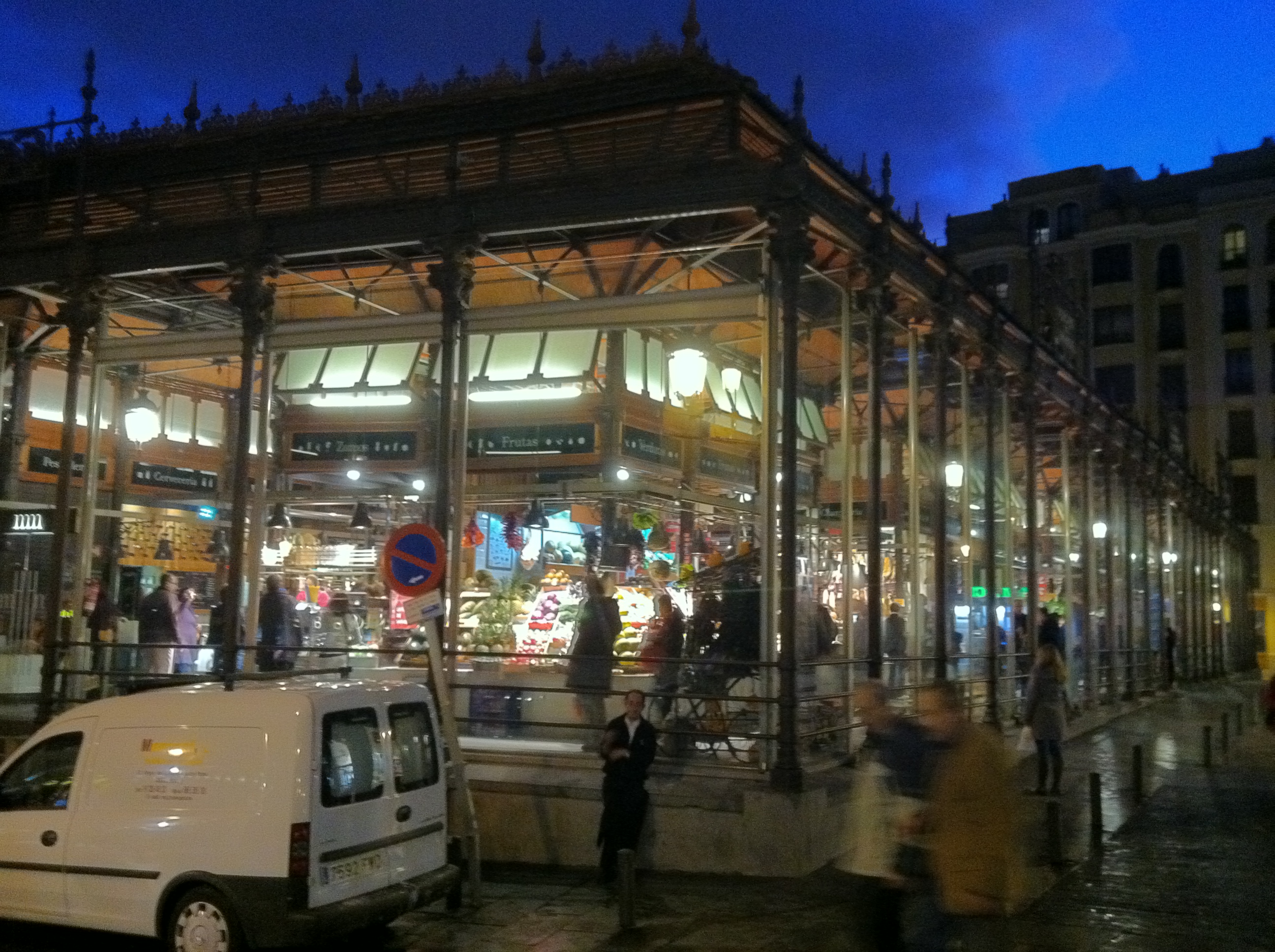
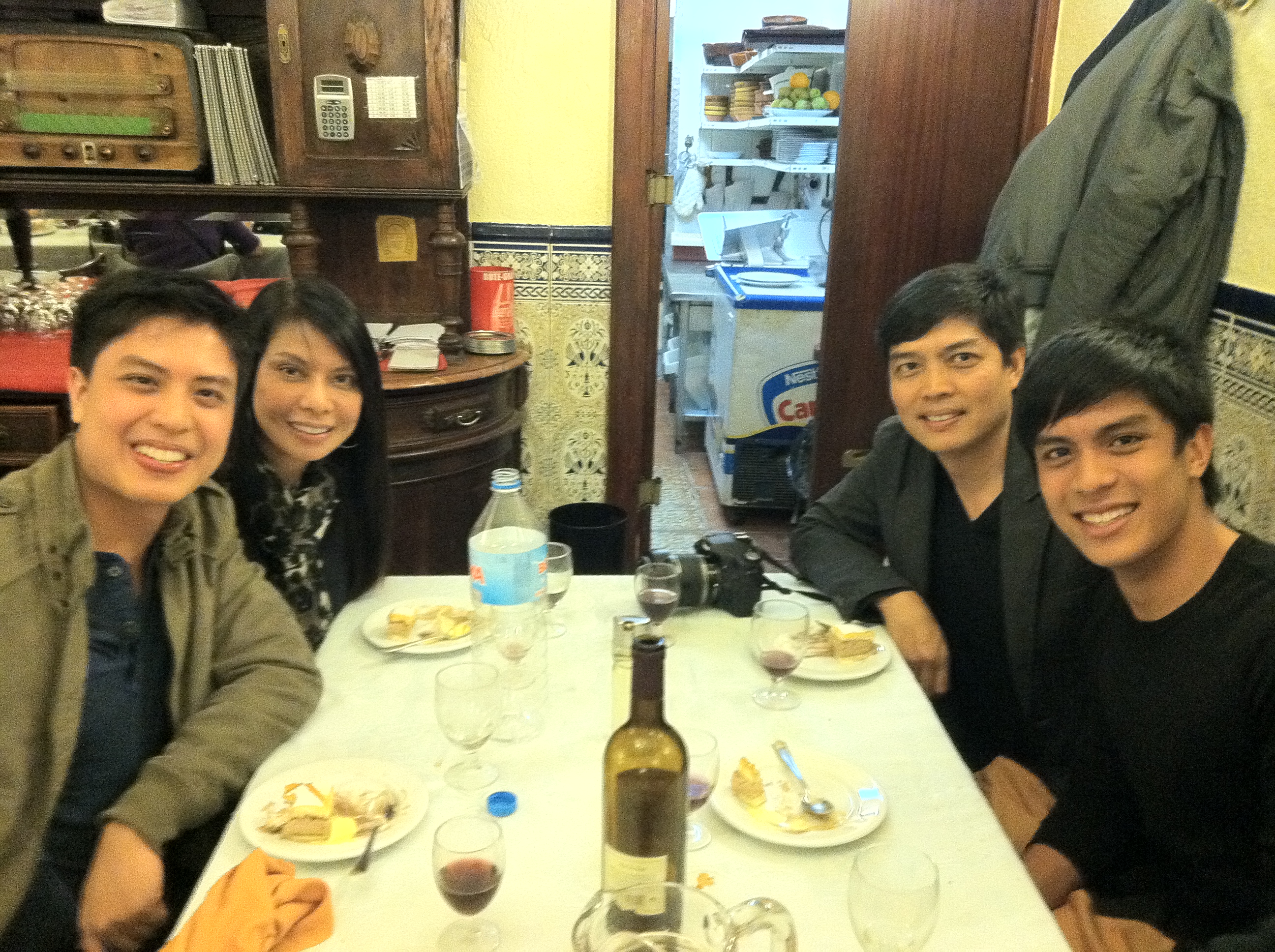
We rolled into Madrid in late afternoon and checked into the Hotel Praga, in the south part of the city.  Big night planned.  Our farewell dinner, a true Spanish Tapas dinner in the old city.  After a brief clean-up and rest we were off in the bus for the Plaza Mayor, where we had started a week ago.  Luis was a bit chagrined at first because a giant tent had been erected in the square, blocking all views, but when he saw what was going on, he grew animated, and suggested we have a look before the short walk to our restaurant.  What had him so excited was a Ham Fair!  Told you they loved their ham in Spain.  Inside, the walls of the tent were lined with ham purveyors, and in the center, a giant beer dispensing operation.  I think Luis wanted to stay, but after fifteen minutes he dutifully herded us toward the Plaza de San Miguel, and the many tapas bars within where we had taken our first lunch in Madrid.  A quick walk around, then into the restaurant right behind San Miguel.  This time the place was ours, and we were seated at tables of six and eight, and served dish after dish of wonderful Spanish tapas– ham, chorizo, cheese, calamari, potatoes and hot sauce, Spanish omelet, all washed down with great wine, and finished off with Sangria!  A great time was had by all, and the bus was once again rocking on the way back to the hotel.  Luis admitted we were an unusually happy and animated group.
Posted in Uncategorized | Leave a comment

Day 7: Seville

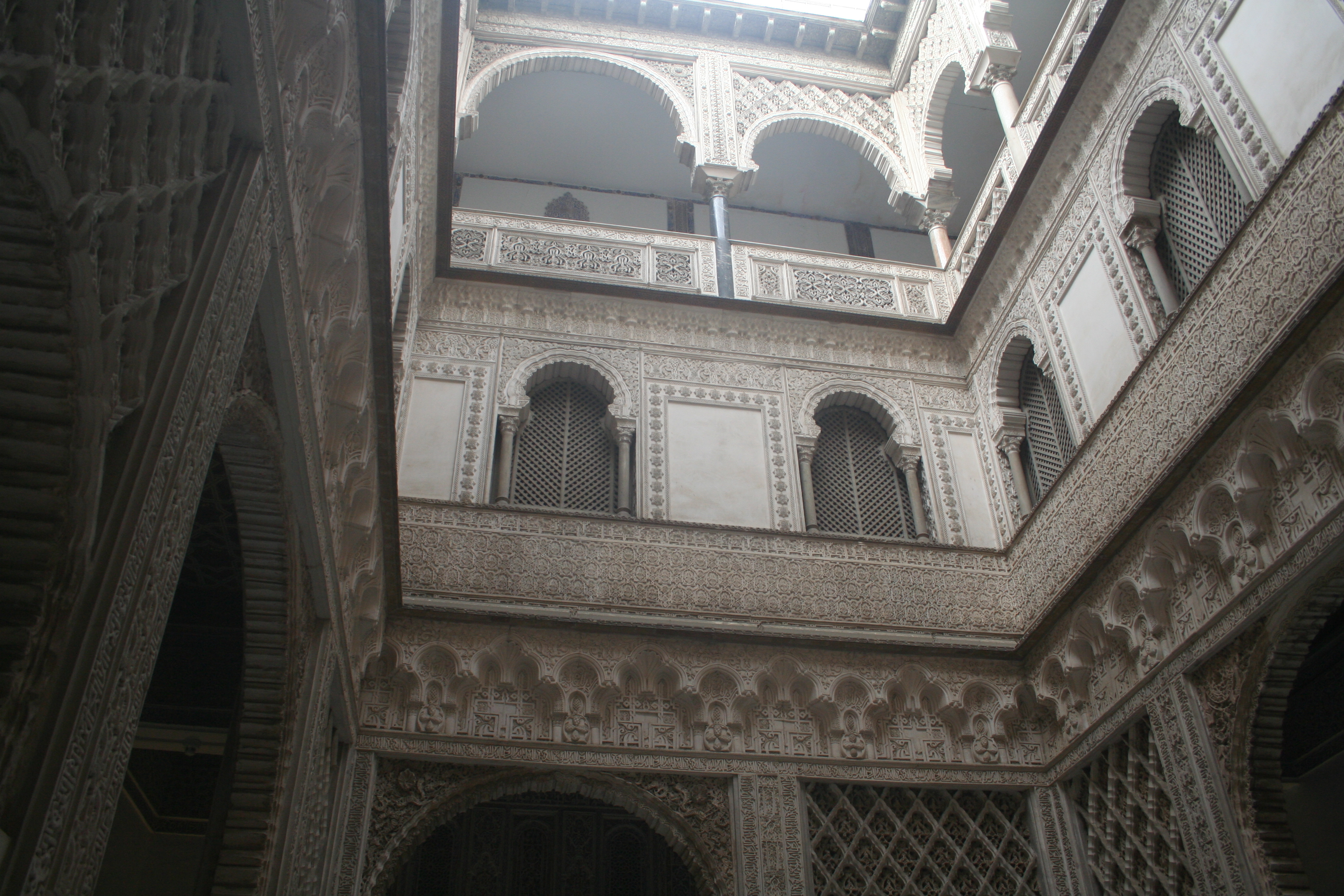
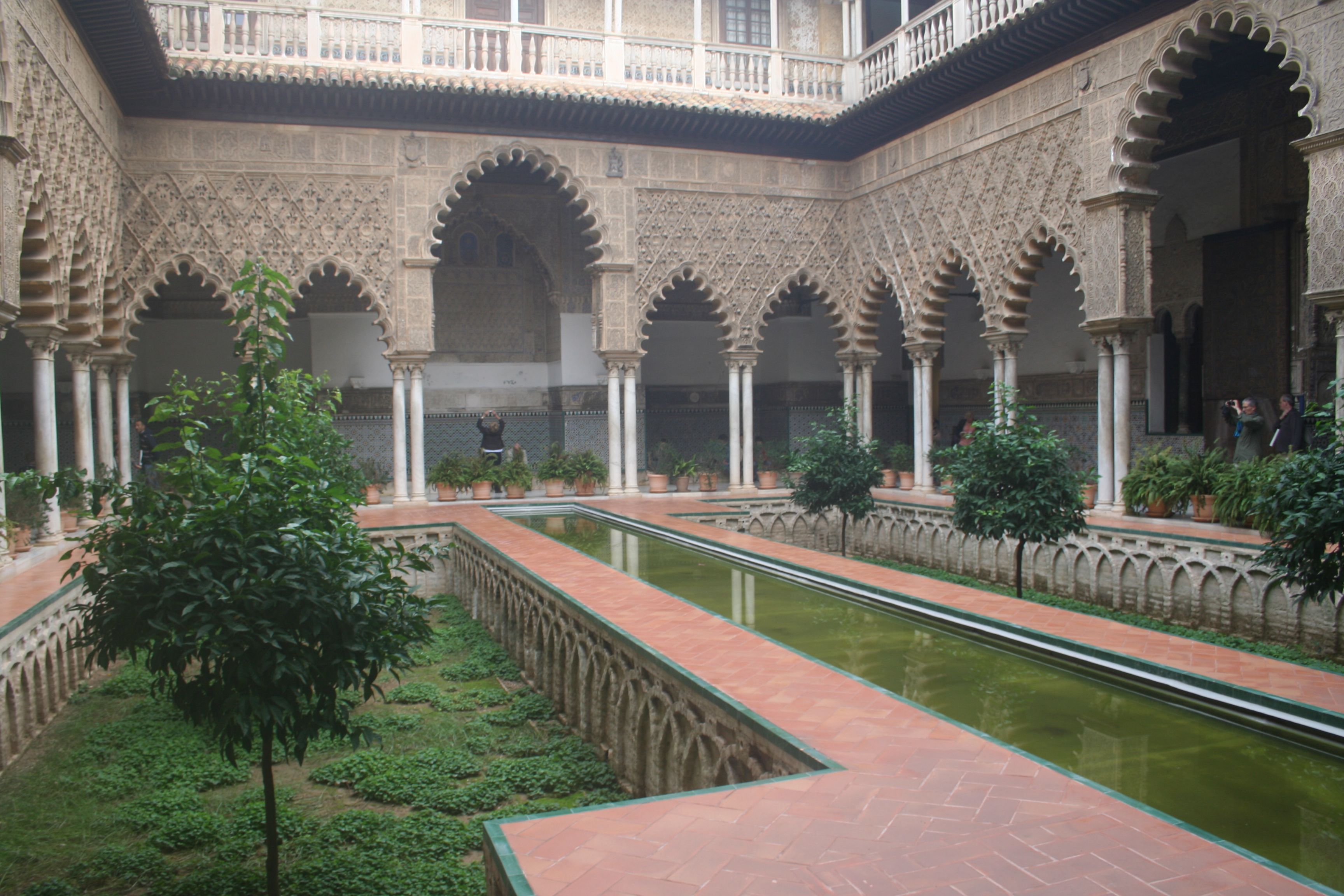
We took off on our own this morning for a walking exploration of old Seville.  Luis had warned us that all maps of Seville are notoriously incomplete; that there are hundreds of streets that do not appear on any map, and that streets may change name from one block to the next in the labyrinths that make up the old city.  We had good directions from our hotel to our first stop, the Seville Cathedral, but we still managed to get turned around and missed it the first time by several blocks.  Came across this unique, very modern pedestrian bridge near the main square. We asked directions, and eventually found the main drag, where the big church was located.  It was still closed.  We had more than an hour before it opened, so we crossed the square and entered the Alcazar, another of the must-sees on our list.  Right away we were mesmerized.  The Seville Alcazar is truly one of the world’s wonders, and one of the best remaining examples of mudejar architecture.  Originally a Moorish fort, it has been expanded and amended over many centuries, becoming an extraordinary palace in multiple architectural styles, the upper levels of which is still the official Seville residence of the Spanish Royal family.  Many stories can be told of the various rooms.  The Casa de Contratacion lies off the la Monteria, one of the great, lush patios.  Built in 1503, The Casa regulated trade with the New World, and included a chapel where Columbus met with Ferdinand and Isabella after his second voyage.  It contains the painting The Virgin of the Navigators, one of the first painting to depict Columbus.  We walked the floor where that rascal Columbus stood.  Amazing.

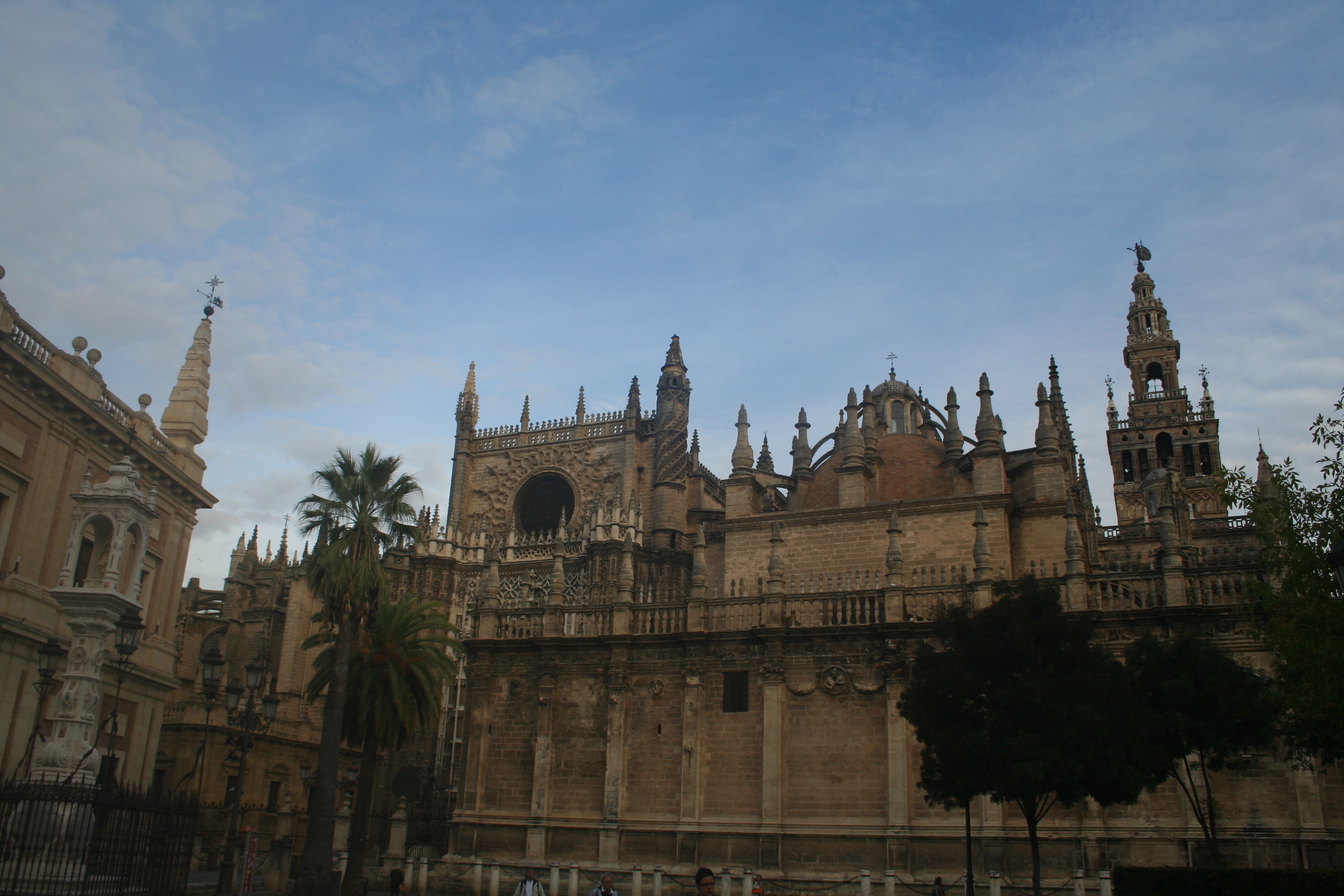
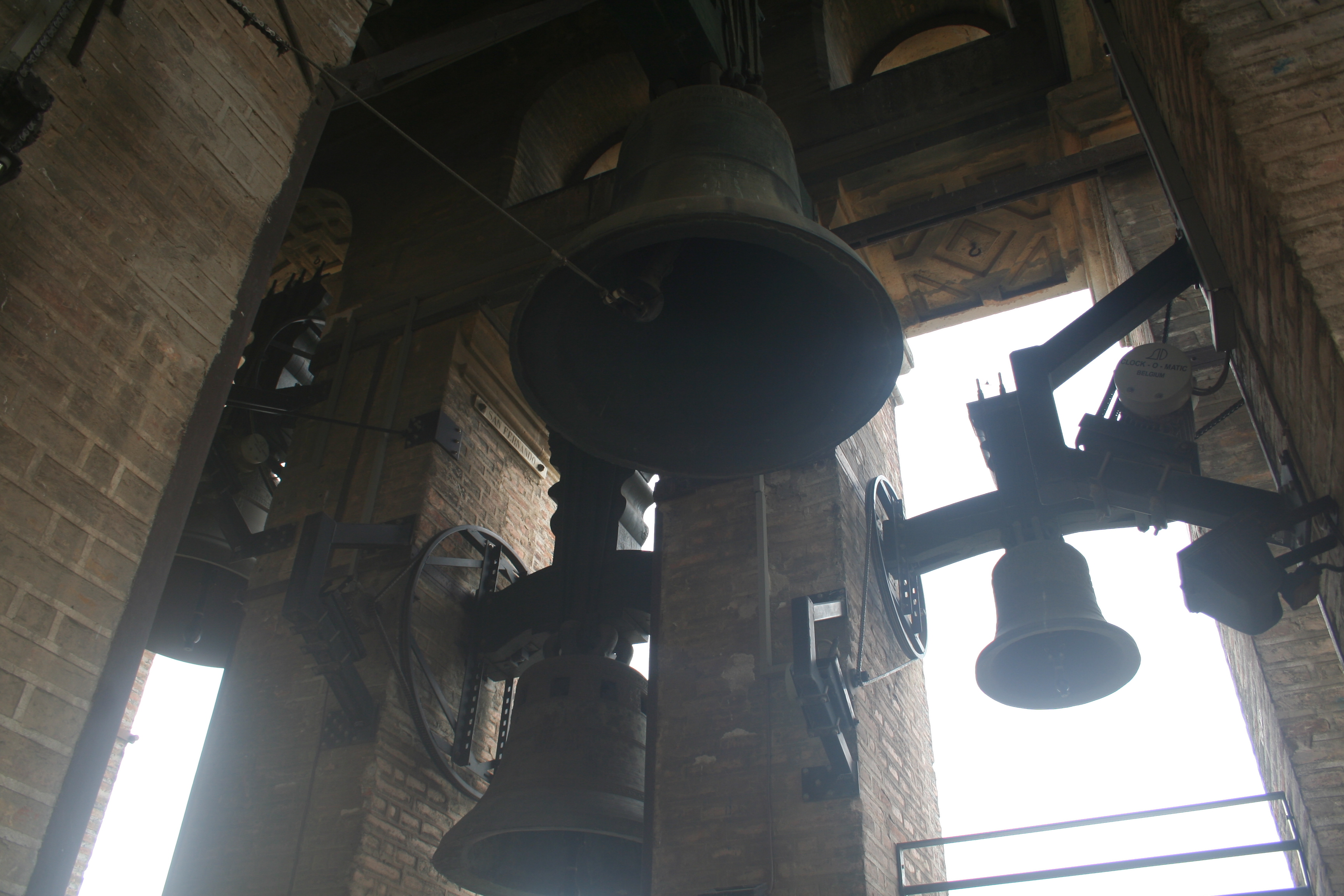
We spent an hour and a half in the Alcazar and would have stayed longer had we not wanted to cross over to see the Cathedral.  Room after incredible room, garden after garden, pool after pool, all with elaborate tile work and fine marble carving, plaster work and filigree arches.  Not space enough here for all the amazing photographs.  We finally dragged ourselves out of the Alcazar, (I could easily live there,) and crossed the square to the Seville Cathedral.  A good-sized crowd had already gathered,but we were able to gain entry in only a few minutes.  Among other prized antiquities, the Cathedral houses the tomb of Christopher Columbus, although officials in Santo Domingo contest that assertion.  They claim Columbus is buried on their island.  Anyway, there is a tomb of Columbus in the Cathedral, whether or not Chris himself is buried there.  It is the largest Gothic Cathedral in the world and the third largest church.  Begun in 1402 and completed in 1506 the cathedral was built to demonstrate the wealth of Seville on the site of an old Moorish mosque.  Some of the columns and other elements of the mosque were incorporated into the construction of the church, most famously the Giralda, a minaret converted into a bell tower.  It is 105 meters tall and Seville’s most famous landmark.  A ramp of some 42 switch-backs takes you to the top, affording a wonderful view of the city.

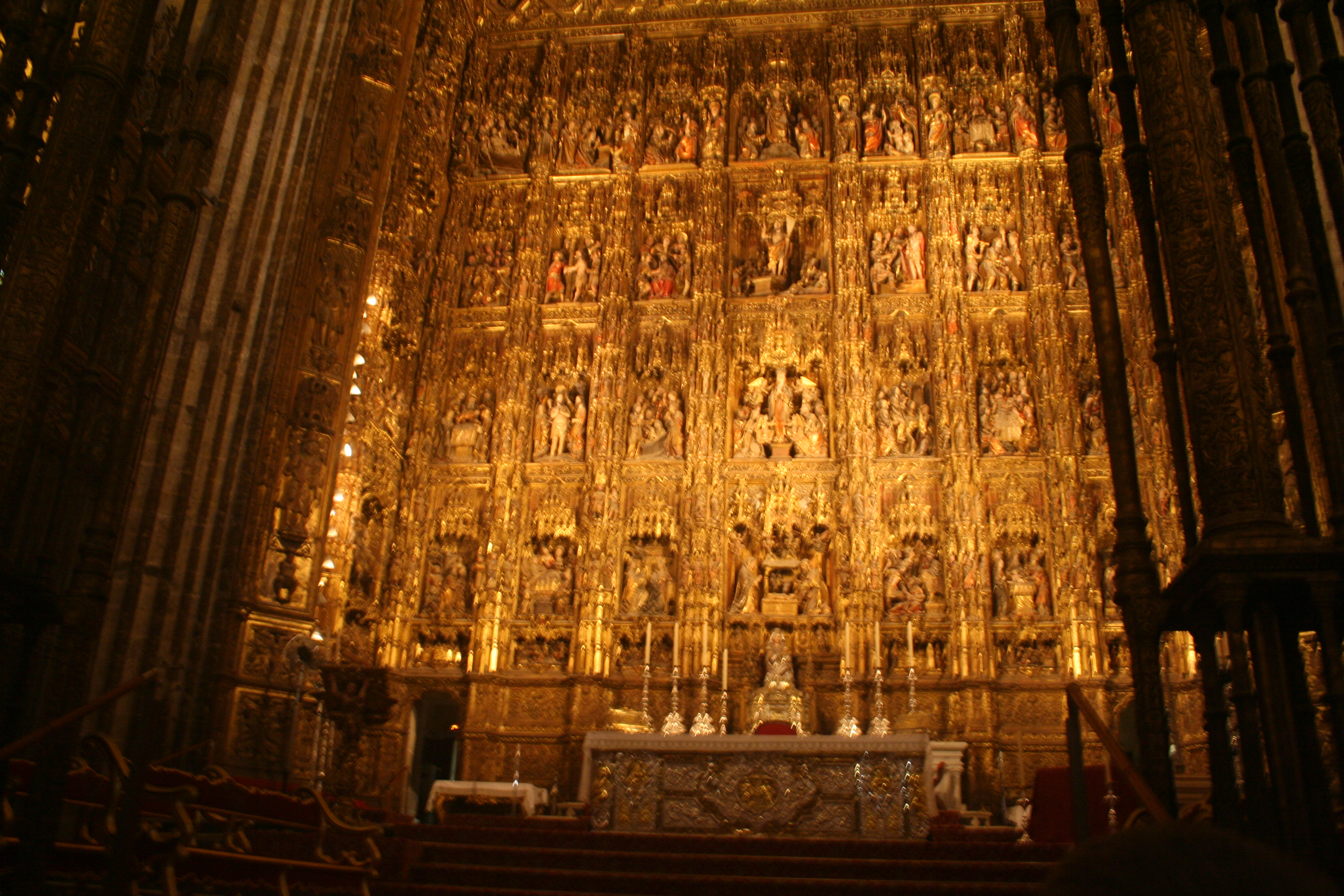
Inside, one is certainly struck by the opulence of Seville at the time of the construction, owing, in no small part, to the gold and silver being shipped back to Spain from the conquests in the New World. The central dome is lavishly decorated with gold and silver, and there are gold and silver crucifixes and statues throughout.  The amazing altarpiece was the lifetime work of a single craftsman, Pierre Dancart.  There are 80 small chapels dedicated to and depicting the lives of Saints around the inside perimeter, and it was said in 1896 that as many as 500 masses were said daily.  It is an awesome place, but feels more museum than church, and the opulence and grandeur of the relics (the chalices alone are priceless) leaves one, a Protestant, anyway, with an uncomfortable sense that things had gotten badly off track, theologically speaking, that the place was built on the backs of an enslaved and ultimately exterminated people, and that the Reformation, while still a work in progress, was one of man’s greatest achievements.

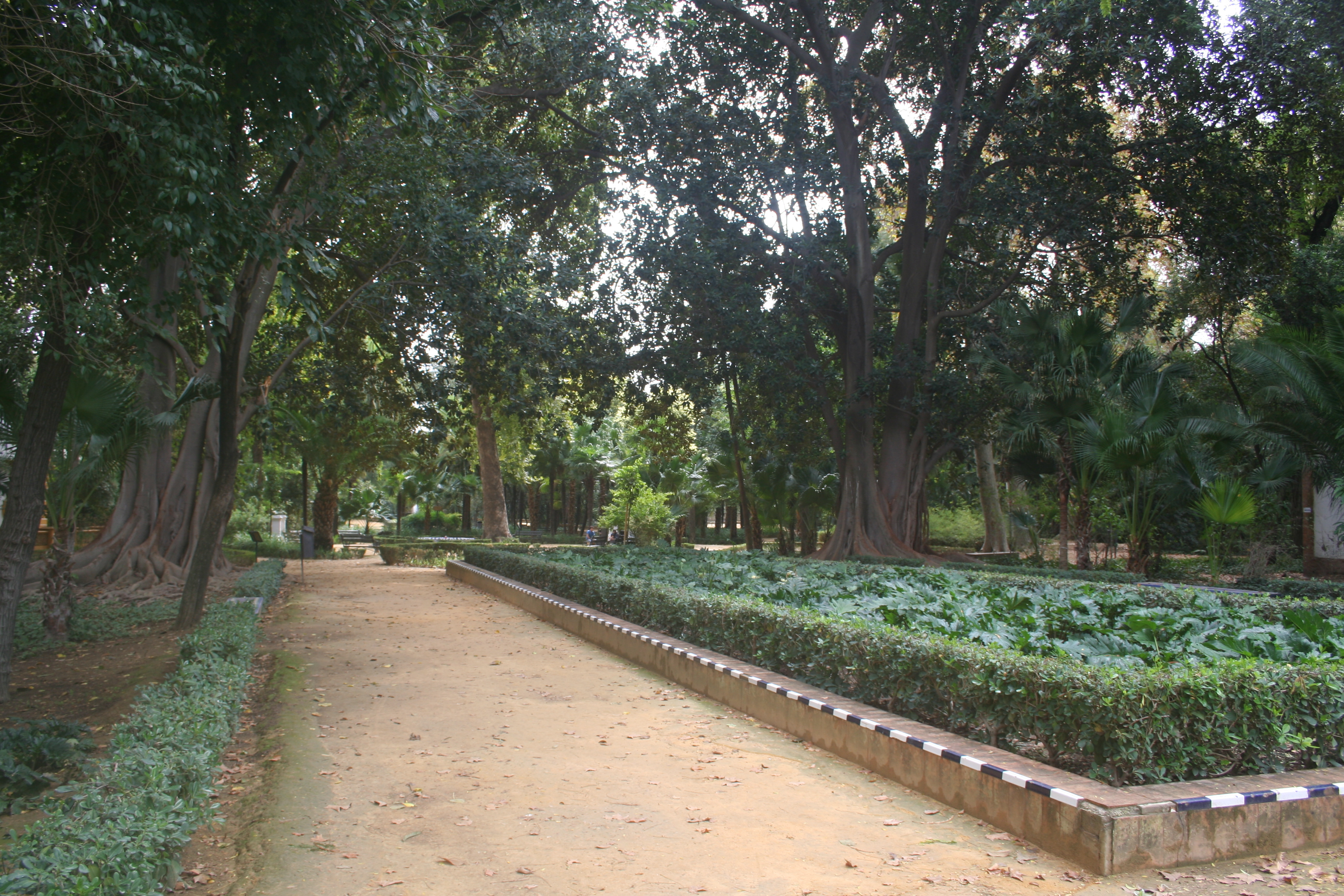
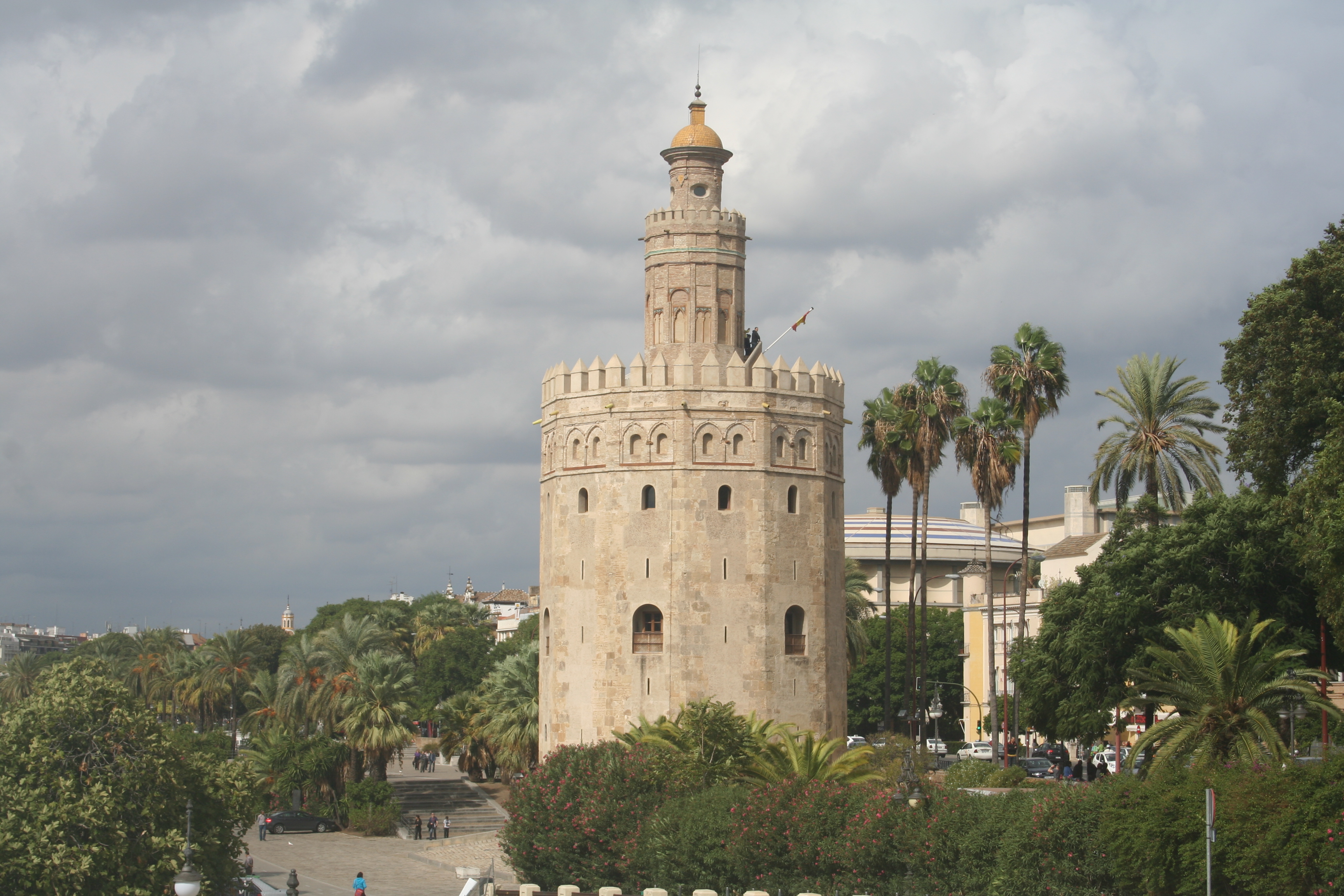
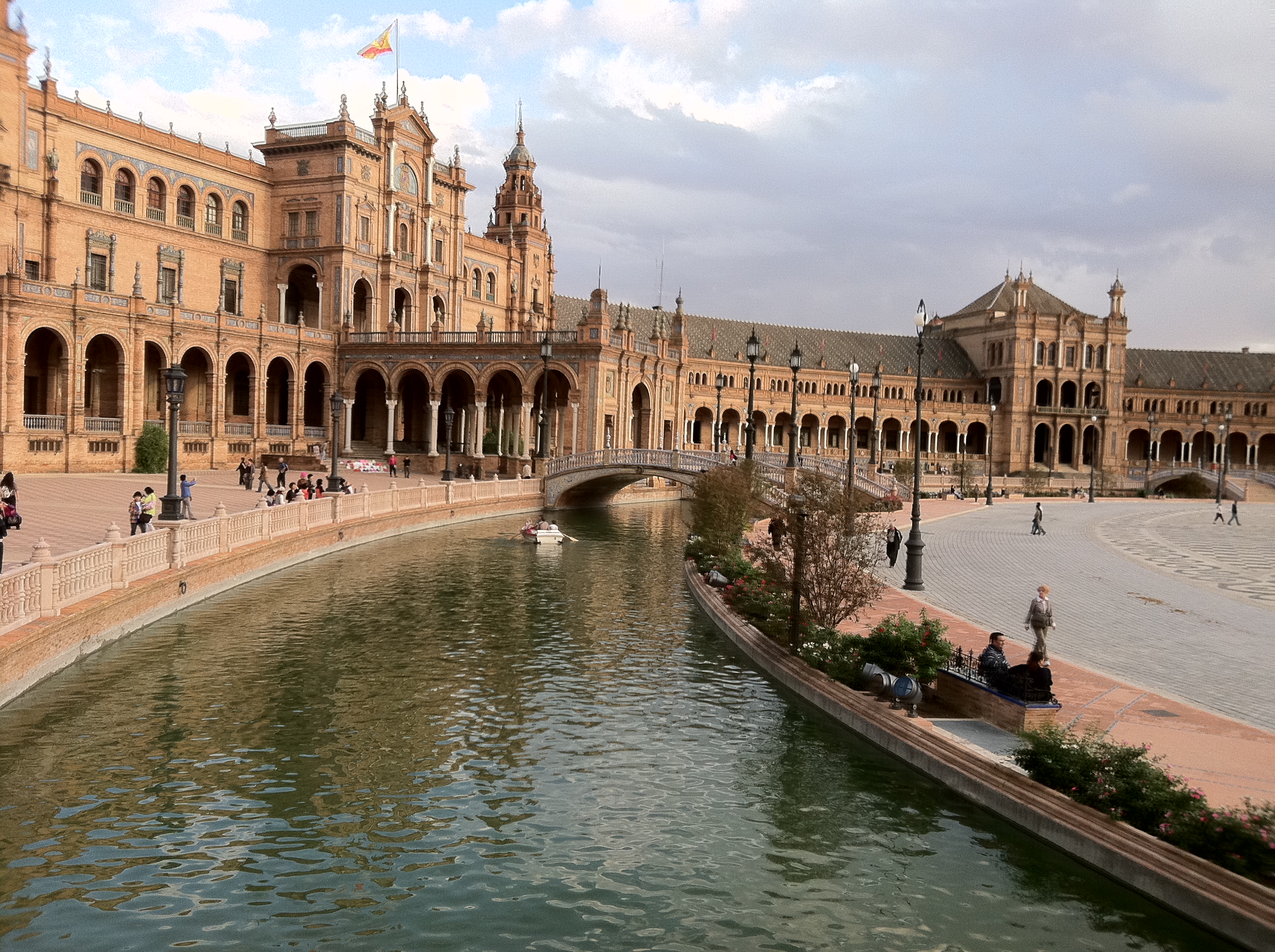
Leaving the cathedral, and with a good feel for where we were going we walked only a few minutes and found the Plaza de Espana, which we had visited briefly with Luis the night before.  It is another grand, spacious place, and we took a casual, relaxed tour of its beautiful structures and tile works.  Along the curved wall facing the vast open area are small alcoves depicting, in elaborate tile work, each of the Spanish provinces.  They are very beautiful and most photogenic.  Now a great place for a casual stroll, or to take a lunch, the plaza was built in 1928 for the 1929 Iberio-American Exposition, it is a combination of Art-Deco and “mock” Mudehar styles.  The buildings themselves now house government offices.  We continued out the open end of the plaza and into a beautiful park, part of the redevelopment of the entire south side of the city into park space and grand boulevards at the time of the exposition.  There are wide foot and bike paths, many trees, and a path for the horse-drawn carriages that carry tourists on extended tours of the old city.  Continuing through the park you come out on the busy boulevard bordering the river Guadalquivir, where you also find another famous landmark, the Golden Tower, a surviving part of an extensive wall and tower system built to fortify the city by the Moors in the 11th century.  We walked out onto one of the river bridges, then, using the cathedral tower as our guide, headed back up into the city to find our hotel.  We once again found the streets of Seville to be a bit challenging.  Several wrong turns ensued, but we could tell from the map and landmarks that we were getting close.  Luckily, a nice tapas bar appeared on our way on one of the narrow, twisting streets, which, by the way was heavily trafficked by both pedestrians and cars, and we enjoyed some fine chorizo tapas and an excellent draft at a sidewalk table, precariously close to the street.  Sufficiently fortified, we trudged on, got further lost, and stopped in a shop to ask directions.  “What would you like,” a kindly patron responded, “German or English?”  We settled for English, he gave us clear directions, and in a few minutes, we found ourselves in the square where our hotel was located.  We stopped in a grocery store next to the hotel and bought a bottle of Spanish red wine, then went to the room for a much-needed nap.

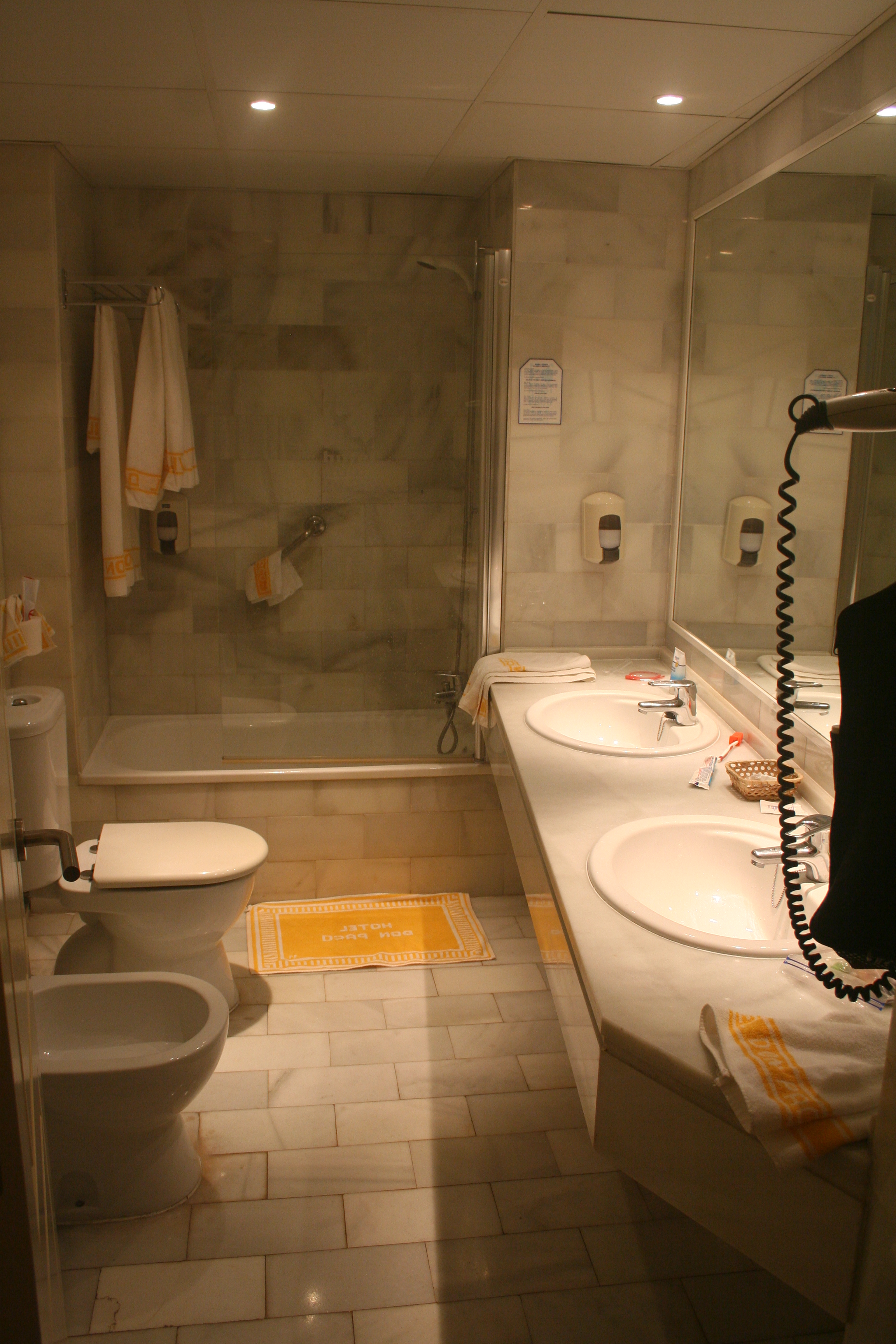
Haven’t said too much about the accommodations, but they were consistently excellent, although the showers weren’t always full enclosed, the soap seemed to get smaller with each stop, and they do not believe in wash cloths in Spain. Here’s a little peek at our bathroom in Seville, way too nice for us beach people.  And of course, there was the ubiquitous bidet, great for washing out socks and underwear.

Happy hour in the room with our very excellent wine, then down to dinner, a badly prepared amalgamation of American-style food, then up to the roof with some of our traveling companions to finish the wine.  The bar was closed, we sat and talked for a time in the dark, and then were told to vacate the roof by hotel staff.  Bummer.  But a wonderful stay in Seville.  Off to Cordoba, La Mancha, and Madrid tomorrow.

Posted in Uncategorized | Leave a comment

Day 6: The Road to Seville

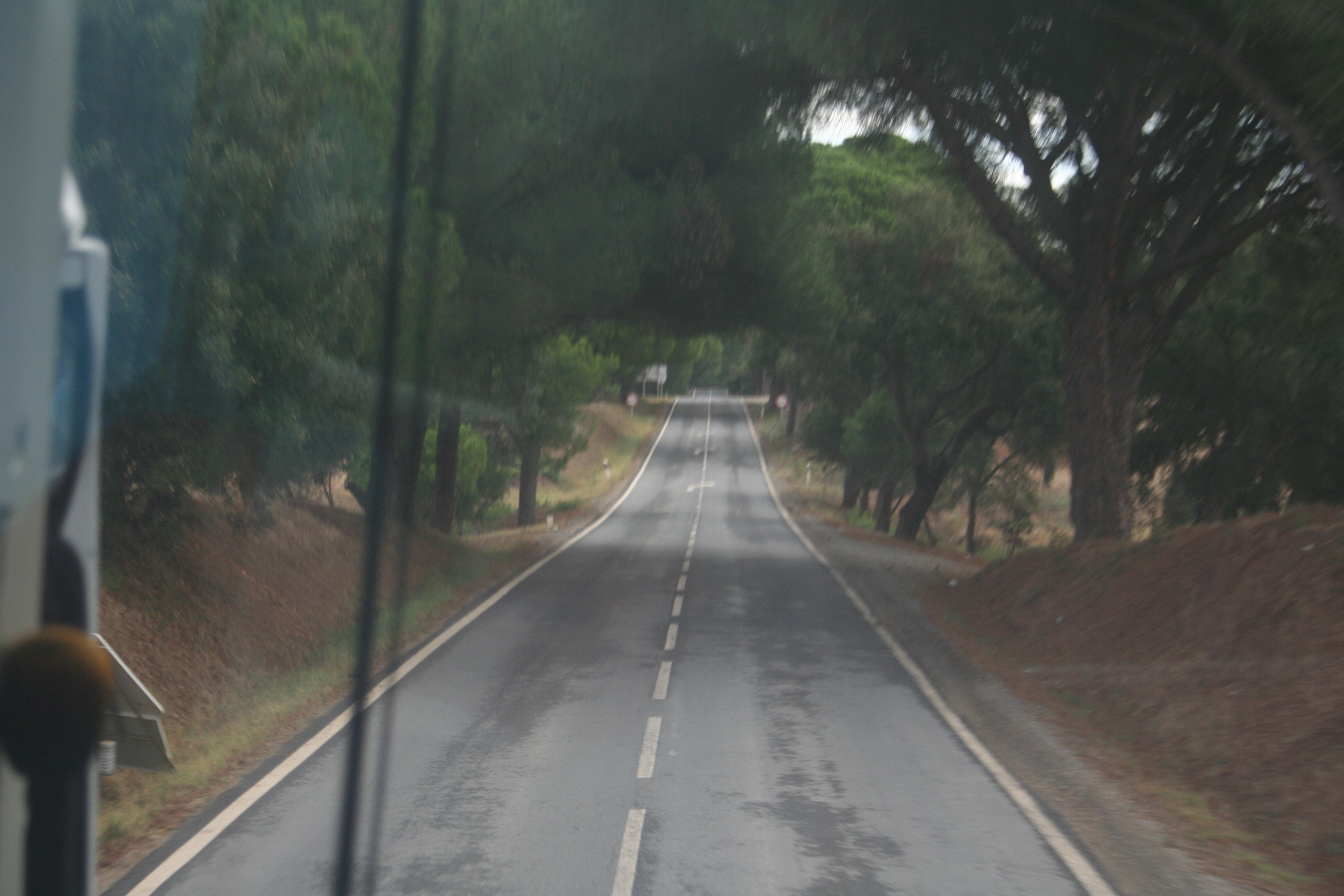
Following the seat rotation system, we had the front seat, right behind our driver Sergio, and just across the aisle from Luis, for the whole day from Lisbon to Seville.  Great views of the countryside, with Sergio taking us off the Freeways to what is called the “National Roads,” two-laners through real country.  Many large olive groves, black bull ranches, and quaint villages.

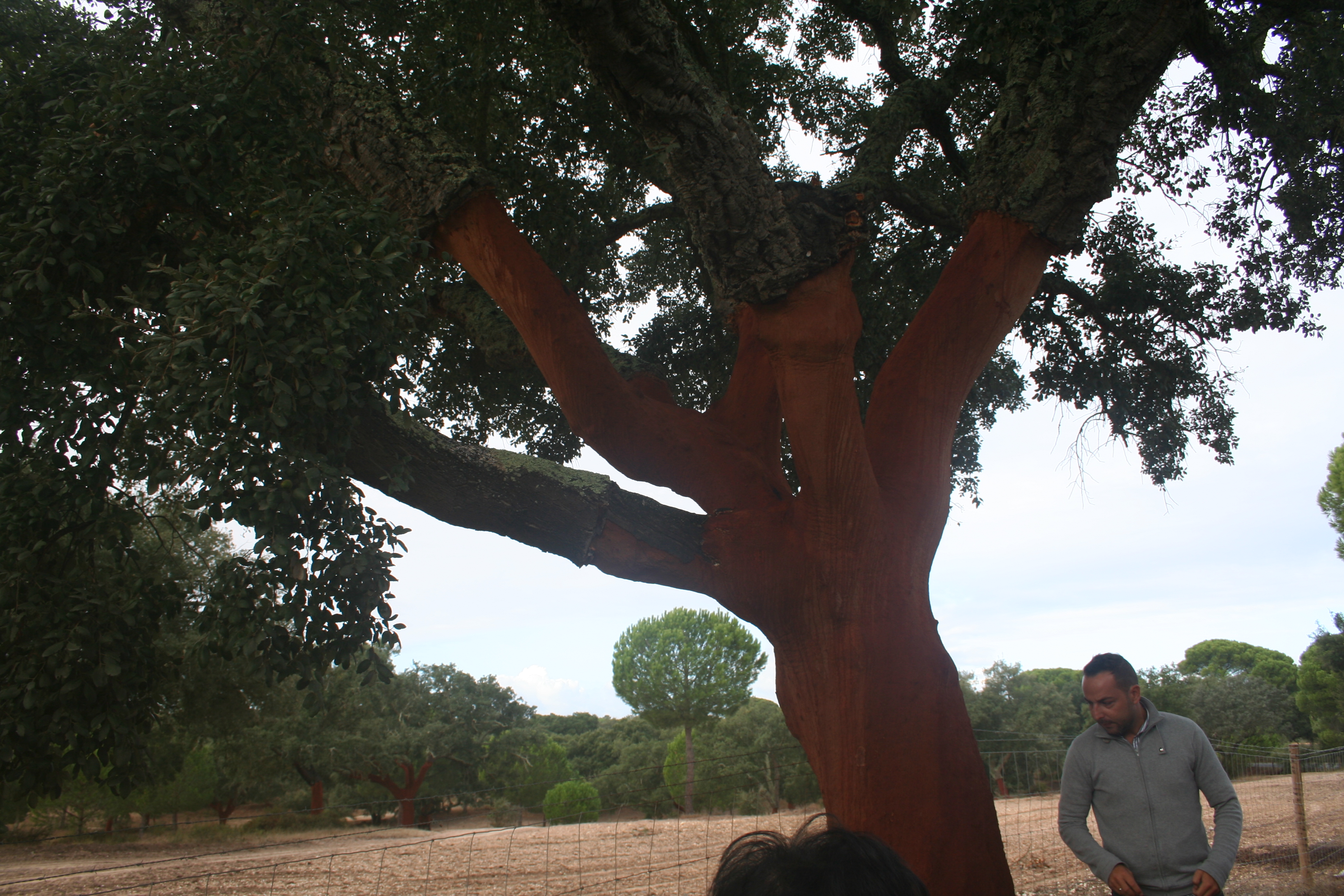
Also many cork trees.  In the midst of a large grove, on a skinny two-lane road not far from the Spanish border, we pulled over on the shoulder, got out, and Luis delivered our cork lecture, close-up and hands-on. Only the bark is harvested, and begins only after the tree is 16 years old.  Trunks and the straight sections of lower limbs are stripped, the tree is marked with the date of harvest, and the tree allowed to grow back its bark for 8 years before harvesting again.  They are a lovely, gnarly tree, similar to oaks, with deep green leaves, and an acorn-like seed, that also serves a very special purpose, which Luis described once we were back on the bus.  As we already suspected, and would have confirmed quite concretely back in Madrid, the Spanish and Portuguese love their ham.  Driving by a pig farm, Luis quipped, “You see pigs; I see ham.”  He explained that there are three kinds of ham in Spain, Regular Everyday, Mid-Grade, and High-Grade.  Regular ham comes from pigs fed only grain; Mid-Grade from pigs fed a combination of grain and cork tree acorns; and High-Grade ham comes from pigs fed only cork acorns.  It’s serious business, and all tied in together.  More on ham when we get back to Madrid.

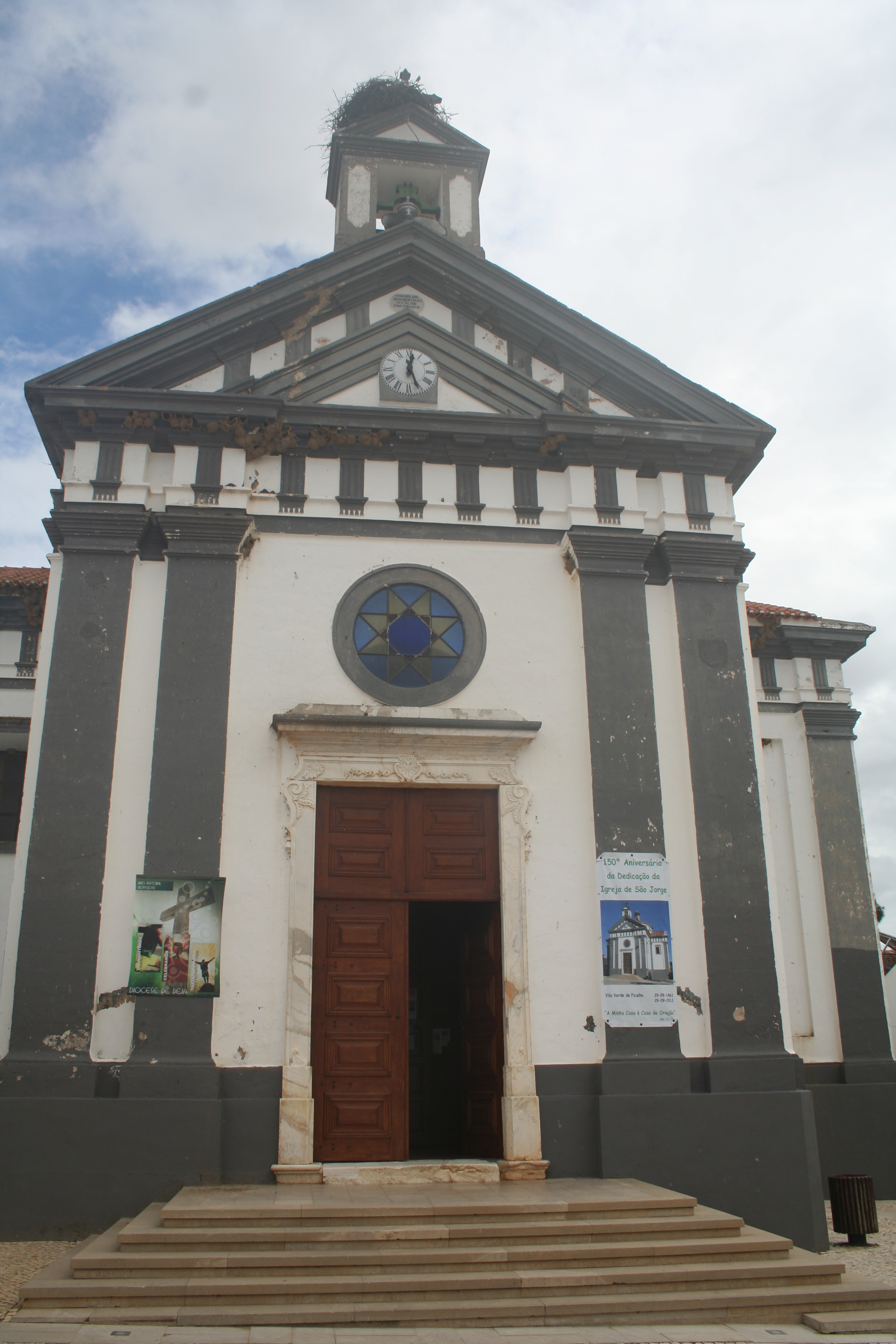
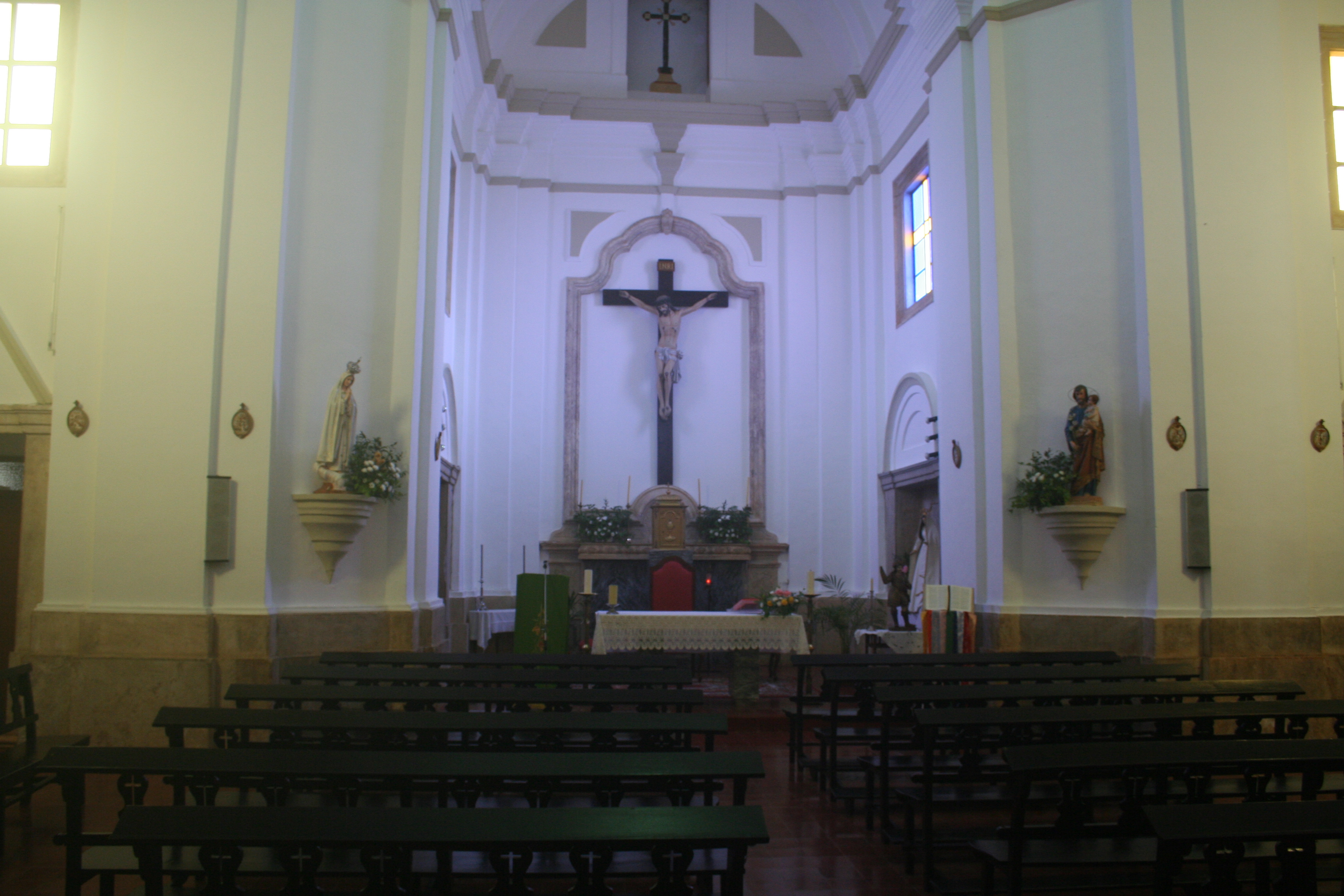
A few miles from the Spanish border we stopped in a beautiful little village for lunch.  We had our breakfast provided sandwiches at a table outside, then took a walk through the village.  Outside a small church with a placard near its door announcing its 150th anniversary, I was approached by an old woman crossing the square who motioned us to go inside.  “Muy Bonito,” she repeated several times.  “Muy Bonito.”  It was.  I thought it the nicest of all the churches and cathedrals we visited, just an elegant, simple, village church serving its purpose.  On leaving, we noticed a stork nest atop the steeple, a sign of good luck.  We walked slowly back to the bus through this sweet village, hearing friendly calls back and forth between the residents, and watched a man drive a horse cart to his front door. It felt like a happy place, and we wondered aloud would it would be like to live there.

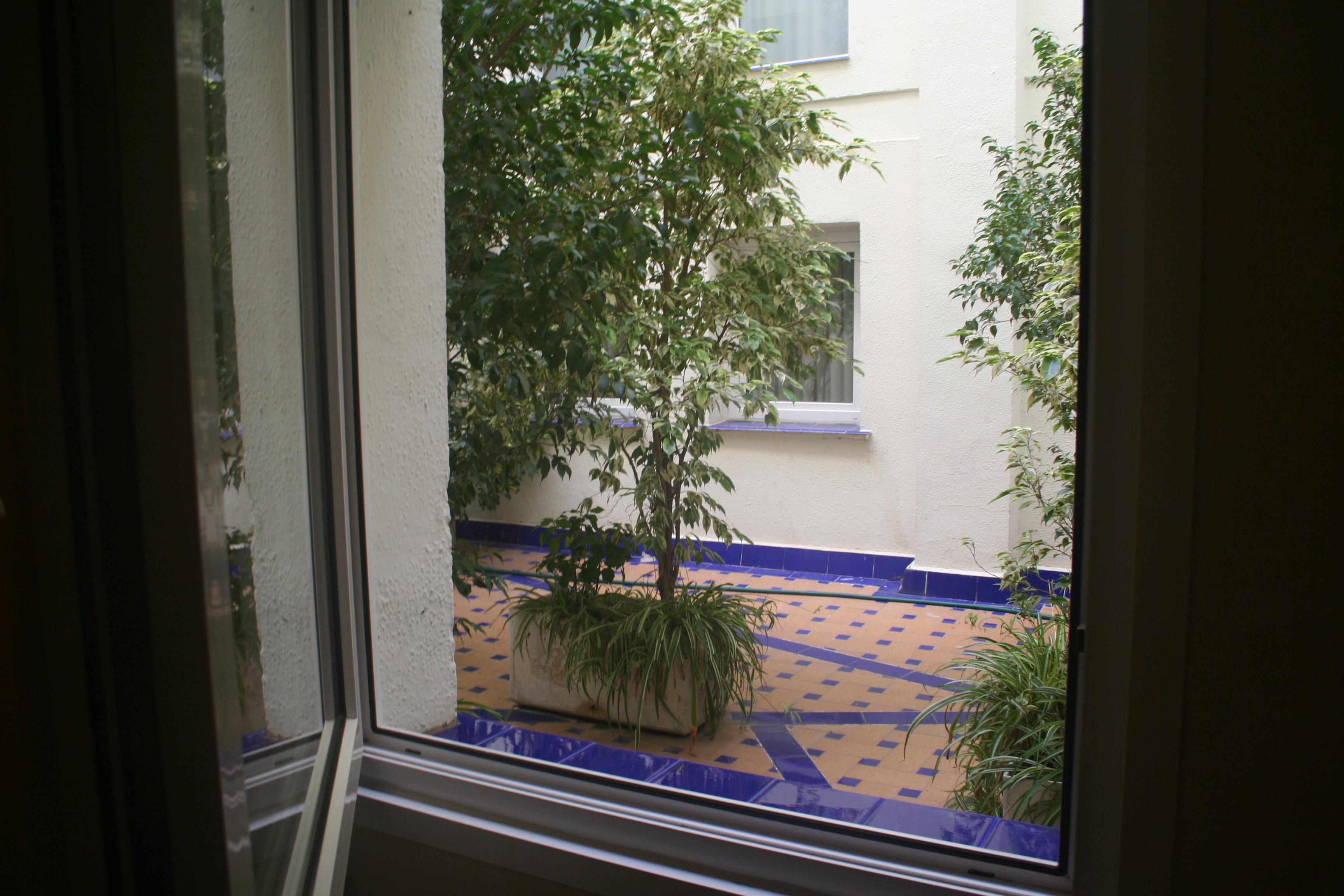
On to Seville, and into another great hotel, the Don Paco, near the old city center.  Lovely ground floor room with window opening to lush patio.  There was a bar, outdoor seating, and a pool on the roof, which also afforded a three-sixty view of Seville.  Just time for a shower and dressing for big dinner out, which Luis had been talking about for days.  We loaded the bus, and he took us on a brief driving tour of some of the important sights of Seville.  We stopped before a large but rather unimposing building not far from the Plaza Mayor, and Luis said he had a surprise, to follow him.  We traipsed behind through the doors, passed through a nondescript alcove, and then out onto acres of open park, with lakes, streams, bridges, and impeccable tile work throughout.  The Plaza de Espana, and one of Seville’s main gathering places.  A simply extraordinary place, and far too vast to really see ibn the time we had that evening.  We made plans to return the next day.  Off we went then, and were discharged from the bus in front of Seville’s old bull ring.  A quick look around there, then on to our restaurant, one of Seville’s best Flamenco venues.  Like our Fado dinner in Portugal, we were seated at long tables, with other tour groups, and treated to a fabulous dinner of paella, cod, pork, vegetables, bread, and wine.  The show began midway through the meal, and was fabulous.  Teams of dancers took the stage one after another, then solo performers, accompanied by bass, drums, and Spanish guitar.  Lots of castanets, foot stomping, skirt swirling, and shouts of “Ole!”  Also much wine imbibed again, including exceptional sangria near the end of the show.  Once again, the ride back to the hotel was spirited, with some of the nurses (and Luis) dancing in the aisles.  A bunch of us took to the roof deck with leftover wine we were told to take from the dinner, and a good time was had by all overlooking the night lights of old Seville.  We are striking out on our own tomorrow to explore this wonderful city.

Posted in Uncategorized | Leave a comment

Day 5: Lisbon, Cascais, Sintra

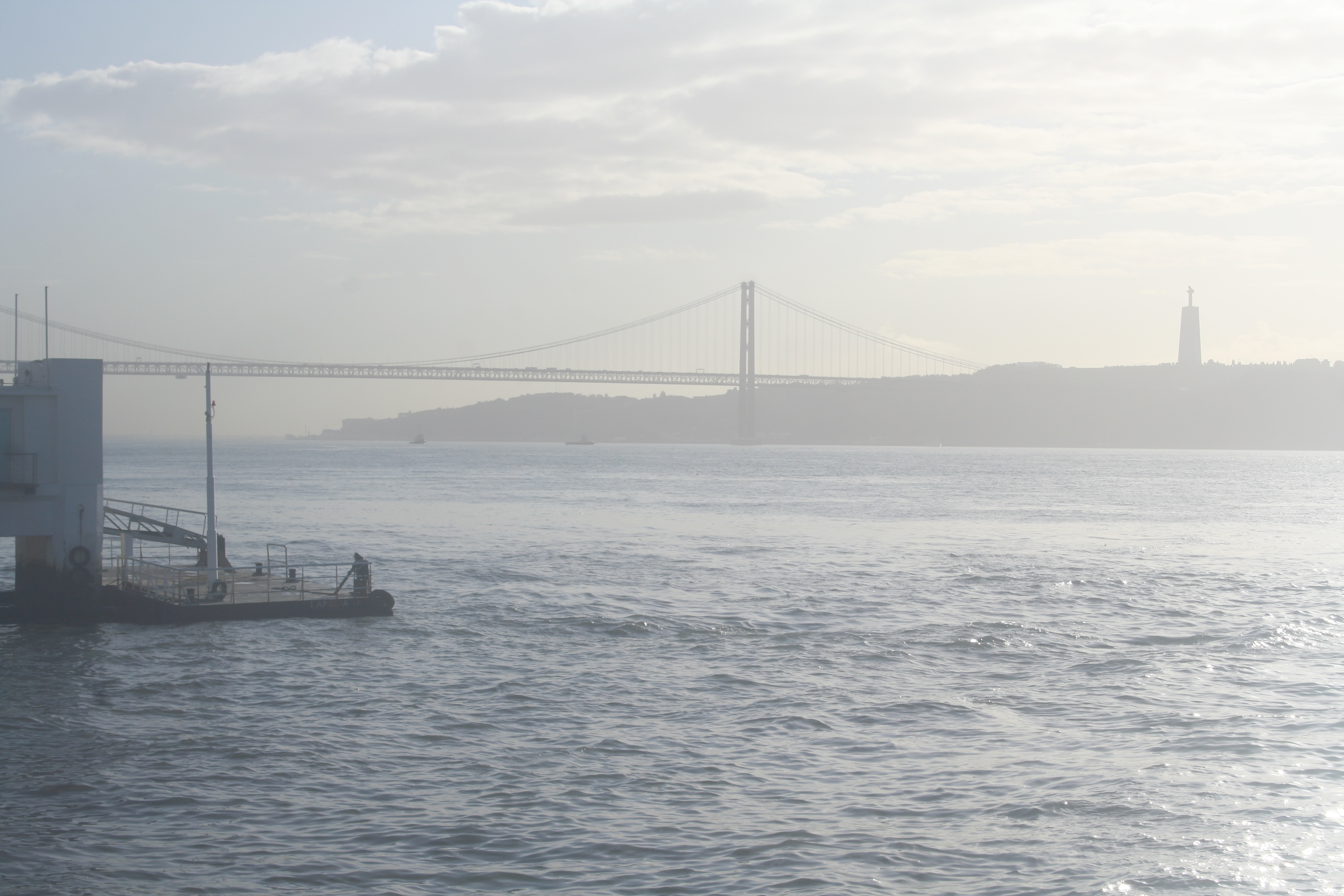
Excursion day with local Lisbon guide, Marina.  Luis took the day off.  We began down on the waterfront, the banks of the river Tagus, where it empties into the Atlantic.  The “April 25th Bridge” crosses the river near the mouth, connecting Lisbon with Almada on the south bank.  The bridge is a smaller replica of the Golden Gate, but was constructed by the company that built the Oakland-Bay bridge, not the Golden Gate.  Like the Bay bridge it has two decks.  Built in 1966, it was renamed in 1974 to commemorate the day the revolution overthrowing dictator Antonio Salazar began.  Nearby was Belem Tower, a fortified structure at water’s edge dating from the early 16th century, which was part of the early defense system for Lisbon.  It was apparently originally situated in the water, but a devastating earthquake in 1755 changed the geography of the waterfront, along with much of Lisbon, and now the tower sits on the bank.  Much to see on the waterfront, including this beautiful monument to Henry the Navigator, (1394-1460) one of Portugal’s most famous heroes, who ushered in the great era of Portuguese rule of the seas.  Henry was the third child of King John the First of Portugal, and as a young man fought with his father and brothers to expel Barbary pirates from the northern coast of Africa, leading to further exploration and development of trade on the west African coast.  Henry was responsible for redesigning the heavy slow sailing vessels of the day to the lighter, faster, caravel, which led to greater expansion.  In 1420 Henry gained appointment as head of the very wealthy Order of Christ, the Portuguese successor to the Crusades Knights Templar, a position he would hold the rest of his life, which would fund his ambitious plans.  Henry sponsored many expeditions of commerce and exploration, including slave trade.  A lifelong bachelor, he was believed by his contemporaries to be entirely celibate, but recent historians indicate Henry may have had other inclinations.  Not that there’s anything wrong with that.

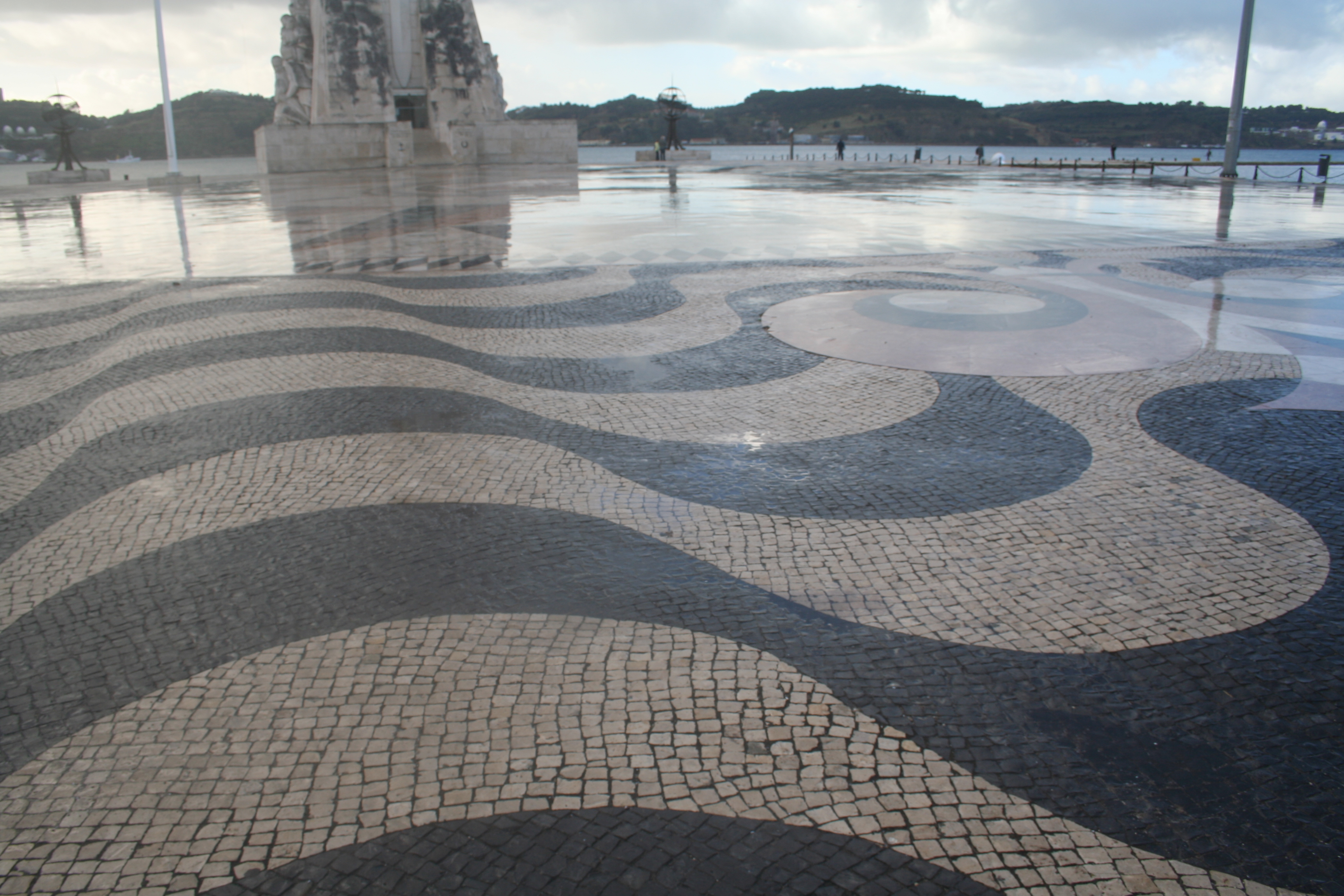
Evident in the sidewalks and open spaces on the waterfront, and indeed throughout Lisbon, were these wonderful tile patterns.  They are literally everywhere and, according to Luis, a matter of national pride.  They have existed for centuries, and when they break up they are carefully restored.  We saw patterns like this, of various tiles and stone, everywhere we went in Portugal, from city center to tiny villages, some, like the tiles we saw in 700 year old walls, quite psychedelic in design.

The St. Jerome Monastery, an enormous structure near the waterfront and a Lisbon landmark.  Begun By Henry the Navigator in 1459, the existing structure was started in 1495 and took a hundred years to complete. It no longer houses monks, is home to the national Maritime Museum, the Archeological Museum, and some government offices.  Being Monday it was closed for tours, but even from afar we could tell something was going on.  There was a large contingent of mounted Government Guard outside.  Our intrepid guide, Marina, led us closer for a look in intermittent showers.  She suspected some foreign dignitary was coming to present credentials, and that proved to be the case.  We didn’t see who it was, but we did snap some photos of these snappy dudes.

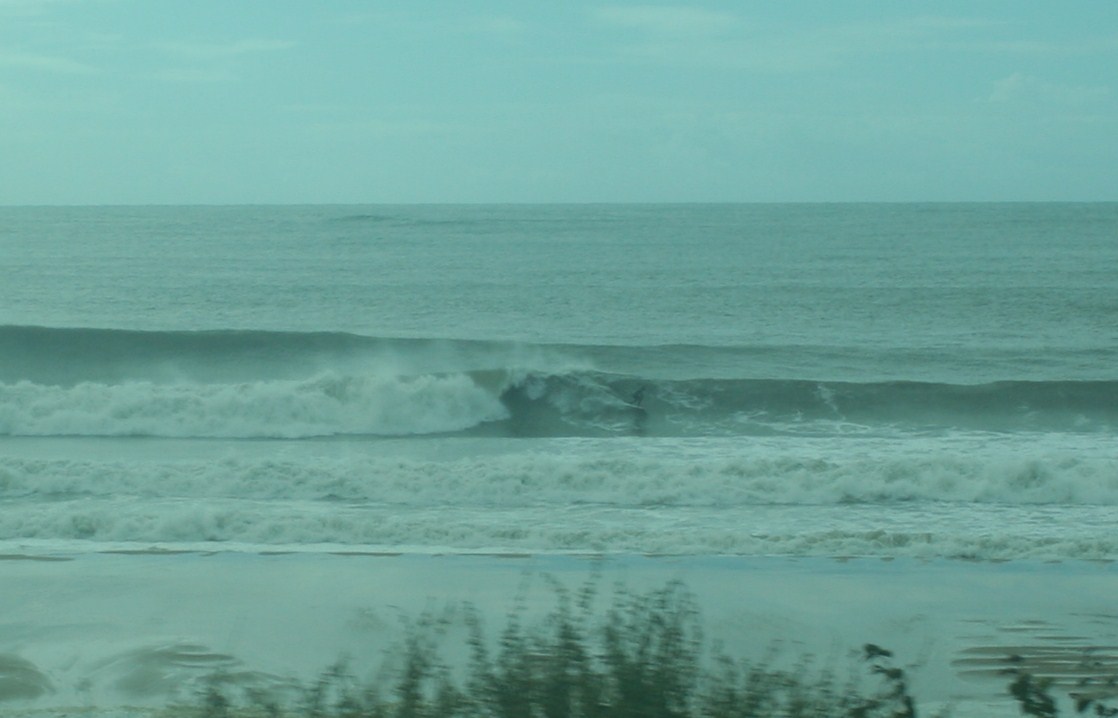
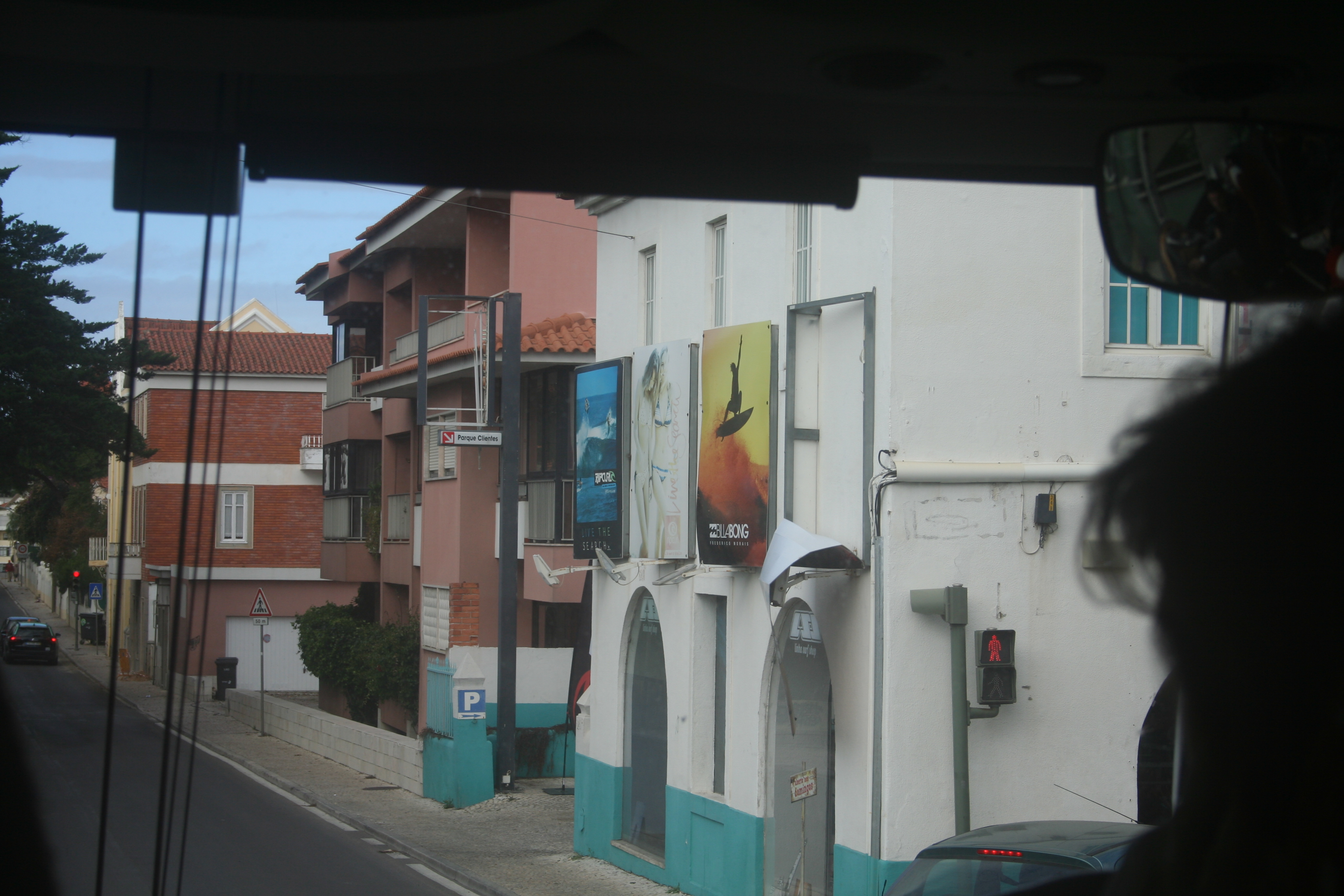
Back on the bus then for a scoot down the coast, the Portuguese Rivera, to Estoril and Cascais.  As we drove along the Atlantic we could see a good south swell was pumping in, cleaned by light off-shore winds, and a good number of surfers were out, charging a big beach break.  Further evidence of a strong Portuguese surf community was this quaint and colorful surf shop outside Estoril. Very good to see.  Estoril has long been an upscale coastal getaway for the Portuguese, and during WWII, because of Portugal’s neutrality, it became the temporary home of many folks of royal lineage from throughout western and eastern Europe.  Many of the fine villas there are now occupied year-round.

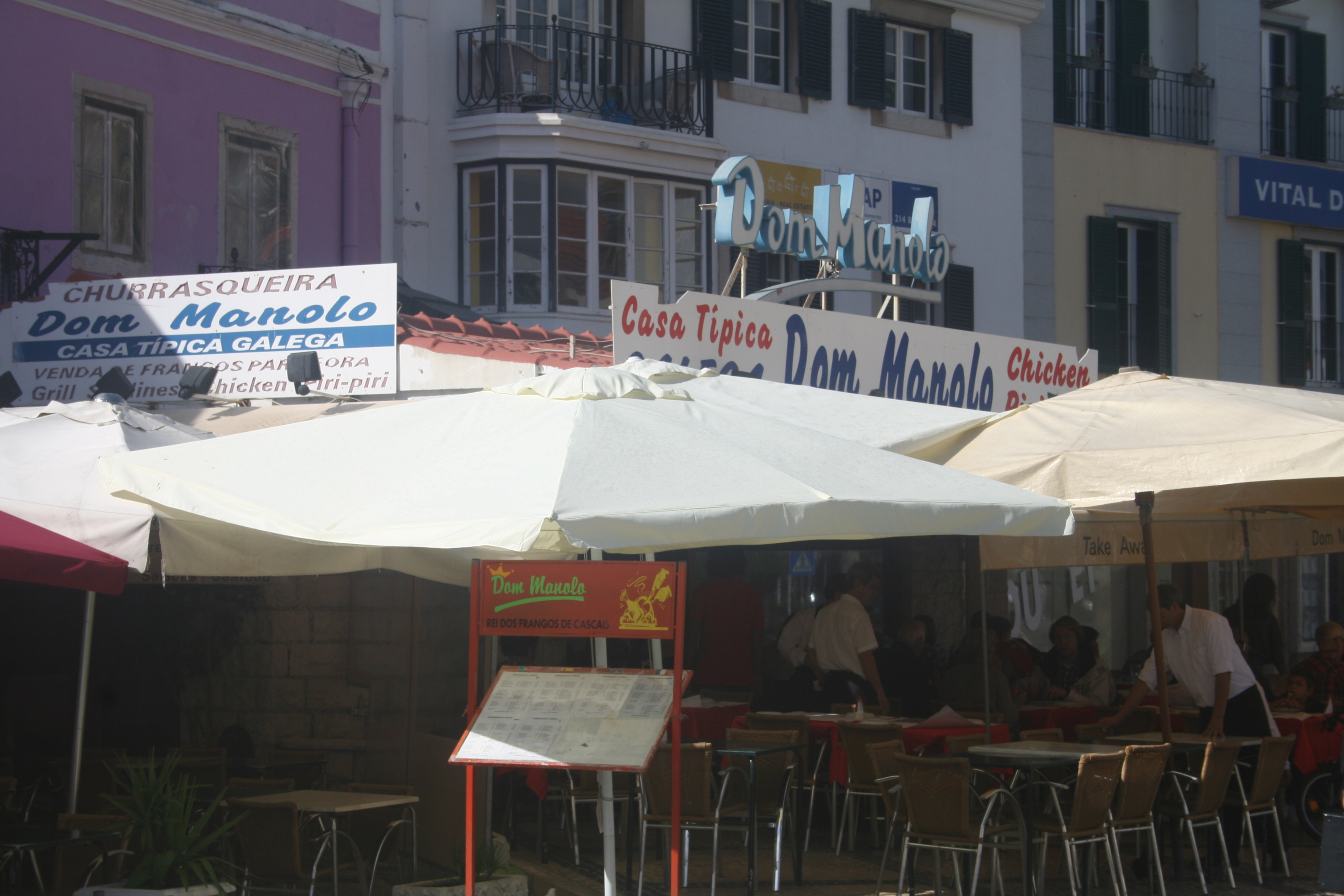
On to Cascais, a seaside fishing village, still functioning in that capacity, but also a tourist destination.  Even in the off and on rain we could see why.  It wraps around a neat little harbor, and there are hilly cobblestone streets lined with shops and restaurants.  Very colorful and picturesque.  It was lunch-time, so we quickly found a table outside at a place Marina had recommended, Dom Manolo, where the local favorite, grilled sardines was reported to be the best.  We were joined by the Hungarian graphic artist and the hipster.  Others from our tour found the spot as well, setting up at a big table near the sidewalk, but were driven inside by a sudden squall.  Further in under the awning we stayed dry, and thoroughly enjoyed the sardines, roast chicken, and Portuguese beer.  The sardines were surprisingly huge; covering a large plate.  We had expected the kind we get in the states, cigarette-sized, in a tin.  These were delicious, skin and all.

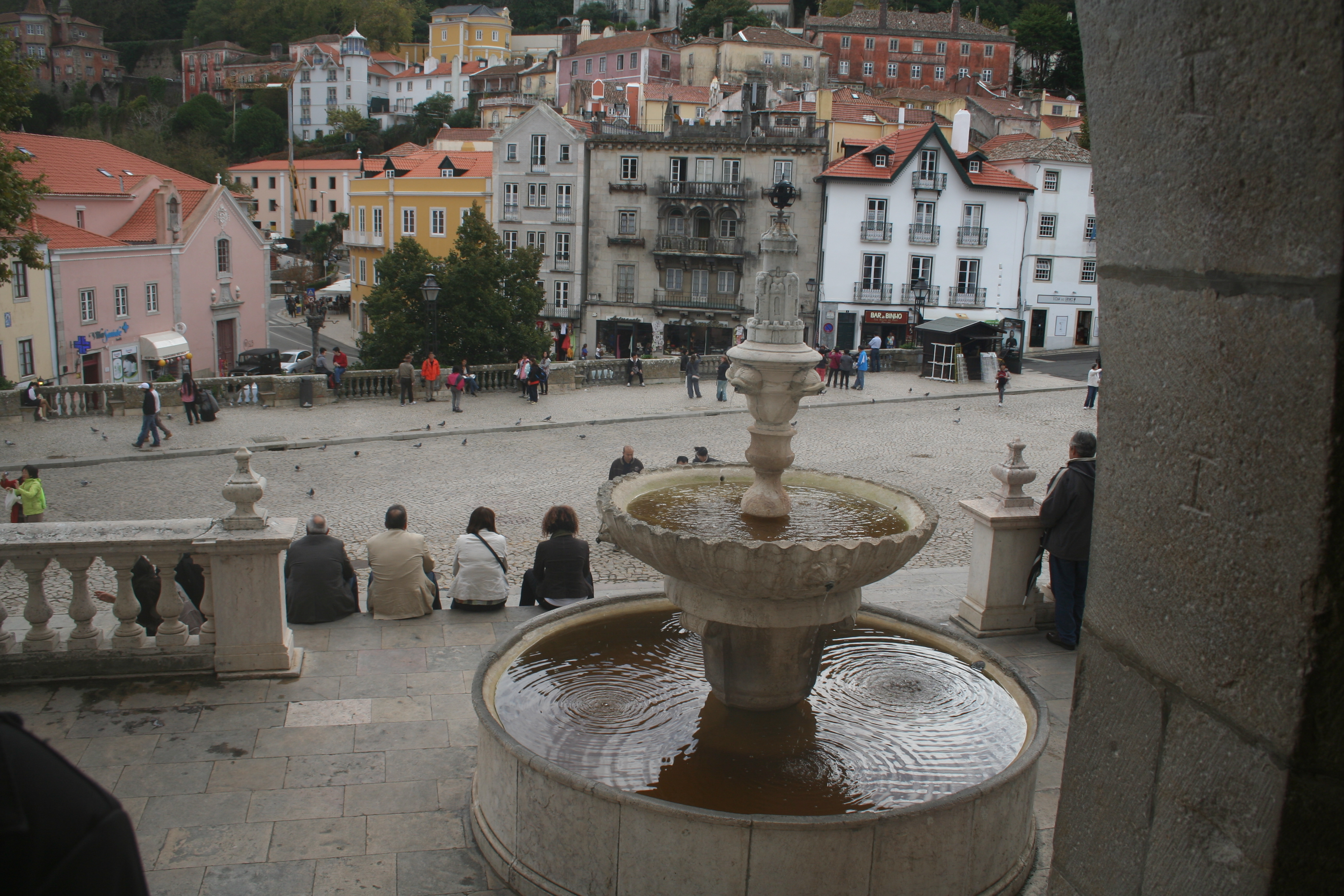
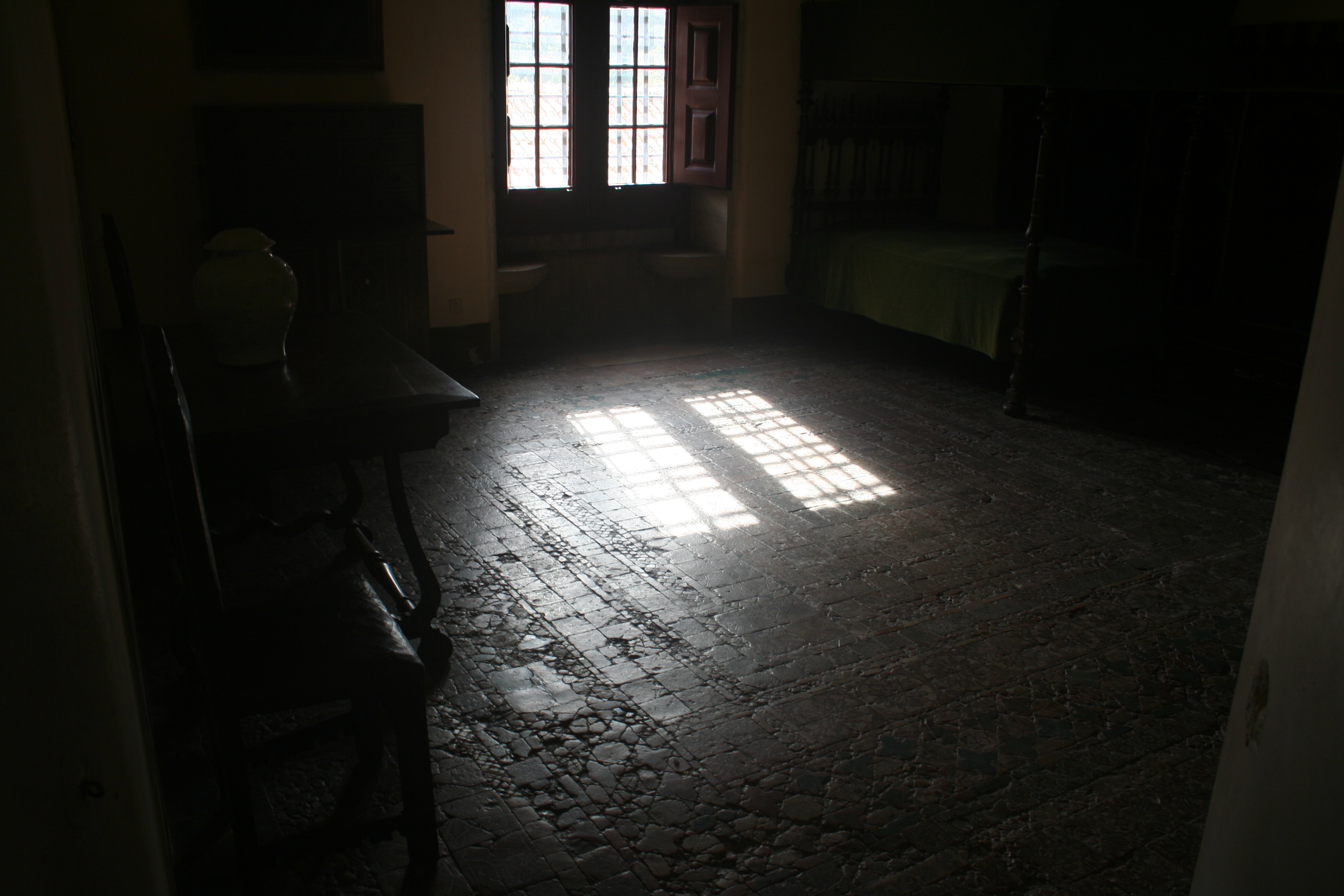
A leisurely walk through Cascais, and then we met Sergio and Marina and the rest of the gang and drove away from the coast and up into the hills to Sintra. We might as well have been transported to a medieval fantasy land. Sintra dates from the 8th century, and is home to no less than 6 castles, constructed in various periods.  The town itself is perched precariously on a steep hillside, (very reminiscent of Jerome, Arizona, travelers,) and is so photogenic, you hardly know where to begin.  Limited by time, we were only able to tour one of the castles, the Sintra National Palace, but it is the best preserved medieval palace in Portugal, and was continuously occupied from the 15th to the 19th centuries.  Its origins go back to Moorish occupation in the 10th century, with additions and revisions occurring primarily in the 15th and 16th centuries.  Nothing of the original Moorish construction remains but a section of floor in one of the rooms, but Moorish influence abounds throughout in the tile work and many arches.  It is a truly grand and beautiful place, rivaling Versailles, we thought.   Generations of Portuguese royalty lived here, and much of their furniture, art works, and accoutrements remain.  There are mullioned windows in the Moorish style; the Swan’s room, with swans painted on the ceiling; and the magpie room, with, you guessed it, magpies painted on the ceiling, and a story goes with that.  Seems King John I was caught kissing a lady in waiting by his wife, Queen Philippa. To put a stop to all the gossip the king had the room decorated with as many magpies as there were women in court.  Other ceilings, while perhaps not as revealing, were no less ornate and beautiful.

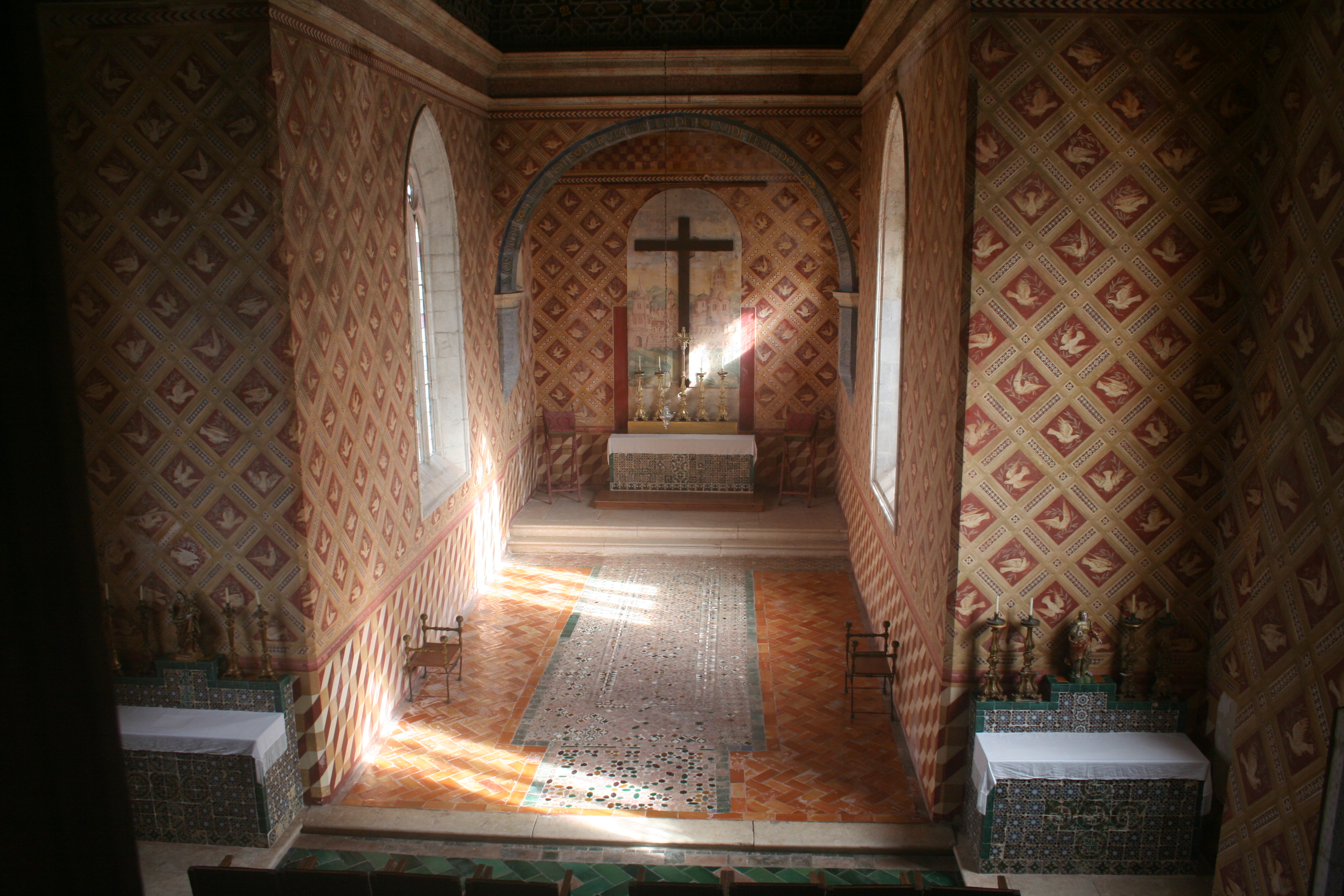
Perhaps most stunning was the oldest surviving section of the palace, the chapel, constructed in the early 14th century.  It is a simple, quietly reverential space.  Finishing the tour we went back out in the streets of Sintra for a little shopping before climbing back on the bus for the drive back into Lisbon and the Hotel Roma.  We had planned on taking a bus back downtown to see another old castle there, but we were too beat.  Instead, we took a walk near the hotel and had a small dinner of cheese, bread and fruit in a small park on narrow street of elegant apartments.  Back into Spain tomorrow.

Posted in Uncategorized | Leave a comment

Day 4: Fatima, Obidos, Lisbon

Before we hit the road again, a little word about breakfast.  As we mentioned earlier, this jaunt very quickly became as much about food as beautiful sights.  Several dinners were included in the package, but every day there was a breakfast buffet in each of the hotels.  Some were better than others; there was a consistent effort to undercook the scrambled eggs; but the breads, meats, fruits, and coffee were wonderful.  In fact, along about now, we, and many of our traveling companions, started taking a few of the rolls, hams, and cheeses, wrapping them in napkins, and whisking them out to have for lunch later.  Somewhere, I forget where, there were some food police who busted some girls from another group for stuffing their handbags, but we got away clean.  Don’t know the statute of limitations on this crime, but we’re laying low until the whole thing blows over.

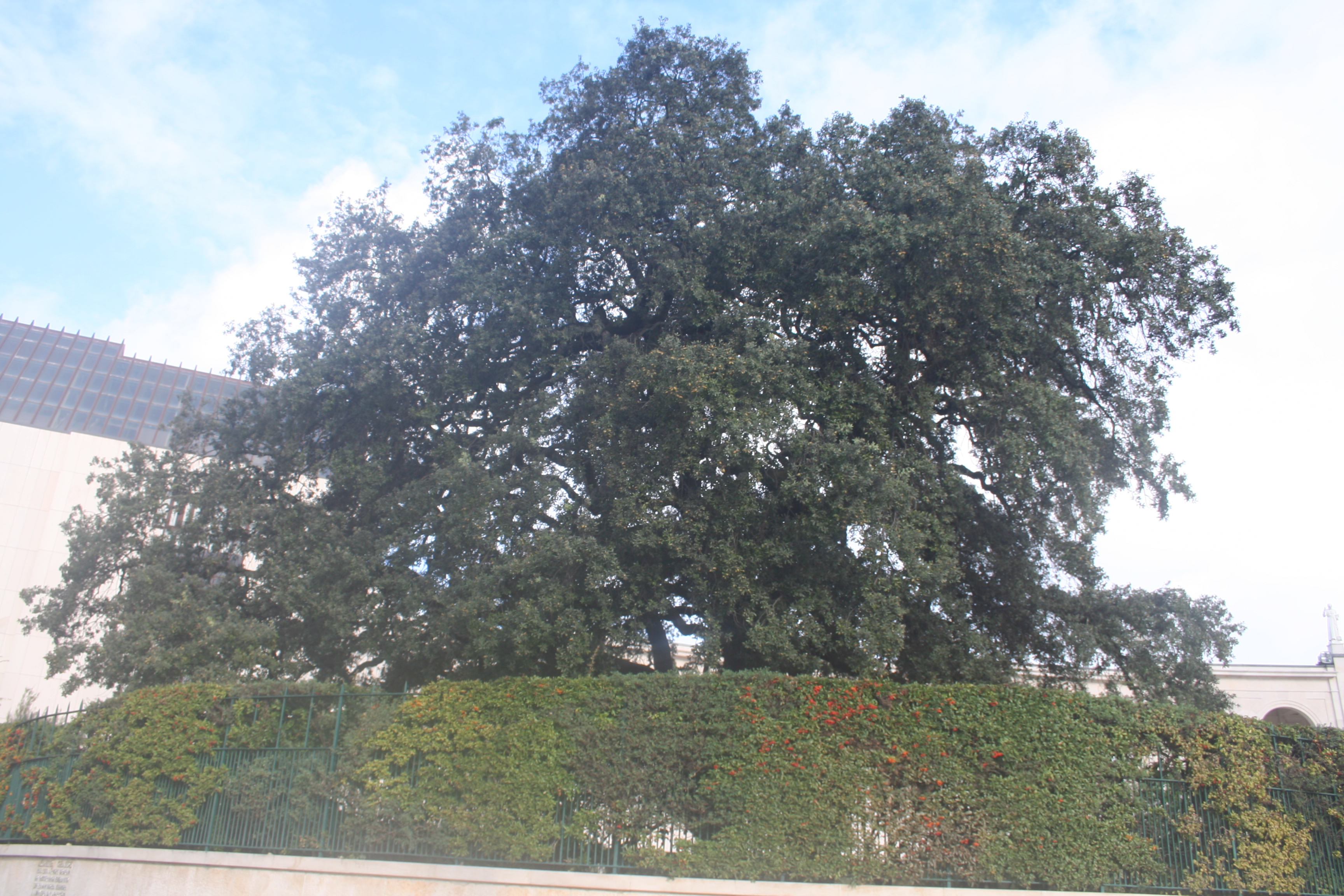
This was a long and full day.  On the bus at 0830 for the relatively short drive to Fatima, Luis filled us in on the history of this unique place on the way.  For those who aren’t familiar with the story, here’s a brief summation.  On the 13th of May, 1917, three Shepard children reported seeing an apparition of the Virgin Mary in the top of an oak tree outside the quiet little town of Fatima, Portugal.  This is a photo of what many in Fatima claim to be the original oak.  The vision appeared on the 13th of each month thereafter for six months.  Thousands of people flocked to Fatima in the months following the first apparition, and on October 13th, some 70,000 were in attendance for what was termed “The Miracle of the Sun,” in which, on an otherwise cloudy day, the sun shone brightly but could be looked upon, and seemed to change colors, among other things.  The children also said they had been told three secrets by the Virgin.  What followed is a somewhat long and amazing story.  Check it out.  Lucia Santos, who not surprisingly became a nun, was the last of the children to die, in 2005 at age 98.

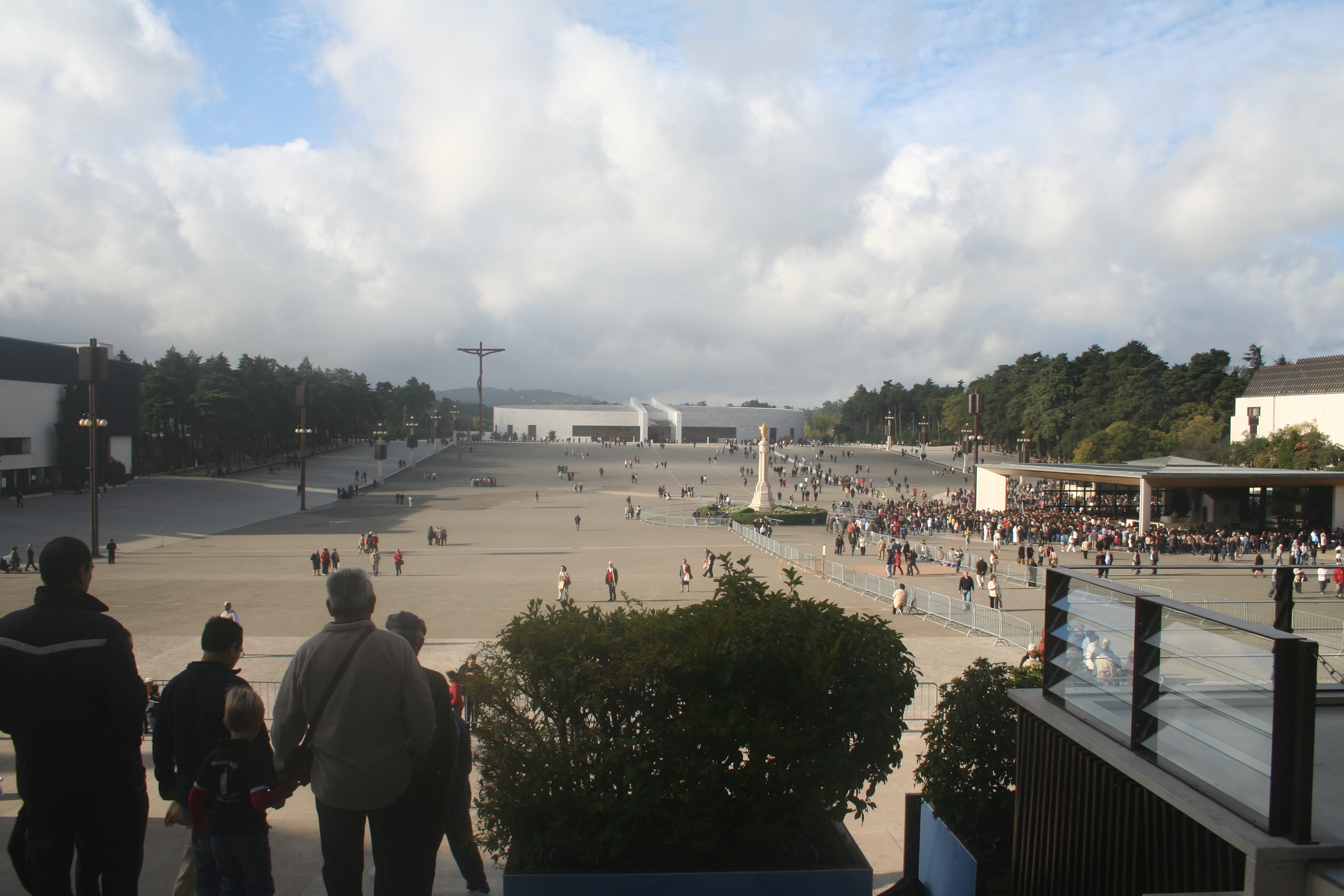
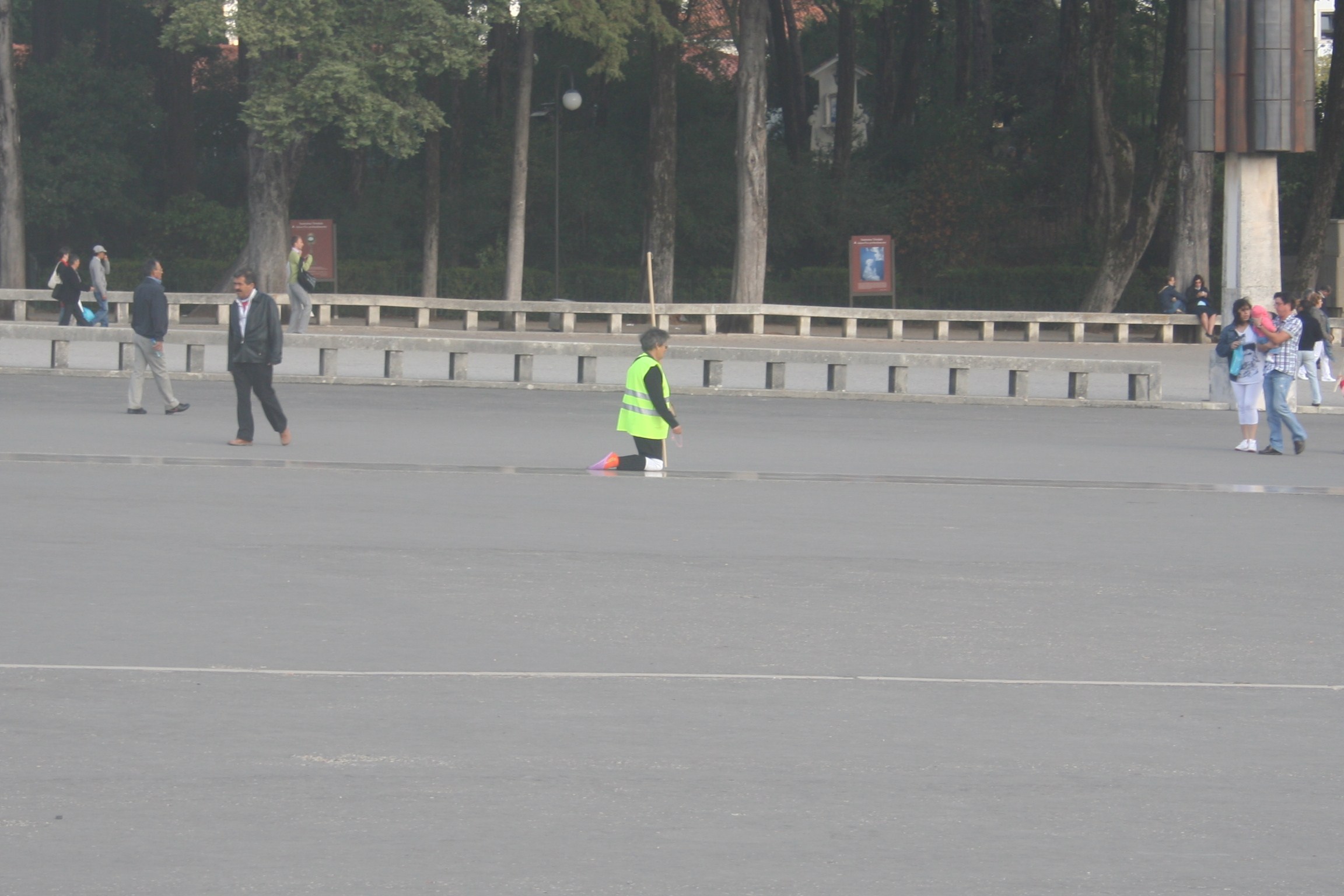
Fatima quickly became a destination of pilgrimage for believers all over the world, but especially the Portuguese faithful.  Various shrines and accommodations were built over the years, including a large Cathedral, and in the last few years, a modern mega-church building constructed at the opposite end of a giant square capable of holding more than a thousand worshipers.  We have been to St. Peter’s square at the Vatican in Rome, and we believe the square at Fatima is larger.  A tile path runs down the center of the square, which pilgrims traverse on their knees, some of whom have walked for hundreds of miles.  In May and October, the main significant times of pilgrimage, 500,000 people fill the square.

Surrounding the giant square are hundreds of small shops selling religious trinkets, and in those closest to the square you find candles used to offer prayers.  Most are normal tapers, though they may reach lengths of six feet, but there are also candles which almost defy description.  These can be found in the shape of just about any body part you can imagine– legs, arms, hearts, stomachs, livers, even whole small children– and are purchased by those with some affliction or other in those parts, which, after saying a prayer for a cure, are then tossed into a large fire burning at the edge of the square. The shops and scale of the place were uncomfortably crass to us, but seemed not to deter the masses, which is again, I suppose, a testament to the power of faith.  We found a nice cafe off the square and had a coffee and the national custard of Portugal, a Nate, which was quite delicious.

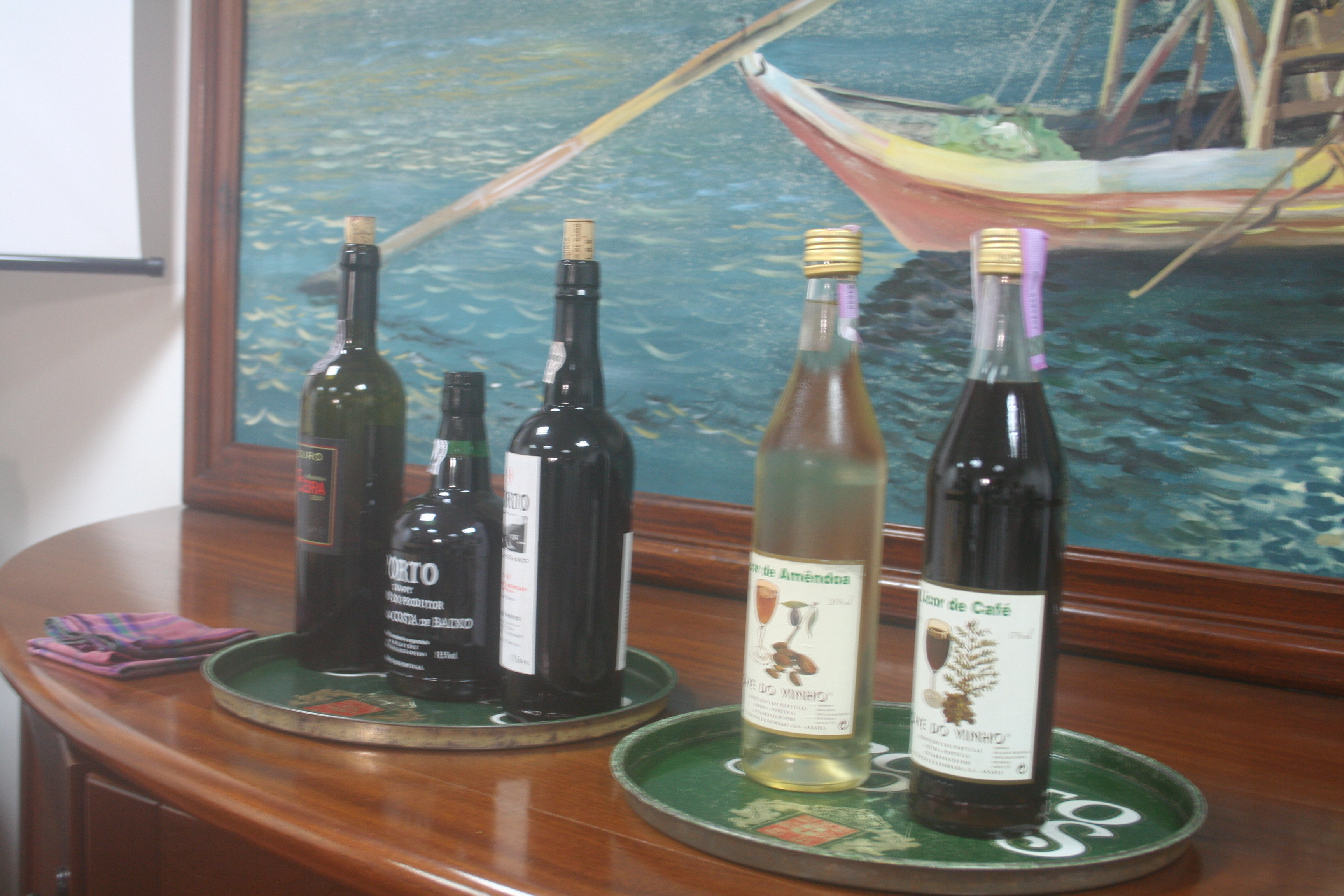
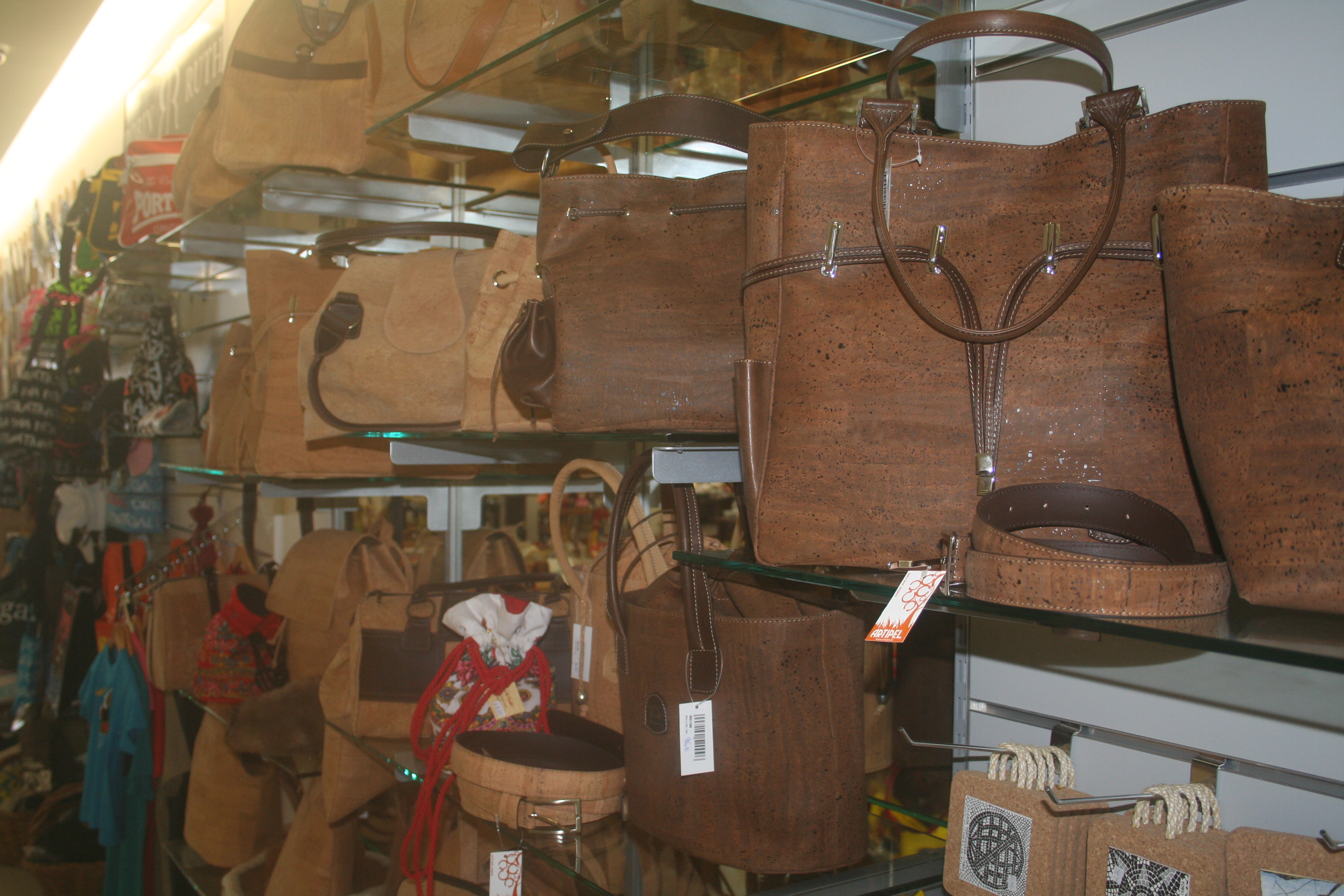
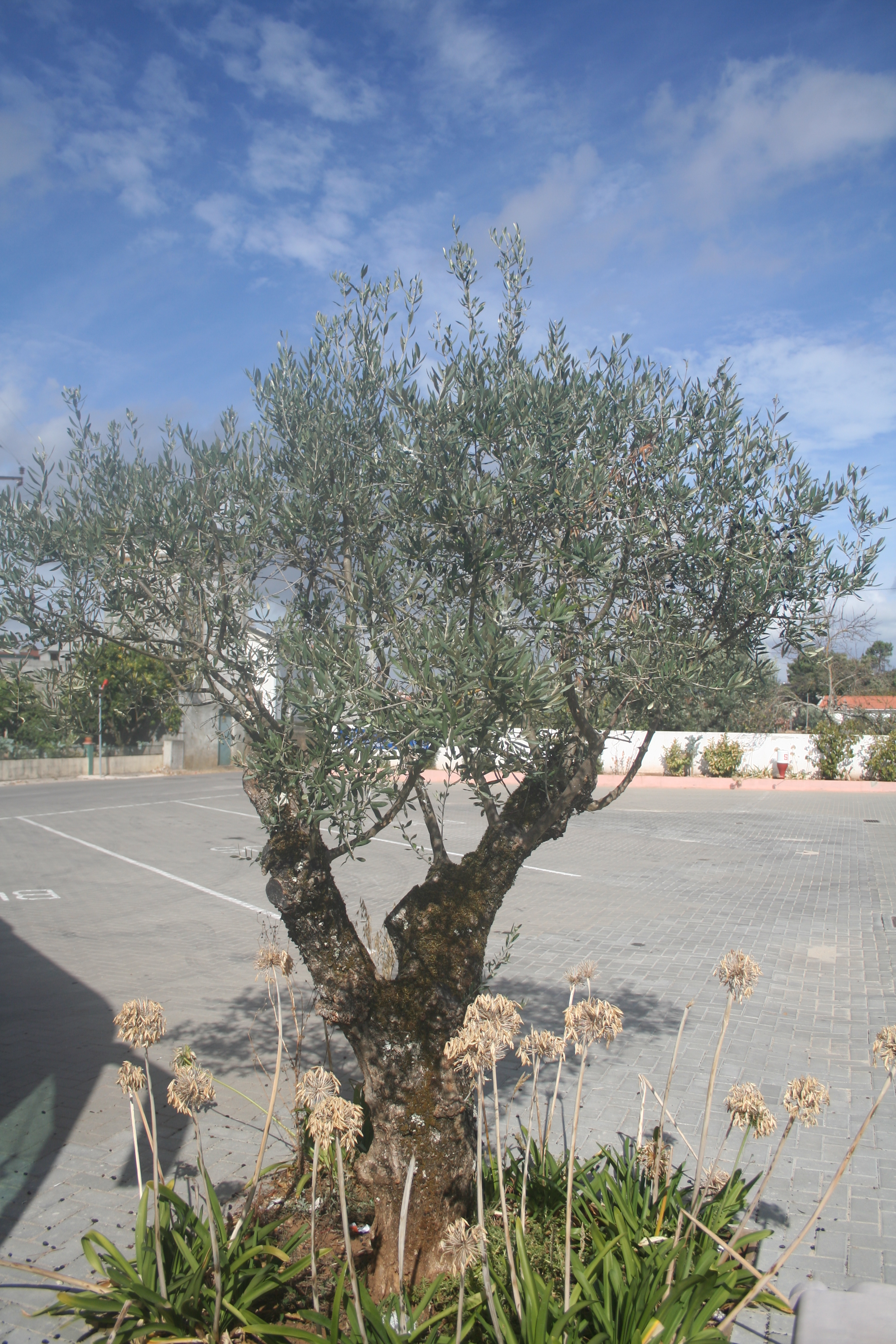
A sweetly ironic twist in the schedule then occurred. We piled onto the bus at the appointed hour and drove, essentially two blocks, where we were deposited at a wine shop for a video and talk on the making of Portuguese Port wine, and a tasting!  Port is one of Portugal’s chief exports, second only to cork! More on cork in a while. A fun and informative stop, and we left with a bottle of fine Port.  Back on the bus then for a short drive just to the edge of town, where we were deposited at a shop and cafeteria for lunch.  We bought a couple of apples, (the price of which was contested by the good wife, and compensation rendered,) to go with our pilfered jamon and queso, then went through the gift shop downstairs from the cafeteria.  Being still in the relative confines of Fatima there were a lot of religious items displayed, but also these handbags, aprons, and hats made of cork!  Quite amazing.  There were even umbrellas.  Who knew? We went for a walk outside, where we encountered this lovely little olive tree growing smack dab in the middle of the parking lot.  Portugal grows a lot of olives, but not as much as Spain.  We were to see huge olive groves later in the trip.

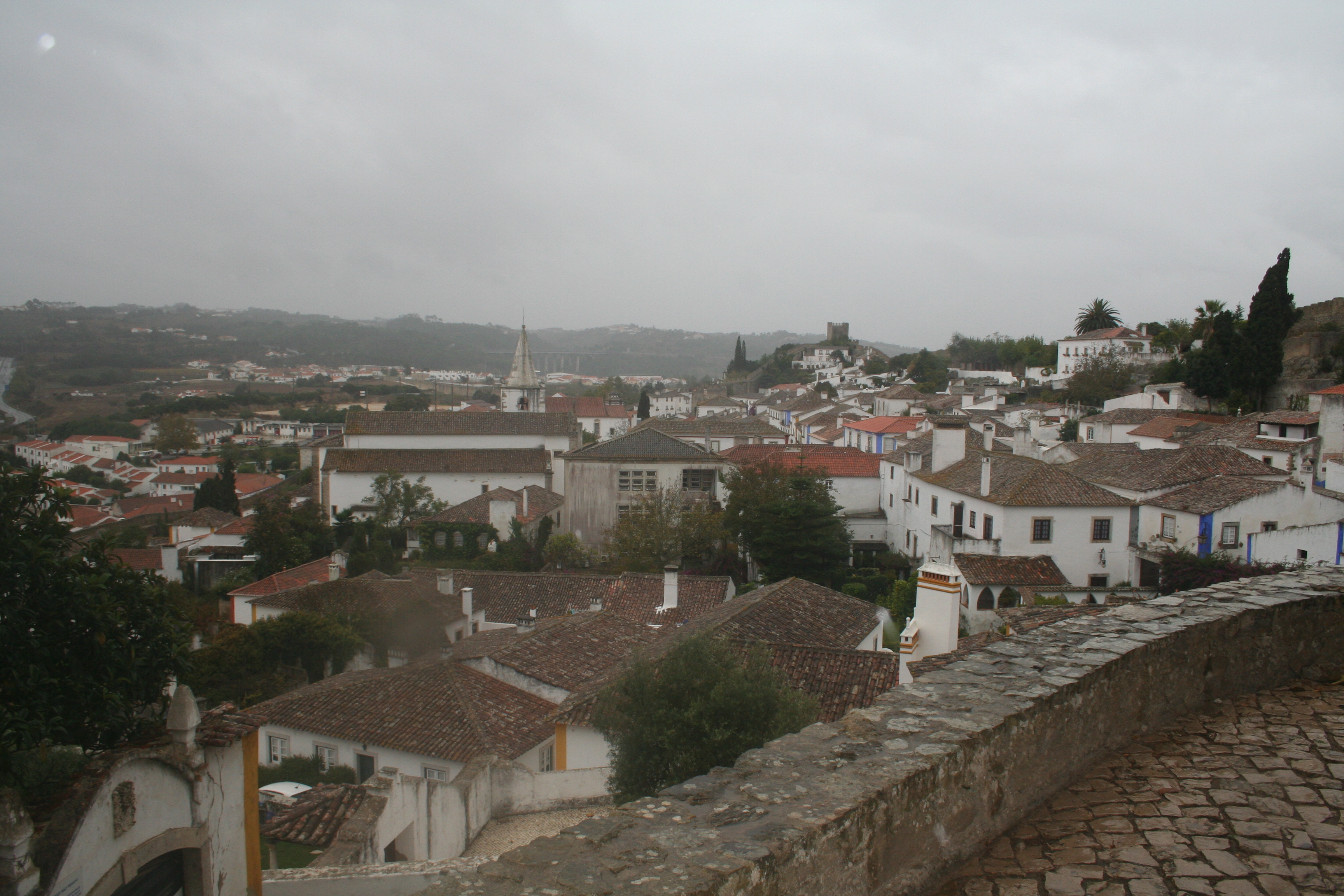
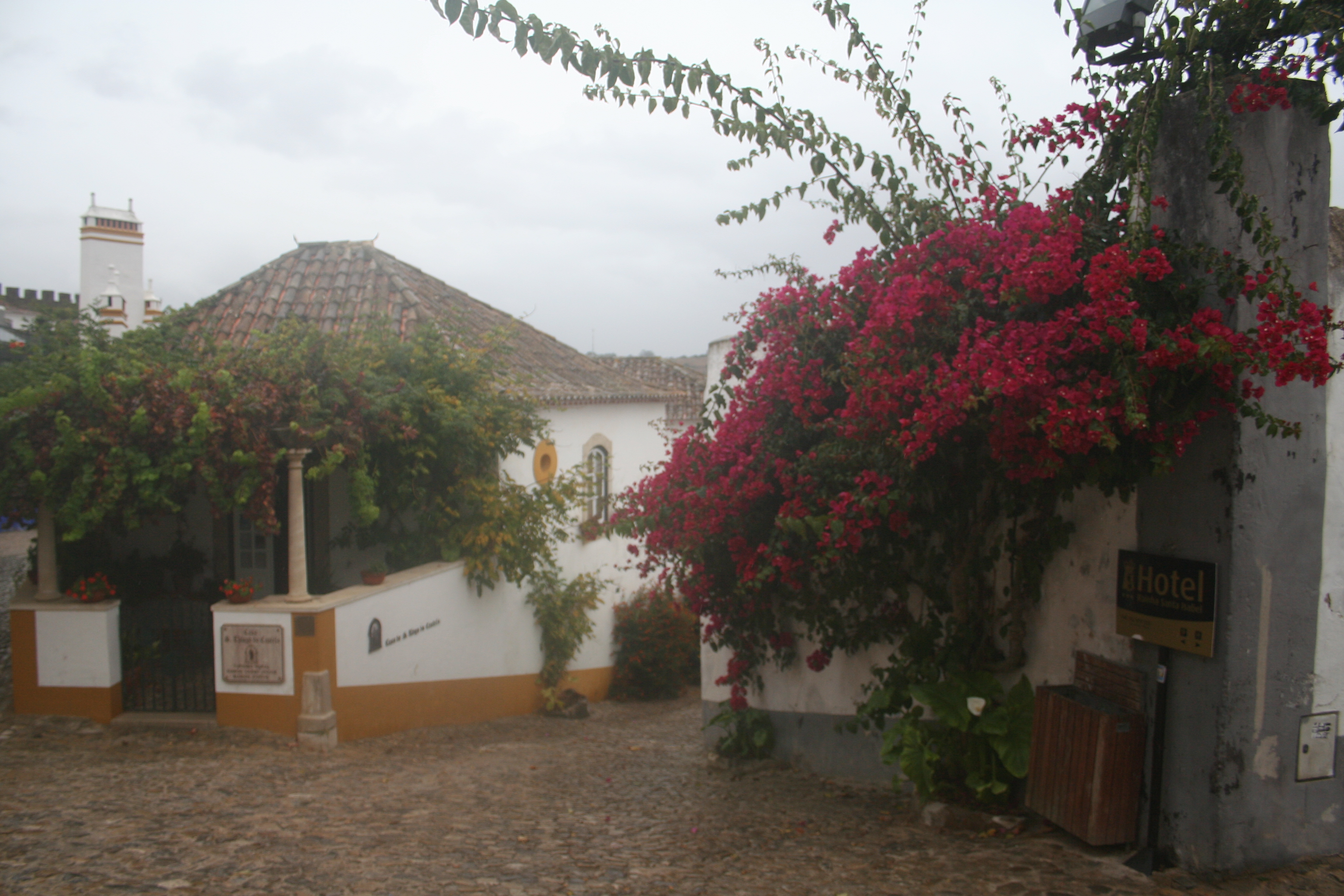
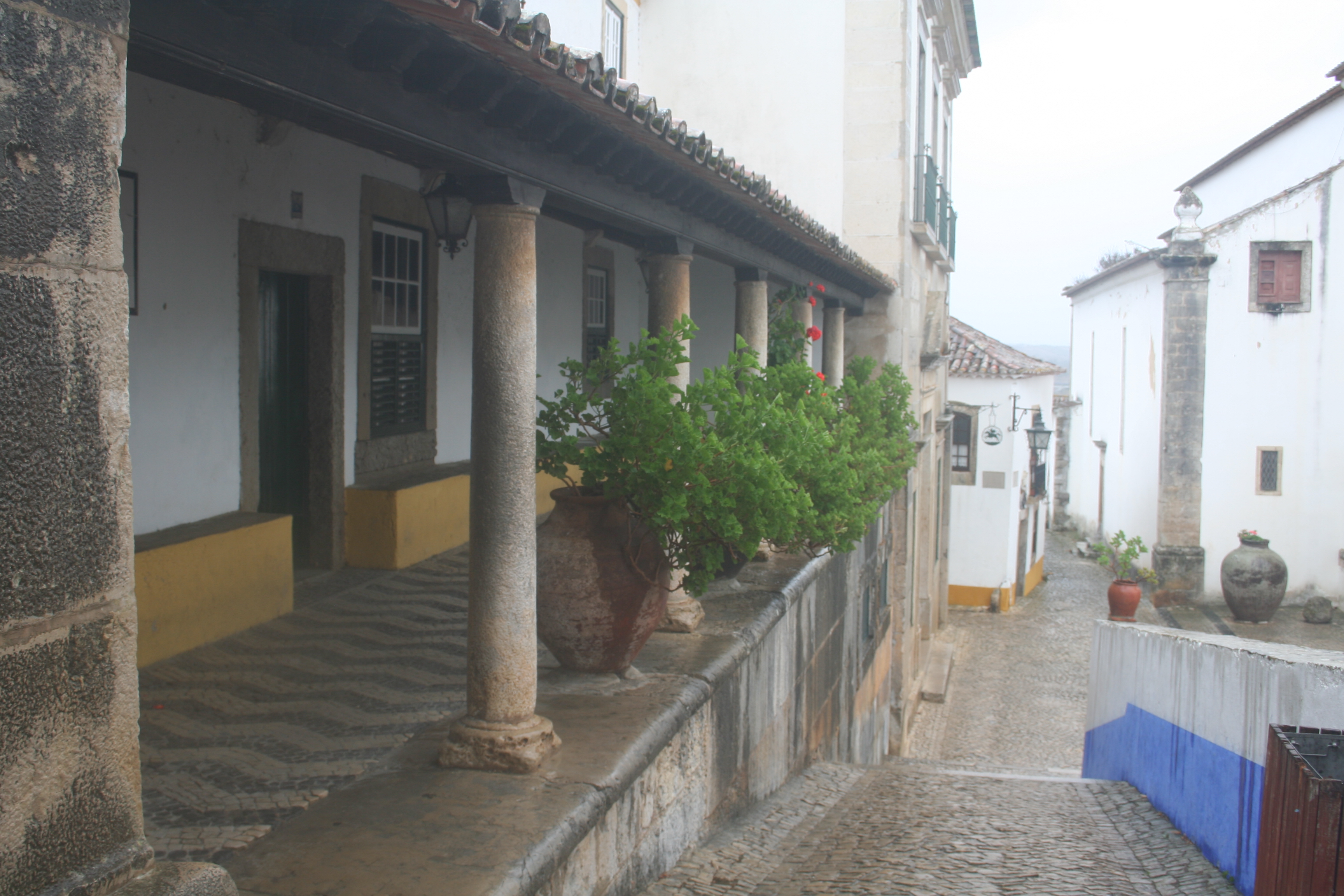
Back on the coach, through driving rain now, to the little hill town of Obidos, perhaps the loveliest of all the places we saw.  A village of one kind or another has existed on the hilltop of Obidos since Roman times.  It became a fortified city, with castle and walls sometime in the 700s, and was liberated from the Moors by Alfonso Henriques, the first king of Portugal, in about 1148.  Much of the old castle and walls remain intact, and it’s winding, steep cobblestone streets are a popular tourist destination.  We arrived in intermittent rain and right away encountered a sight Luis had told us to be on the lookout for, students in traditional dress.  Upperclassmen in the old Universities of Spain and Portugal wear an outfit of all black, including a black cape, when the new students arrive in late October to begin the term.  A group was inside the old walls at Obidos, serenading with guitars and voices.  Most impressive.  We made our  way up the slick streets to the castle at the top of the hill, stopping many times to prowl through shops and admire the beautiful stone streets and blooming Bougainvillea.  A small church was ancient patina facade occupied a central square, and the walls at the top of the hill offered a wide sweeping view of the valley and village.  On the way down we stopped in a cafe for another unique Portuguese treat Luis had told us about, a cherry liquor called Genji, which, in many places, is traditionally served in a small chocolate cup!  You drink the liquor, then eat the cup! Very cool.  Another interesting bit of information:  all the houses in Obidos are white, by law!  You can’t paint any other color.  Most also had a strip of blue or yellow, about a meter wide, at the bottom of all exterior walls, and all had tile roofs.  It was an extraordinarily lovely place, and we could have stayed much longer.  It is what we will always think of as old Portugal.

We pressed on to Lisbon, or Lisboa, as the Portuguese spell it, in rain, informed by Luis along the way about some of the differences between the Spanish and Portuguese people.  He made an interesting point about language.  Looking at the two languages, Spanish and Portuguese, in print, one is struck with the obvious similarities.  But listening, Portuguese sounds very little like Spanish.  The Portuguese have taken the same letters and word construction, and made them sound different. Luis said a Portuguese can make the transition to Spanish easier than the other way around. He also said many more Portuguese speak English, than do Spaniards.  This he attributed to the fact that in Spain, English language TV is always dubbed with Spanish, while in Portugal, the original English is broadcast, with Portuguese subtitles.  The people learn English watching TV.  We did see the difference.

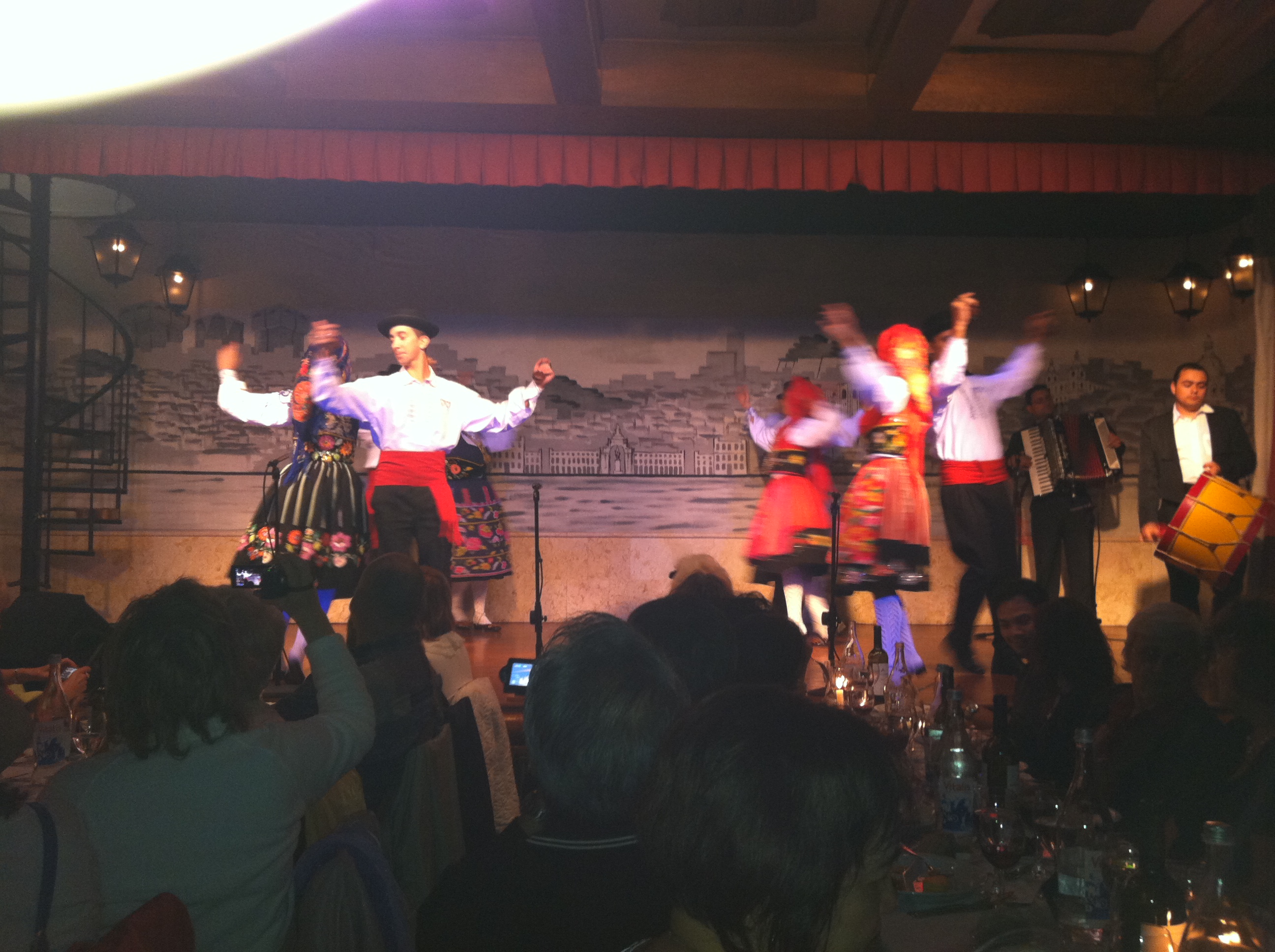
We arrived at the Hotel Roma in Lisbon, and dashed in through the rain.  Barely enough for a shower and then we were off again in the coach for a brief evening tour of Lisbon with its proud son, Luis, and then on to the main event of the day, a night of dinner and Fado, at the famous Luso in downtown Lisbon.  Luso is a name the Portuguese have for themselves, and this place was well-known as a top-line Fado establishment.  Fado, we learned, is a very old musical genre, unique to Portugal, consisting of mournful, or melancholy songs.  Luis explained that there would be dancers, and then the Fado singers would come out, usually one at a time, accompanied by Spanish guitar and a 12-string Portuguese guitar, that turned out to be a cross between a mandolin and a guitar.  Sometimes two or more Fado singers would sing at the same time, actually trading licks, as it were, in an effort to outdo the other.  The festivities started with a wonderful Portuguese meal of cabbage soup, followed by cod, the national fish dish, and both red and white wines.  We sat at long tables, ours in the middle of the room perpendicular to the stage, with other groups seated on either side.  The show began with dancers in traditional Portuguese costume, and then a series of marvelous Fado singers performed, including the owner of the restaurant, a very famous Fado singer, who, before he took the stage, was seen bussing tables.  The show culminated in three singers engaged in a rotating sing-off, the owner on stage, and two others in the audience.  Wonderful!  An extraordinary evening of food, friends, song, dance, and wine, and it was, shall we say, a very happy and animated bus on the way back to the hotel.  Lisboa, and the Atlantic coast tomorrow.

Posted in Uncategorized | Leave a comment

Day 3: Avila, Salamanca, Coimbra

The Brits were a few minutes late getting on the bus but Luis declined to make them sing and we came to love them down the road for their uniqueness and extraordinary goodness anyway.  Luis introduced us to Sergio, our driver for the duration, a tall, slender Spaniard of about Luis’ age, who spoke no English.  “Hola! Sergio. Buenos Dias,” we were coached to say, and did so every morning from then on.  It was like a school field trip; Luis our affable, patient teacher; we, students of diverse age and background, giddy to be out of the classroom, and about to learn in spite of ourselves.  Luis sat in the front seat, right side of the coach and detailed another rule by microphone before we left.  In order that we all see as much as possible of the countryside and each other, we would rotate seats on a daily basis.  Those on the left side would move two seats forward every morning we boarded, those on the right, two seats back.  Luis’ seat did not count in the equation.  That established, we left Madrid on a cool, cloudy, blustery morning and headed northwest into the hills.

On the way to our first stop, Avila, Luis delivered a brief, concise, but thorough lesson in Spanish history, including the convoluted relationships and marriages of the old royals with the Hapsburgs and Bourbons of Europe, the Basque independence movement, the Civil War, Franco’s rule, the return of the Monarchy, and the current economic situation, as we passed through brown, hilly country reminescent of northern California, with great open spaces dotted with gnarly oaks.  We saw black fighting bulls in the fields, great, shiny, confident creatures, and some bull calves, and Luis talked about the bull fights and the differences between the Spanish and Portuguese approaches.

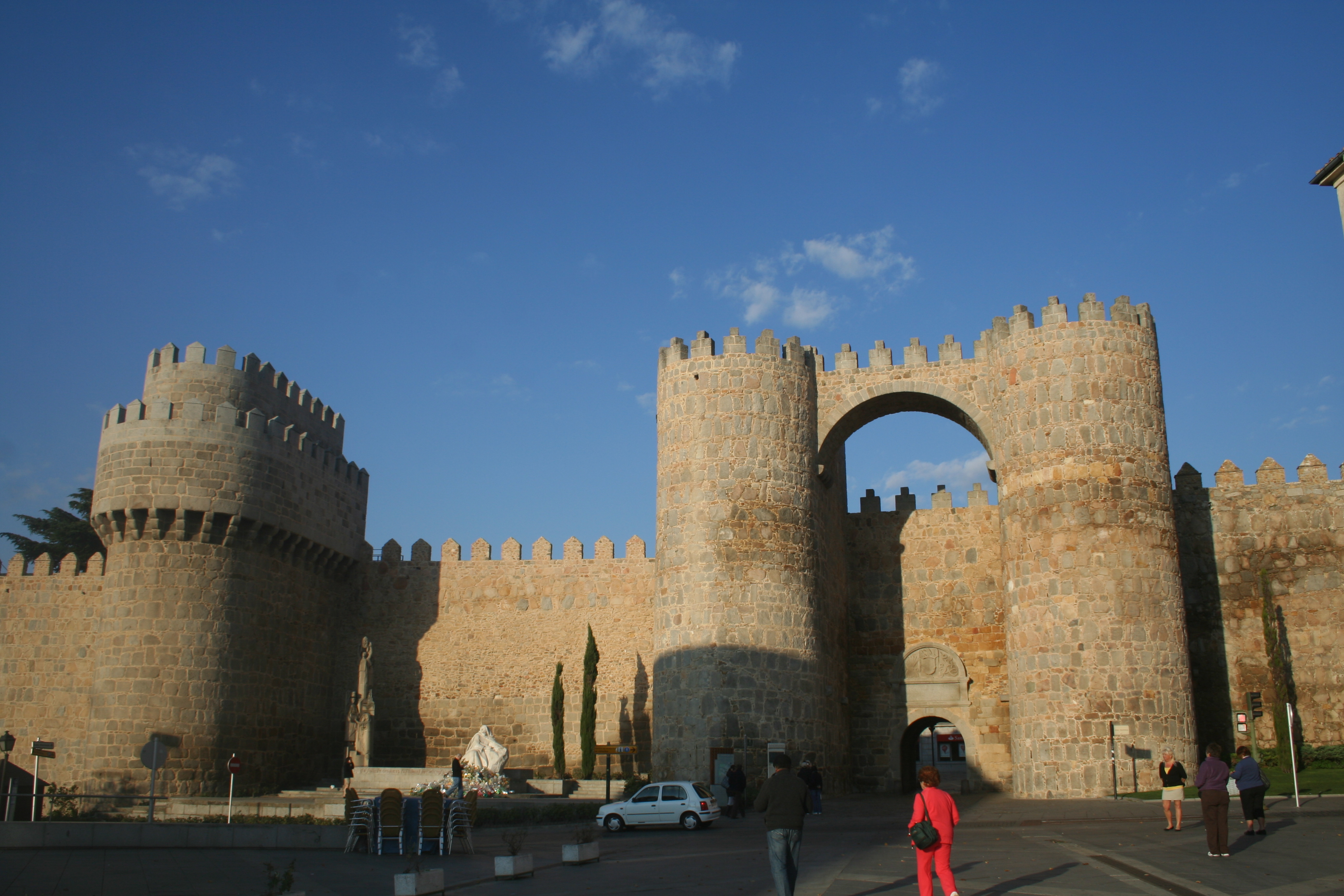
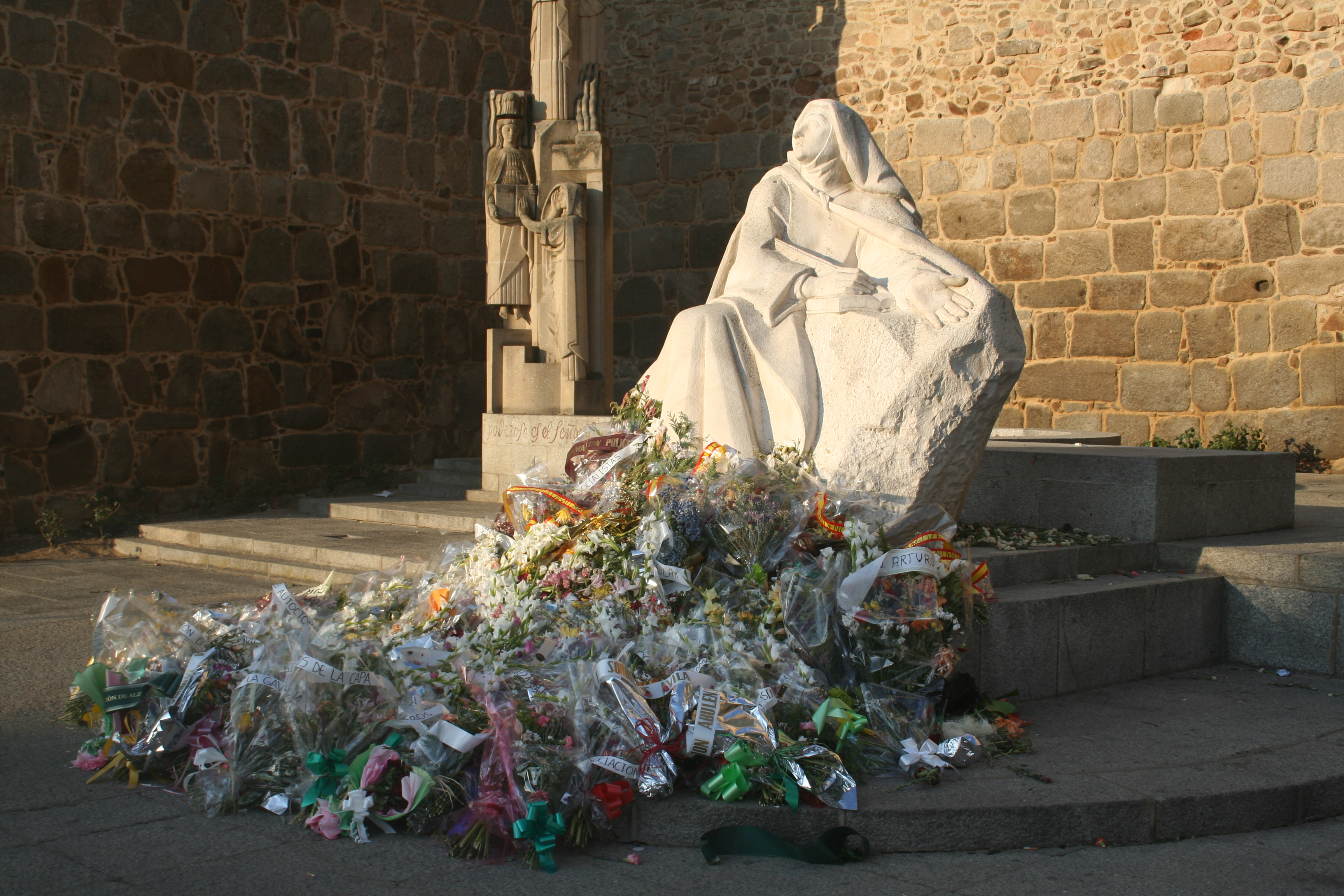
Nearing Avila, Luis outlined the history of that ancient town, the birthplace and residence of St. Teresa, one of the great Christian mystics, and inspiration for St. John of the Cross.  Avila probably dates from the early settlement of the Iberian peninsula, but its heyday was during the time of the Catholic Monarchs.  It is built on top of a hill jutting up off the plain, and much of its ancient wall with towers remains intact.  It is said there are more churches per capita in the old town than anywhere else in Spain.  The same is said of Key West, I am reminded, which leads me to believe that is an indicator of a high level of sin rather than piety, in both cases.  We dismounted just outside the old city walls, and after an admonishment from Luis to remember where the bus was going to be, we climbed the narrow streets to find the old Cathedral.

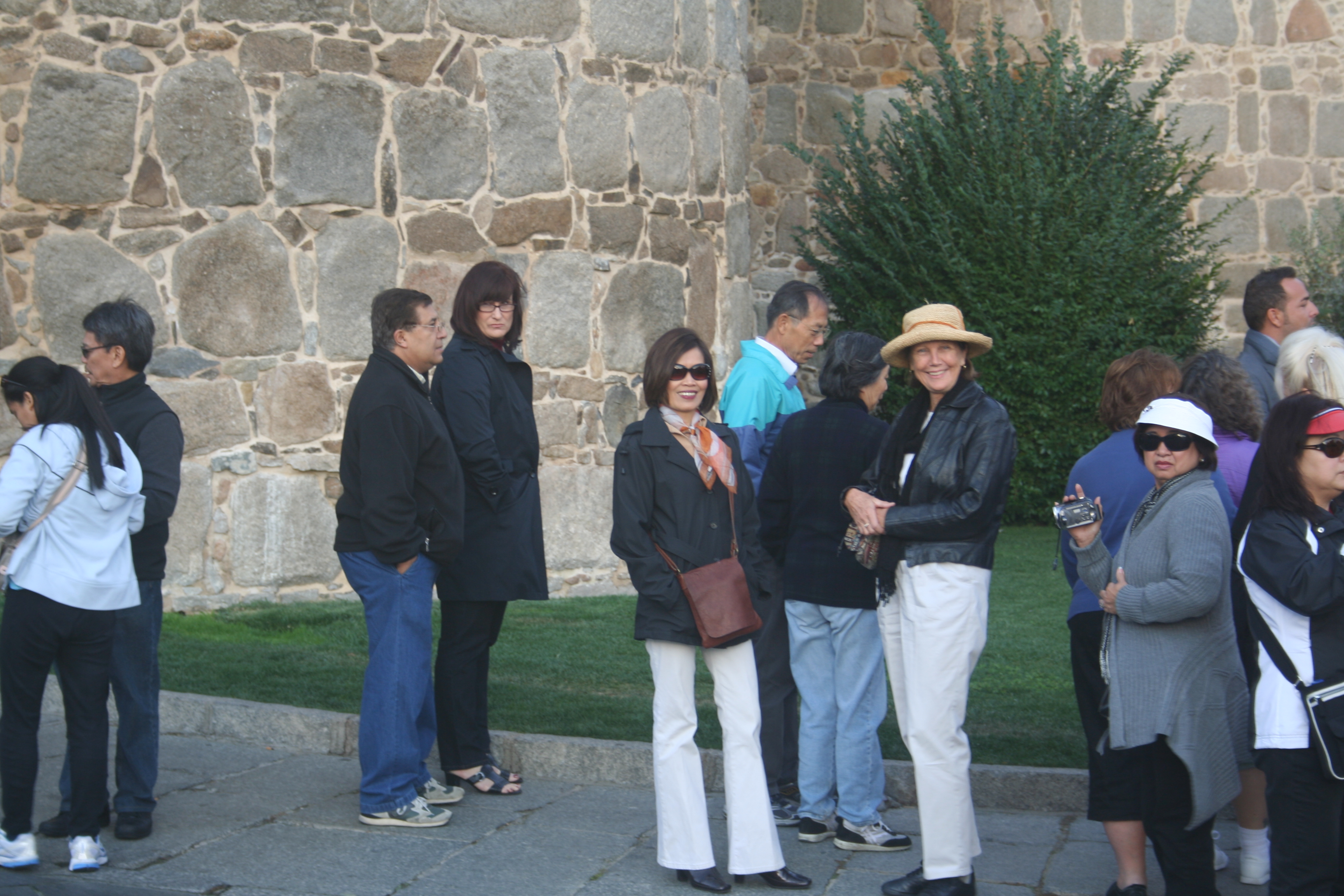
Already some familiarity with our group of fellow travelers had developed, and they appeared to be an interesting lot.  Besides those I have already mentioned, there was a group of five women traveling together I early on pegged as nurses; a couple our age from Pittsburg; three Filipino women I believed were also nurses; some eight more folks of Philipines extraction; two gentlemen apparently traveling alone; a pharmacist and his wife, also from San Francisco; an older Chinese couple; and a bright young couple who couldn’t have been out of their twenties.  At the statue of St. Teresa I was approached by one of the five women, who said they needed to know if I was a professor or a doctor.  “Retired hospice nurse,” I replied.  “Oh,” she said.  “We’re nurses, too.”   Bingo!

We won’t go into too much detail about St. Teresa, (1515- 1582) but suffice it to say, she was a most interesting and controversial figure during her life, and after.  A mystic, reformer, and prolific writer, (her works are an integral part of Spanish Renaissance Literature) she was also responsible for the establishment of some seventeen convents, and as many men’s cloisters.  But she is best known for her ecstatic visions of Jesus, which continued virtually uninterrupted for two years, and the mortification to which she subjected herself in imitation of the Christ.  Assailed and venerated during her lifetime, she was canonized forty years after her death.

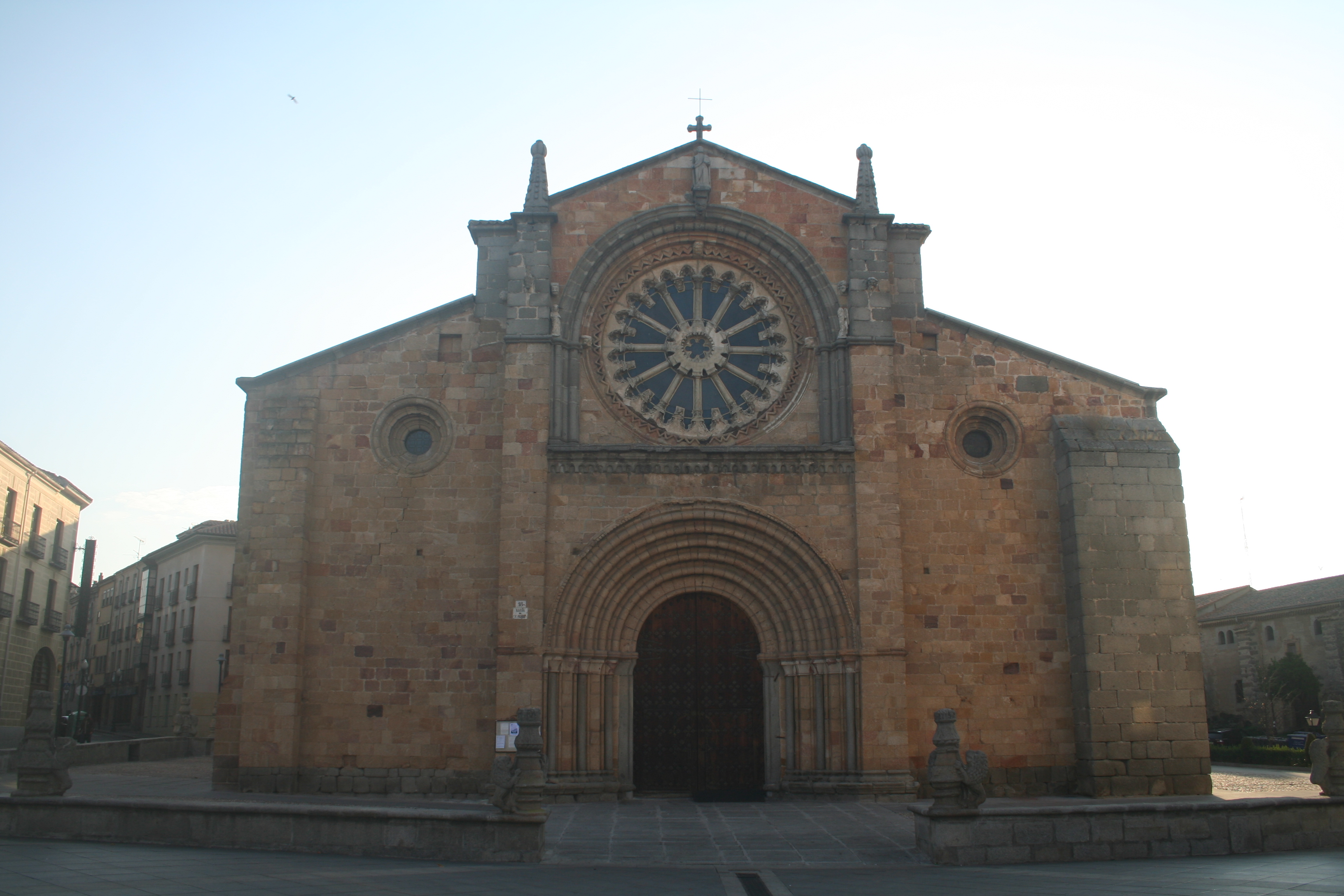
The Cathedral of Avila was the highlight of our brief visit.  It is not clear exactly when construction was begun, but most of the work was apparently done in the 12th and 13th centuries.  Typical of many of the Cathedrals of that time, work continued for centuries.  Avila was completed sometime in the 15th century.  It is ornate, soaring, beautiful, and inspiring.  The craftsmanship and detail are astonishing. As with all the other ancient structures we saw on this trip, one comes away with a deep sense of awe for the design, dedication, and power of these buildings, whatever one’s beliefs.  That they still stand is testament enough.  And the Avila Cathedral, as all the others, are still in daily use.  Tour groups mingle daily with locals attending Mass.  Spain, we were learning, has a long and deep religious history, and remains a strongly religious people.

We wandered down through the town from the Cathedral, and enjoyed the first of many, many, cafe con leche’s at a busy cafe with outdoor tables, then boarded the bus and were back on the road to Salamanca, about an hour away, which would be our lunch stop.

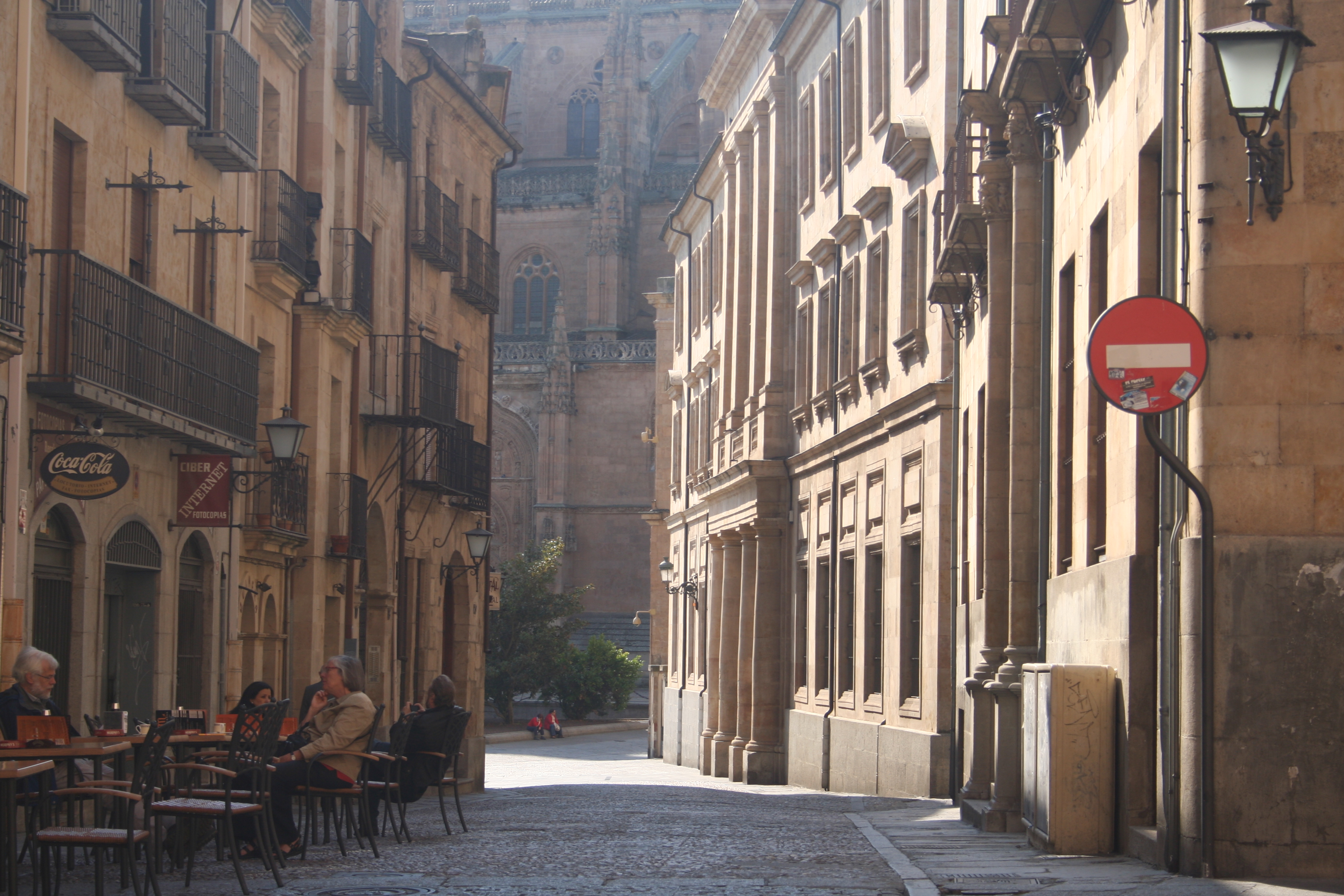
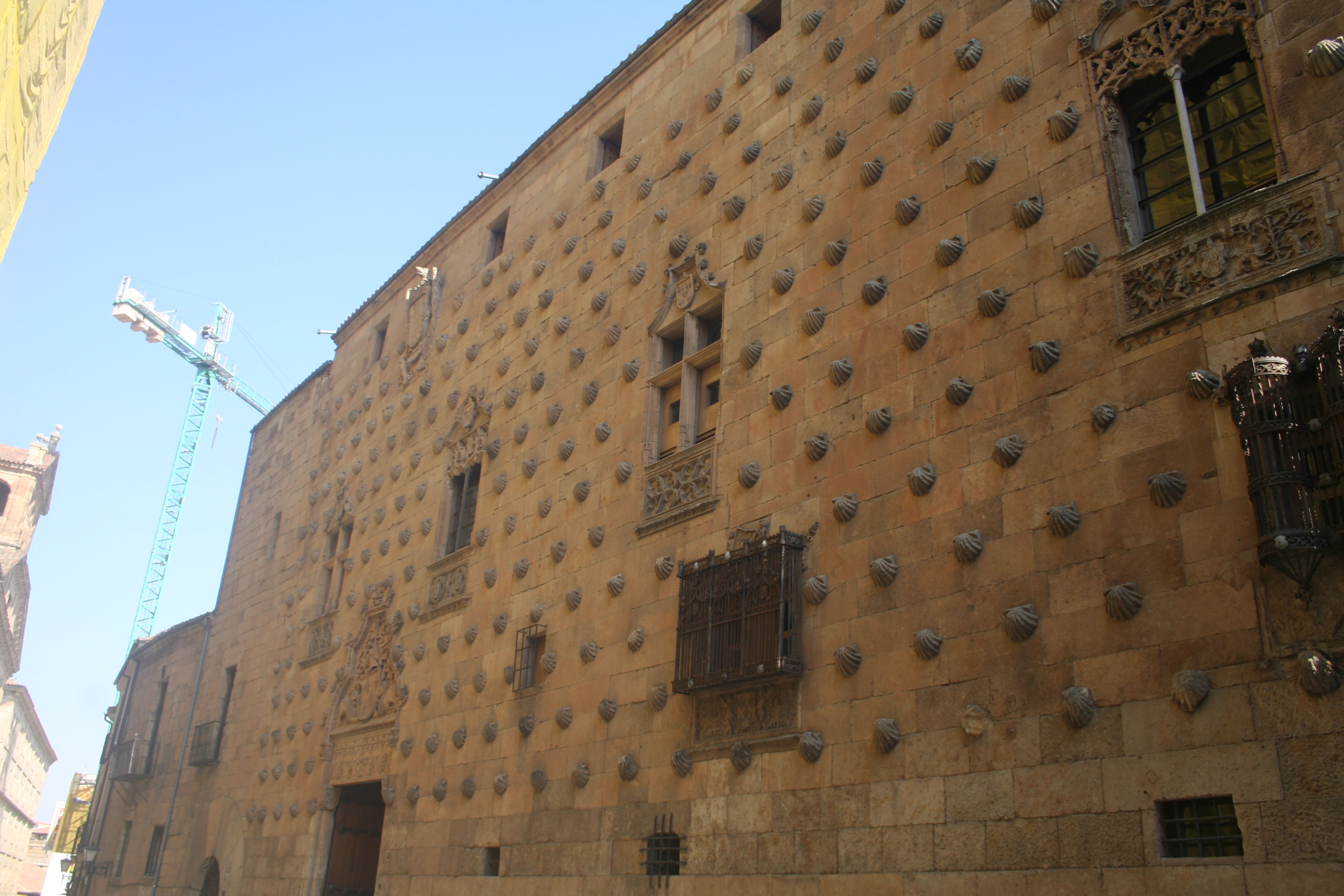
Salamanca is an ancient city dating from pre-Roman times, founded by a Celtic tribe, and then ruled by Romans, Visigoths, and Moors, until the Moors were expelled in the late 11th century, and the Catholic Monarchy took over.  It has been the home of Spain’s oldest university since 1218, but formal teaching had existed since 1130.  The university at Salamanca still flourishes, and only the best and brightest Spanish students attend.  Luis gave us a run-down of what to see in the town, and the best place to have lunch, and turned us loose.  We started at the main square, busy with tourists and locals, then went in search of a famous landmark, the wall of shells, a facade dating from the 12th century, and decorated at intervals with carved shell formations.  Next was to participate in a traditional challenge.  Luis had explained that there was a building in the old university section, with an elaborately decorated stone doorway.  Somewhere in the decoration was hidden the figure of a frog.  Each student, upon entering the university was challenged to find the frog in the facade.  If he did, it meant his university career would be a success.  It has since become a tradition for every visitor to find the frog, and frogs have become the symbol of Salamanca.  You see frog figures, large and small in every shop window, as well as t-shirts, aprons, etc.  We found the old, impressive university section, and didn’t have to be shown the building in question.  Hundreds of people stood staring up at the formidable facade, decorated with a seemingly infinite variety of animals, shells, and skulls.  After some ten minutes, we actually found the damn frog, though it looked to us like a rat, perched atop one of the skulls.  If you enlarge the accompanying photograph, locate the skull in the center of the column on the right, then find the skull a little to the left, and there you will find the frog.  Ha!

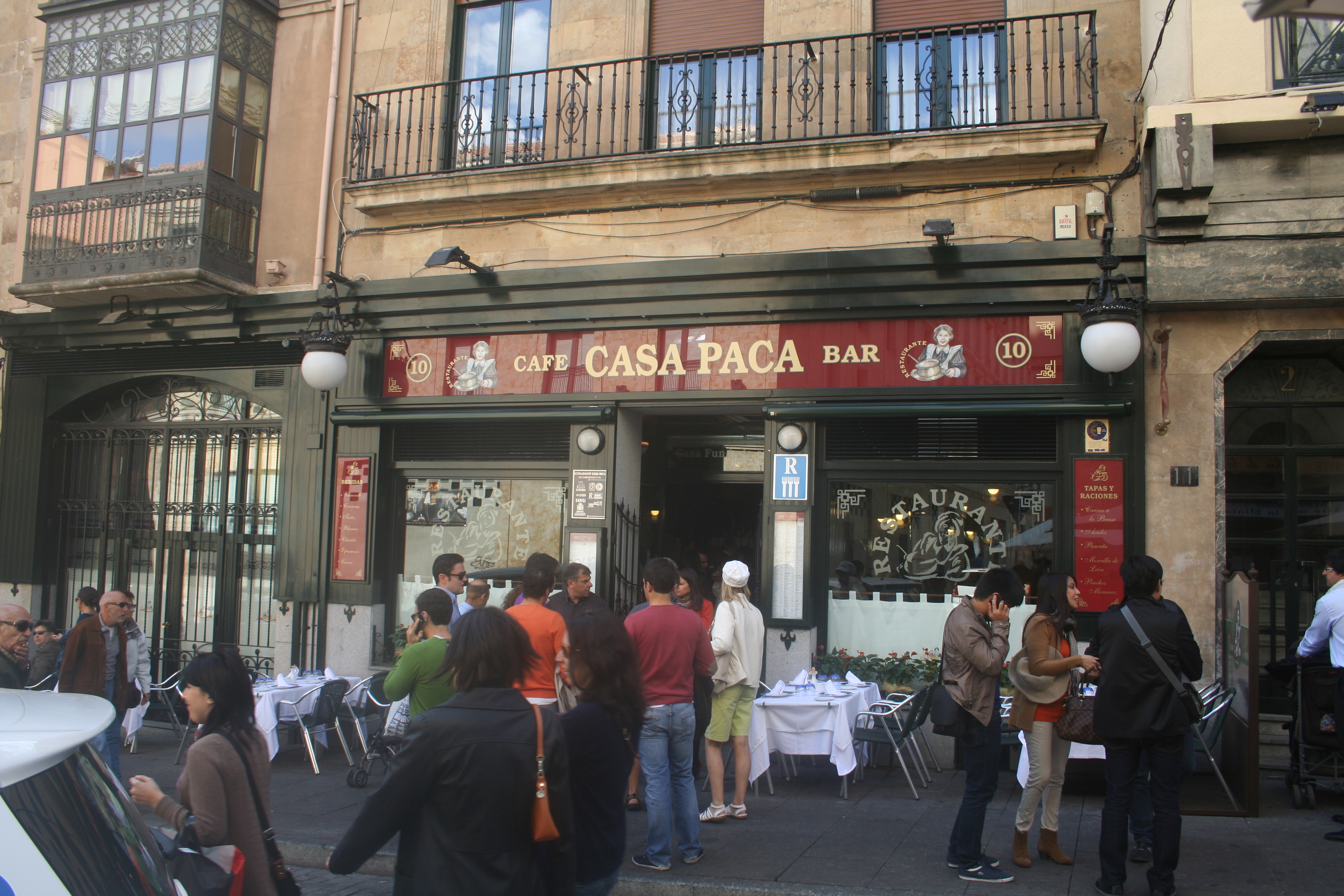
Victorious and full of ourselves, and now quite hungry, we went looking for the tapas bar Luis had recommended, Casa Vaca.  Turns out everyone else had found it too, and we had to struggle, standing several people deep, at the counter to be served.  We wrangled a wonderful bowl of spicy arroz, some delicious fried shrimps, and beer, and ate standing.  Outside, we came across the nurses from Michigan, who had commandeered an outside table at a place across the street, and we took this great photo.  We were all starting to get into the flow of things, but the best was still yet to come.   Back on the bus, and off into the hills again, west now, for the Portuguese border and our stop for the night, Coimbra.  While Salamanca is home to Spain’s oldest university, Coimbra is home to Portugal’s oldest university, dating from 1308.

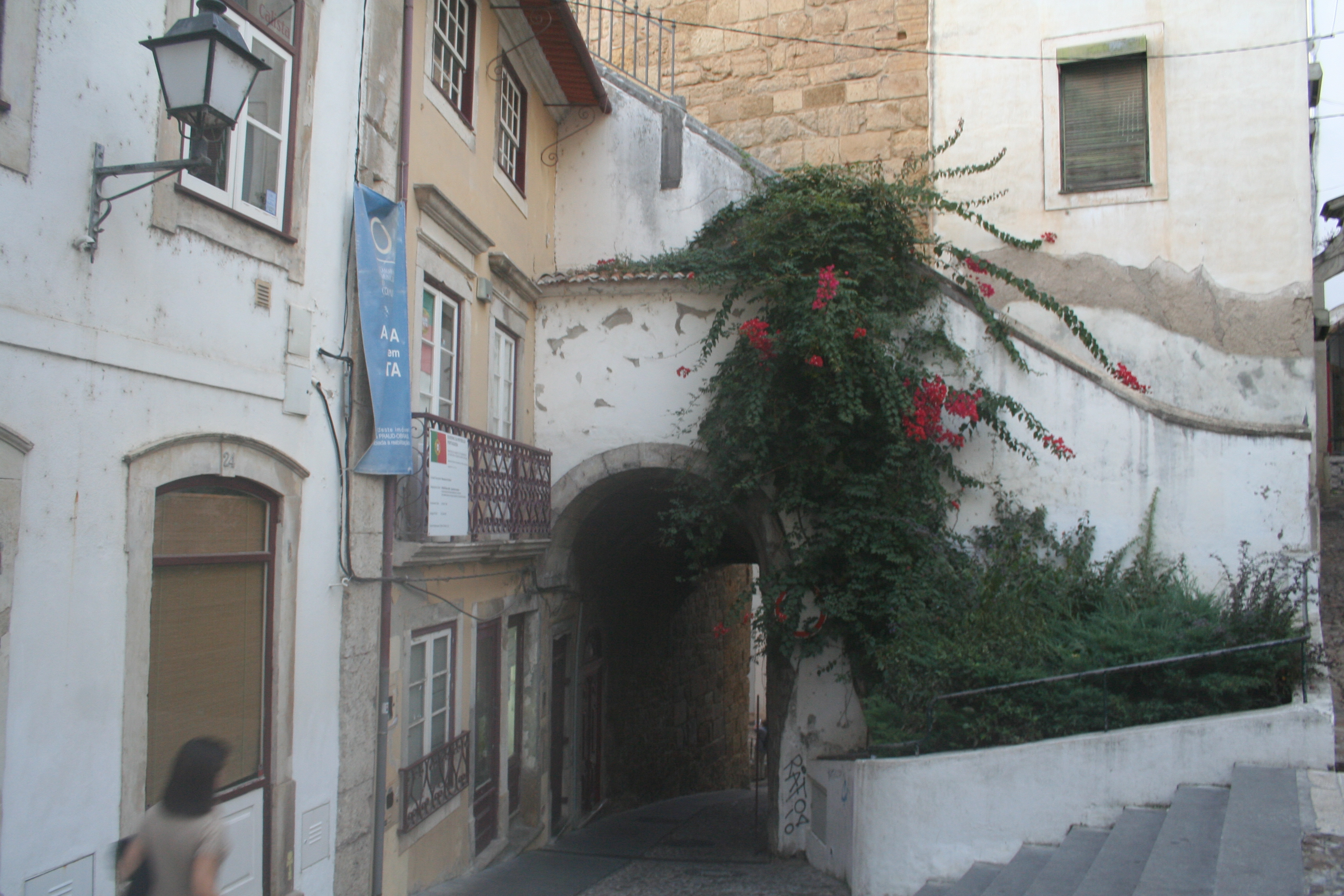
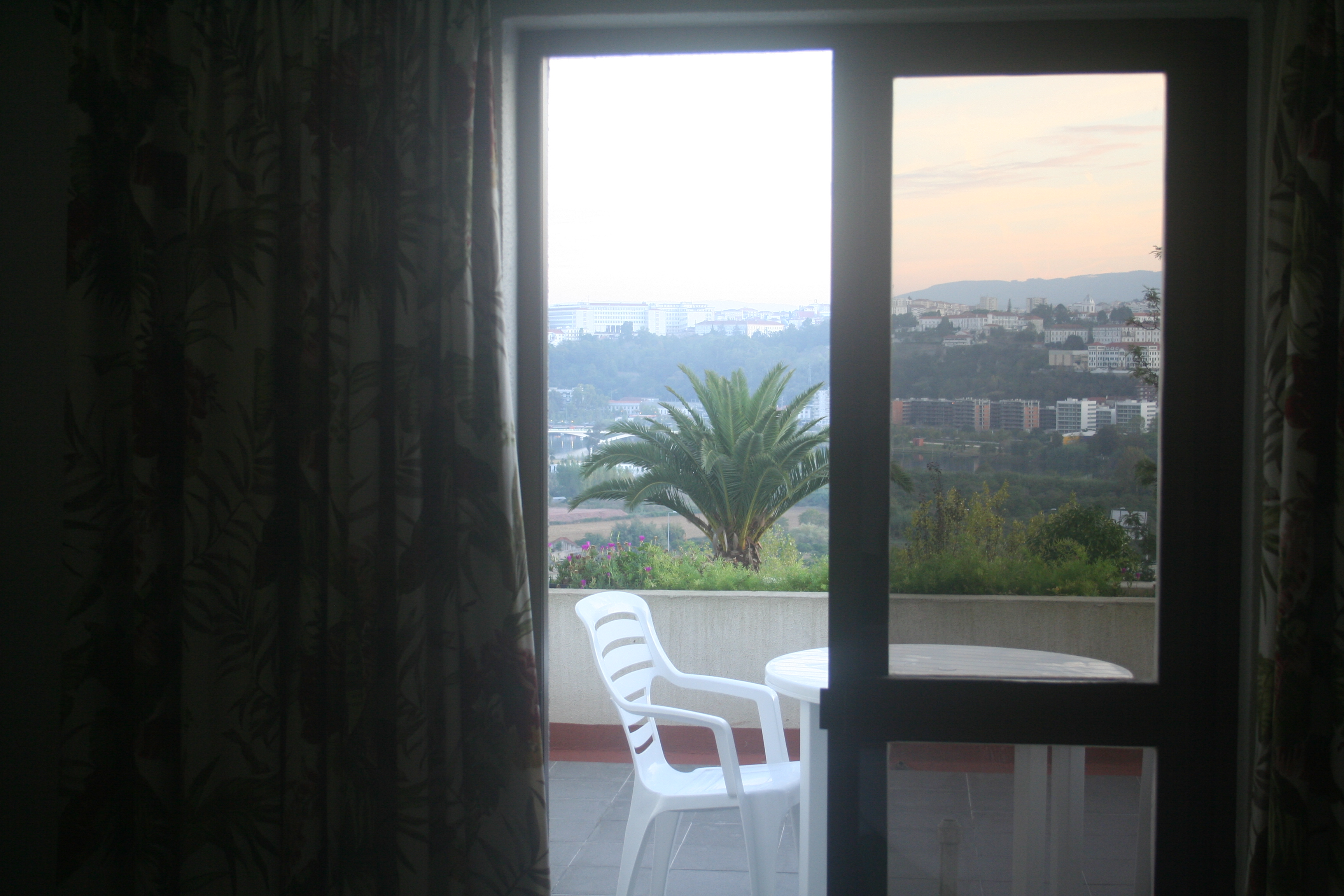
We were dropped off the bus at the old city, and given an hour and a half to explore, while Luis and Sergio took our bags to the hotel.  We walked down lovely cobblestone pedestrian street lined with shops to the old Coimbra Cathedral and saw amazing mural of blue and white tiles.  A mass was in progress so we didn’t get to look around too much.  Took off from there up strenuous winding streets to top of the hill, where the old university is located.  Huge square at top with great views of river town is built on.  Slowly made our way back down and went out on river bridge for pictures, then met bus and drove five minutes across the river to the Hotel Dom Luis.  My, oh my!  This was the best yet.  Lovely, bright room with all amenities, and a balcony overlooking the city of Coimbra! Unbelievable.  Time for shower and dressing, then down to dining room for one of our group meals, this one featuring a variety of Portuguese dishes.  Absolutely delicious.  Off to Fatima, Obidos, and Lisbon tomorrow.

Posted in Uncategorized | 1 Comment

Day 2: Madrid

We had information from the tour booklet that a certain bus would take us from the airport to very near our hotel, the Hotel Abba, in the Madrid city center.  With only a little translation difficulty we located the stop and only had about a ten minute wait before it arrived.  To make things even easier, ours was the last stop on the line, so we couldn’t miss.

After a rapid and sometimes harrowing ride into town the bus deposited us in the end terminal, an underground garage. We ascended and found ourselves in a large, busy open square, with streets running out from the center like spokes from a wheel.  Identifying which street was which was made nearly impossible by the lack of any signs, but after a couple of false starts we found the Calle de Americas, and in ten minutes entered the front doors of the Hotel Abba.  To our amazement, our room was ready, at ten o’clock in the morning, so we went up and found a bright, cozy room with blonde paneling and floor, a good view of Madrid, and a huge bathroom with shower.  Intent on adjusting to local time as quickly as possible, and with several hours to spend before our evening meeting and dinner with the tour guide, we stowed our gear and, guide book in hand, hit the streets of Madrid, in cool, sunny weather.

Madrid, like most European cities, has a great and easily negotiated subway system.  Still, we managed to get on a train going in the wrong direction our first try, but quickly figured out the system and were on our way.  First stop was Puerto del Sol, about a fifteen minute walk from the hotel, and one of the two major squares in old Madrid.  As we would learn over the next several days, these squares– and every city has them– are essential to Spanish life, and extremely well-attended by locals.  They are the places to see and be seen.  Sol was surrounded by shops, with apartments above, some government buildings, and the ubiquitous statue and fountain in the center.  A little before lunch time, it was not yet very crowded.   We took a look around, then went looking for a side street we had read about where one of the most famous guitar shops in Spain was located.  Papa was entertaining a vague idea of returning with a real Spanish guitar, but on entering the beautiful (and tiny) Jose Ramirez Guitars shop, those hopes were dashed.  A gentleman was seated giving a Ramirez a test run, in lovely and accomplished classical style, there were pictures of Eric Clapton and George Harrison on the wall, each clutching a custom Ramirez, and a nearby displayed, used Martin was going for 1200 Euros.  We admired the incredibly beautiful handcrafted works of guitar art on the walls, and moved on.

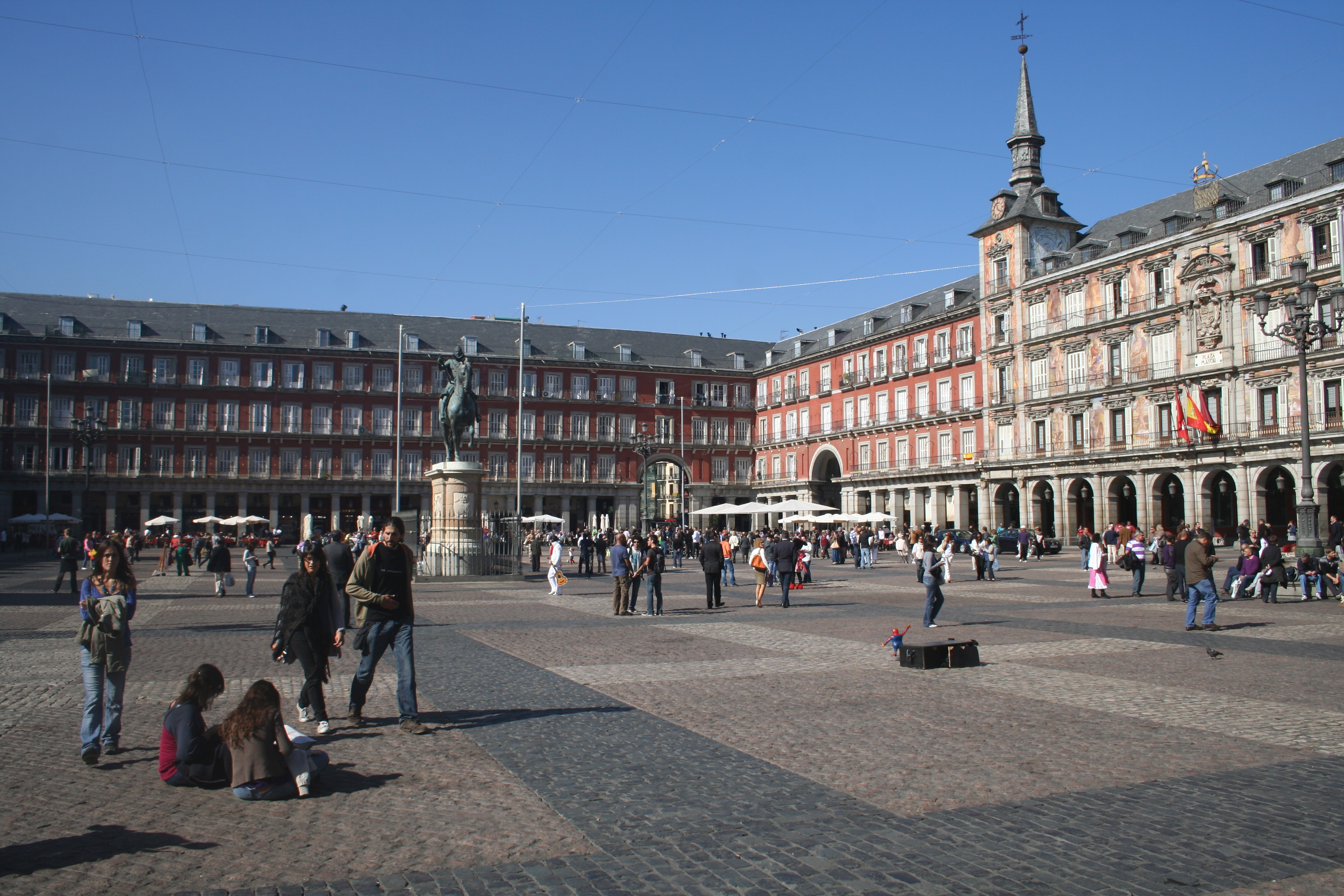
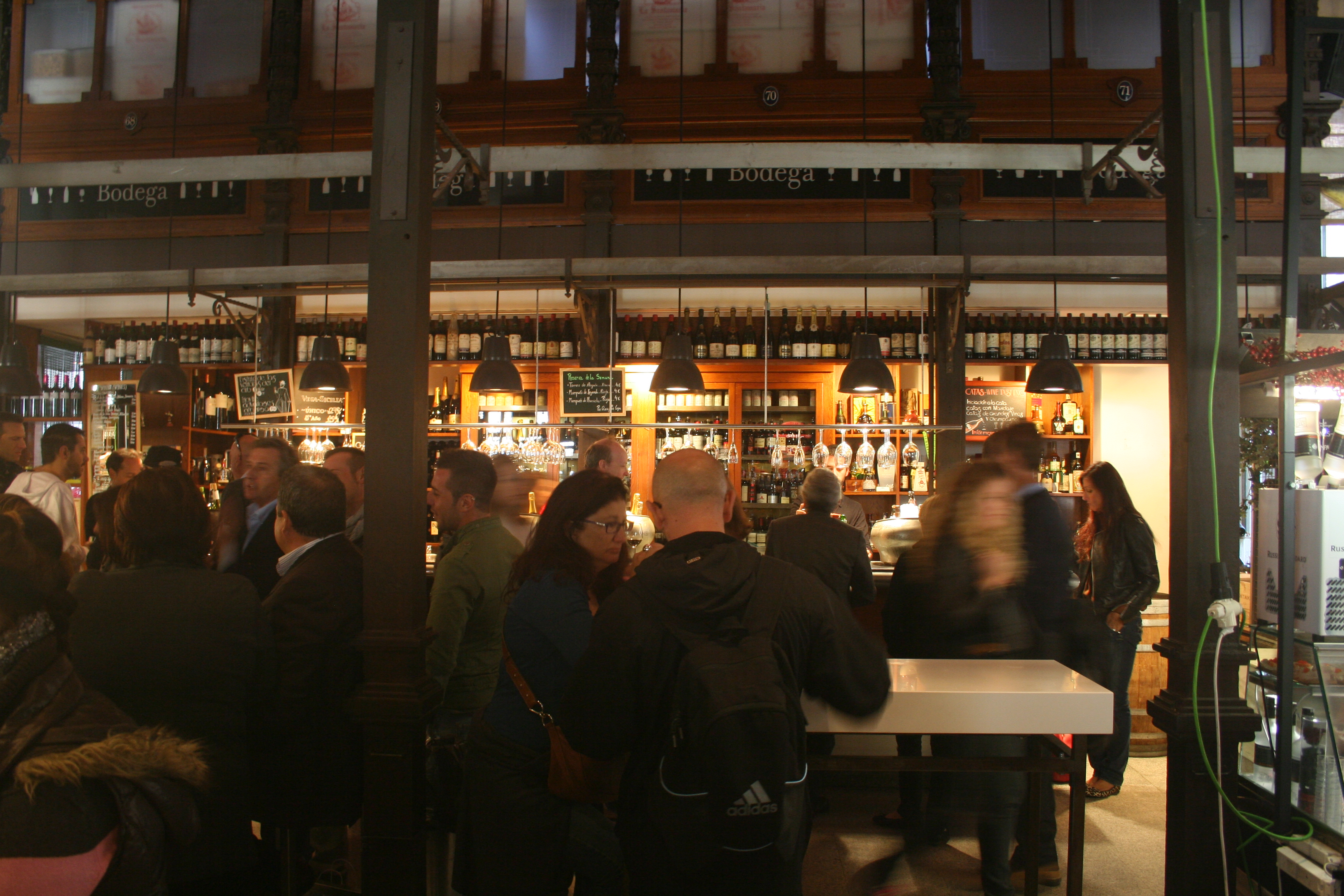
We found Plaza Mayor, or main square, a short distance away and were blown away by the scope and grandeur.  Probably twice the size of Puerto de Sol, it is the heartbeat and main gathering spot for the city of Madrid.  Tourists and locals mingled with street musicians, mimes, and Elvis impersonators, in a vibrant, happily infectious atmosphere.  Just off the square we found another destination we’d read about, the Place de San Miguel, which turned out to be very similar to the place we’d seen and loved in Philadelphia, a large, enclosed array of food vendors and bars.  We entered the already full, noisy scene and had our first encounter with the extraordinary Spanish tradition of Tapas.

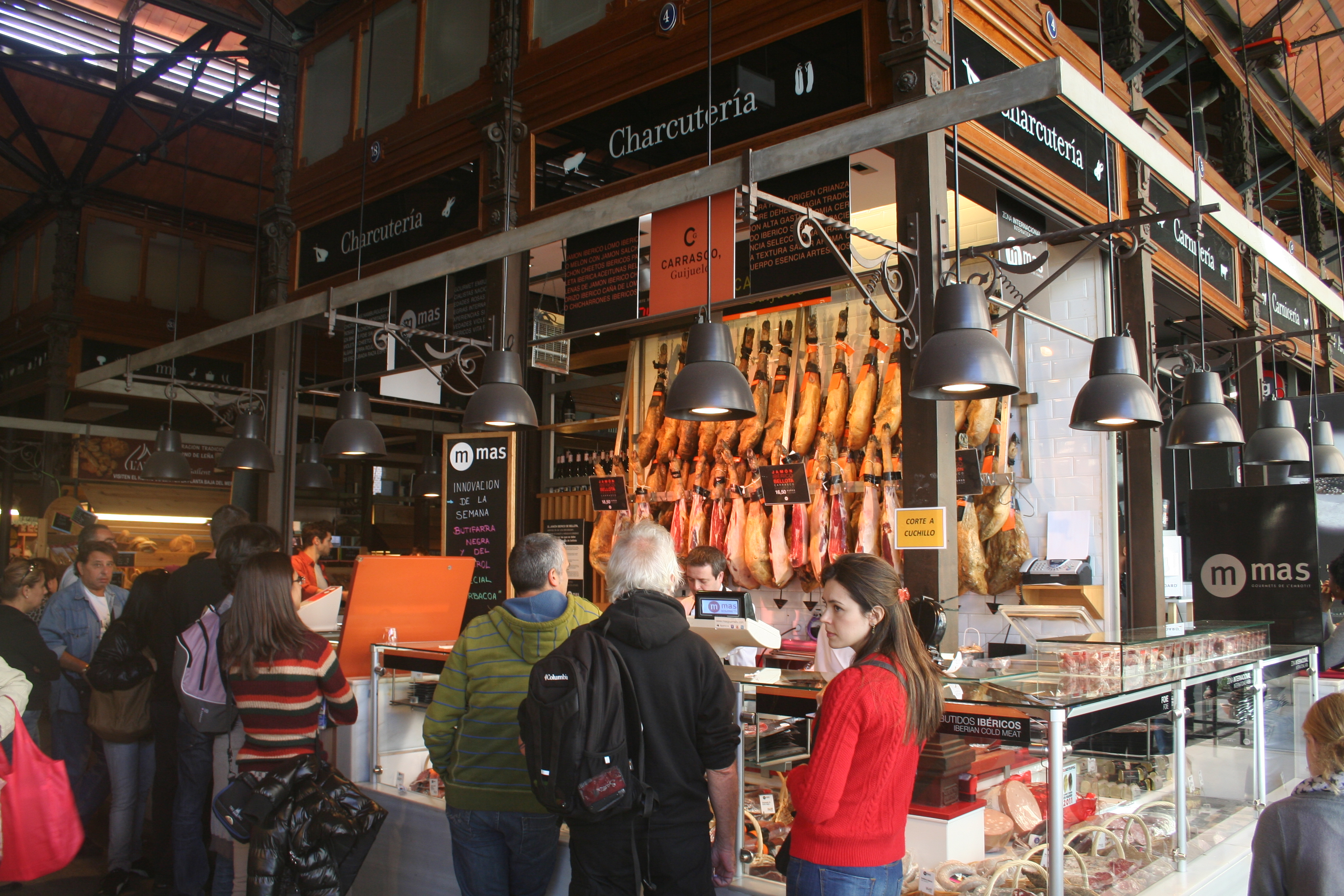
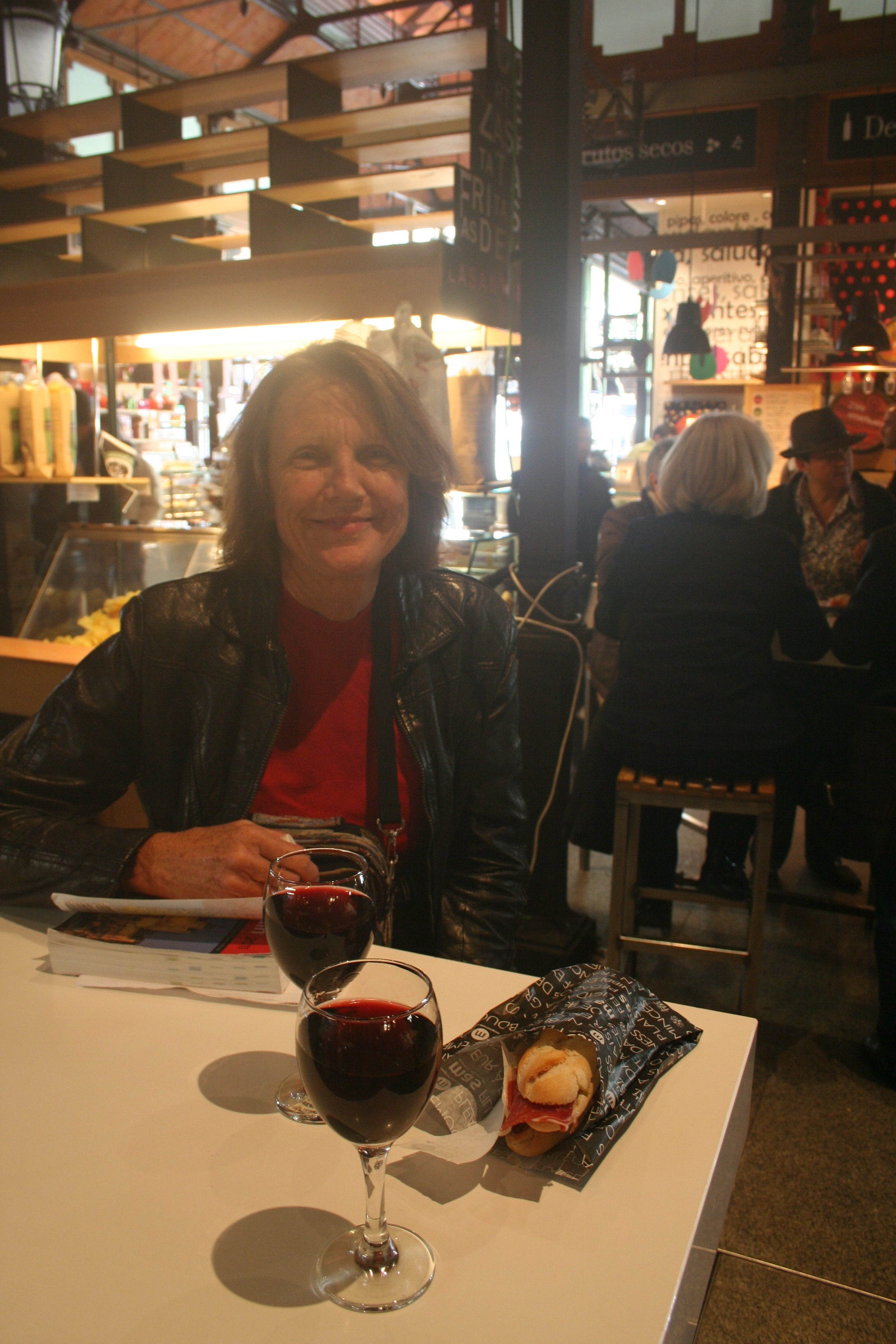
Tapas, for the uninitiated, uninformed, or just plain slow, are a wide variety of snacks or appetizers, small portions; everything from cold olives, to calamari, to Chorizo, ham, potatoes, paella, a nearly infinite variety of cheeses and breads, mushrooms, etc. which has evolved in Spain, by combining and sharing, into a major meal, with beer and wine.  It is pretty much everyone’s lunch, and goes on all afternoon and into evening.  In fact Spain strictly observes Siesta, from about 1 to 4 p.m., in which everything closes except tapas bars and restaurants.  And, we learned later, there is a distinct difference between a Tapas Bar and a Tapas Restaurant.  In a Tapas Bar you can, and are actually expected, to throw your paper napkin on the floor when done.  Just don’t do that in a Tapas Restaurant; you’ll get thrown out.   Dinner, by the way, generally doesn’t get underway until about 10 p.m., maybe the most difficult thing to get used to in Spain.  The Spaniards get around that by eating tapas and drinking most of the afternoon and evening, it seems.  Anyway, Place de San Miguel was a wonderful amalgamation of Tapas vendors, and by the time we entered, the lunch crowd was going full force.  Several stalls had whole legs of ham hanging, and from these, very thin strips of meat were sliced, and with fresh baked bread and slices of cheese turned into what is probably the National Lunch, a ham and cheese, or Jamon y Quesa sandwich.  Unbelievable, and very unlike the pinkish, salty ham we use for sandwiches in the states, it’s more like bacon.  We walked through and looked at everything, then bought a jamon and queso each, and a glass of exquisite red wine, and shared a table with other lunchers in a shoulder to shoulder, party kind of atmosphere.  We think it goes like this every day.  With a pleasant mid-day buzz we ambled out into the bright sunlight of Plaza Mayor, and back up to the Metro station for the ride back to the hotel and a long-anticipated 2-hour nap.

On awaking, we still had a little more than an hour before meeting our guide, so we took off on another brief walking tour of shops down a side street near the hotel, ultimately settling into chairs streetside at a sweet little cerveceria, or beer bar, called Montaditos, for a draft of the local beer, Mahou, which was quite good. Sidewalk cafes are just about our favorite spot, anywhere in the world, so it was hard to get up and move on, but we had to get back to the hotel to begin the real tour part of this trip.

We gathered in the hotel dining room, and our guide came in and introduced himself. Born and educated in Lisbon, but living now in the southern Spanish coastal city of Cadiz, handsome, mid-thirties Luis was instantly likable, with an easy manner, perfect English, and intelligent sense of humor.  He gave a brief overview of the trip, and set out a few rules, chiefly how important it was to be on time for setting out the bags in the morning and being on time for the bus.  It was a large group, 43 of us, and the logistics of moving that size group around two countries was formidable. If you were consistently late, he said, you would have to sing for the group.  We moved then to a very nice buffet dinner and met the other travelers at our table, a Chinese couple from San Francisco, our age or maybe a little older; a couple from southern California, she a Hungarian graphic designer, he retired Air Force with shoulder-length hair and granny glasses; and a youngish, (we thought) Filipino couple from the Bay area, she strikingly lovely who, over the next several days, would provide many opportunities for good-natured ribbing as she posed for innumerable photographs. We got our marching orders: Wake-up at 0630, breakfast at 0700, on the bus at 0800 for Avila, Salamanca, and Coimbra. Lock and load.

Posted in Uncategorized | 2 Comments

Day 1; Philadelphia and Pond-Hopping

Ten days ago we took the Skinny Island Post on the road again, but technical issues and budget constraints would not allow us to post from the trail, so we are doing that now, after the fact, from the safe and comfy confines of the little hacienda, tuckered out, but richer from the experience.

This was a bit of a stretch for us in a couple of ways.  First, it was a trip across the pond to Spain and Portugal.  We mostly do our exploring stateside; it’s been ten years since we took the show abroad.  Second, it was a package tour, something we’ve never tried, which meant, besides there being a tight schedule, we would be in close proximity to a bunch of other people for more than a week, not exactly our forte.  But it was a good deal, and promised to cover a lot of ground, and we were ready to let someone else do the driving. Turned out to be a great decision.

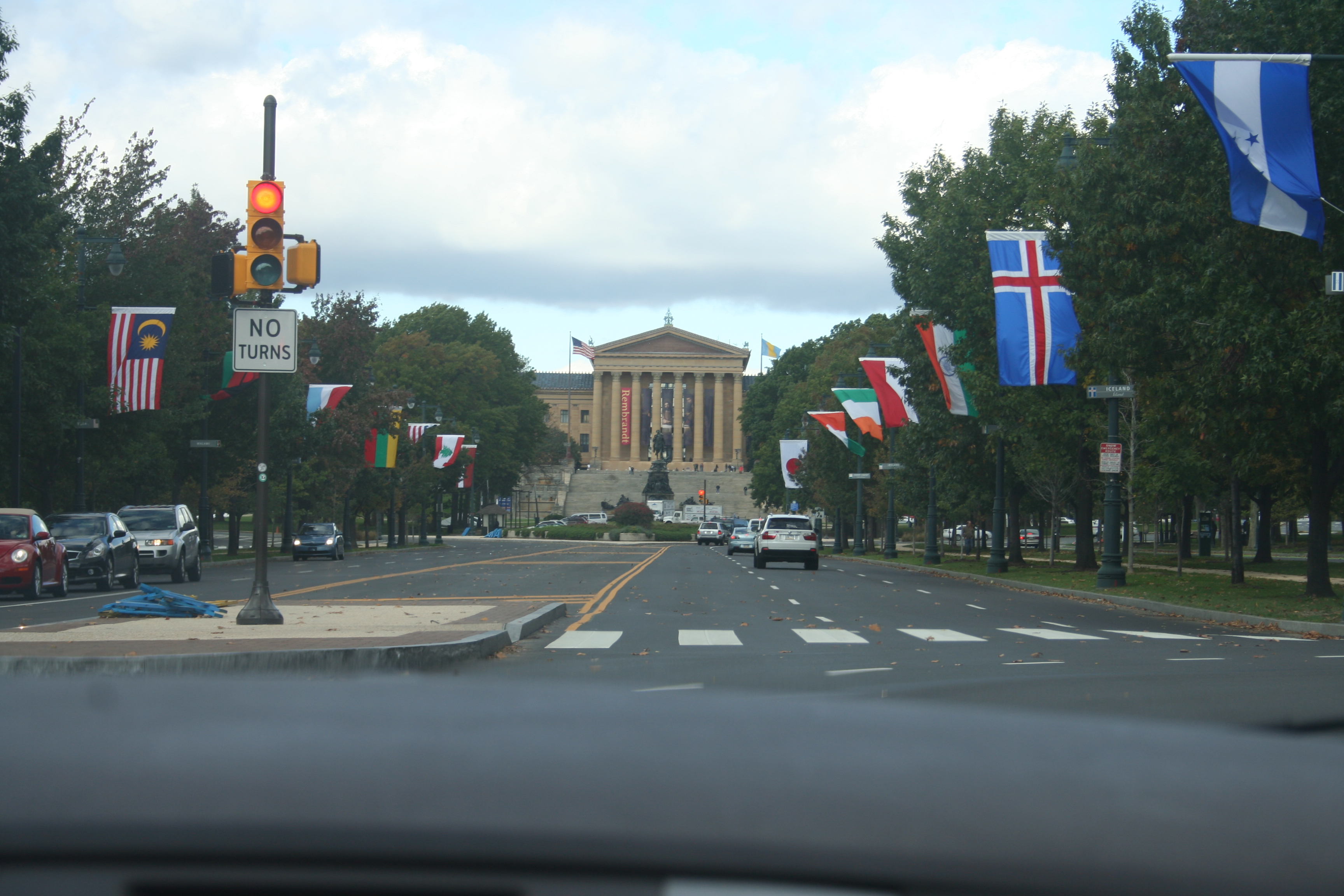
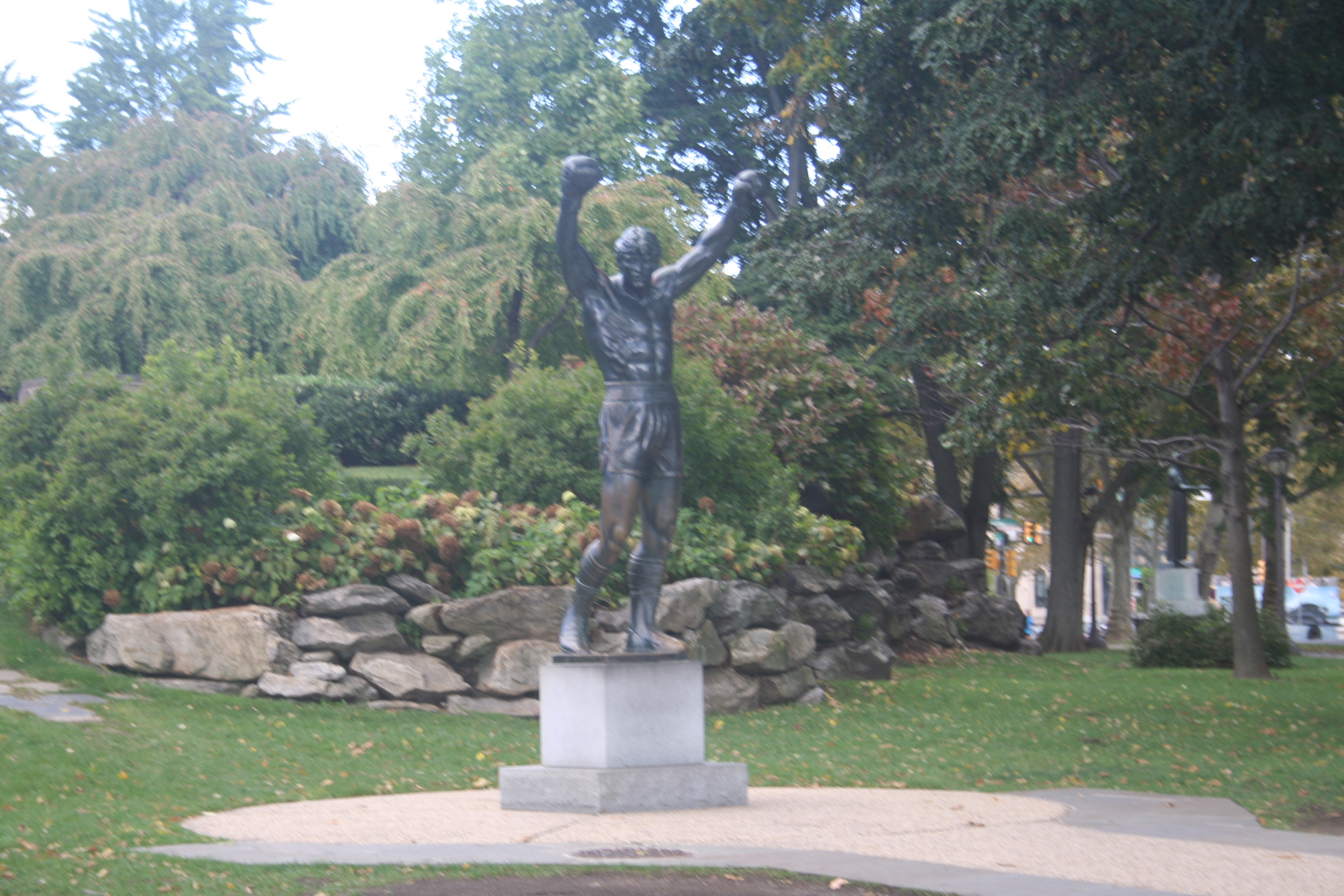
 Up at three for a drive to Orlando where we left the intrepid van in a lot and took a shuttle to the terminal for the first leg, a short flight to Philadelphia, where we had a significant lay-over before hopping the flight to Madrid.  We were picked up by Barbara’s long-time friend Dayle, who lives nearby in Delaware, and whisked off for a driving tour of some of the famous historic sites downtown.  Most impressive, even the statue of Rocky.

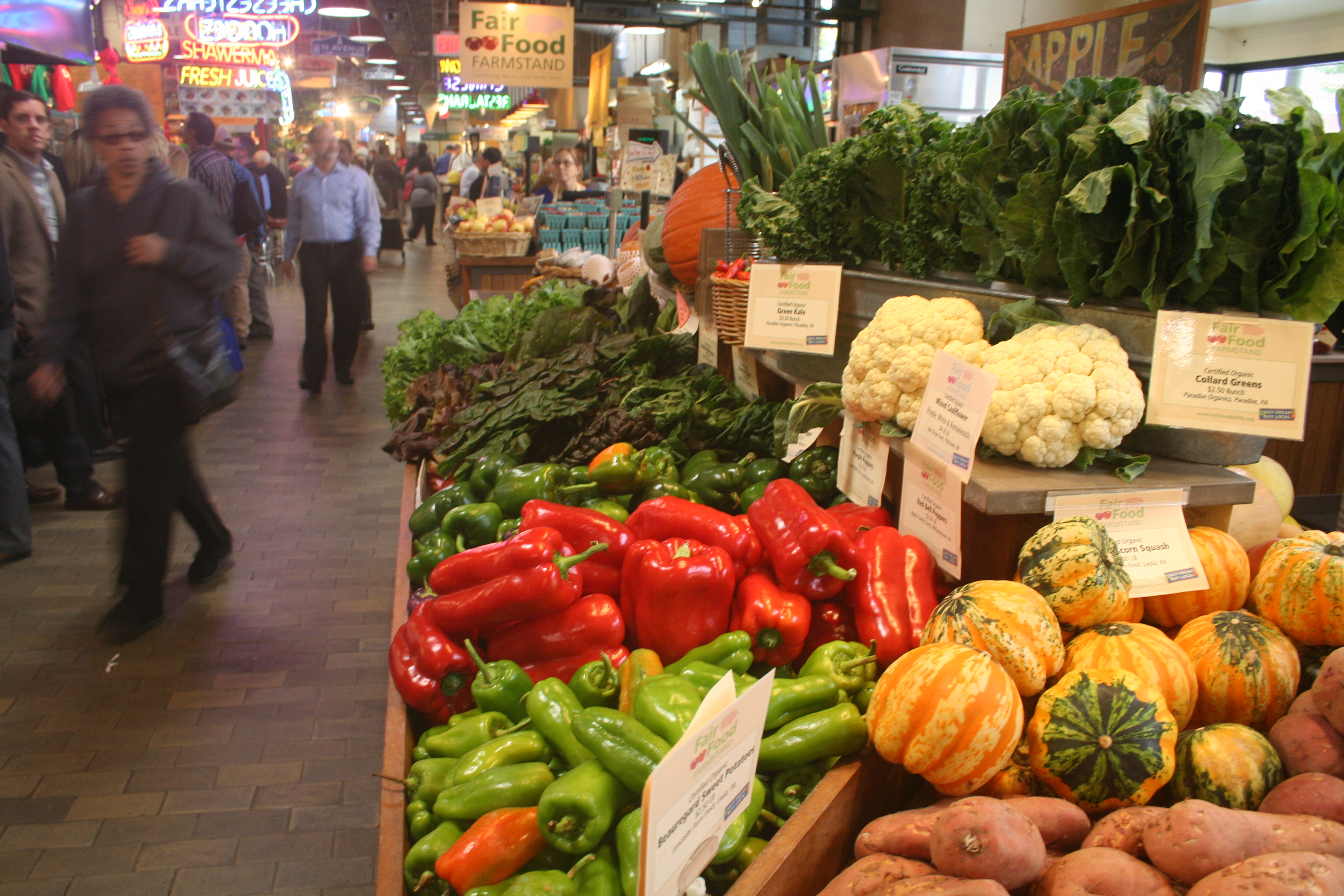
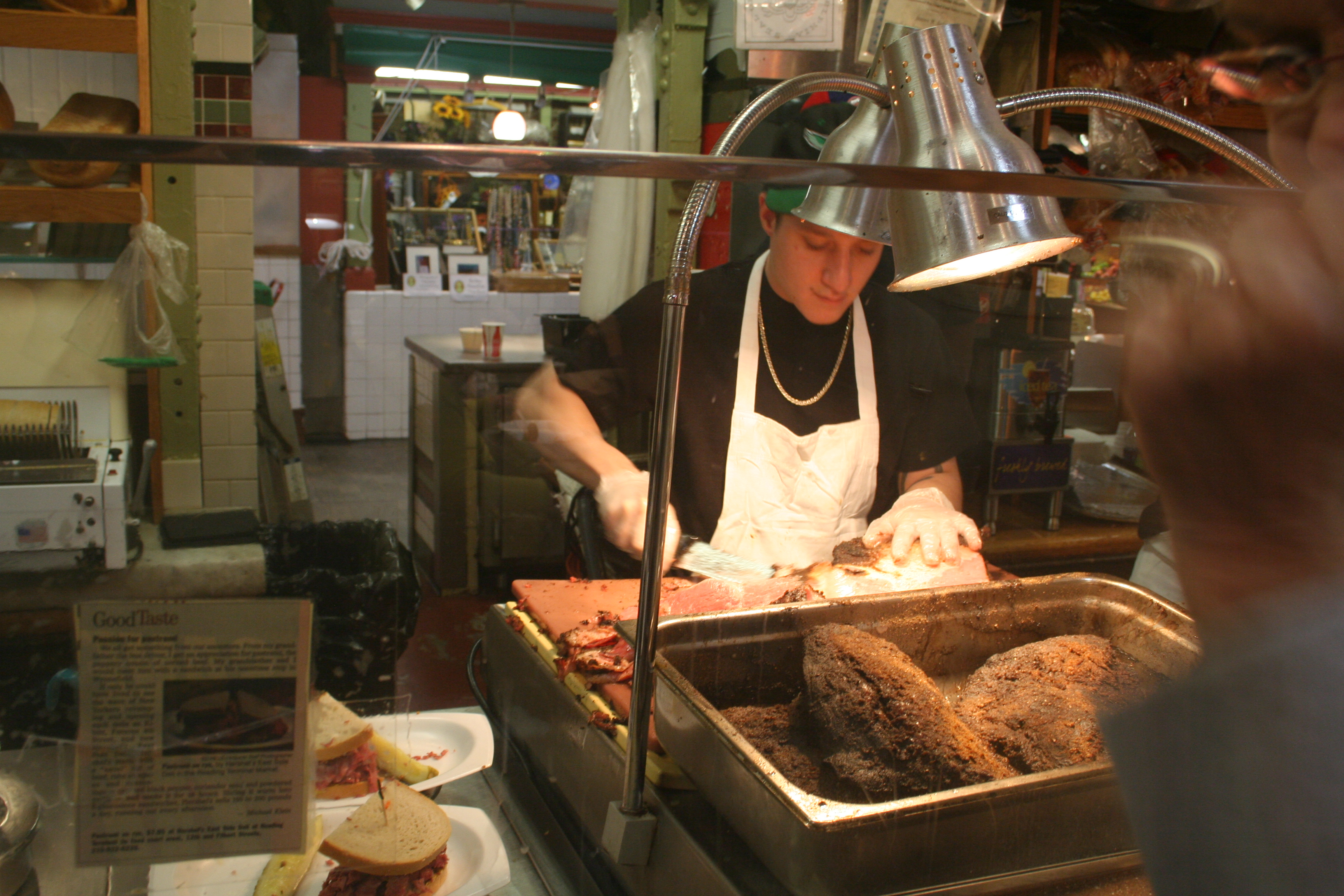
We parked in a garage and toured a wonderful indoor market place consisting of dozens of food vendors of every description, from vegetable and fish markets, to pizza and deli sandwiches, to breads and unbelievably tempting desserts.  Very European, and predictive of things to come. This place was huge, and bustling with a lunch-time crowd.  We made a pretty thorough inspection, somehow managing not to indulge at this point, then set off to meet Dayle’s husband Steve, who had promised to take us to his favorite place for Philly Cheese Steak.  We weren’t even in Europe yet, and the trip was already about food.

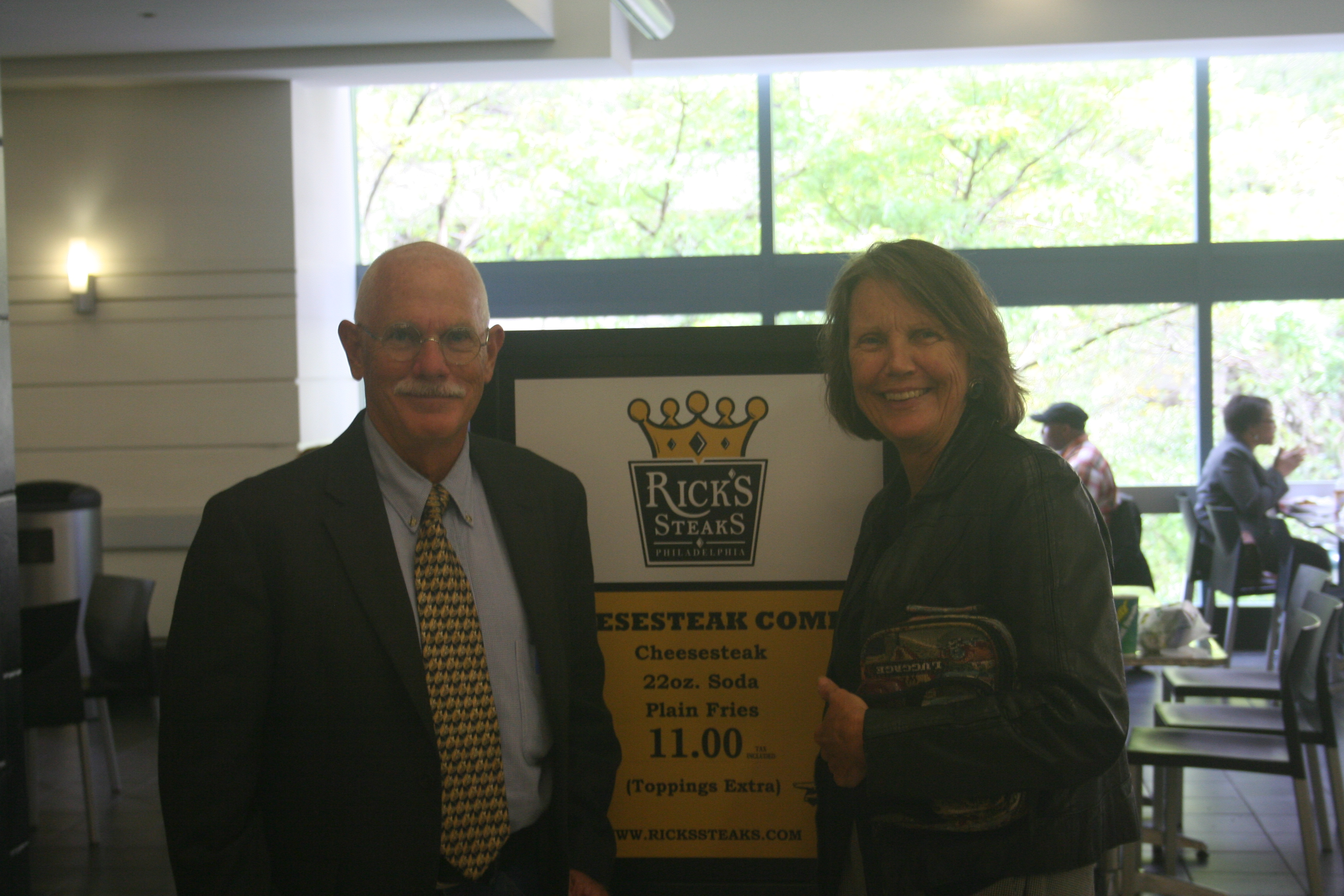
Though the place had moved since the last time he had been there, Steve successfully guided us to the new home of Rick’s Steaks, and we dove in.  Coached by a veteran, we knew to ask for a regular steak, with “Wiz,” meaning Cheese-Wiz, of course, which endeared us to the staff.  No food rookies on this junket.  It was delicious.

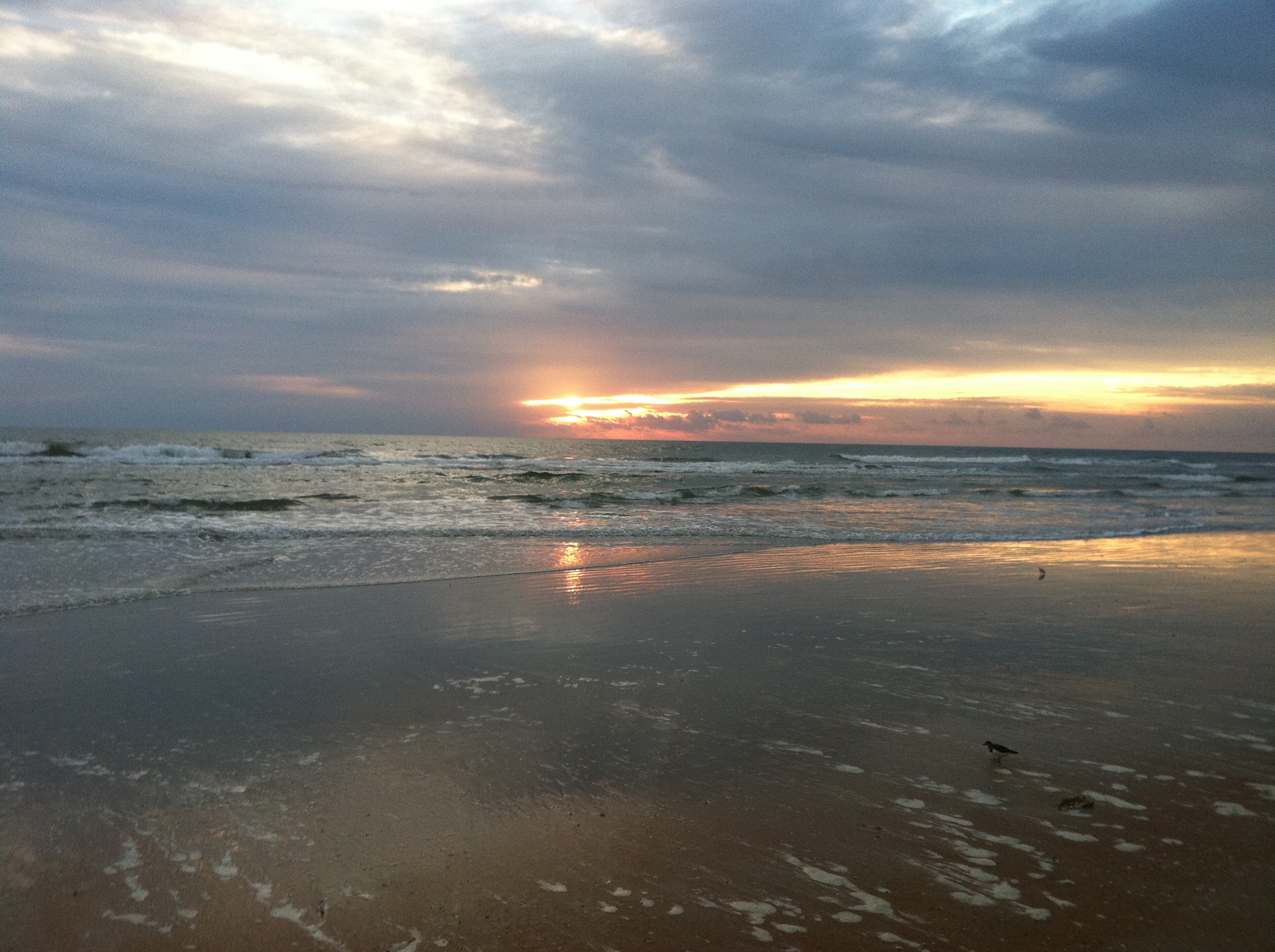
 On the way back to the car, we stopped in the market again and got a Reuben and a pastrami to eat on the plane, and then Dayle kindly deposited us at the airport.  A fine way to spend a lay-over, and good memories to carry onto what turned out to be a miserable flight over.  We’ve never been real good at sleeping sitting upright in a cramped space.  It was just six hour to be endured, made worse by a flight staff that was not only gum-smackingly rude, but downright hostile! Never seen anything like it.  Post-Modern Relativism at it behavioral worst.  Dozed a little finally and woke at seven to watch the sunrise from the air.  Pretty nice.  Landed in Madrid at 0840 local time, claimed our bags, and went looking for the bus that was supposed to deposit us near our hotel very near the city center.  Hang on.

Posted in Uncategorized | 3 Comments

A Little Mangrove Essay

 OK, so we haven’t cooled the presses just yet.  A little bike ride this morning with the sky closing in from the south and the beach littered with a variety of stuff, both natural and human inflicted, generated a little mind wandering.  A variety of recent weather systems, with on-shore winds and rough water, have washed in a lot of flotsam and jetsam, including a great deal of Gulfweed again, these seemingly containing a good bit of animal life, judging from the poking interest of sandpipers, plover, and willets.

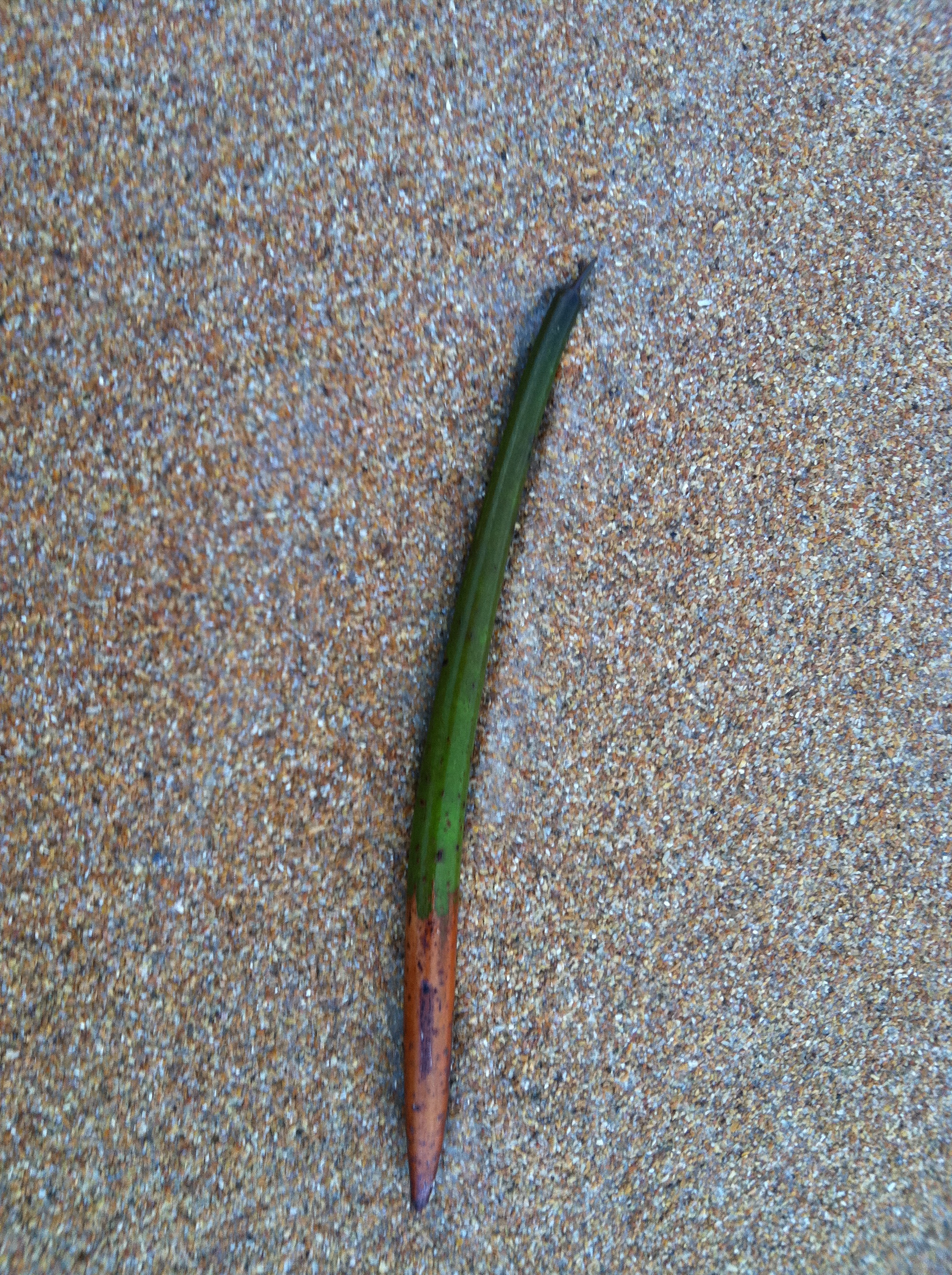
 And for about two weeks now, hundreds of these mangrove seed pods have been present every morning.  We call them seed pods, but they are actually called propagules, and are not seeds at all but fully mature plants.  They are, in essence, little mangrove trees. They develop and hang like dangling ornaments on living mangrove plants in estuarine shallows, eventually dropping off to float away with wind and current.  In water, they float vertically, with the fat end down, much like a fishing bobber, and, in fact, can be used as such in a pinch.  When one reaches suitable shallows, it embeds and starts growing.

These that wash up along our beach will never put down and develop.  The shoreline of the Atlantic is just too rough.  But some get carried by tides up into the various inlets and further into estuaries, where conditions of still, brackish water are favorable.  Seeing all the mangrove propagules on this beach, wasted, in a sense, invited a brief reflection on the astonishing width and breadth of selection and propagation in nature, and how similar it all is while being so incredibly diverse.  Millions of mangrove propagules dispersed with just a tiny fraction ever taking root; millions of thistle seeds scattered on the wind; millions of spermatozoa swimming in all respects, upstream.  It seems inefficient, but what grabs me is the enormity, and it works.  Well, it has so far, anyway.
Posted in Uncategorized | Leave a comment

Damage Assessments and Spanish Boots

It’s getting to be almost commonplace.  Our little unnamed, all-night outburst of last Sunday did more damage than any of the named storms that cruised by offshore through the summer.  The unnamed ones tend to sneak up on you; there’s no panic, because the weather guys are caught off-guard just like the rest of us, but there’s no preparation either. We kind of smelled this one and got the shutters down in time, but it was close.  It formed very quickly just off Skinny Island after lolling about as a weak low down in South Florida, and took down a great many palm fronds here, as well as two sections of fence and a gate. At first blush it appeared the beach and dune had not suffered any significant damage, but later in the week it became apparent there had been changes which will take months to undo.  This was the biggest blow we’ve had since the three hurricanes of the famous ’04 season, which carried an enormous amount of sand off the beach, and it took until just last spring to return the beach to its normal width.  This little ruckus of last week did much the same.  The ocean has moved back in.  The tides are much higher, even at low, leaving only a narrow band for walking and biking.  It’s going to take a while to replenish.   That’s the way it goes.

Once the storm cleared the weather for the remainder of the week was picture perfect, as Fall motorcycle mania, otherwise known in these parts as Biketoberfest kicked into gear. This event, along with its older and bigger brother, Bike Week, is not one of our favorite invasions.  We prefer jellyfish and locusts, so the less said the better.  In summary, they all feel the need to cruise A1A often and loudly, and this year, the weather was perfect.  The whole shebang culminates over the weekend, so we grasped a well-timed opportunity and fled.

Fled and were faced with a damage assessment of another sort.  We attended a multi-class high school reunion.  Classes graduating from 1963 t0 1976 were represented.  The people who looked like our grandparents were us, the people who looked like our kids could have been. It was at once inspiring and numbingly depressing.  We took no pictures.  But we spent quality time with wonderful folks, cementing old bonds and forming new ones.  I was struck, yet again, with what an exceptional group of individuals I had the good fortune to attend school and grow with, what wonderful stories, tragic and triumphal, their lives have been.  I love you all.  Live long and prosper.

And just as we have cranked up publication of the Post again, we announce yet another brief shut-down.  We are headed off to Spain for a few days, and the dollar being what it is, it’s just too damn expensive to publish from the continent.  We will keep a journal, however, and publish when we return in November.  Spanish boots of Spanish leather, anyone?

Posted in Uncategorized | 1 Comment