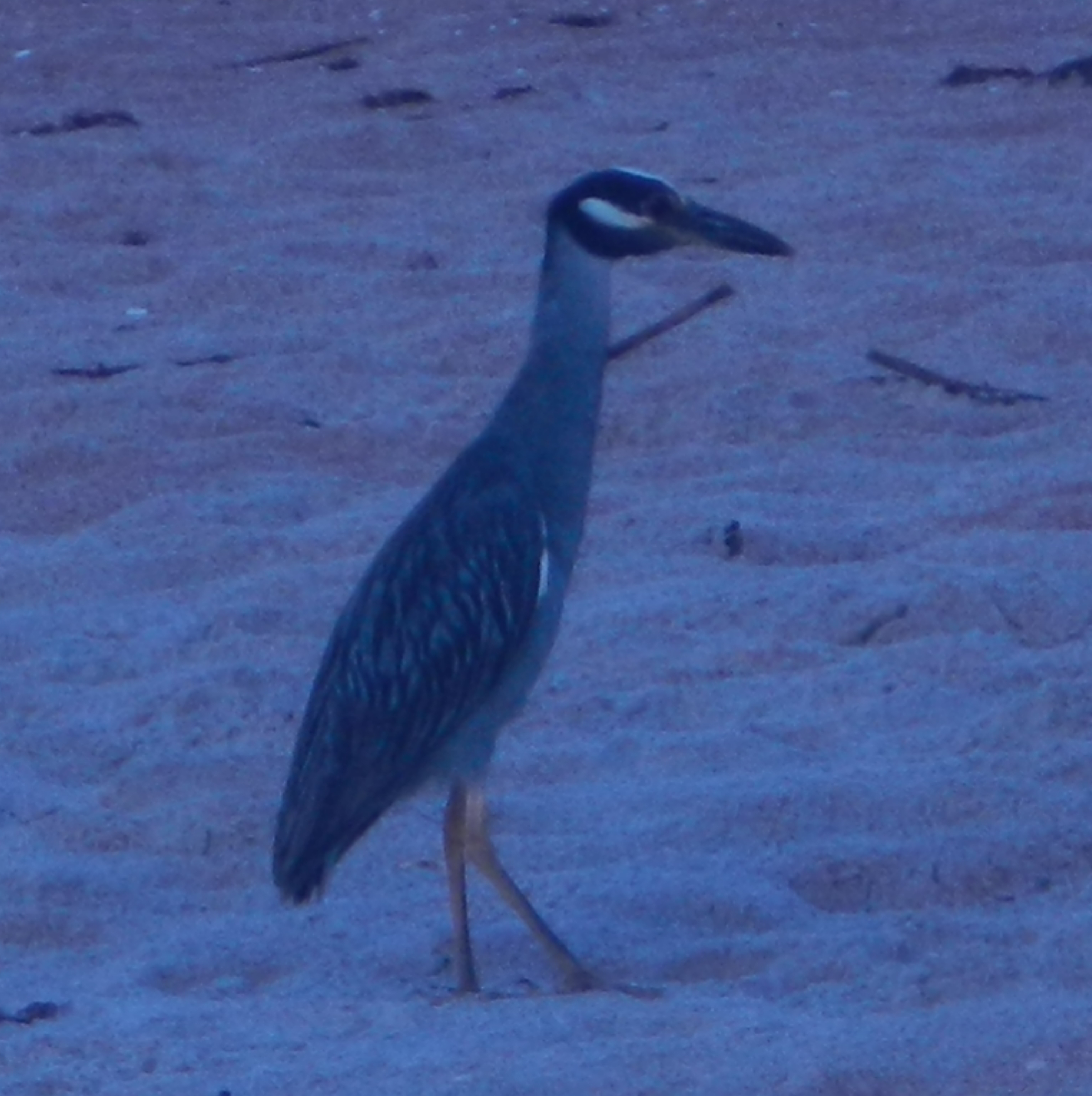
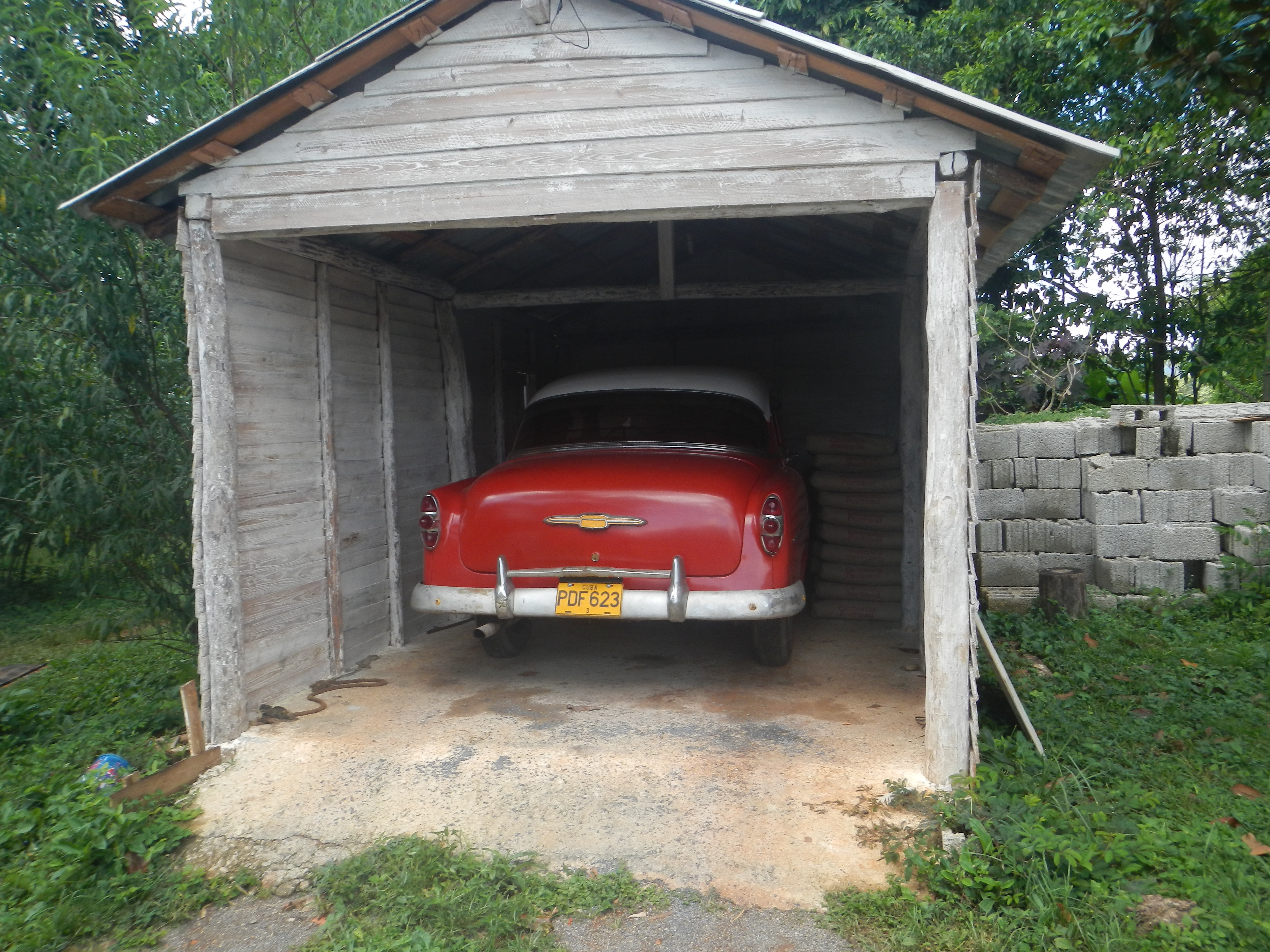
The Flower Avenue Gang

Dear readers, I know I promised you months ago to I would continue the saga of The Little Hacienda, and I shall, sometime, but life has intervened in the interim, and I have been thinking more and more, because of losses I cannot put to rest, of a sweet time when we were very young and still together, with all our life before us.  This, then, is a brief history of The Flower Avenue Gang, a chance gathering, for a brief time, of beautiful, extraordinary people who deeply affected our life.

We arrived in Washington as newly-weds for my posting at Walter Reed Army Medical Center in February of 1971, fresh from a year in San Antonio and a hastily arranged wedding in Daytona Beach, and thankful for our good fortune in the midst of an ugly war.  We were joined there by my good friend Dean Glosson, with whom I had trained in San Antonio, and his wife Frannie, expecting their first child.  Because Walter Reed had no on-base housing, we had to find our own lodging, and we did, Barbara and I, and our little dog Jimmie, at an ugly, massive apartment complex called Summit Hill, just north of the District in Silver Spring, and Dean and Frannie at a nearly equally depressing place not far away.  Dean and I were assigned to the same ward, a neurosurgical unit on the ground floor of the old Walter Reed facility.  I was making $525 a month, with a small housing allowance, but we lived well, even buying a spanking new Chevy Nova off the showroom floor on East West Highway that year.  Barbara worked in a bank down near the Cathedral for the first few months, then was accepted in a Dietetics Internship at Freedman’s Hospital, Howard University.  She agonized for several days whether to take it or not, but Frannie intervened one night, and told her she would regret it forever if she didn’t do it.  She took it.

Most days Barbara took the bus downtown to Howard and I took the car to Walter Reed.  I worked on an open ward, a nurses station at one end, then twenty or so beds on either side of the ward all the way to a kind of porch at the other end, which housed six beds, for high ranking officers, when we got them.  On one side of the nurses station was a private room, and on the other, a four-bed ICU.  The open ward was set up to accomodate fresh post-op spinal cord injuries on one side, and recovering boys on the other, including a lot of head injuries.  The spinal cord injuries, both Viet Nam casualities and stateside accidents, were sent to us on Foster Frames, a medieval kind of contraption consisting of a tight canvas sheet stretched on a steel frame on which the patient lay.  Nearly all also had crutchfield tongs, a large caliper device with screws into the side of the skull, which was attached by a cable to a set of free-hanging weights on a pulley at the head of the bed, which acted as traction on the spine.  There was absolutely no side to side turning.  Every two hours we were supposed to turn the patient, which entailed placing another canvas and steel rack on top of the guy, strapping it down, then flipping him over, and removing the canvas he had been laying on.  Day and night, every two hours, back to front.  For weeks, until they were stable enough to move to a regular bed and begin physical therapy.  These were paraplegics and quadraplegics, boys who would never walk again, some of whom would have no movement from the neck down.

We rotated all three shifts, generally ten days and four off.  Me, Dean, Wendy Frank, Steve O’Malley, and a guy whose name I can’t remember, and Kelly and Browner, two D.C. civilian locals.  Our Wardmaster was Sgt. James Jefferson, a hard-boiled medic with two Viet Nam tours under his belt, but a compassionate and fair man who treated us like sons.  Years after our discharges, he was still calling to see how we were doing.

The ten nights on, 11-7, were the toughest, but also, in a way, the most beautiful.  It was when you really got to know people, their stories, their pain, and sometimes, wrenching tragedy.  We had a kid that first year named Patrick Fawltenski, fourteen years old, and a military dependent.  He had spinal cord tumors, which kept recurring, despite multiple surgeries, but was a full-on trooper, with an attitude that kept everybody positive.  We all loved him.  One night, me, Dean, and O’Malley on, O’Malley took him in for a bath in the latrene.  Pat was pretty functional, despite his weakness, and O’Malley left him in the tub and stepped out into the ward for a smoke.  In those days you could smoke anywhere, and we did.  When he went back in, barely two minutes later, Pat was under water, and unresponsive.  We worked on him for over an hour, but we lost him.  O’Malley, of course, was devastated, even though the autopsy showed Pat had died of a respiratory arrest and did not drown.  None of us got over it.

And then there was Gary Ledbetter, twenty-three, a quadraplegic from diving into a shallow lake while AWOL.  Ledbetter was my special project, and I got to know him very well, especially on nights.  We talked a lot because he didn’t sleep much, even after he moved into a regular bed.  One night, after he’d been there about five weeks, he called me over and told me he had been working really hard in PT, and was now able to use his hands and arms.  I was overjoyed.  It meant so much that he was at least going to have that function.  Duties interrupted, and I set about emptying urinals, and turning patients.  Toward dawn he called me over again and said, “I was just shitting you, man.  I can’t move a thing.”  The things you remember.

Most of our guys moved to a VA hospital when they left us, and from there, I don’t know what happened to them.  Urinary tract infections usually got them eventually.  When Sgt. Jeff called for the last time some seven years later, he said Ledbetter was still alive.  After that, I don’t know.

When our year lease was up at Summit Hill, Barbara found an apartment in a small complex on Flower Avenue in Tacoma Park and we moved there.  As luck would have it, another apartment was available just across the hall from us, and Dean, Frannie, and their baby boy, Josh, moved in.   Other friends joined us as apartments became available.  Linda Dunn, one of our nurses on Ward 10, and her husband Tim moved into an adjacent building, and Danny and Kathy Osborne, friends of Tim and Linda from upstate New York, took an apartment on the ground floor of our building.

I was playing a lot of guitar in those days and writing songs, all of which was heavily encouraged by this gang, on a nightly basis, fueled by cheap wine and cannabis.  Danny had a friend who was a sound engineer, a kid named James, and it was arranged for me to lay down some tracks at a studio James worked with.  Early one Saturday morning, with Danny driving, he, Tim and I went looking for the studio in D.C.  As expected, the chemistry kicked in and we got hopelessly lost.  The studio was in a building that housed WHFS radio, a very popular FM station, known as “Bigger than a breadbox radio.”  At one point, amid a rash of giggling, Danny pulled over and asked a kid on a bike, “Hey, can you tell us where Bigger than a breadbox radio is?”  Amazingly, he knew; we actually weren’t far away, and we eventually made it.  I laid down five songs, and we were done.  I thought it was pretty good, but I didn’t hear from the studio for several months, as we were packing to leave for Tallahassee, actually, asking if I wanted to do some commercial work.  I didn’t, we left, and that was that.

Sort of.  On another occasion Tim arranged for me to play at a place out in Maryland called “The Tin Dipper.”  They had a Thursday night contest where you got up and sang with the house band, and the weekly winner got to be on the radio.  I was next to last on the program and played, “It Takes a Lot to Laugh, It Takes a Train to Cry.”  The band was perfect, and we killed it.  Following me was a blind guy who sang some soulful country ballad, who killed it even deader.  His name was Ronnie Millsap.  End of story.

Between our apartment and the Glosson’s across the hall was another in which lived a family called Rides-at-the-Door.  They were Lakota Sioux, and on Saturday nights, they had a Native American drum circle in their apartment.  They had two beautiful little daughters, and were amazingly lovely neighbors.  They went back to Montana at one point while we were there and he brought us back a hunk of venison.  Rancid venison, as it turned out, but it was the thought.  Unfortunately, Mr. Rides-at-the-Door was a sad drinker, and many a morning I would see meet him staggering in as I was going out to work.

In June of that year I was diagnosed with bilateral inguinal hernias, from yanking around big, inert GIs, and surgery was scheduled to repair them.  They decided to do two separate operations, so I had the first, then had a thirty-day recuperative leave, then the other, and another thirty-day leave.  We had no AC so I spent a large part of those sixty days soaking in cool water in the bathtub.  It was during one of those soaks that Dean came in and told me that Rick Gilson, another of our pals from the San Antonio days who had also come to DC, had committed suicide.  Rick had already been discharged, and was living in Connecticut.  His life-long dream was to go to medical school, but he’d been rejected multiple times.  I guess he couldn’t live with that.

But the real story is the bonds we formed that year on Flower Avenue.  We were kids, still learning how to be adults, all of us in love, and dependent on each other in a way that would never be equaled.  Jam sessions and marathon record listening down in Danny’s apartment, walks up to the Flower Avenue Theater for movies, Sligo Creek Park in the snow, badminton in the yard, trust and sharing, putting it all together.  On my days off I played guitar all day in the apartment alone.  I didn’t know until recently that Frannie, across the hall with baby Josh, was listening, and loving it.  That is special.  When we got out Barbara and I moved back to Tallahassee, and Dean and Frannie and Josh came to visit.  We then moved to the Daytona Beach area and Danny and Kathy moved to a town nearby, and we saw them frequently for a few years.  Tim and Linda ultimately divorced, and Tim moved to the area and remarried.  Tim died three years ago.  Danny and Kathy have endured some rough times but are still together.  We saw them at Tim’s funeral, but not since.  We remained close to Dean and Frannie, and have come to know Josh and his beautiful family.  And then Dean died last spring, and that’s what got me thinking again about The Flower Avenue Gang, because that time sits out there somewhere eternally, whole, intact, and beautiful, and always associated with my friend Dean.  See, despite all I know; fifteen years as a hospice nurse dealing with death, I was not ready, or have been able to successfully assimilate Dean’s death.  How can I?  Dean was, and is, eternal, an integral part of a time that never grows old, never dies.  It doesn’t fit.  When we last saw him, the four of us spent several wonderful days in a cabin on lake Superior in the UP of Michigan.  Barbara, Frannie and I sat bundled in blankets on the beach, while Dean did a swim in the 50 degree water, loving it.  Not macho; just Dean.  Loving it.
Posted in Uncategorized | 2 Comments

The Little Hacienda, Part I

The Little Hacienda

The Little Hacienda

Some of this will be familiar to long-time readers of the SIP, but time, reflection, and conditions beyond our control have urged a reappraisal and consequent renewed appreciation of the venerable house in which we have lived for seventeen years, affectionately known as The Little Hacienda.  The older we get the more we appreciate older things, I guess. Anyway, if we’re not careful, there could be a book in this.

And there is a story to be told about this place, just as there is for any structure of advancing years.  Some of that story can be gleaned from property, sales, and tax records, but some of it, maybe most, you piece together in other, less empirical ways.  For example, this place has faced the Atlantic Ocean head-on for several decades.  That’s a lot of heavy weather that builds character.  You just have to know where to look to appreciate what that means.  You have to live through enough seasonal changes, nor’easters, dry summers, rainy summers, the occasional freeze, tropical storms and hurricanes, not to mention the daily, relentless incursion of salt air, to get it.  Over time you begin to understand and feel something of the cyclical nature of things that resonates in a place.  All this forms a kind of narrative floor for the story of The Little Hacienda, but imagination and speculation, informed by some extraordinary encounters, personally, anecdotally and in artifacts, with the prior owner, are the walls and windows.

Watch Tower

Watch Tower

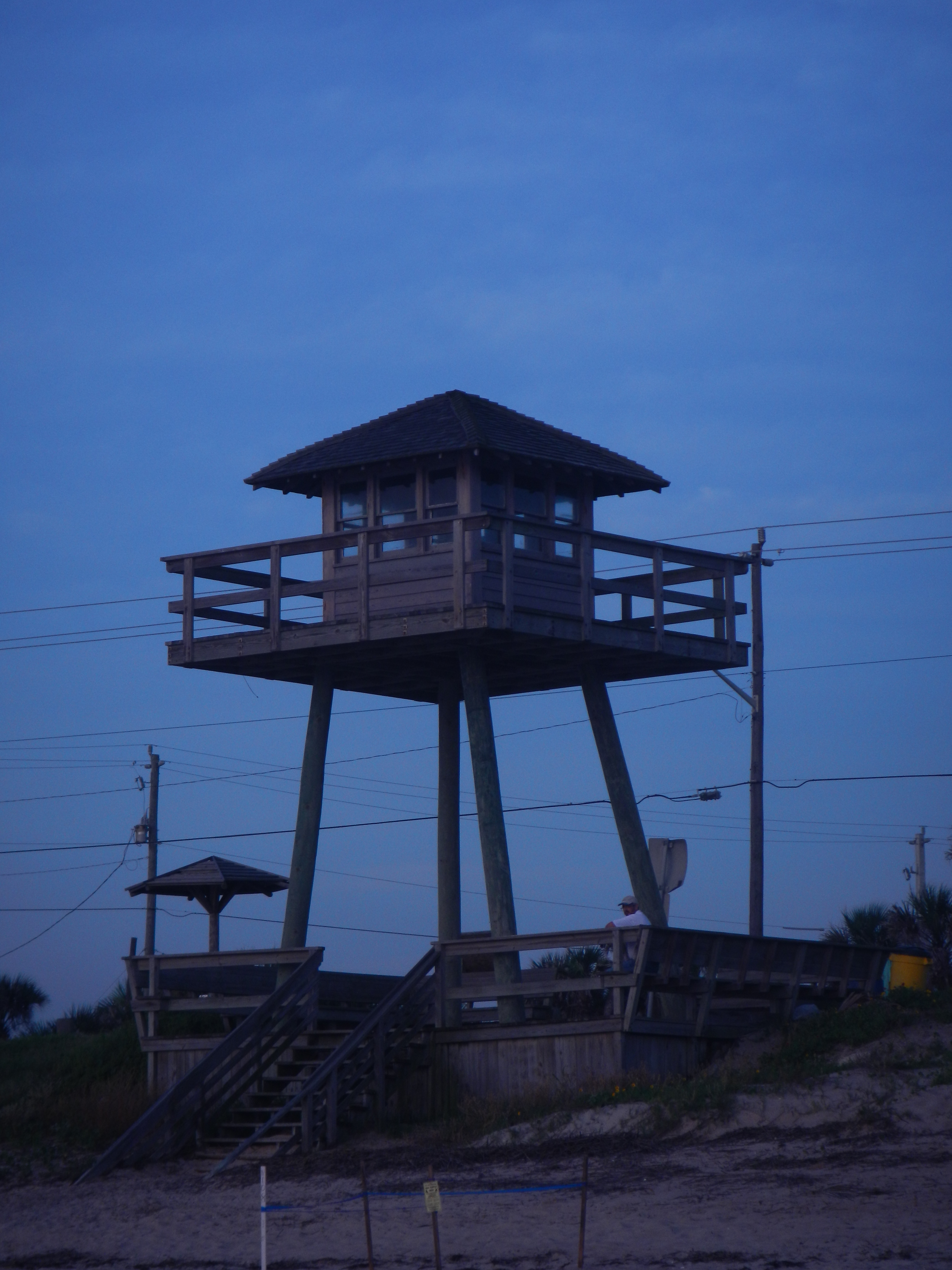
Records indicate the house was built in 1949.  I was two years old, probably just beginning to toddle out from under a table at the Columbia Restaurant across the state in Tampa. We have friends who lived for several years in a 200 year-old farmhouse in western Massachusetts, so compared to that 64 years is nothing.  But this is Florida, and most everything is a lot newer.  There couldn’t have been much up here, five miles north of Ormond Beach, in ’49.  The place next door was built sometime in the 50s, so there were neighbors, but none of the condos existed then, and the little two-bedroom, tile-roofed places on the streets between the ocean and the Intracoastal weren’t built until the mid to late fifties and sixties.  I haven’t been able to determine whether there were any other houses at the time, or before, along the beach road, that have long since been torn down or blown away, but I suspect there were.  I know there are none on this stretch of Skinny Island that are older. The only war-time structure still standing is the watch-tower a half-mile south of us that was one of a series on the coast used to watch for German submarines.  Legend has it, by the way, that a four-man expedition from just such a sub made it ashore somewhere in Ormond and disappeared, so I guess the folks in the towers that day (or night,) were napping, and perhaps the descendants of those mariners are living nearby, their fathers or grandfathers having made a decision favoring sand and surf over goose-stepping and great beer.  A woman in her 80s with a decidedly German accent is a regular walker on the beach.  I say I suspect some earlier inhabitants because, after Hurricane Charlie in 2004 scoured out tons of beach sand, a long section of hewn timber with evidence of nails and pilings, could be seen jutting ocean-ward just south of us, looking for all the world like the remnants of a pier.  It was covered again in a couple of weeks.

Coquina Slab

Coquina Slab

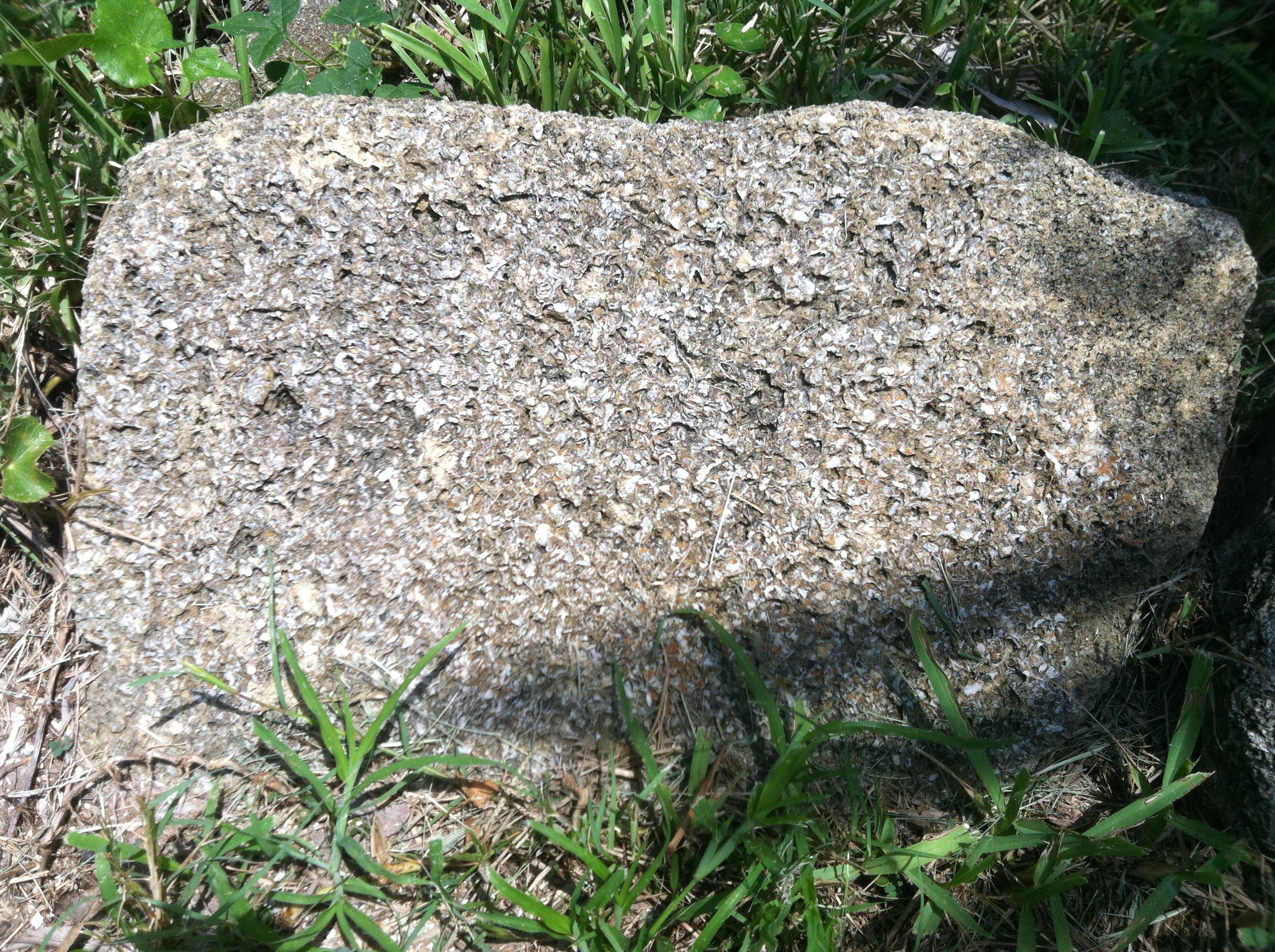
Anyway, I like to think about how nearly desolate it was here in those days.  A1A ran out front, but there couldn’t have been much traffic. By ’49 A1A had become pretty much what you find today, a more or less continuous highway from Key West to Mayport, although there have been changes and realignments as recently as the 80s.  There was a significant, state-long realignment in 1945 that connected all the many pieces.  Prior to ’45 the highway was a loose confederation of county roads, not all of which connected, of various surfaces, from asphalt to shell midden to just sand.  One of the interesting artifacts we have in evidence here at The Little Hacienda, are some 50 coquina slabs marking borders and walkways, and put in place by the prior owner.  They have clearly been cut to offer a flat surface, and my research indicates that rock like this was used to form the roadbed of A1A in this area.  I believe when a resurfacing occurred, our intrepid owner, (whom we will get to shortly) acquired a significant number, and used them in landscaping.  As to the highway itself, though iconic, it is our only impediment to beach access, and while we have noticed a significant increase in traffic in the years we have been here, (we sometimes have to wait several minutes to cross,) it is not hard to imagine, with some 18-million fewer people in the state, how it must have been little more than a scorcher of bare feet in the 50s and 60s.  I fantasize about living here in the 60s, around the time I was making my first forays into the surf up at Jax and Neptune Beaches, after a brutal drive from Tallahassee.  To just walk across the road at 16 with a nine-six Dewy Weber tucked under my arm?  ‘Nuff said.  It’s still perfect.

From the Hammock

From the Hammock

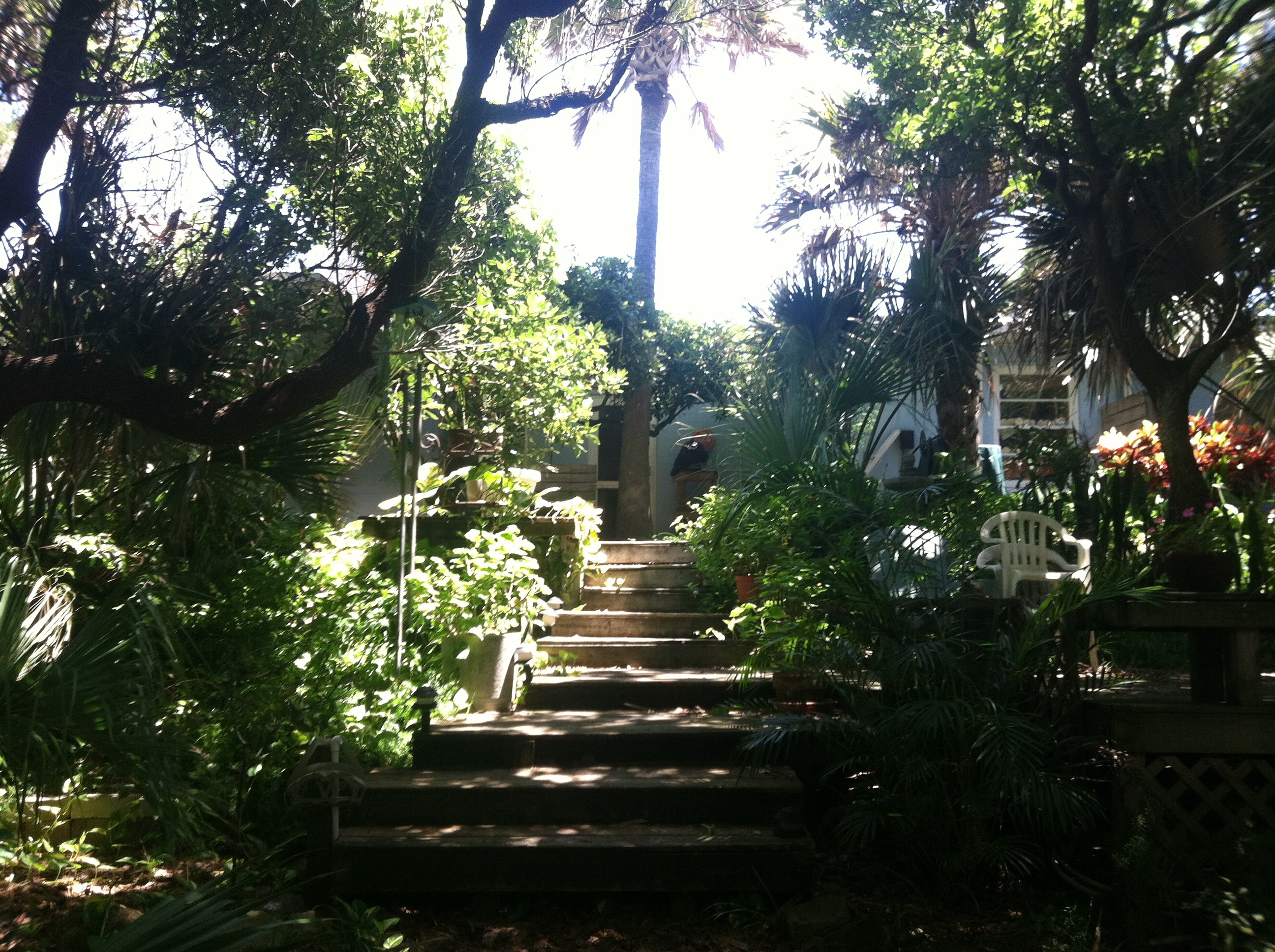
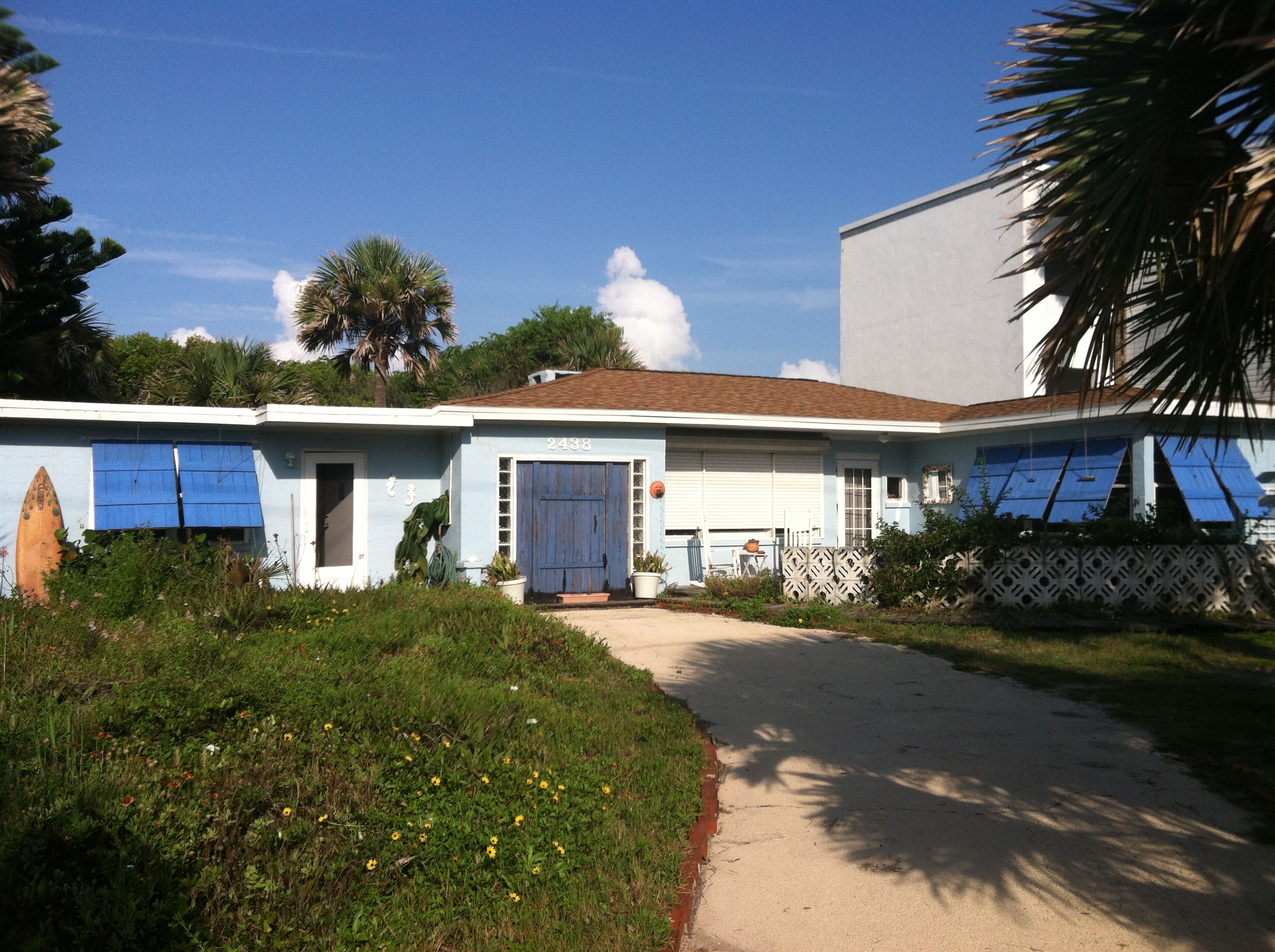
As I have related before in these pages, we pretty much fell into this place.  We had been riding with a realtor and on our own for weeks, searching for places we could afford on the streets perpendicular to the ocean, and had passed this house many times.  It was empty and for sale, but being on A1A facing the ocean, we assumed we couldn’t afford it.  One day Barbara was with the realtor and he pulled in.  She said something like, “Oh, we can’t afford this,” to which he replied, “Oh, I think you can.”  She gave it a good look, and was sold by the view from the back woods up to the house.  The house sits atop what was the second dune from the ocean, before the highway construction, and the terrain falls off some 12 feet right behind the house, to a thick Florida Hammock of palmettos, Florida Bays and such.  It was all like this once, but almost every other lot had been bulldozed level.  The catch, as was clear when I first saw the place, was that it needed extensive work, having been abandoned for some time.  Turns out the day the realtor showed it to Barbara he’d had a closing on the place, the buyers being a couple in their eighties, but the old lady bailed at the table, citing the vast work that had to be done to make the place livable.  Being much younger, (than them, and what we are now,) we jumped on it and struck a ridiculous deal.  The owner had died in a nursing home in Ft. Myers, (interesting, as we shall see,) and her brother wanted to unload the place.  Closing was contingent on an official inspection of the integrity of the place, and our own inspection indicated some old evidence of termites in one of the rafters in the attic.  In addition the flooring throughout most of the house was old asphalt tile, and it was broken and loose in several places, a definite environmental hazard.  Somehow, we acquired the keys even before we owned the place, and I moved in, alone, to make some repairs.  Interesting, and at times spooky.

TLH

TLH

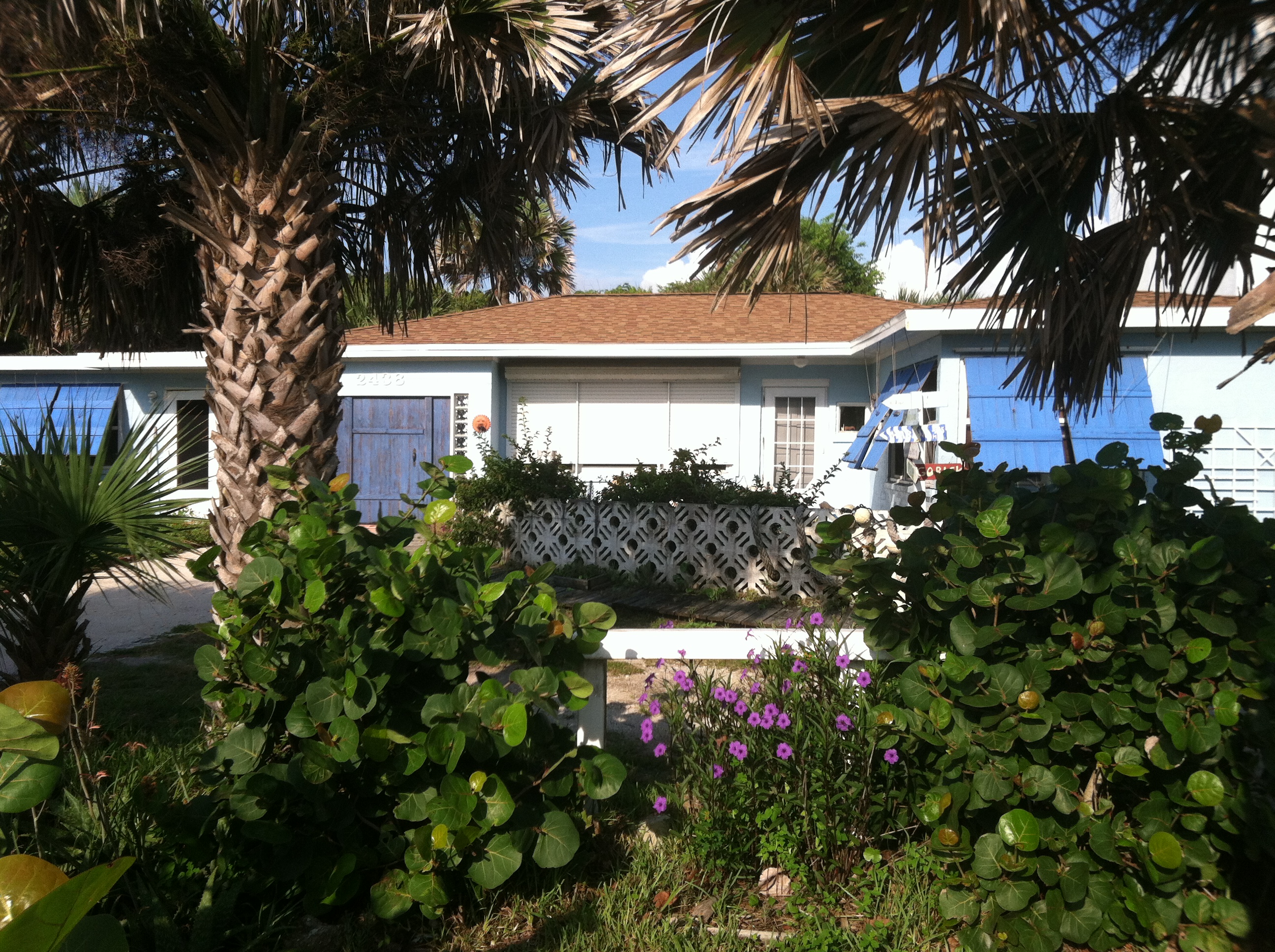
Here I will close this installment in the same fashion as every chapter of my favorite book when I was a wee lad, Uncle Wiggly’s Adventures, given to me for Christmas in 1951 by my Aunt Eva.  Uncle Wiggly, if you don’t know, was a gentleman rabbit who always found a way to get into some kind of jam, and every chapter ended with a cliff-hanger of sorts, and read something like this: “And in the next story, providing our wash lady doesn’t put my new straw hat in the soap suds and take all the color out of the ribbon, I’ll tell you about Uncle Wiggly and Fido Flip-Flop.”  Got me every time.  So . . .  unless the palmetto bugs finally unionize and begin making demands we can’t in good conscience grant, in our next installment of The Little Hacienda, I will tell you all about the several years of back-breaking labor that turned this place from a haunted dope den into the sweet little blue-shuttered place it is now. Thank you.

Posted in Uncategorized | 2 Comments

Limpy and Pei Wei

One of the many joys of living in close proximity to the great Atlantic is the opportunity to observe the several species of shorebirds that forage and nest along the beach.  Watching their feeding and behavior patterns has been a source of amusement, wonder, and profound instruction. They are like the ocean itself, always changing, but constant at the same time. The following story has had legs, if you will, for two years, but I haven’t been able to get it out because the behavior of the subjects, Limpy and Pie Wei, while following age-old patterns, seemed at times, in my ignorance, erratic, inexplicable, and then insignificant, and I gave up on it several  times.  But the recent sighting of one of the subjects, after a lengthy absence, brought it all into focus.  I will explain.

Pei Wei

Pei Wei

Pei Wei is a sandpiper, indistinguishable from the hundreds of others of his species found everywhere on the beach here, except that, since the early spring of 2011, he could be seen foraging in the shallows every day right out in front of the Little Hacienda.  These are very territorial little birds; they stake out a section of beach some fifty yards wide and vigorously defend it against others of their kind.  Their diet consists of small sand fleas and other crustaceans, and their diminutive stature, short legs and beaks keeps them from venturing any deeper than a few inches in the ocean.  They have adapted to finding food in the wet sand of a retreating wave, and are, therefore, not in competition with any of the larger birds.  That said, we have witnessed numerous spirited confrontations between sandpipers contesting a particular section of sand.  They puff out their feathers, hunch their little shoulders, and scold in a high-pitched, staccato.  Pei Wei has been consistent and persistent, and we are certain it is the same bird because of the territory, and because of his unique relationship with Limpy.

Limpy

Limpy

There is no mistaking Limpy.  He is a Willet who we first noticed about the time we did Pei Wei, in early spring, and is distinguishable from all the other Willets by his crooked left leg, which causes him to walk with a distinct limp.  He flies perfectly well, but walks with a limp, probably the result of a fracture.  Early on, we weren’t sure he would make it, but toughed it out through that summer, fall, and into 2012.

The long legs and long beak adaptations of the Willet allow it to venture farther out into the surf than the sandpiper, in search of the fat sand fleas that burrow several inches deep in the surge.  The sandpipers feed on much smaller crustaceans in the wet sand.  For months, every time we would be down on the beach, from early morning to late afternoon, we would invariably see these two working the same stretch of beach, apparently oblivious to each other, but to our eye, compadres.

Then, in mid-summer, Limpy was nowhere to be seen, along with nearly all the other Willets, and for the first time, we became aware of their seasonal movements.  Most of the sandpipers left as well, and without Limpy to define Pei Wei, the remaining few were indistinguishable, and I figured that was the end of the story. Knowing both the Willets and sandpipers would return in cooler weather, I did not believe the same birds would return to the same beach.

But they did.  In early spring we spotted Limpy, on the same stretch of beach as always, and within a few days, in his wake, a scampering little sandpiper.  Shortly after these sightings my health calamities became a distraction, and I lost track of the little birds. When I regained some sense of time, place, and health some six weeks ago, and returned again to the beach for walks, they were gone.  But here’s the news flash: Barbara reported earlier this week that she had seen Limpy, right where he should be, and some fifty yards away, a solitary sandpiper.  I have yet to confirm the sighting, but I do not doubt it. Female sea turtles return year after year to the exact beach on which they were hatched to lay their own eggs, and I guess Willets return, for perhaps the same reason, to the same beach, year after year.  Had it not been for Limpy’s unfortunate deformity, I would never know this, all Willets being more or less identical.  For our purposes he was tagged in this way so that we might have a better understanding of the behavior of these beautiful, timeless creatures.  Limpy’s disability has apparently not caused him any long-term problems– he hobbles perfectly well and successfully after sand fleas, and fights off territorial challenges from more fit Willets– and it has given us a sweet insight into this particular aspect of nature, and graced us with an even deeper understand of the interrelatedness of all things than we already had.   As to Pei Wei, while we have no empirical evidence he  is consistently the same bird, we choose to believe he is, and that feels good,  too.

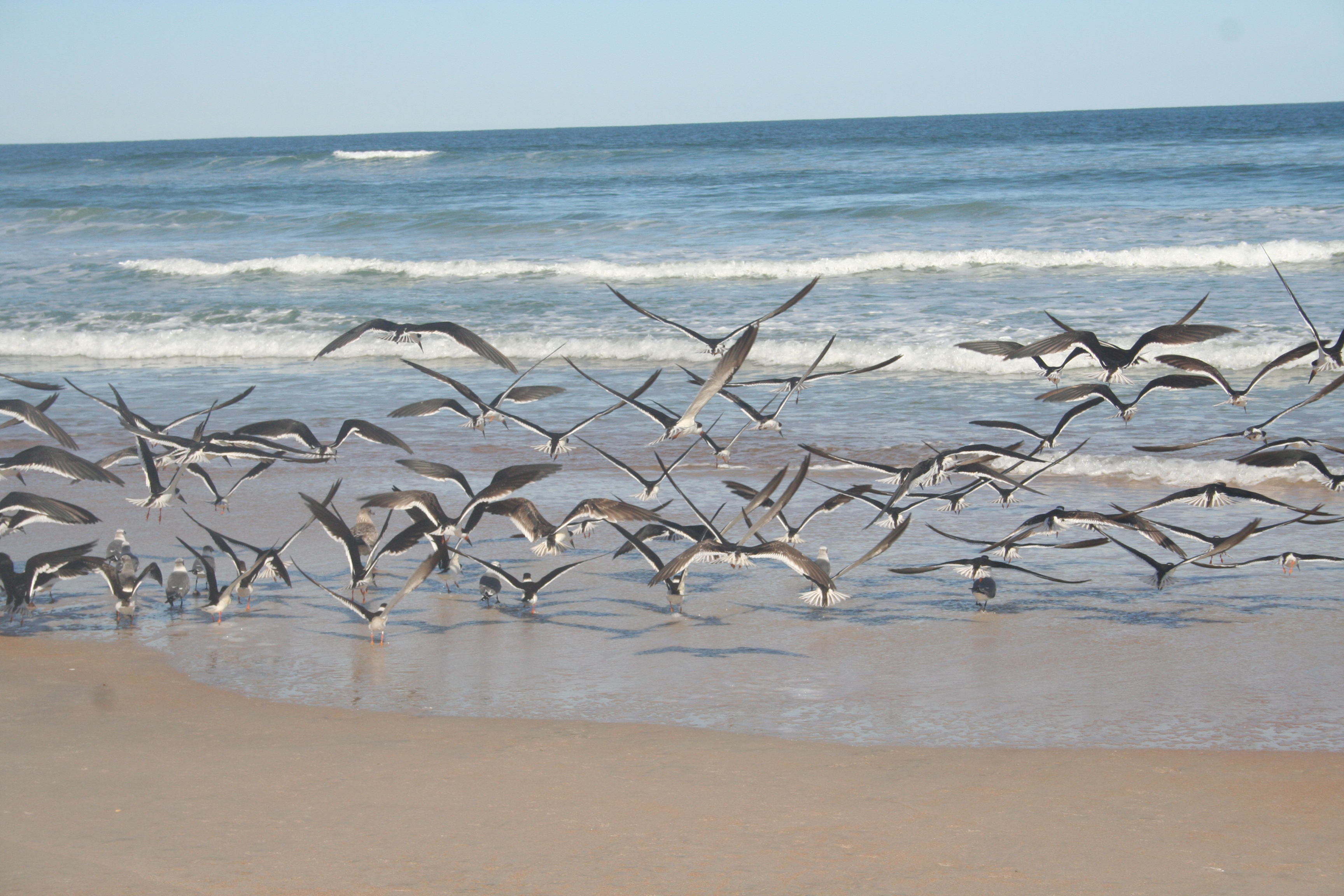
Skimmers

Skimmers

Posted in Uncategorized | 2 Comments

A Consuming Fantasy

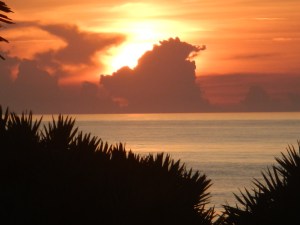
Sunrise 7-12-13 003It’s been a crazy summer thus far on Skinny Island, and not just because of health issues and lost friends.  I’m talking weather now.  A lot of pieces have come together to make this happen, probably not the least of which is climate change, but that’s a subject for another day.  Except to say that our weather has changed over the last couple of years, and while that is a long way from announcing any climate change here for Skinny Island, it is the first step.  We have yet to break 90 degrees; we’ve had a record-breaking amount of rain; and we’re covering up with sheets at night!  Unheard of for mid-July.

Rain

Rain

The first thing I look at to begin explaining this is the ocean temperature.  The Atlantic moderates all weather in one way or another here on Skinny Island, and this year its behavior has been quite pronounced.  Dropping into the 50s by late winter, it usually breaks 70 by mid-April at the latest, a harbinger for increased fish activity and shore bird foraging.  Things come to life.  We didn’t see 70 until late May and as of this date, July 16, it has still not broken 80.  By contrast, the Gulf temperature today at  St.  Pete Beach was 85.  Very interesting. When the ocean stays cool, we stay cool. And then there’s the rain.   As I have related before on these pages, the way we are situated, out on the edge of the continent, on a barrier island, generally precludes us from receiving the afternoon showers that ramp up down the spine of the state and roll toward both coasts.  The reason for this event is the sea breeze, caused by heating of the land mass between the two great bodies of water through the morning and early afternoon hours.   This air rises, of course, drawing in air from the cooler water bodies, and where these sea breezes collide, storms develop.  This has occurred, as usual, but we’ve also had numerous systems, large and small, drawing moisture up from the south, and both the Gulf and Atlantic, that in conjunction with a very southerly dip of the Jet Stream, had kicked off an abundance of rain.  Even for us.  We’ve had a number of long dry spells, but a lot more rain, from all directions, than I can remember here.

Beach Sun Flowers

Beach Sun Flowers

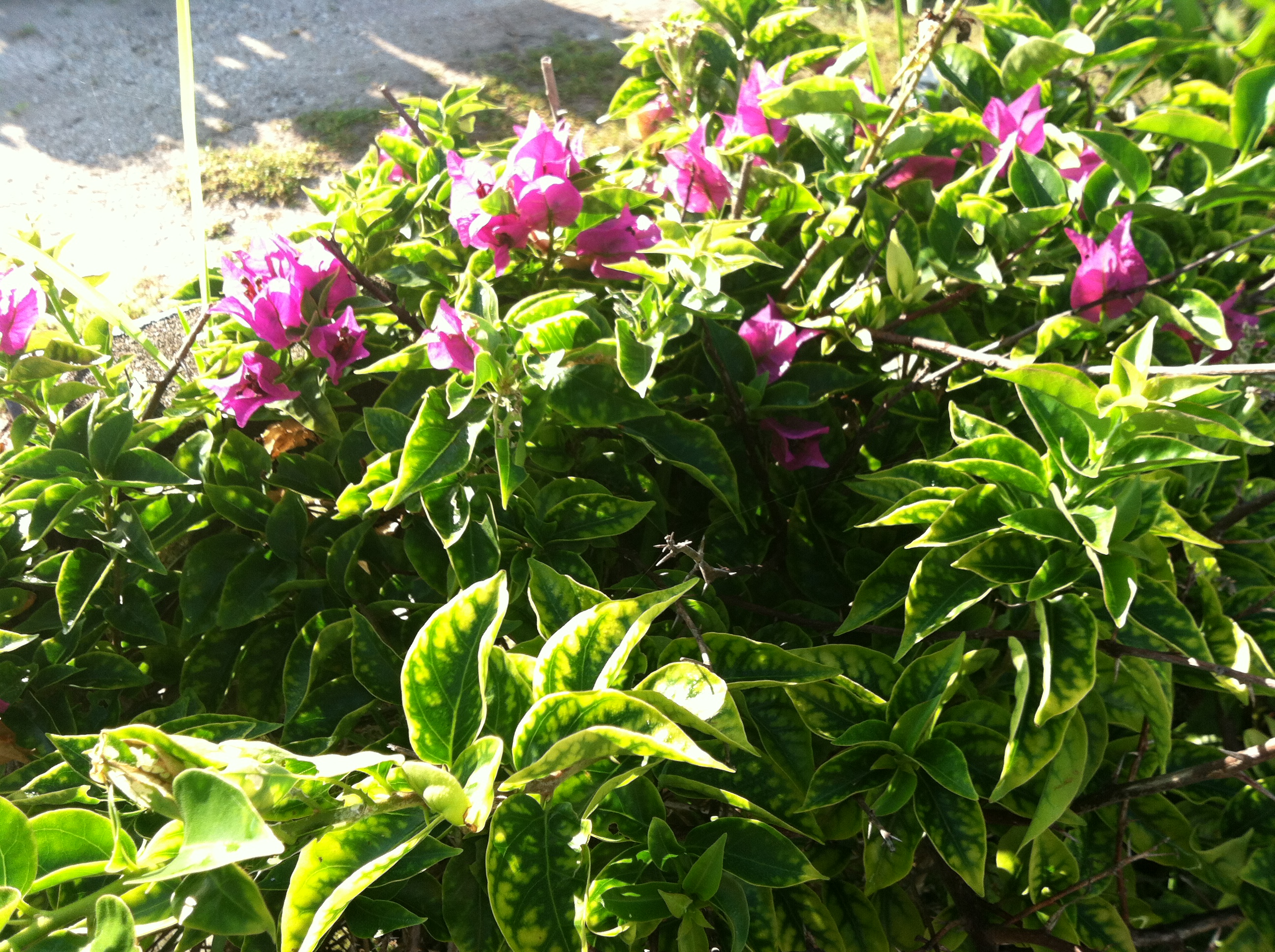
Meteorological lesson aside, the upshot of all this rain has been a rather pronounced growth and advancement of vegetation around The Little Hacienda which, accompanied by my relative incapacity both before and after heart surgery to cut, whack, and otherwise control, threatens to take over the house.  Words like verdant and fecundity come to mind. With the vegetation, not surprisingly, has come a significant increase in the numbers of green and brown anoles, several species of snakes, and a mother and baby Florida Box Turtle, who have taken up residence in the compost pile, which itself has encouraged a rather wild growth around its perimeter.  On the plant side, beach sunflowers, sea grapes, Bougainvillea, and aloe, to say nothing of the ubiquitous saw palmetto, have begun a slow march across the tenuous and diminishing clear zone around The Little Hacienda.

Bougainvillea

Bougainvillea

All of which should, but does not, cause me some alarm.  Rather, I have been inclined, perhaps because of my prolonged inactivity, to entertain  a rich, if eccentric little fantasy of the house actually being consumed by the encroaching vegetation.  Things growing through the windows, across the floor and up the walls. Imagine the light.  I think it would be like living in a Magic Realism novel, all hot, steamy, strange and very, very green.  The Bougainvillea would be first, I believe, owing to its ability to send out long, thorny tendrils– of astonishing tensile strength, by the way– the advance team, if you will, breaking out glass, scouring plaster, the beauty of its flowers disguising an underlying, relentless intent that one would simply have to let go and accept, ultimately.  The beach sun flowers would be next, finding root sustenance in throw rugs and wood floors; then the aloe, inching across the Mexican tile (they require so little.)  the palmettos would be last, I think, but being the most muscular, the most damaging.  Walls would not be immune.
The creatures would follow, led by the smallest: snails, Rolly Pollies, crickets and cicadas (for sound effects.)  Then the lizards and snakes and, hardest to accommodate, raccoons and opossums.  Still, it could all be accepted, and even embraced, with  the proper attitude.  It’s all about letting go.  boundaries are so artificial.  Think of the possibilities.

Sea Grapes

Sea Grapes

Posted in Uncategorized | Leave a comment

Two Eulogies and an Open Heart

Egret on Beach

Egret on Beach

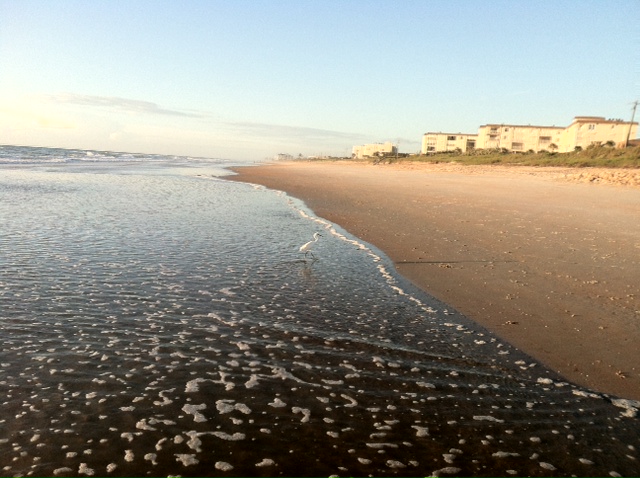
Due to circumstances beyond our control, some of which may become apparent in the following, I have decided to revive “The Skinny Island Post” yet again.  Veteran readers of this blog have been exposed, for better or worse, to near daily minutia of life in The Little Hacienda on Skinny Island, The First Farewell Tour, Spain and Portugal, The Second Farewell Tour, and last fall’s extraordinary trip to Cuba.  And while I hope you have been entertained and a little informed, a lot of water has passed under the proverbial bridge since last we published, and a new phase has been entered here on Skinny Island which urges some reflection and clarification. We will, of course, continue the traditions for which the Post is famous: expositions of the mundane and quirky observed in the plants, animals, and weather of Skinny Island, as well as the occasional philosophical aside.

Heartbreak and heart surgery.  One not often seen following the other, but I have experienced both in the past few months and I’m still recovering.  I lost two very dear friends of long-standing within a couple of weeks of each other, while experiencing a rather abrupt decline in my own cardiac health.  Mortality barged in unannounced this spring and early summer.
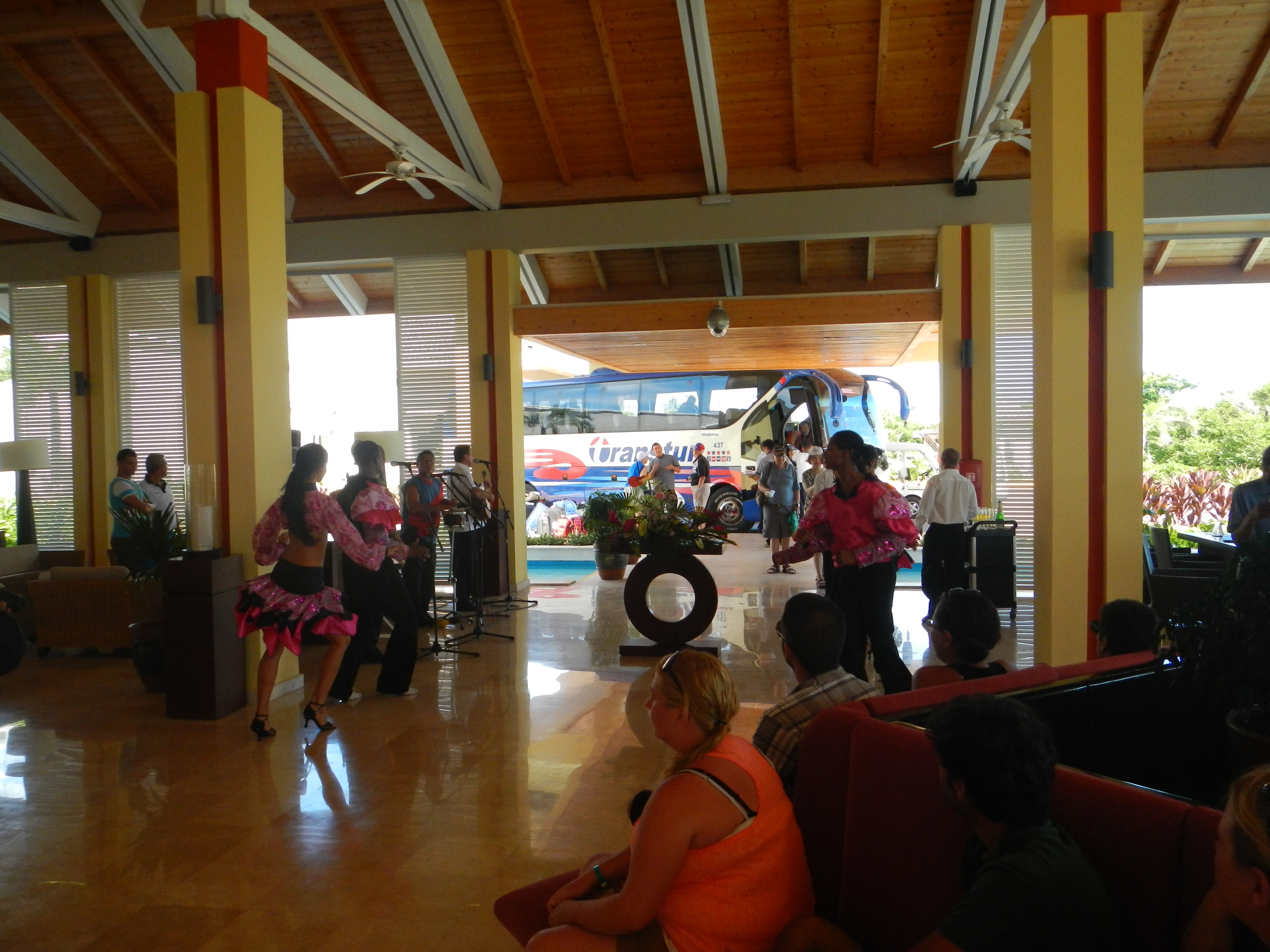
Early one morning, while preparing for my last outdoor art show of the season, I received a message stating that my old friend Ron Williams had suffered a stroke in Denver and was in critical condition.  Not long after, another message came through saying  he had died.  I was flattened.  I knew he’d had some long-standing heart issues and, in an effort to gain from his insight and experience, we had been engaged for several weeks in phone discussions about my own, very similar problems, but this was completely unexpected.  Ron was an energetic, dynamic, sixty-five year old consummate musician, composer, and conductor, the founder and director of several chorale groups in the Denver area.  I had known him since the eighth grade, some fifty years.  Our mutual interest in music led to our forming a folk group, with friend Joe Kelly, and we won our high school talent show our junior year.  Ronnie could play anything: piano, cello, baritone horn, upright bass, guitar; and he played them all very well.  I was essentially an observer.  I was a frequent guest in the rather busy and rambunctious Williams house over several years, and among my fondest memories are the times I just sat by the piano and listened to Ronnie play.  He went into the Marines right out of high school, then Viet Nam, and on his return to Tallahassee and FSU, he moved into the attic of the Sigma Phi Epsilon house where I was residing.  We remained close through college years, then drifted apart as marriage, kids and work drew us in different directions.  We hooked up again for good after Ronnie moved to the Denver area.  We e-mailed and spoke by phone frequently, following each other’s artistic endeavors and offering support and encouragement.  As part of The Second Farewell Tour we stopped and had a wonderful lunch with Ron and Joan in Denver before start the long trek back to Florida.  In the past few years we had begun collaborating again; me adding lyrics to some of Ron’s compositions, some of which were performed by his chorale groups.  He asked if I would provide liner notes for a CD of his piano improvisations, and I was honored to do so.  We discussed plans for more extensive collaboration, made all the more exciting for me when Ron and Joan confirmed they were moving back to Florida by the end of summer.  We had begun the outline for a pretty major effort, a musical entitled “Dinner on the Grounds,” the title based on an event immersed in our mutual  Methodist upbringings.  Sadly, it was not to be.  My friend Ron was a genius.  Music consumed him, but he gave it back.  His talent was and is a bottomless well.  I miss him every day.

About two weeks later I had an electro cardioversion to correct a heart arrhythmia.  As I was being assisted into a wheelchair to leave the hospital following the procedure, I received a phone call from the son of another friend, Dean Glosson, informing me that Dean had died of a heart attack the night before while jogging.

I met Dean in late 1969, in San Antonio, where we were training as combat medics.  We hit it off right away, an odd friendship really, a Florida beach boy and an Illinois farm boy, but it stuck.  We learned of a school we could attend after basic medic training that would keep us in San Antonio another year, the Clinical Specialist Course, essentially an LPN course, and we both signed up.  With Peter Young, a lanky, unique Maine farmer, who was in the class ahead of us, we got an apartment off base while waiting for our girlfriends to join us.  It was an extraordinary period of music, pot smoking, skill learning, and growing up.  I found Dean to be an exceptionally honest, genuinely good person, somewhat amazed at my rather erratic interests, but never judgmental.  He went home on leave, married his sweetheart Frannie, and brought her back to San Antonio about the time Barbara graduated FSU and joined me.  We rented places a street apart and within short walking distance of Ft. Sam Houston.   The bonds between the four of us deepened as we struggled, mostly happily, to make our way, really on our own for the first time, even as we dreaded the end of the course and our orders.  But Providence smiled.  We both got orders for Walter Reed Hospital in Washington, DC.  Barbara and I drove back to Florida, (with our little dog, Jimmy,) got married, and headed up to DC.  The first year we and the Glossons lived quite a distance apart in the near suburbs.  Their son Josh was soon born.  Our second year there Barbara found a lovely little apartment building in Tacoma Park, MD, and we all moved onto the second floor, Dean and Frannie’s apartment diagonally across the hall from ours, with Rides at the Door, a Lakota Sioux, between.  Two other couples from Walter Reed followed as apartments became available, and there ensued, on reflection now, perhaps the most idyllic few months of our life.  We were all extremely close and very happy.  My work with Dean at Walter Reed, especially the many night shifts we pulled together, served to form me from a kid to a man, as my respect for my totally unpretentious friend deepened.  After our discharges, Dean and Frannie went back to McHenry, Illinois, and Barbara and I back to Florida.  Dean started working construction, and was soon building houses on his own, and a very successful career.  We saw them in ’74 when we took a wonderful train trip  out to Colorado, they came to Florida shortly after, and again in the 80s.  We stayed in touch, more so as our working lives began to wind down.  Dean essentially retired from building, (after building their splendid house) and started doing concrete finishing part-time.  They came down three years ago and spent some time with us in The Little Hacienda. We spent several wonderful days at Frannie’s family Lake Michigan Cottage a year later, then shared a cabin on Lake Superior in the UP as part of The Second Farewell tour just two years ago.  I am so glad we did that.  It was the last time we saw Dean.  A lasting image is of three of us sitting bundled against the cold on the shore while Dean took a plunge in the frigid lake.  He may have been the kindest person I’ve ever known, a truly devoted husband, father, and grandfather . . . and friend.  Nine-hundred people came to his wake.   I talk to him every day.

So, it was with a weary, heavy, and increasingly damaged heart, that I began the process to repair a by now very leaky Mitral valve.  I had a cardiac catheterization, a trans-esophageal echo-cardiogram, and surgery to repair the valve was scheduled for June 10th. Over the ensuing 2 weeks of waiting my symptoms worsened severely.  I was short of breath with the slightest exertion, my pulse was erratic, and my energy level at just about zero.  The day finally arrived and I turned myself over to the skill of a Daytona thoracic surgeon.  On awaking from anesthesia I learned, groggily, not that the surgery was a success, but that the surgeon discovered, via another trans-esophageal echo, (they didn’t open me up,) that my condition was worse than he’d anticipated, and might require support and ultimate transplant, something they couldn’t do at this hospital.  He’d made a call to a very prominent surgeon at UF/Shands hospital in Gainesville, who said to send me up.  I made the trip by EVAC, had to wait another full day, then had successful repair of both the mitral and tricuspid valves.  The Shands team, starting with Dr. Tomas Martin, were superb, and I was out of bed and walking the next day.  Recovery the first few weeks at home was slow, painful, and tedious, but something has kicked in the past few days and I’m doing much  better.
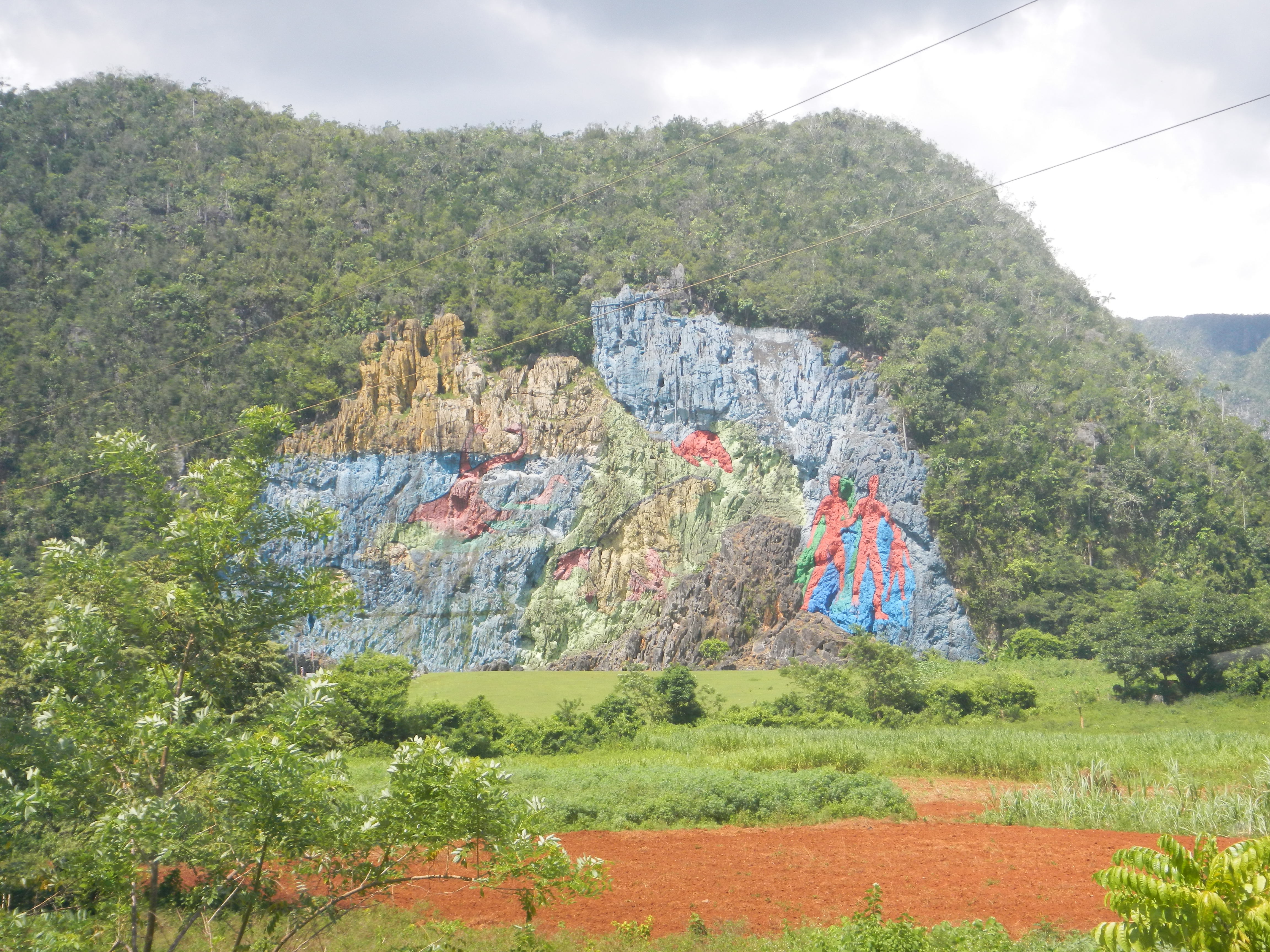
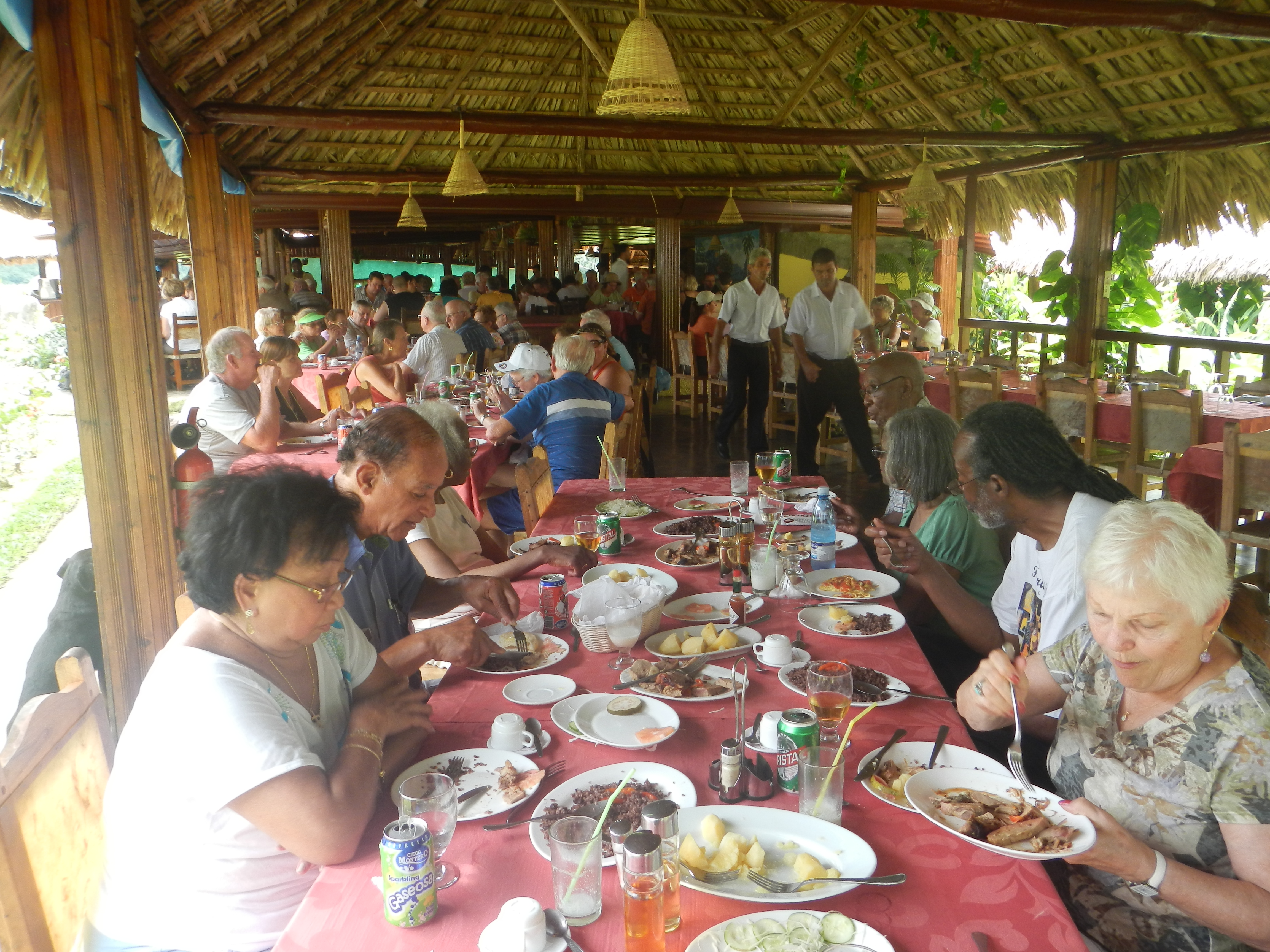
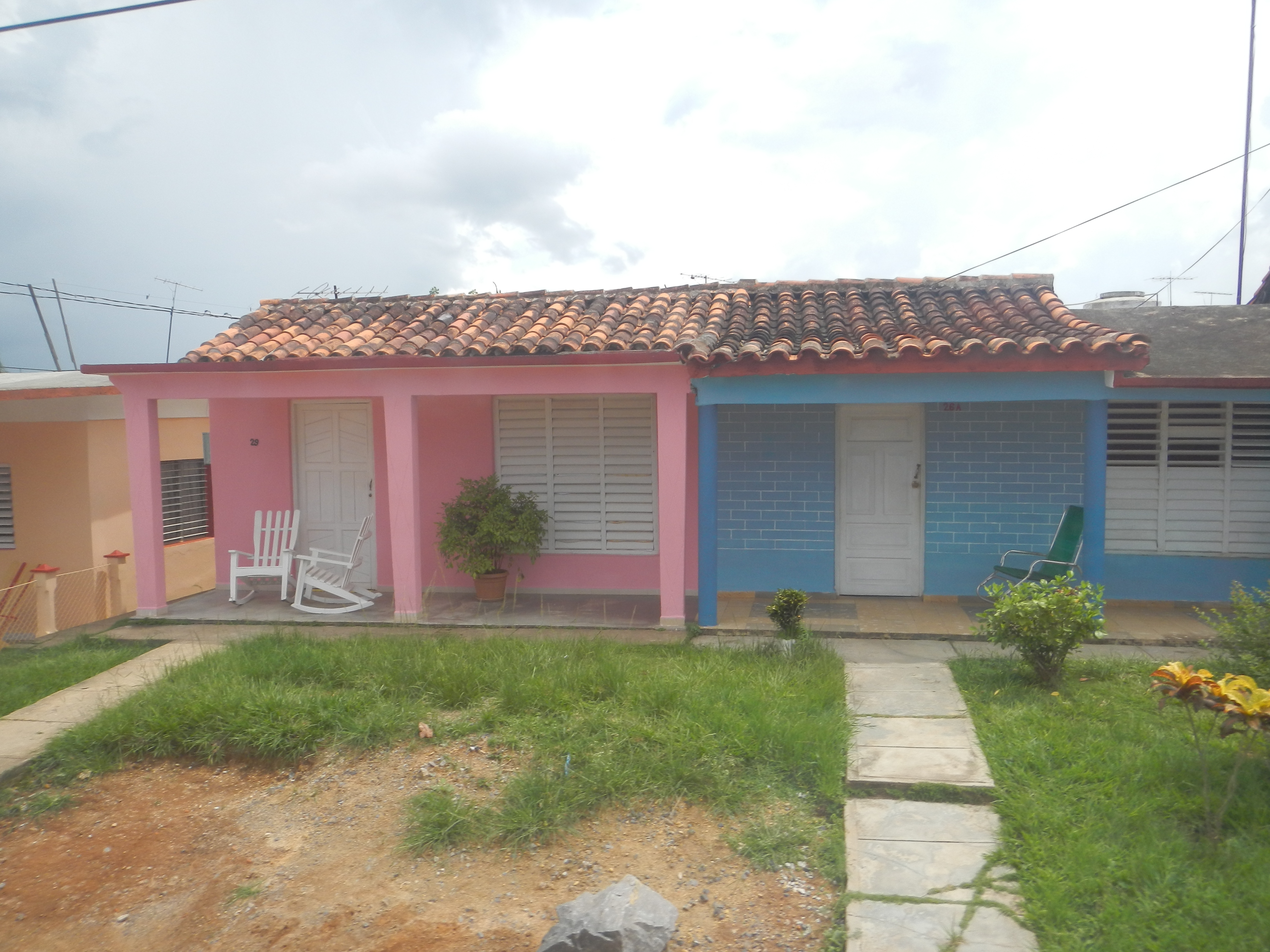
Both before the surgery and after I’ve had a lot of time to think about Ron and Dean, what they gave me, the beauty and fragility of life, the meaning of friends, my own mortality and, not insignificantly, my personal theology.  Still working.  It’s a process, but I’m damn happy to be alive here in The Little Hacienda on Skinny Island.  Stay tuned.

photo (15)

Posted in Uncategorized | 3 Comments

The Cuba Diaries: Day 7

Last full day in Cuba,  We depart for Miami tomorrow morning.  We had a great breakfast in the buffet dining room where we had eaten last night.  There were cooks to prepare omelets to specifications, and a huge variety of fruits, meats, cheeses and the like.  Great coffee as well.  While we gathered in the hotel lobby before boarding we learned that two of our ladies had become pretty ill, one of whom had been taken in to the local clinic with severe diarrhea.  We saw her later at the day by one of the pools, sufficiently recovered, and she said she had received medication and IV fluids, was weak, but feeling much better, and the experience at the clinic was professional and efficient, no waiting.  The other lady striken was the one who had offered the negative comment about Fidel at Santa Clara.

Hand Feeding

Back across the causeway to Remedios, a fishing village of 18,000 folks, stopping first at another place frozen in time, a print shop in which stood a half-dozen presses from the 1880s and 1890s, all still in working order.  This was a commercial print shop, and we saw a young man working a machine that was printing bus tickets, hand-feeding the small pieces of paper.  Back in the typesetting room there were trays and lead type strewn about everywhere, and I was sure someone there knew the exact location of each and every letter.  This amazing old linotype machine dominated the room.

Old Linotype Machine

Remedios Malacon

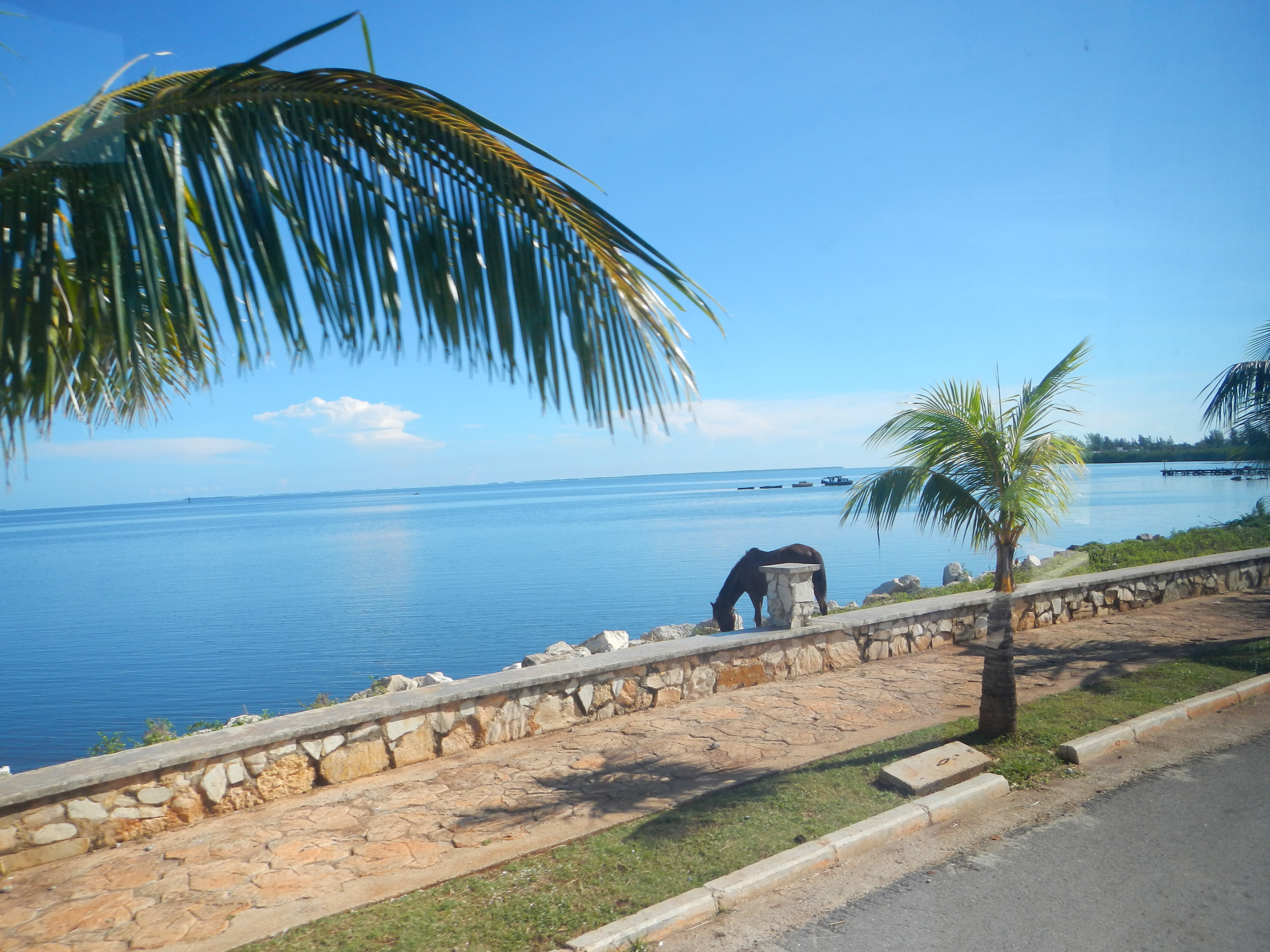
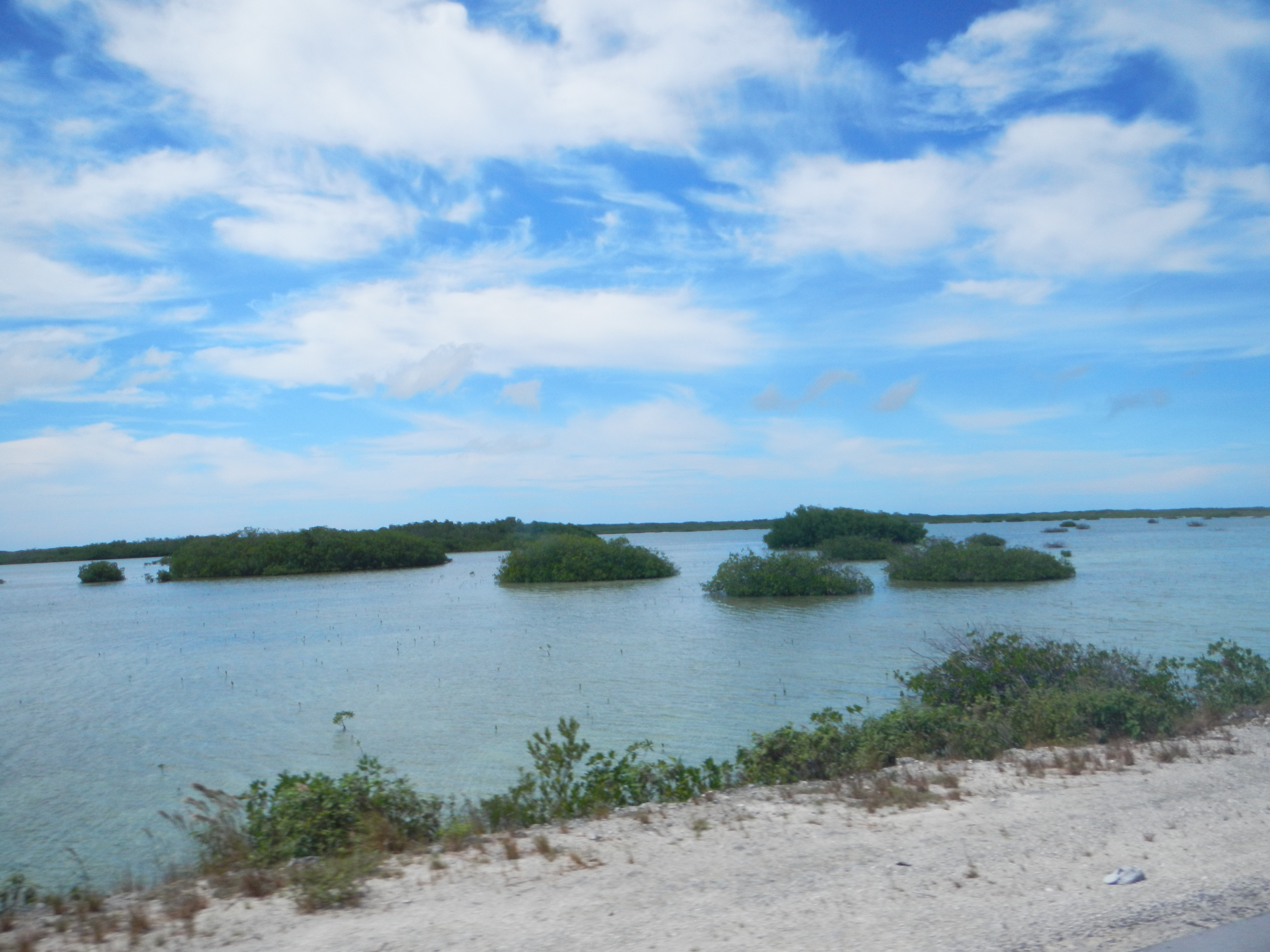
In perfect summer weather, we then drove along the Remedios Malacon, with beautiful views of the ocean, some fishing boats, and grazing horses, of all things.  The sea there, protected by the many mangrove islands offshore, was incredibly placid.  It was a lovely place. On the landward side, which I could not get decent photos of, were some buildings and walls that had been decorated by a local artist whose home and studio we were heading to visit.

Artist’s Home and Studio

This is the home and studio of the renowned Remedios artist, Madelin Perez Noa, a charming and colorful place, where every inch of space was utilized for art production.  As with the other prominent artists we met, their living spaces and studios were home to cottage industries, employing assistants and craftspeople to carry out a lot of the repetitive production tasks.  Now, that’s what I’m talking about.  We can’t pay here at The Little Hacienda, but we could sure use some help on occasion.

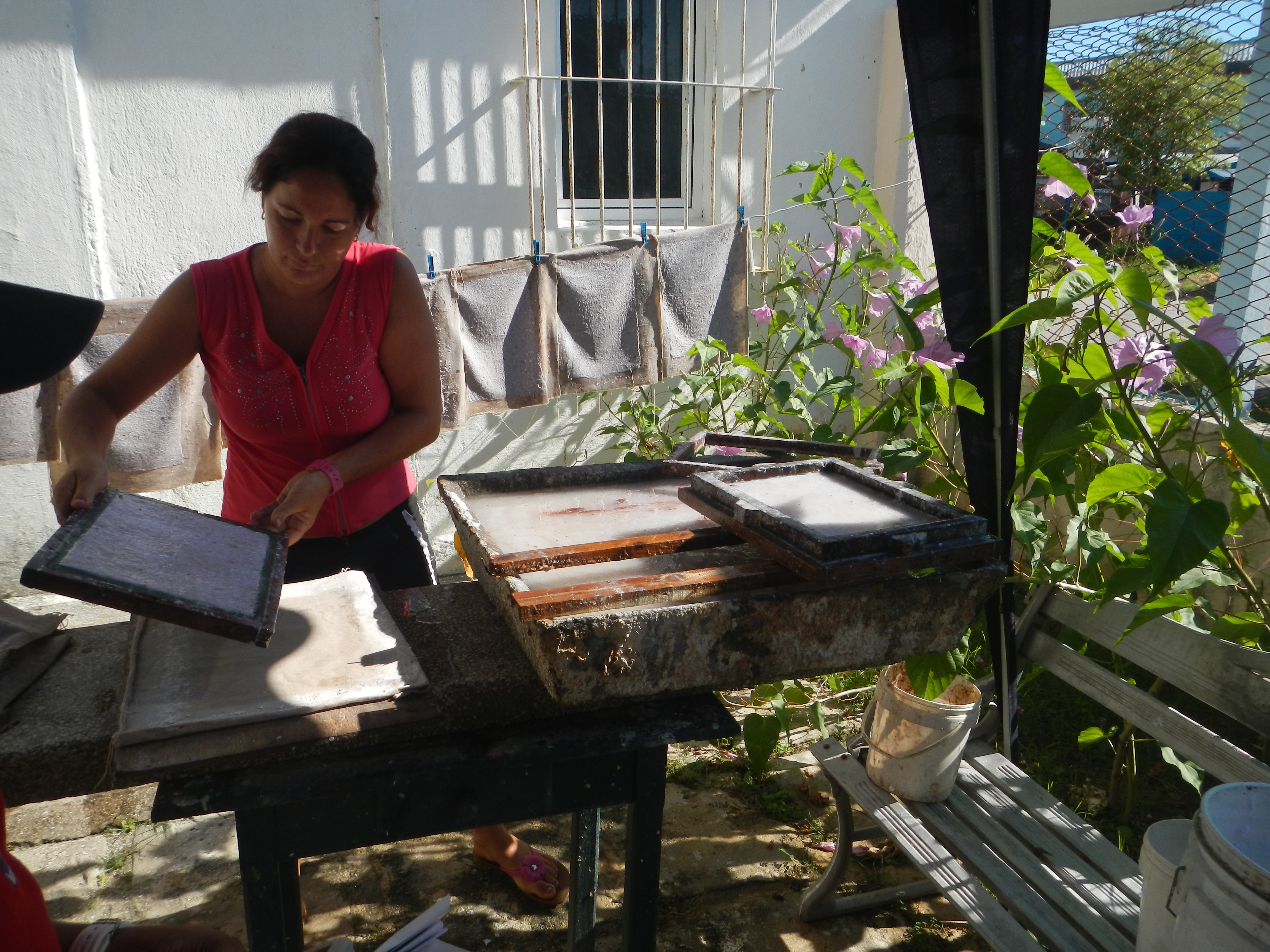
Paper Making

For instance: this is a young woman outside in front of the house engaged in making paper to be used in print making.  I have been learning this process and was pleased to see that I am on the right track, with my set-up being nearly identical.  Scraps of old paper- newsprint, stationary, whatever -are ground with water, (I use an old blender) to make a wet pulp.  You can add flowers, leaves, threads, etc. to give it all kinds of character.  You add the pulp to a deep pan of water, making the mush thicker or thinner to your liking, then dip a rectangular frame covered with screen, lift it out to drain, then transfer the drying pulp to a waiting cloth, like canvas scraps.  You then hang these on a line to dry, peel off the paper and there you have a wonderfully textured surface perfect for block and press printing.

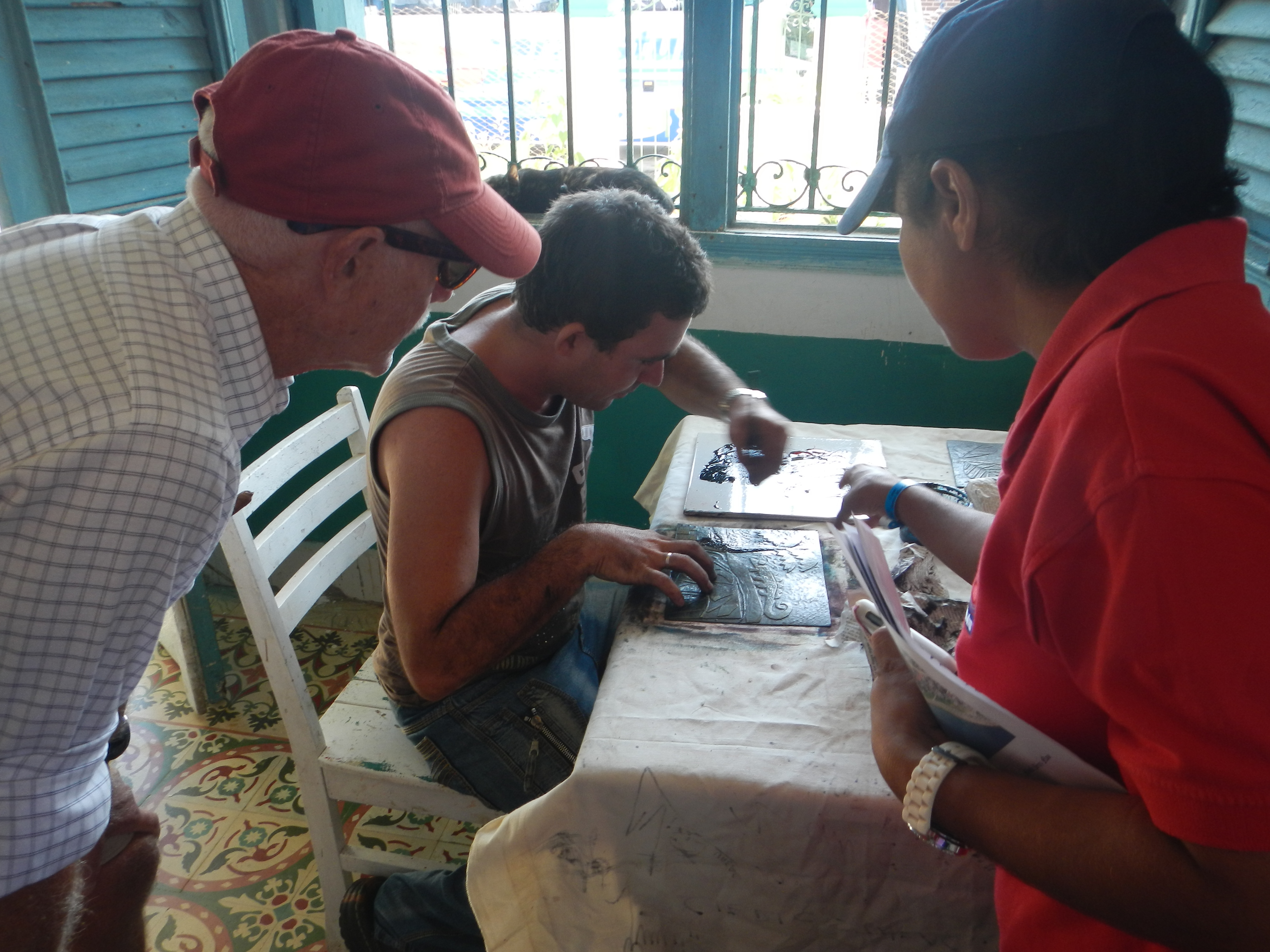
Inking the Plate

Inside, another assistant was inking plates and printing the art work.  A design by the artist is transferred to a wood block, or a softer material, like linoleum, by carving the image.  The raised parts of the finished piece, when covered by ink, will print on the paper, the carved out sections will not.  You can run the process as many times as you want, using different colors each time.  This man is inking sections, and wiping off where he does not want it to print.

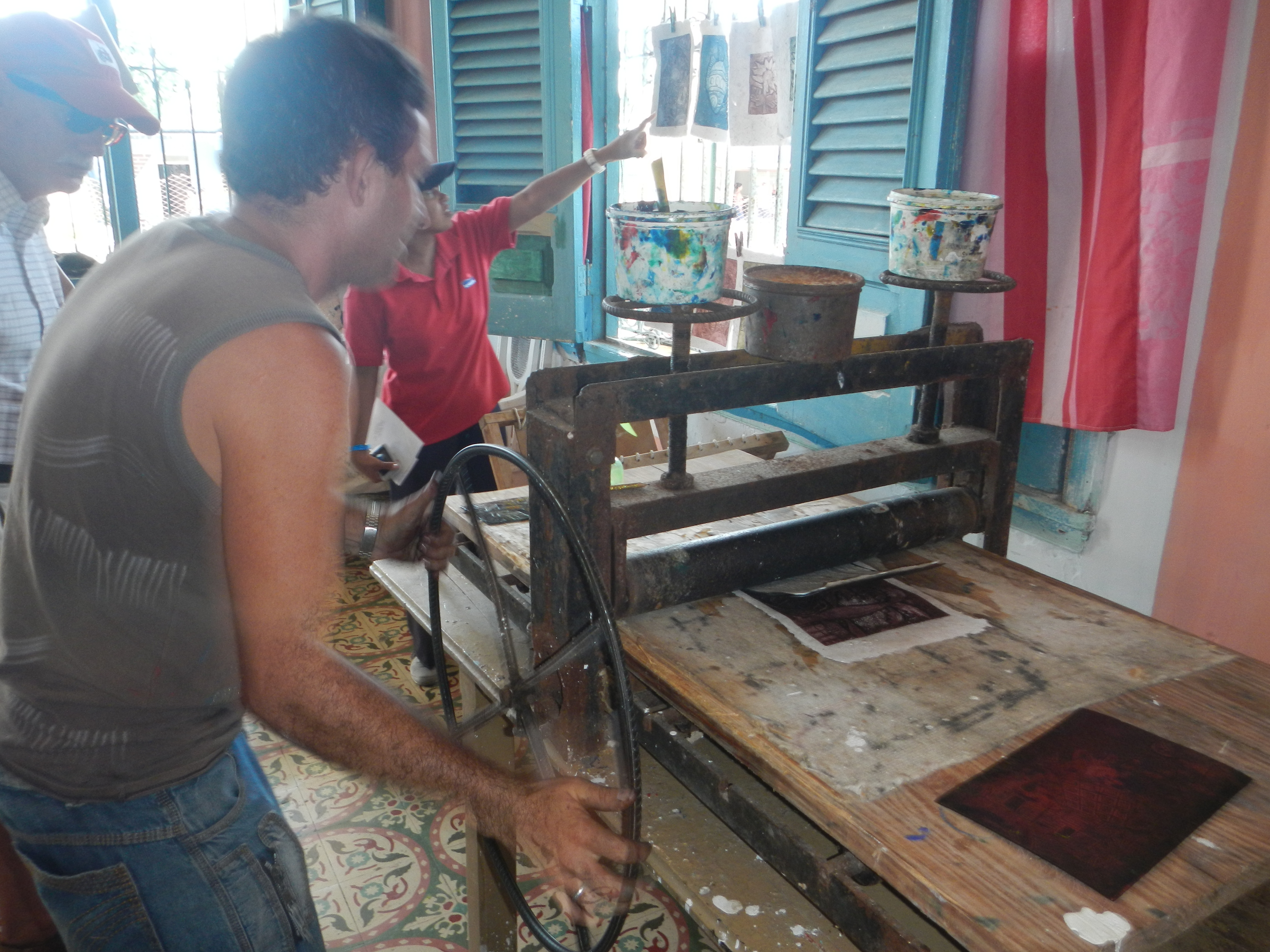
Making a Print

There are a number of different presses for this kind of work, but the idea is all the same: exerting sufficient pressure to transfer the image from the block to the paper.  This one uses a wheel to move the press bed, plate and paper under a roller which is stationary and has great downward pressure exerted.  Very effective prints can also be made applying pressure by hand or with the use of a rolling-pin. In the right hands, the results are amazing.  We bought a beautiful, multi-colored print of a fish.

We then met the artist herself, and toured the rest of her studio and the grounds around the house, lush with flowers.

Noa’s Work

Jesus Under Glass

Back on the bus and into the center of Remedios, where we were to meet another artist, this one in charge of several projects in town, including the restoration of the cathedral.  We got a look inside before he arrived, and found it a repository of some strange and wonderful religious artifacts, such as this reclining Jesus under glass. Our local guide arrived, yet another engaging, personable young man, whose name I failed to write down, and he told us about the efforts underway to completely renovate the cathedral.

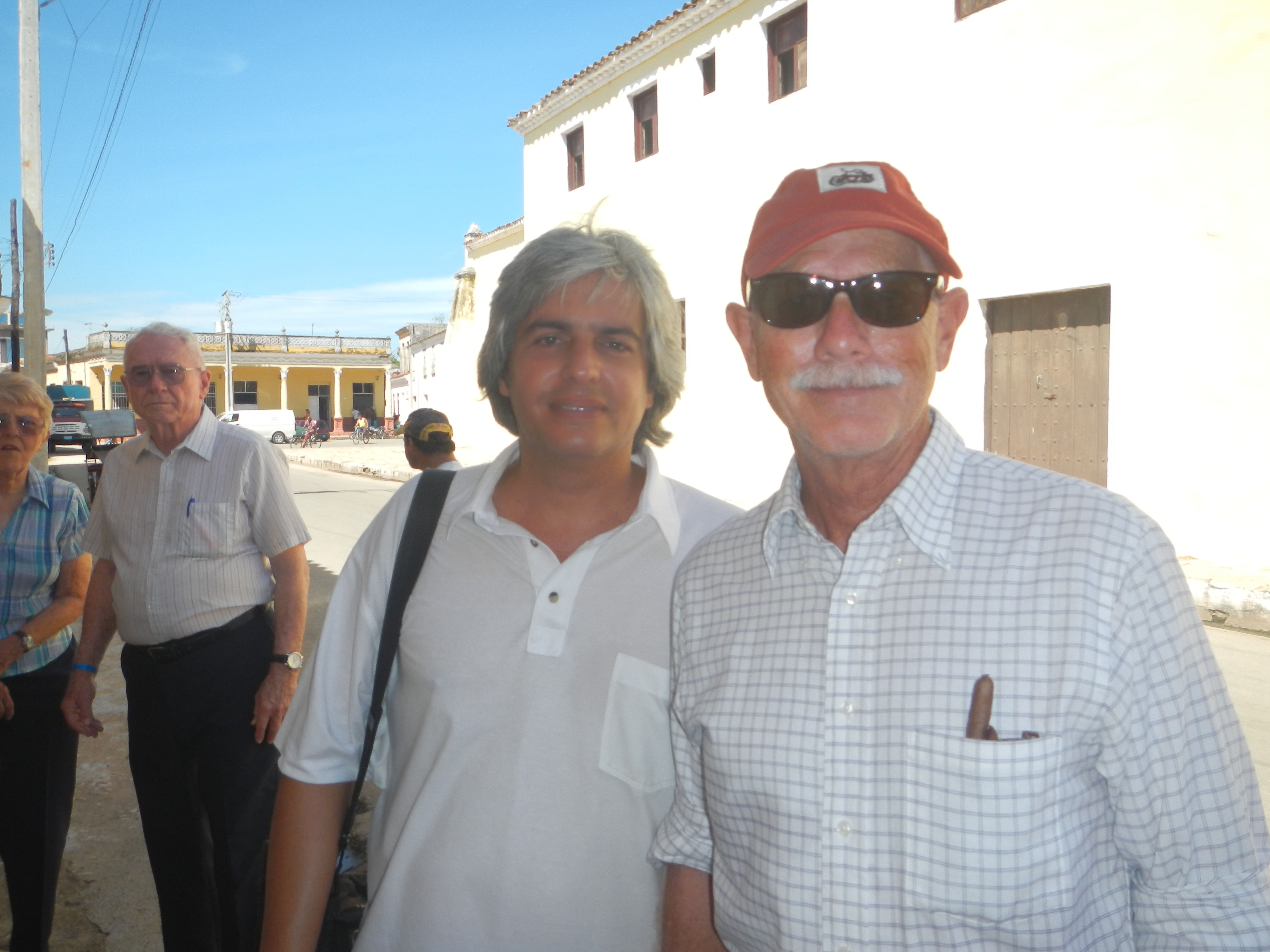
Papa and the Remedios Artist

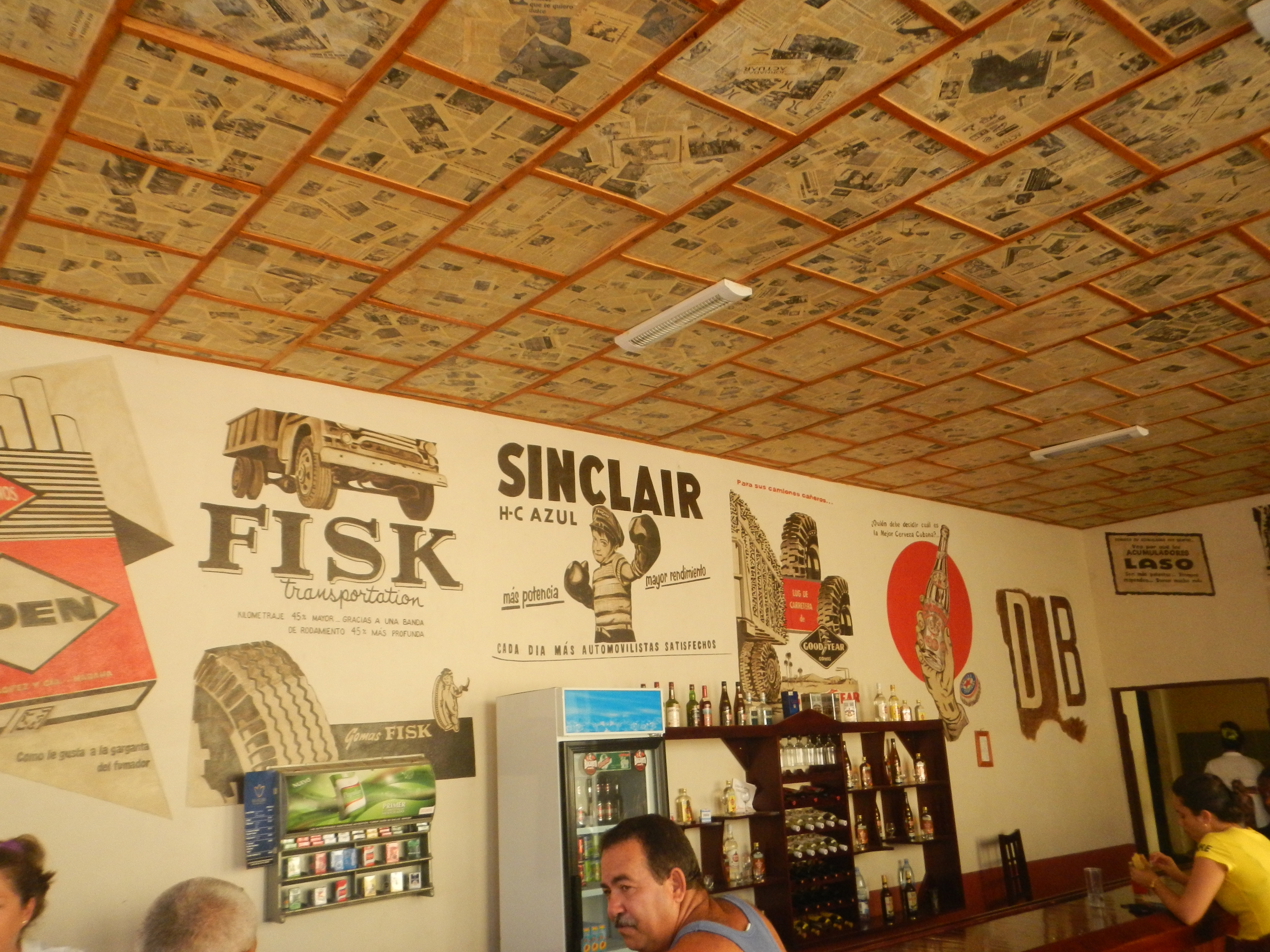
A very busy chap, he also told us of two other projects of which he was justifiably proud, the restoration of an old town bar just off the square, called the “Drivers’ Bar,” and the huge annual Remedios Christmas Festival called the Parandas.  We walked to the bar first, an airy, bright space consisting of a long bar and just a few tables.  He had done a great deal of research, piling through old photographs and interviewing descendants of the original owners, to achieve an authentic recreation of the 40s era landmark it had been.

Inside Drivers’ Bar

From the outside the place is quite reminiscent of Sloppy Joe’s in Key West. Taking its name from the bus and truck drivers who used to stop there on the way back and forth between the eastern and western provinces, the walls have been painstakingly covered with hand-painted advertisements of the period, and the ceiling covered with period newspaper pages.  Quite impressive.  On our walk back to the bus the artist told me he had visited the U.S several times, as a guest of the Cleveland Museum of Art, which had brought him in for conferences with other

Drivers Bar

artists from around the world because of what he had done with the Parrandas festival.  He said he loved the U.S., and then remarked to me that we were making history in this coming together of our people and cultures.  I told him I agreed, and added that I hoped this integration, while good for both countries, would not result in a proliferation of Wal-Marts and McDonalds in Cuba.  He smiled, but I wasn’t sure he agreed.  I had wanted to express my hope that the good things of the revolution, (and there are many things, also, of a depressing, negative nature,) not be lost in or swallowed by the rush to commercialism that will inevitably result in our descent upon this island when the barriers come down.  I didn’t say it well, and anyway, they want what we have, and that is completely natural.

Next was a tour of the warehouse where preparations for the great annual Christmas festival take place.  Every Christmas Eve since 1820, Remedios has hosted a cultural event considered the oldest in Cuba: Parrandas, or Popular Revels.  This celebration confronts the El Carmen and El Salvadore neighborhoods of the city.  All their work is kept a secret until opening day, when floats and fireworks fill the square.  Thousands, from all over Cuba attend, swelling the little town to 10 times its normal size.

Parrandas Warehouse

In the preparation warehouse of the El Salavadore group, a young woman spoke, interpreted by Enedis, and showed a short video of last year’s festival.  Each year has a theme, and last year’s was Hollywood!  A representative of the El Carmen neighborhood, which won last year’s shin-dig, was also present, and gloated enthusiastically.  The competition is fierce,and preparations last all year.  We didn’t see what was afoot for this year’s festival– it’s all a secret– but with only 3 months to go, we could feel the excitement, even in translation.

Fireworks Computer

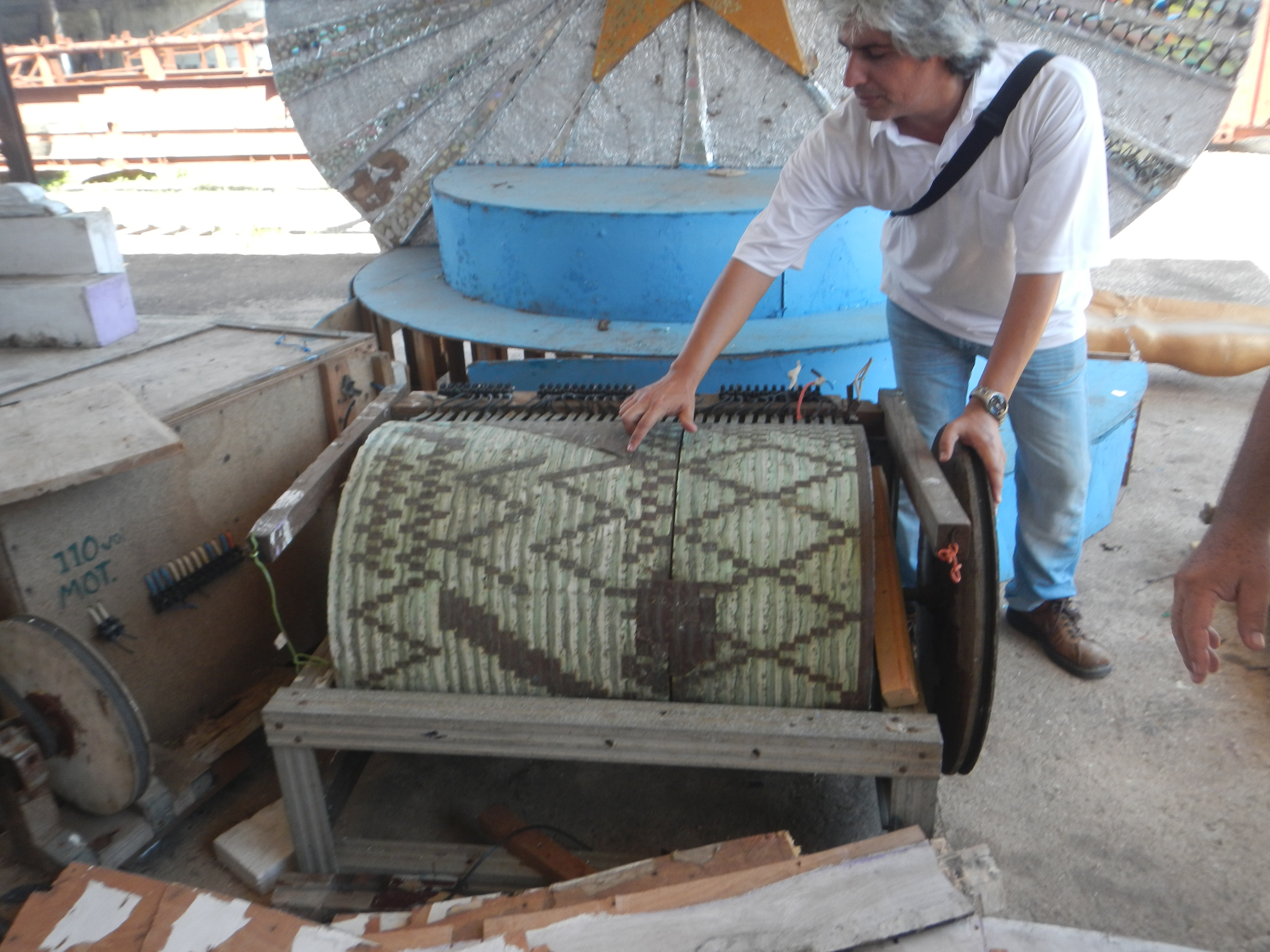
We toured the warehouse then, and saw this absolutely incredible device, a rudimentary but thoroughly efficient computer, actually, that controls the ignition of the elaborate fireworks that end the festivities.  It is a drum, wired to both a generator and the fireworks, which, when rotated, ignites the fireworks in an order specified by the pattern of electrical contacts laid out on the drum.  I hope that makes sense.  Describing it is almost as intricate and complex as the device itself.  It was the most beautiful and sublime example of ingenuity I think I’ve ever seen, and will forever stand as a symbol, for me, anyway, of the amazing ability of the Cuban people to make something out of nothing.  It was truly awesome.

El Salvadore Neighborhood Symbol

We said farewell to our new friends in Remedios, as extraordinary and resilient and happy a people as we’ve ever encountered, and headed back to Cayo Santa Maria for our last night in Cuba.

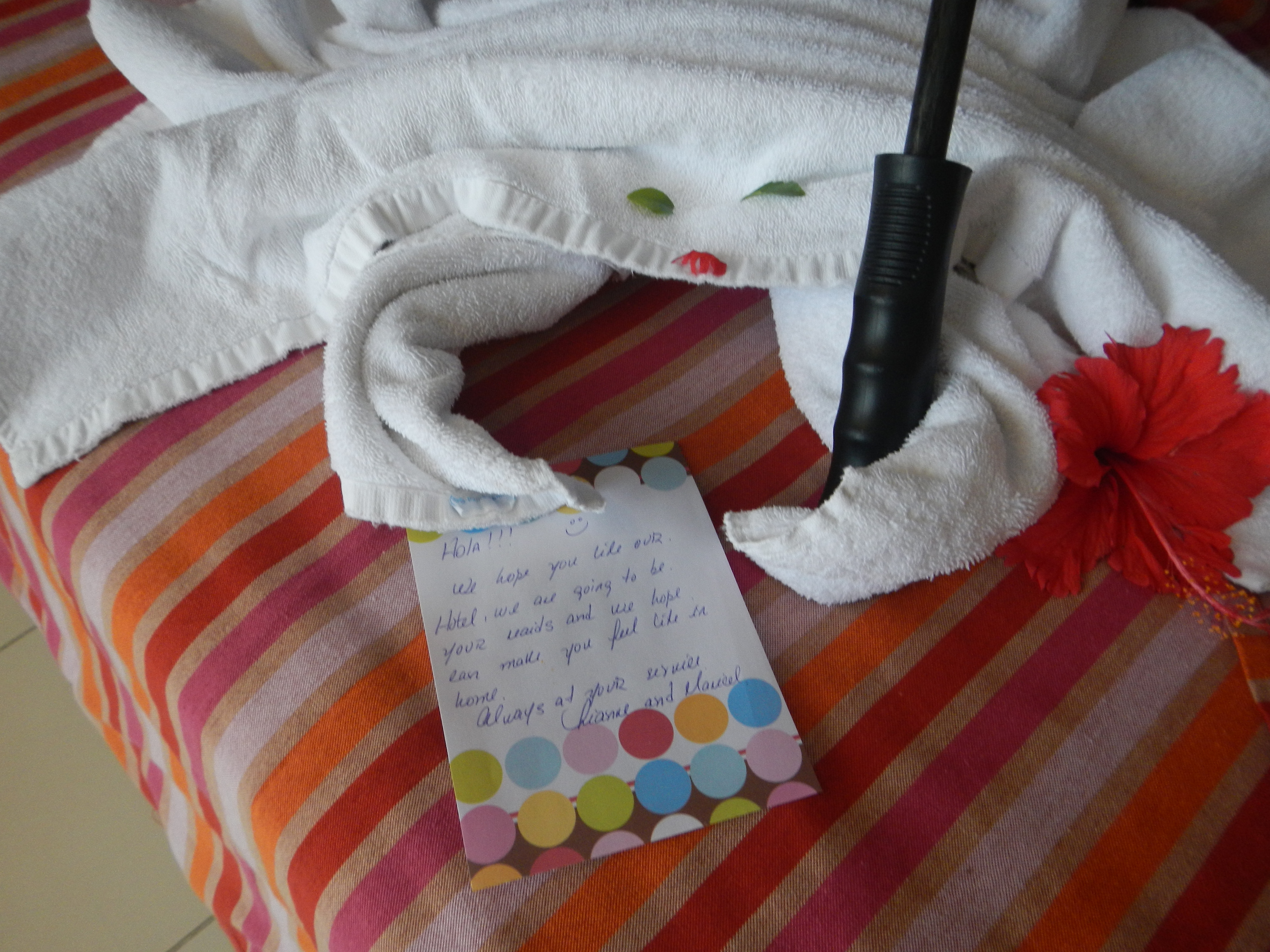
Towel Display

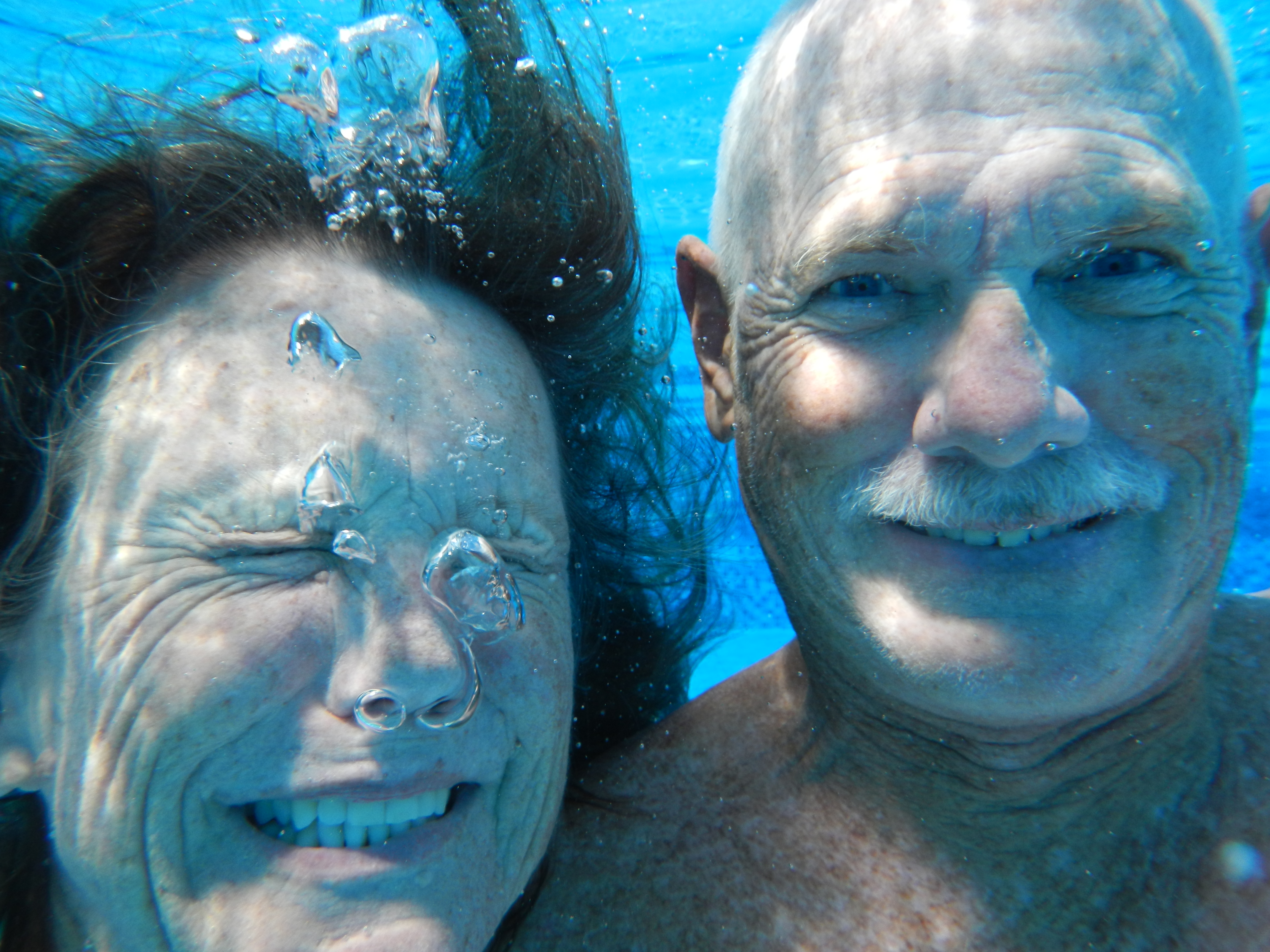
We found this lovely towel display and note from our hotel maids when we returned, and another of a swan in the bathroom.  The note reads, “Hola!  We hope you like our hotel.  We are going to be your maids and we hope we can make you feel like in home.  Always at your service, Dianne and Mariel.” The staff in this place were gracious, efficient and always friendly.  We left a good tip for these ladies. There was time for a little more beach and pool time before our farewell dinner at the beach restaurant, and we took full advantage.  Lunch first at the snack bar by the main pool, then a dip in that pool, in which we tried out some creative underwater photography.

Loving It!

A few hours at the beach and some more pool time, and we headed for the lobby bar for a final drink before going to the beach restaurant for the final extravaganza.

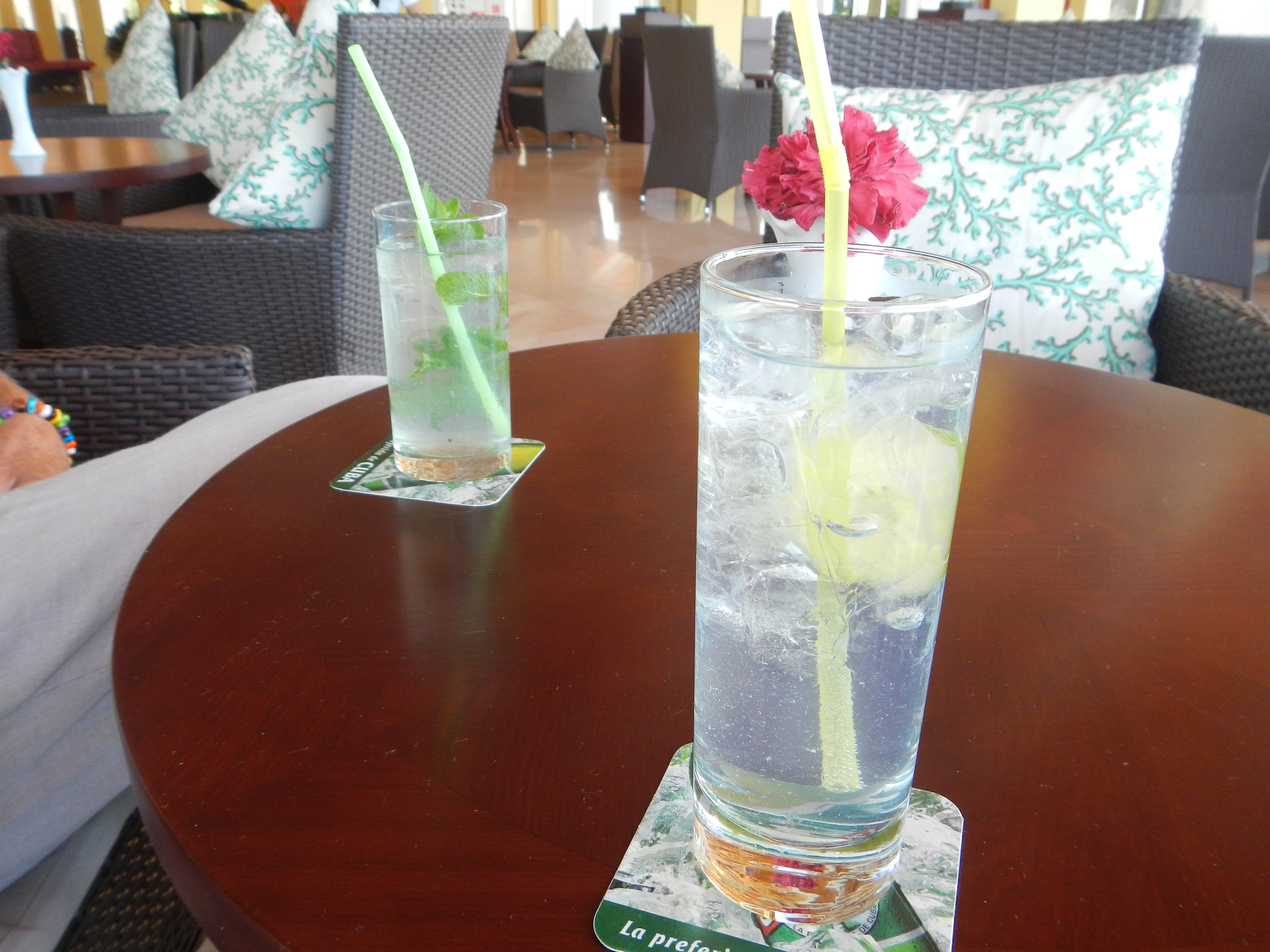
Gin and Tonic

We enjoyed a long, quiet gin and tonic and reflected a little on this extraordinary adventure.  Our impressions will be summarized in tomorrow’s departure narrative, but we’ll say here that, for a variety of reasons, this will resonate as perhaps our most precious and fondly remembered trip.  Cuba!  A place so near and yet so far, a place we have longed to visit all our lives, in no small part due to the impossibility.  Many emotions, many lasting impressions.

Farewell Champaign

At the restaurant, we were greeted with Champaign and music.  Of course.  Some among us, including our friends from Sonoma had spent the afternoon bar-hopping, so the atmosphere was indeed festive.  We found a table with our friend Debbie from Pinellas Park who was travelling alone, and I ordered another bottle of Champaign to see us through.  I made a toast to the group: “May the wind be always at your back; may you have safe travels; may you find the place you seek; and Viva Cuba!  Viva Cuba!  Viva Cuba!”

Papa Learning Salsa

The meal was amazing.  Shrimp and peppers in a crusty bread bowl, then surf and turf, with lobster and steak.  The steak was a little tough, (hey, they don’t do beef in Cuba,) but the lobster was superb.  And then the band and dancers took the stage, and there was nothing I could do, when approached by this lithe, cafe con leche skinned beauty, but get up and learn to salsa!  And learn I did, to the best of my limited ability.  1, 2, 3; 1, 2, 3.  I nearly had it.  There are those in the States, and we will go into this tomorrow, who think doing salsa, listening to Cuban music, and smoking Cuban cigars is not what a “People to People” excursion should entail, but they are dead wrong.  This is the culture, and I know of no better way to break down barriers than to do what the people do.  We are forever graced and humbled by this opportunity.

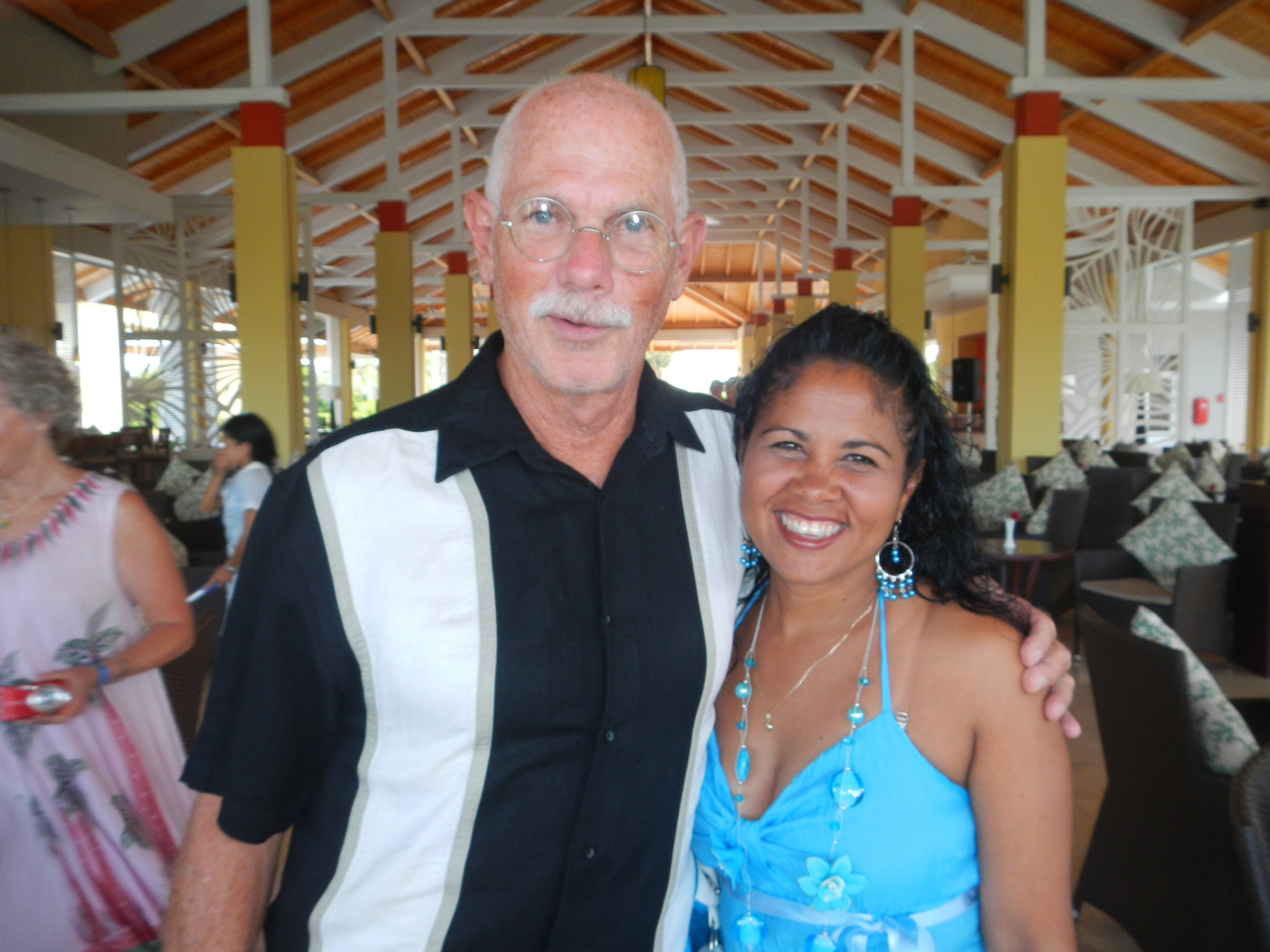
And to our dear new friend and guide Enedis, may you live long and prosper, and travel to all the places you desire.  You embody all that is good, and beautiful, and special of the country you love so deeply.

Papa and Enedis

Posted in Uncategorized | 7 Comments

The Cuba Diaries: Day 6

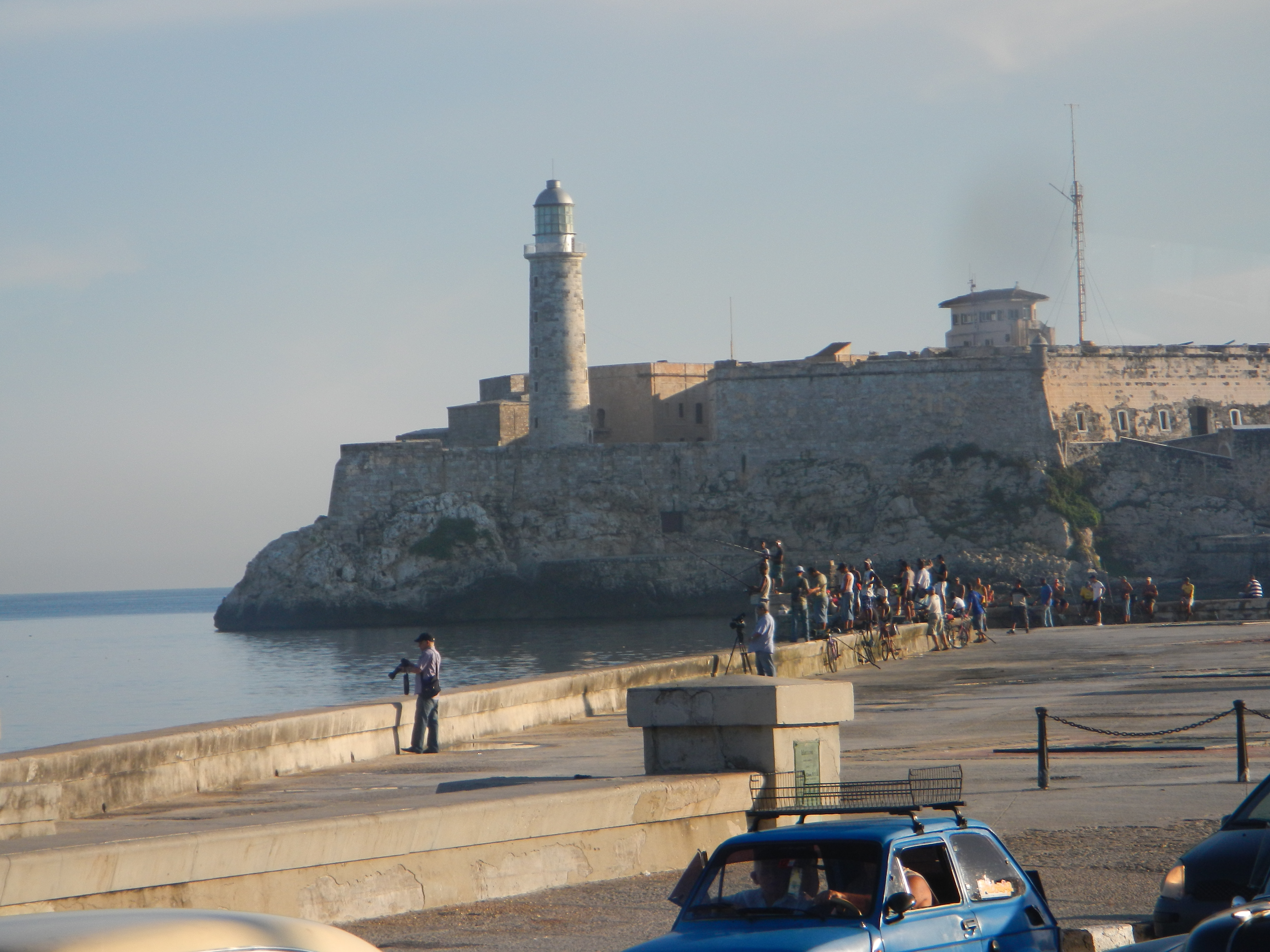
Last Look at the Malacon and El Morro

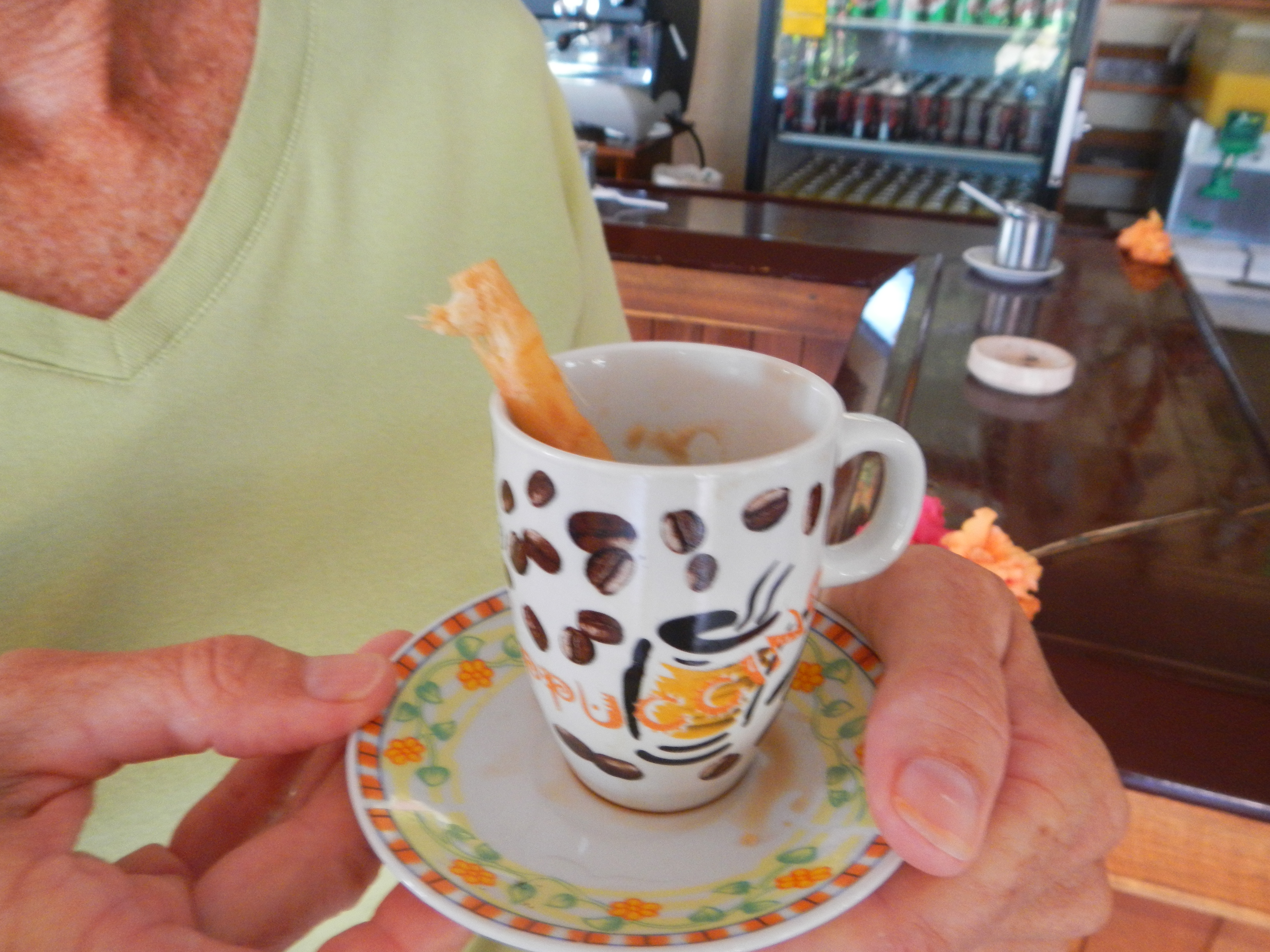
After our last breakfast in the wonderful Quinta Avienda in Havana we were on the bus at 0830 for a 3 hour drive east to Santa Clara, in the center of the country.  We cruised the Malacon one last time, most likely for good, and we had our last look at El Morro, then utilized a tunnel under the bay and surfaced on the other side of the fort on a nice 4-laner. At the halfway point we stopped for a bathroom break and coffee at a little roadside restaurant and gift shop.  I had this wonderful Cuban coffee, sweetened by a stick of sugar cane.

Cuban Coffee

There was a large stand of bananas nearby, and a local in the parking lot selling small bunches.  One of our group bought several bunches and passed them out as we reboarded the bus.  Underway again, Enedis popped a DVD on the life of Ernesto Che Guevara in the player, as promised the day before, and we watched it as we cruised to our next stop, the Guevara Memorial outside Santa Clara.

Che was quite an interesting character, as I will now briefly summarize.  An Argentine, he grew up middle-class and matriculated as a physician.  While treating poor folks in his native country, he decided to see the continent via motorcycle, and became quite radicalized by what he saw, as told in the wonderful book, “The Motorcycle Diaries.”  He came to believe, at quite a young age, that revolution was the only answer to the ills of the society he encountered in South and Central America.  Meanwhile, a young law student in Havana, Fidel Castro, was arriving at the same conclusions in his native Cuba, a country ruled by a ruthless, callous dictator, backed by U.S. money and might.  Fidel organized an attack on a military installation in Santiago de Cuba, which failed, and resulted in his being jailed for two years.  Upon his release, he went to Mexico, where he met Che Guevara, who was essentially looking for a revolution, and the two began planning a return to Cuba to organize a people’s uprising, naming themselves the “26th of July Movement,” after the abortive attack on the barracks in Santiago de Cuba.  The yacht Granma arrived in Cuba on 2 December, 1956, carrying Fidel and Raul Castro, Che, and 80 others.  All but twenty-two of their number were killed by Batista’s forces while making their way to the Sierra Maestra mountains, but with peasant sympathizers, this group organized and began taking it to government forces in guerrila combat.  After an aborted coup attempt on Batista in Havana by students, the U.S. imposed an economic embargo, but the government had continued support from the Mafia and U.S. businessmen.  In the mountains, rebel forces under Che Guevara and Raul Castro were successful in attacking small government garrisons and gaining the people’s support.  In 1958 a radio network was set up in the mountains, allowing Fidel to broadcast his message nationwide.  The mountains came under Castro’s control, even though his army numbered only 200 at best, against a government force of 40,000.  A U.S. arms embargo further weakened Batista, and he was forced to take bold action against the rebels in the mountains.  In the Battle of Las Mercedes, his forces pinned down, Castro asked for and received a cease-fire, during which his small army slipped away, leaving Batista with nothing.  In August of 1958 Castro began his own offensive, taking  control of several towns in the eastern provinces.  Meanwhile the 8th column, under Che Guevara, fought toward Santa Clara.  On 31 December, 1958, Guevara attacked and derailed a munitions train in Santa Clara, and took the city, capturing some 400 Batista troops.  Batista fled the country for the Dominican Republic on 1 January, 1959.  Hearing of this victory, Fidel began negotiations to take over Santiago de Cuba, which was surrendered without a fight.  Che entered Havana on 2 January, and Fidel on the 8th.  The revolution had succeeded.

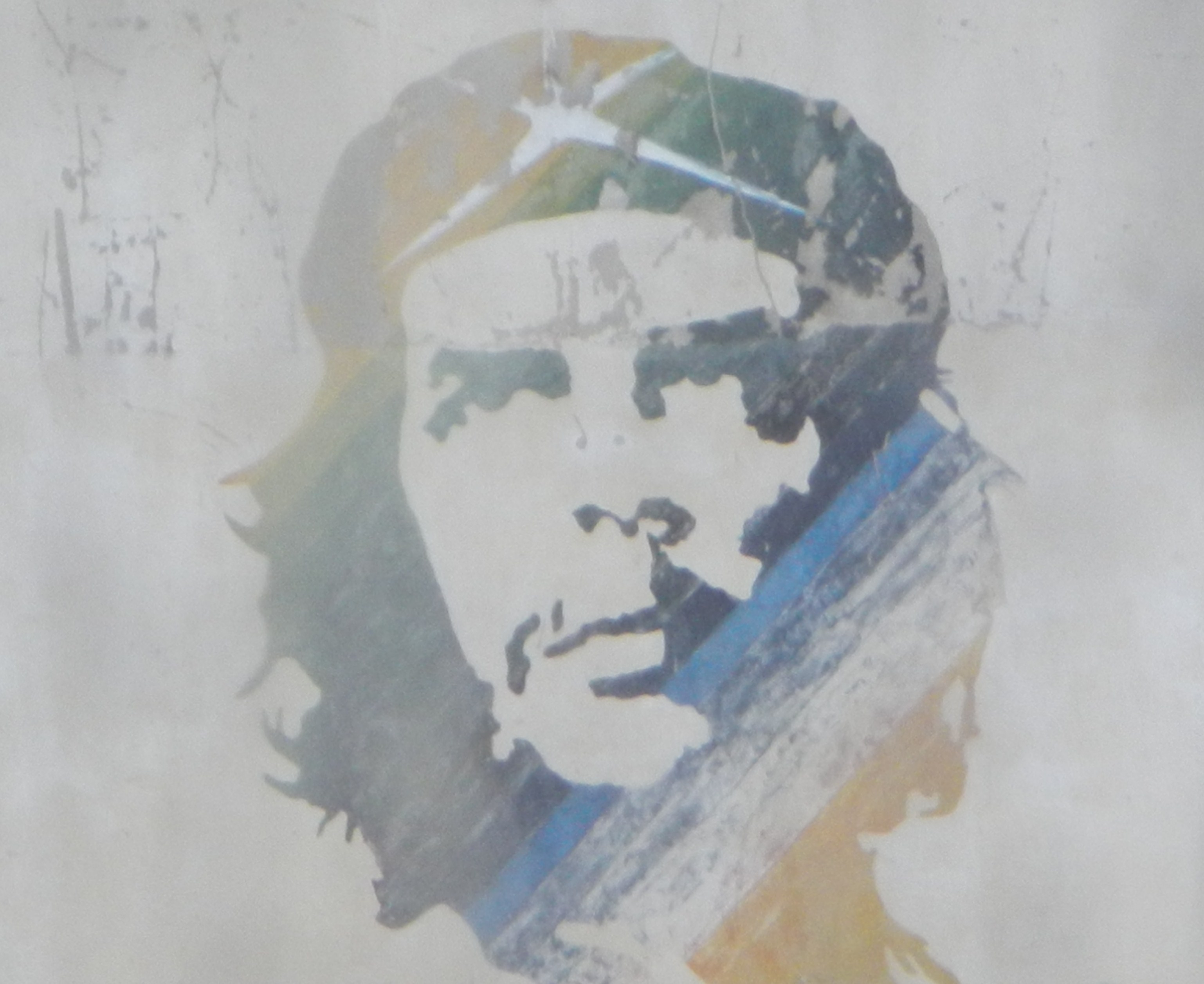
Che assumed a number of key roles in the new government, including reviewing appeals for war criminals, instituting agrarian reforms as minister of industries, spearheading a national literacy campaign, serving as national bank president, and traveling the globe as spokesman for Cuban Socialism, including speeches at the U.N.  Divorcing a woman he had married in Mexico, with whom he had one child, he married again, this time to a woman with whom he had fought alongside in the mountains, and they had three more children. Exceptionally intelligent, he studied economics, set theory, and social theory, and tried to apply these to the revolution.   In 1965, having grown tired of diplomacy and bureaucracy, the revolutionary Che left Cuba to ferment revolution abroad, first in the Congo, and then in Bolivia, where he was killed by the CIA in 1967.  Revered and reviled, he remains one of the most influential people of the 20th century.  A 1960 photograph of Che, by Alberto Korda, showing a beautifully intense, long-haired young man in a beret, has been called the most famous photograph in the world, and is the model for thousands of t-shirts, posters, and billboards, not only in Cuba, but throughout the world.  We saw Che t-shirts hawked all over Spain and Italy.  In a letter written from Bolivia to his children, feeling the end near, he encouraged them to “study hard, and be good people.”  He was 39 years old.  This image, after the famous photograph, rode in the windshield of our bus, and a smaller one to the left of our driver Miguel’s seat.

Che

Che Guevara Memorial

Shortly after the video, we arrived at Che’s memorial and mausoleum outside Santa Clara.  It was a Monday, and we had originally been scheduled to visit on Tuesday, but the tour management had changed things around a bit.  Well, turns out the place is closed on Mondays, so we didn’t get to go in to the mausoleum where Che is buried.  We did get a close-up look at the very impressive memorial, which stands next to the highway, across from which is a large open square.  Fidel has given a number of speeches at this site, and in one not long ago, fell down the steps.

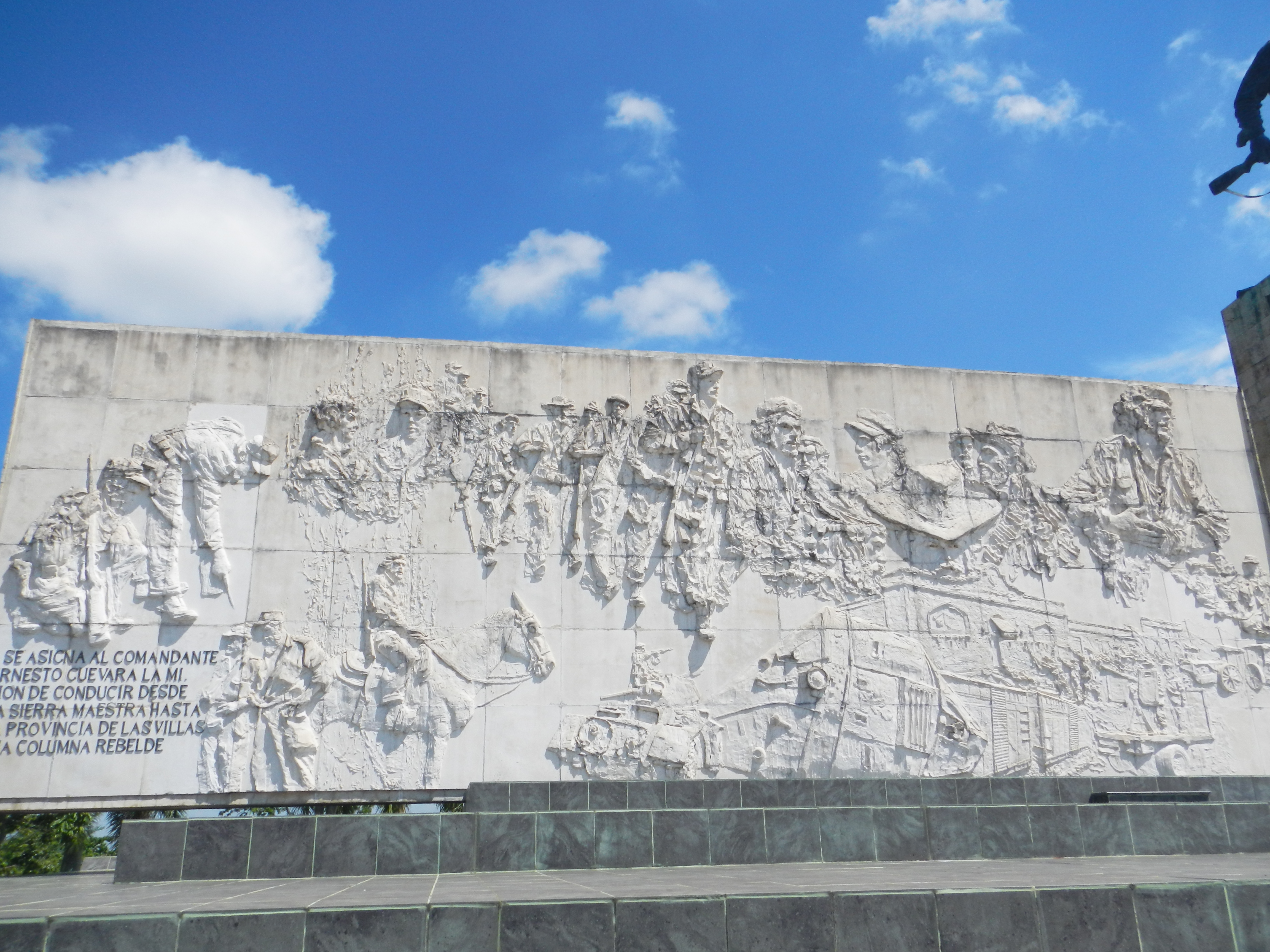
Wall Depicting Che’s Battles

Part of the memorial consists of a large marble wall on which are carved scenes depicting Che’s revolutionary exploits.  The 22 foot tall statue of Che shows him in full military gear, including carbine.  Santa Clara was chosen as the site for his mausoleum and memorial, because of the decisive battle.

Che Guevara statue

Apparently the history lessons and national memorials were not sitting too well with some of our group.  While waiting to board the bus we were passed by a couple from south central Florida.  In a loud voice, and clearly seeking our concurrence, the woman said, “I’m getting sick of having Fidel Castro pushed down my throat.”  We declined comment, but it made me wonder why they had come on this trip.  Maybe she missed the part about a revolution in Cuba, and that we were guests of the government established as a result of that revolution, a government that remains in control, whatever our own politics and ideology might be.

Second Hand Shop

We moved on to Santa Clara, where Enedis took us on a short walking tour around the main square.  We visited a hardware store, one of the rare places in country where Cubans can spend CUCs.  Next door was a small, very busy second-hand store, and across the street a pharmacy.  You must have a doctor’s prescription to get a medicine, but, like all health care in Cuba, it is free.  One of our group experienced this national health-care first-hand, as we shall later relate.

Hotel Santa Clara Libre

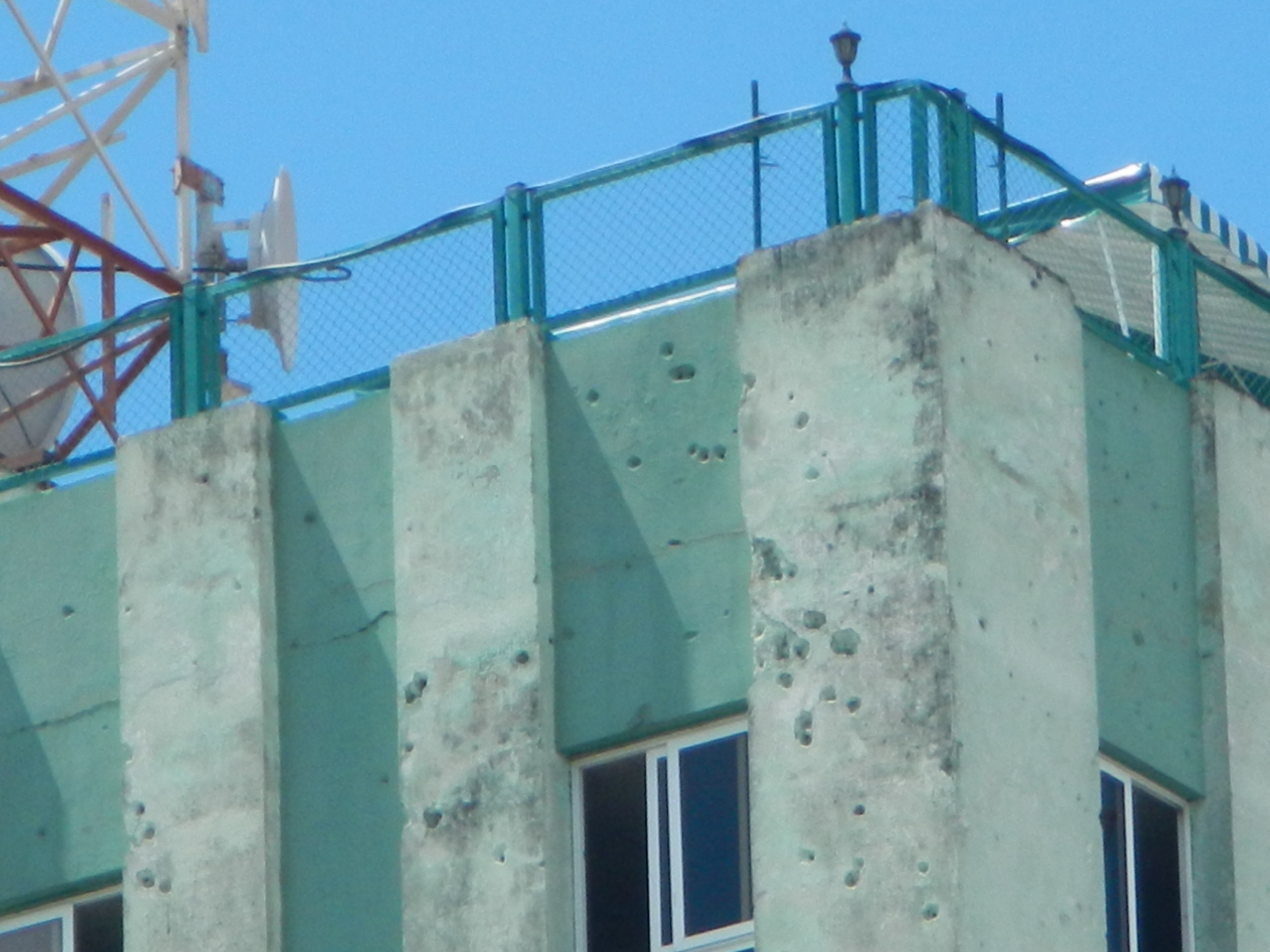
One of the highlights of the main square is the Hotel Santa Clara Libre, which, during the revolution, was the region’s government army headquarters.  It was taken by Che Guevara’s little band in the battle for the city, and the bullet marks remain.  The square itself contained a gazebo and many shade trees.  It was noon, and very active, in and around the square, with street vendors selling sandwiches, and fruits and vegetables.  I saw a man riding up to the square on a bicycle, a basket on the handlebars filled with herbs, and this fruit vendor was on the sidewalk near our bus.

Santa Clara Produce

Los Tainos Restaurant

We had lunch on the outskirts of Santa Clara at a government restaurant and mini-resort called Los Tainos, after the Tainos, the aboriginal people of the island.  There are no Tainos left, though some of their genes certainly survive in the descendants of early Spanish settlers.  The original explorers brought no women with them, so many took Tainos women as wives.  Others were incorporated into the slave work force, and many others died of smallpox and other diseases carried from Europe, against which they had no immunity.

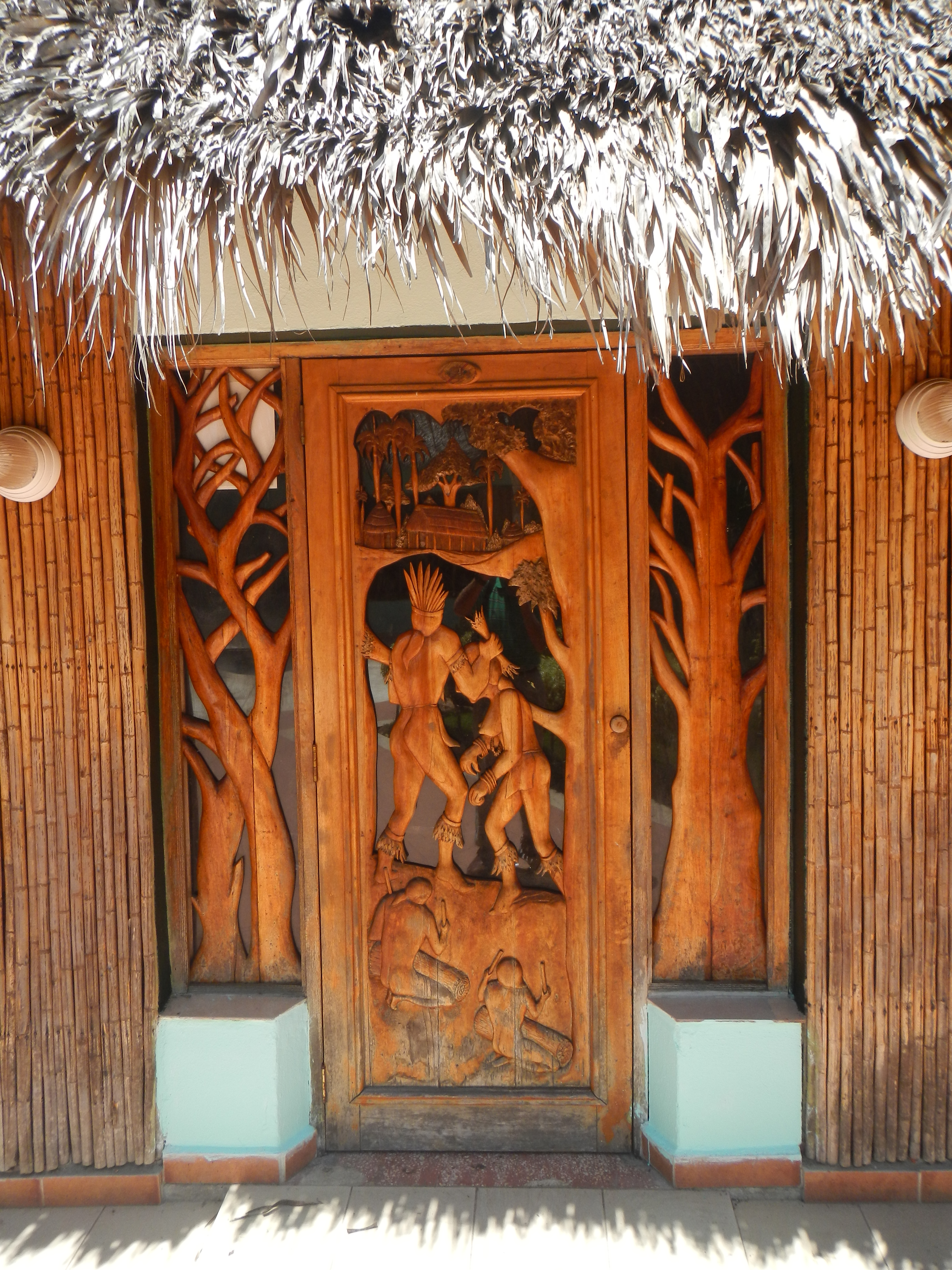
Carved Door, Los Tainos

Anyway, nothing remains of the Tainos but drawings and paintings of their villages, art work, and dress, on which this place was modeled.  We enjoyed a wonderful buffet lunch, (with live music,) andtook a walk around this classy-looking place.  Like many of the places we had been taken, this was clearly new and built for tourists.  The Master Plan is heavily relying on increased tourism.  It is a growth industry in Cuba, with many visitors coming from South America, Italy, and Germany, but the vast majority from Canada.  The U.S market is what they really want, though, and the Cuban people are very interested in the outcome of our upcoming presidential election, and are very savvy.  On one of our drives Enedis asked if these kinds of tours would continue under a Romney administration, and our response appeared equally divided, yes and no, but for all the Cuban people we met who addressed this issue, there was unanimous support for Obama.  Make of that what you will.

Causeway to Cayo Santa maria

We got back on the bus for our last trek of the day, a 30 mile drive out a causeway to Cayo Santa Maria, where we would spend the last two days of the trip.  This was a drive very reminiscent of the Overseas Highway to the Keys, with mangrove islands all along the way.  Built in the 90s, the road was undergoing repairs of its many bridges.  It looked like good bird habitat and I asked Enedis about that.  She said there were occasional flamingo sightings, but all we saw was one heron and a few egret.

Welcoming Committee, Playa Cayo Santa Maria

Enedis had given us a head’s up in Havana that our hotel on the Cay was even grander than our Havana digs, but we were completely unprepared for what we found.  Greeted by a band, dancing girls, and Champaign, we were ushered into a meeting room, where we each received a little packet of information about the hotel, and a blue wrist band, which turned out to be our ticket to all manner of delights in this all-inclusive hotel.  There were five restaurants, seven bars, a show pavilion, three pools, and, of course, the Atlantic.  Cayo Santa Maria is one of several small islands, or Cays, off Cuba’s north shore, and it appeared this area was being groomed exclusively for tourism.  We noted several other similar resorts near ours.  It was an exceptionally beautiful and comfortable place, a true five-star resort, and further emphasized what a great deal we had gotten on this trip.  I don’t think, as regular guests, we could have afforded the two nights we spent there for what we paid for the whole trip.  They want our business, folks, and we were most fortunate to have found this tour.  More on that in a summation.

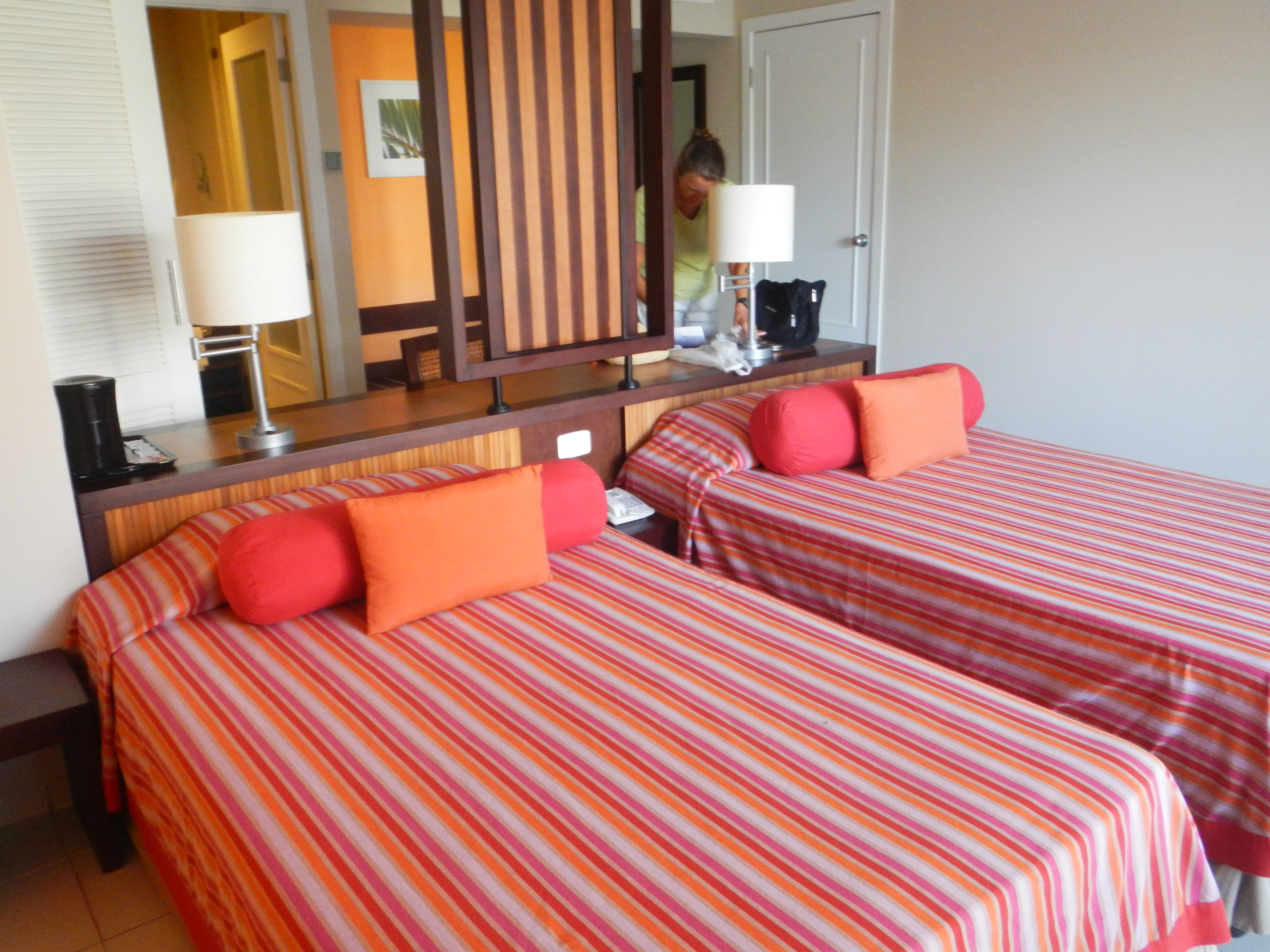
Our Room

The rooms were in individual two-story buildings called “bungalows,”  there being 14 such bungalows scattered over some 5 acres.  We were in bungalow 8, with most of the rest of our group, and were taken there by golf cart.  A ground floor room, ours opened onto a small patio with table and chairs, and was a short walk from two pools and the snack bar.  We waited impatiently for our bags to arrive, anxious to dig out our swimsuits and hit the beach. We were apparently the last to receive our luggage, but at last it arrived and we were out the door.

Beach Bar

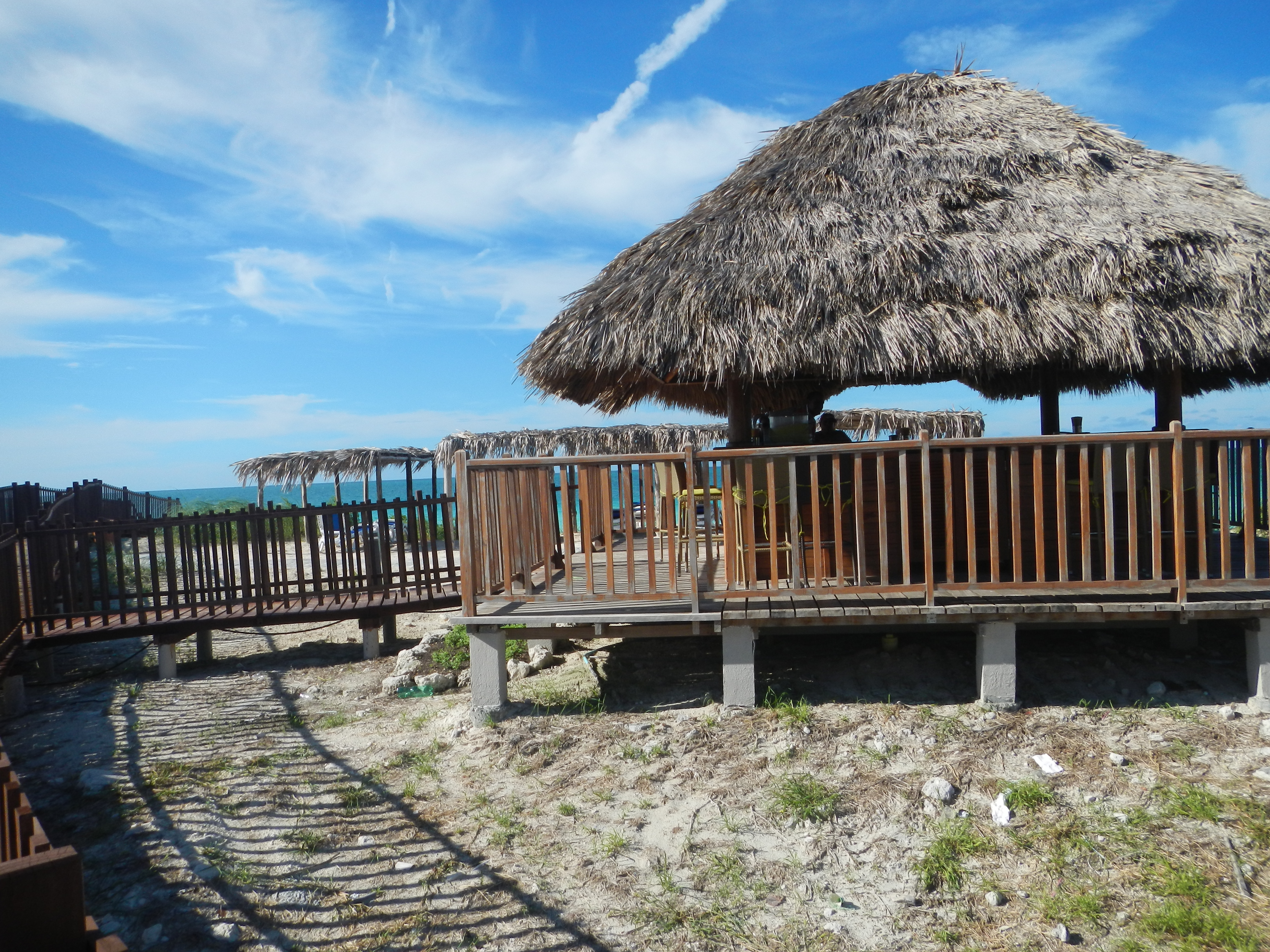
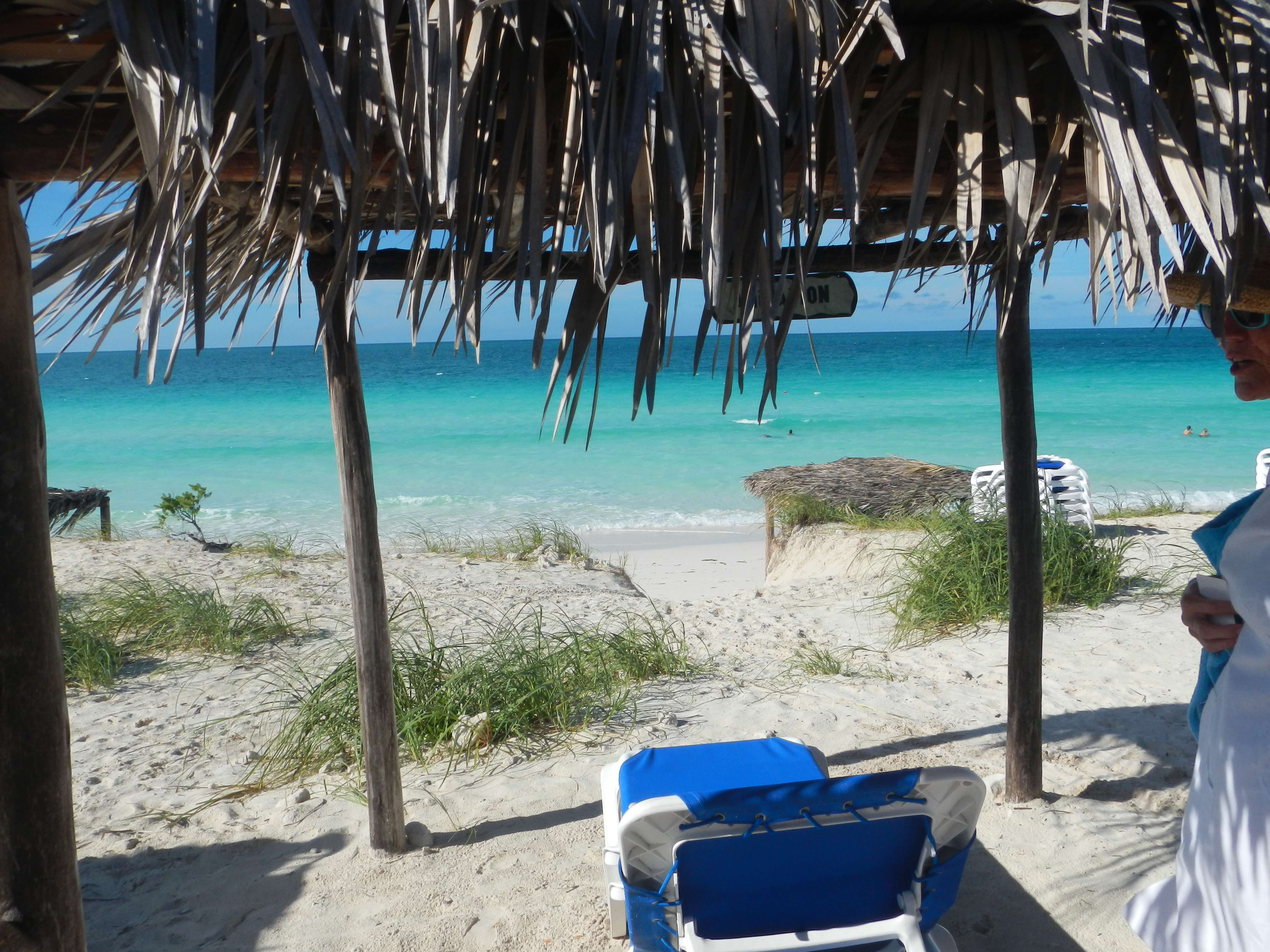
Skirting the West Pool, a 50 meter glistening paradise, we found the sidewalk to the beach and reconnoitered the beach dining room, and beach bar, each constructed in a lovely, open, thatched roof style, then descended the sand to a sweet little thatched roof cabana, complete with loungers, and this view of the Caribbean colored Atlantic.  I felt like I was in a Corona commercial!

Da Beach

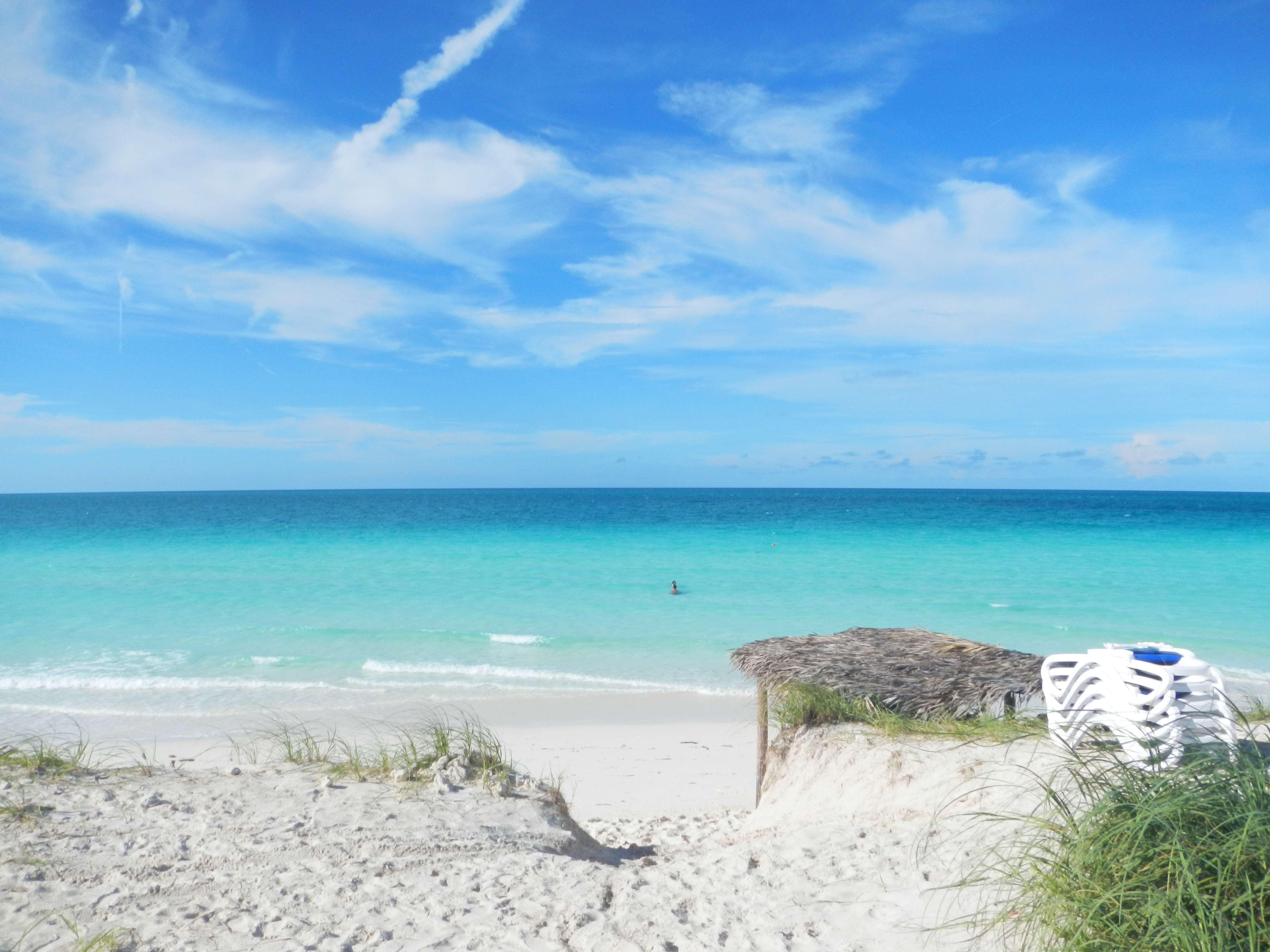
The Atlantic

We put our towels in the chairs and went for a swim in the gin-clear water, which was very salty, more like the Gulf than the Atlantic we are used to.  Joined by our new friends from California, who were shaking their heads in disbelief as well, we enjoyed the warm, calm water for 30 minutes, then decided to lounge in the cabana and see just how “all-inclusive”  this place really was.  I went up to the beach bar and asked if drinks were included, and the very congenial bar man answered, “Of course, amigo.” Mojitos in hand, I returned to the cabana.  This was truly decadent and, as I remarked to Barbara, my kind of communism.

Our Cabana

The West Pool

Dinner was at 7, it was pushing 5, so after the mojito we decided to go back up and try the pool nearest our room.  Somewhat giddy from the experience, (and mojito,) like a couple of kids in a candy store, and knowing this would be our only stay at an all-inclusive resort, we ordered a pina colada at the very handy pool bar, and settled into loungers poolside.  We ultimately managed a leisurely swim there, then went to the room to dress for a walk-about and dinner.

Lady with Cigar

Of course, before proceeding to the buffet, we had to give the lobby bar a look, just off the main entrance.  Like everything but the rooms, it was a large open space without walls.  I never could quite figure out what they did when a storm blew in.  We ordered dry martinis, like we are wont to imbibe at The Little Hacienda on occasion. These were at least half vermouth, not dry, but not bad, either.  While sipping, a young man approached and asked where we were from.  When we told him he was very interested and we engaged in a somewhat lengthy conversation.  He said he was one of the entertainers, and hoped we would attend the show later that evening, where we would hear some good, “real” Cuban music.  Like others we had met, he expressed a seemingly heart-felt desire that our two countries find a way to normalize relations.  He was very sweet, with a kind of unaffected innocence, and said he hoped we could talk more later.

Afro-Cuban Band

We ranged through the extensive buffet of salad, chicken, lamb, fish, vegetables, cheeses, and many breads, then had a delicious, Cuban-style pizza, with thin crust and peppers, made to order, after we had consumed virtually everything else on the line.  We walked this off for some time on the beautiful grounds, then made our way to the Pavillion, where the warm-up act, a five-piece Afro-Cuban band, was into their set.  They were over-the-top good, and we could have listened to them all night.  A brief intermission, and then the main show started.

Flamenco Show

This was a Flamenco program, five dancers backed by a band consisting of guitar, violin, bass, and a percussionist playing a large wooden box, who produced the most amazing array of sounds.  Our young friend from the bar appeared, sat with us, and explained that this was a show honoring the Spanish cultural influence.  A separate show highlighted the African heritage.  The musicians were wonderful, the dancers flawless.  Tired as we were, we couldn’t tear ourselves away, and stayed until the end.  Tomorrow, back to the mainland and the town of Remedios, one of Cuba’s oldest cities, established in 1514.

In the Pool

Posted in Uncategorized | 1 Comment

The Cuba Diaries: Day 5

Cristobal Colon Cemetery

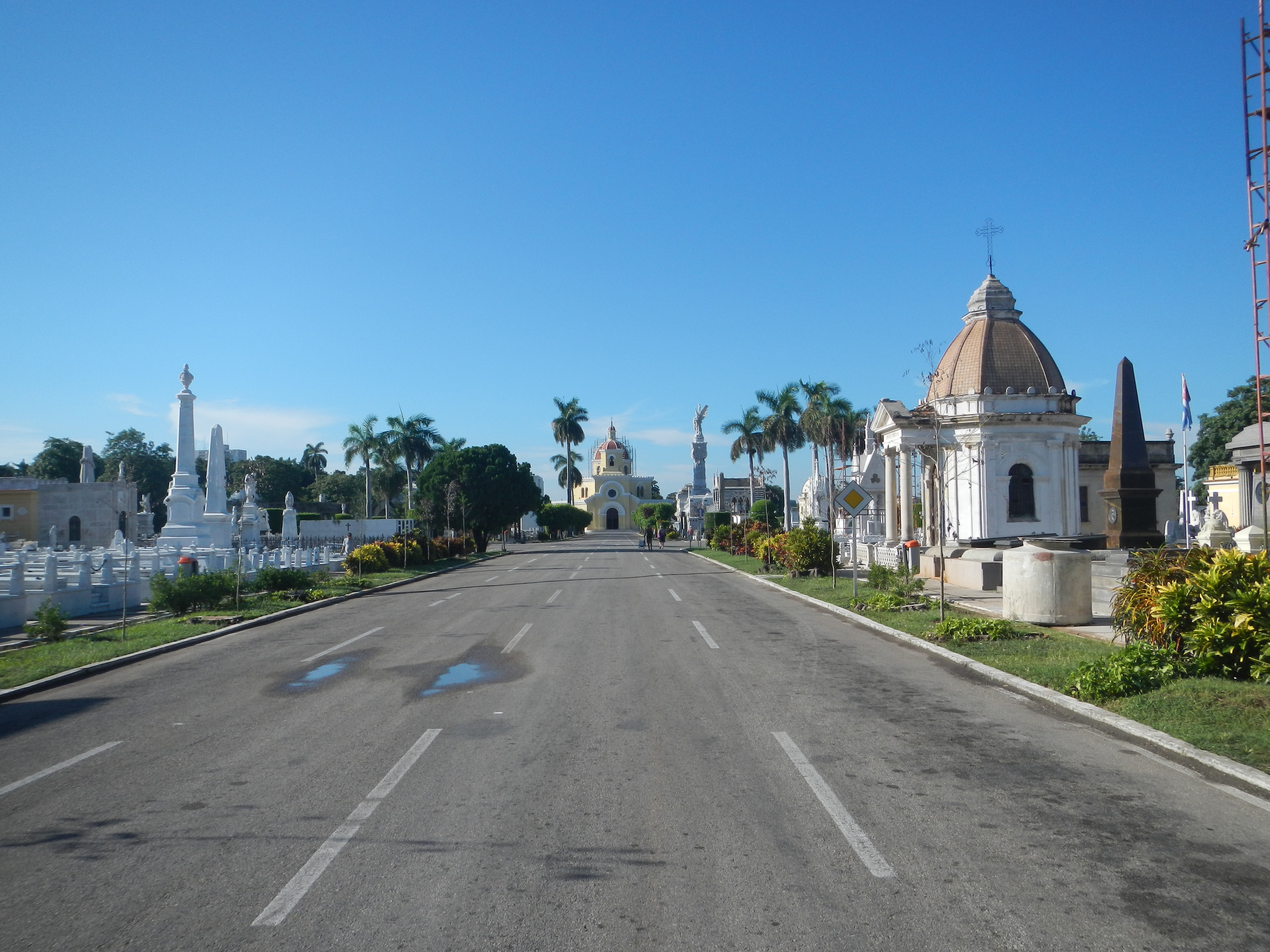
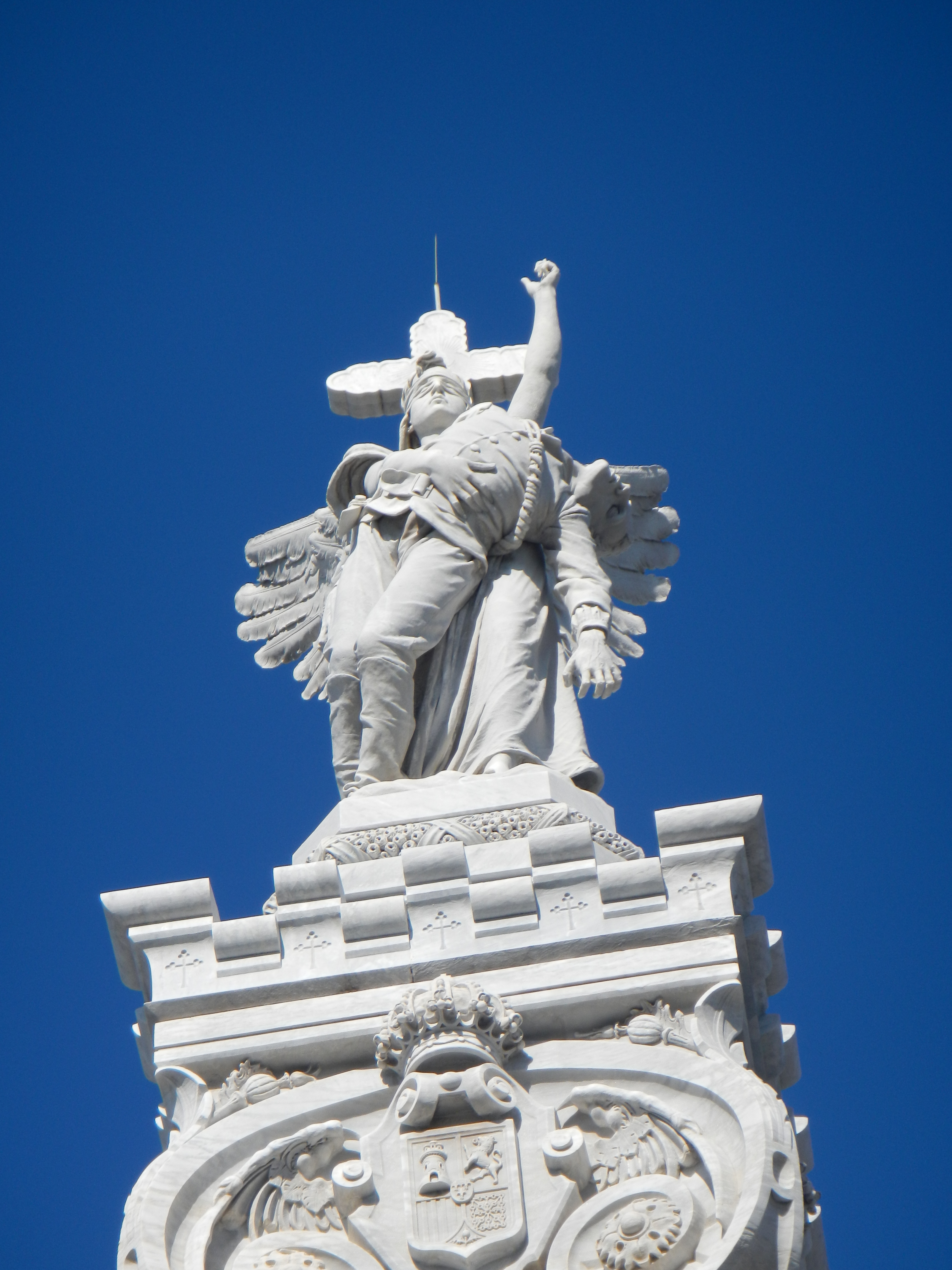
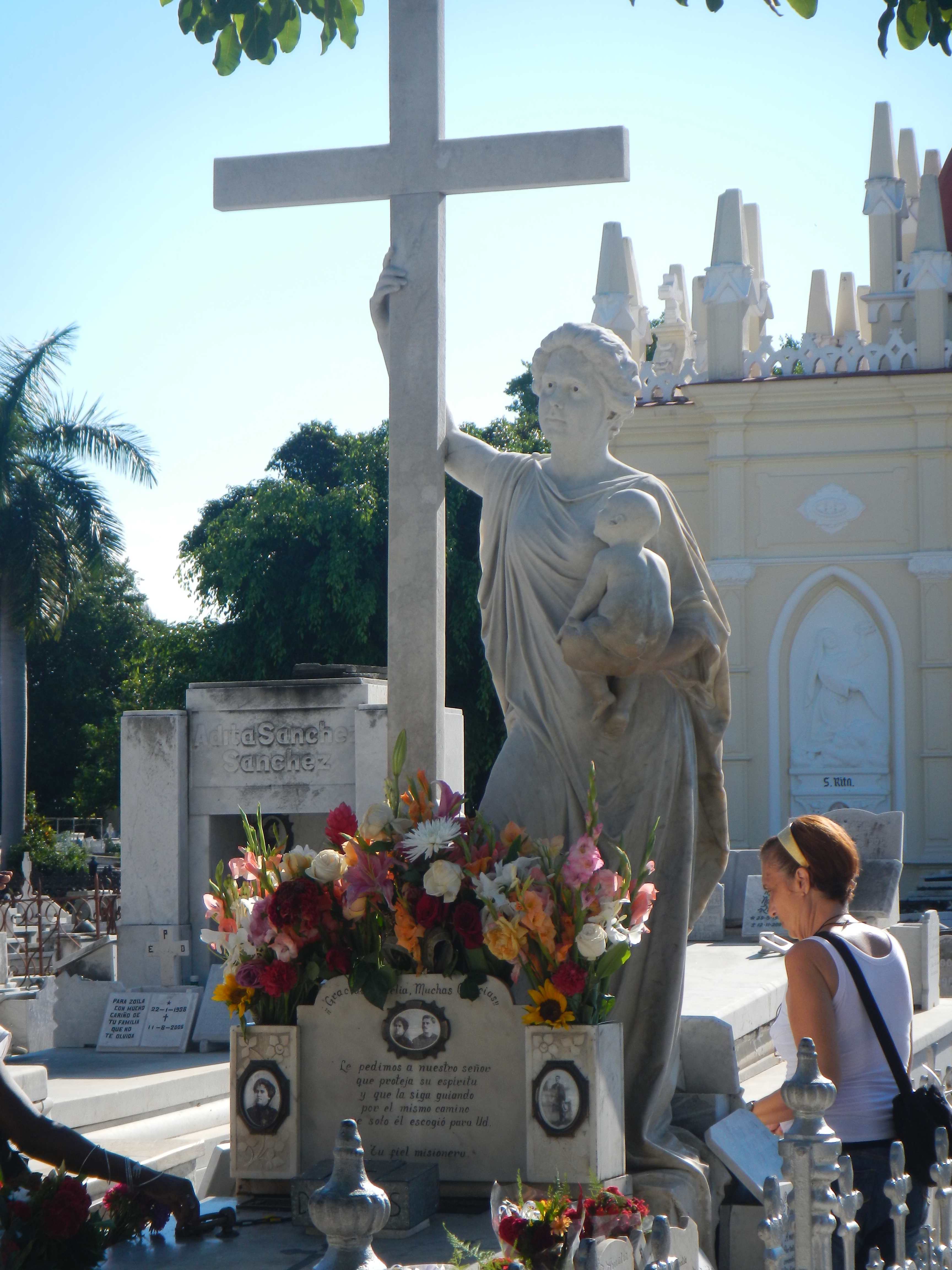
This was a full day of street art, starting with a tour of the Cementario de Cristbal Colon, which is as much outdoor museum as boneyard.  We arrived early on a clear, warm, humid morning that promised to be a scorcher, and bring on the inevitable afternoon thunderstorms.  Our guide was a feisty little woman employed by the cemetery, who had an opinion on just about everything, and wasn’t afraid to express it.  We learned that the 140 acre cemetery, in the Vedado section of Havana was founded in 1876.  It contains 800,000 graves and over 1 million internments, with 500 major mausoleums, chapels, and family vaults.  The supposed bones of Christopher Columbus were at one time interred there, before being moved to the Cathedral in Seville, which we saw last year.

Firefighter Memorial

There were many elaborate monuments in the cemetery, including this one dedicated to firefighters killed in a late 19th century warehouse fire.  The owner of the building, a corrupt city official, was storing ammunition and explosives in the warehouse, but he told firefighters there was nothing inside.  Twenty were killed in the ensuing explosion, but the official got off with a slap on the wrist.  Incensed citizens raised the money for this memorial.

There were chapels and tombs of all shapes and sizes, and several sturdy mausoleums in which generations were entombed.

Amelia’s Tomb

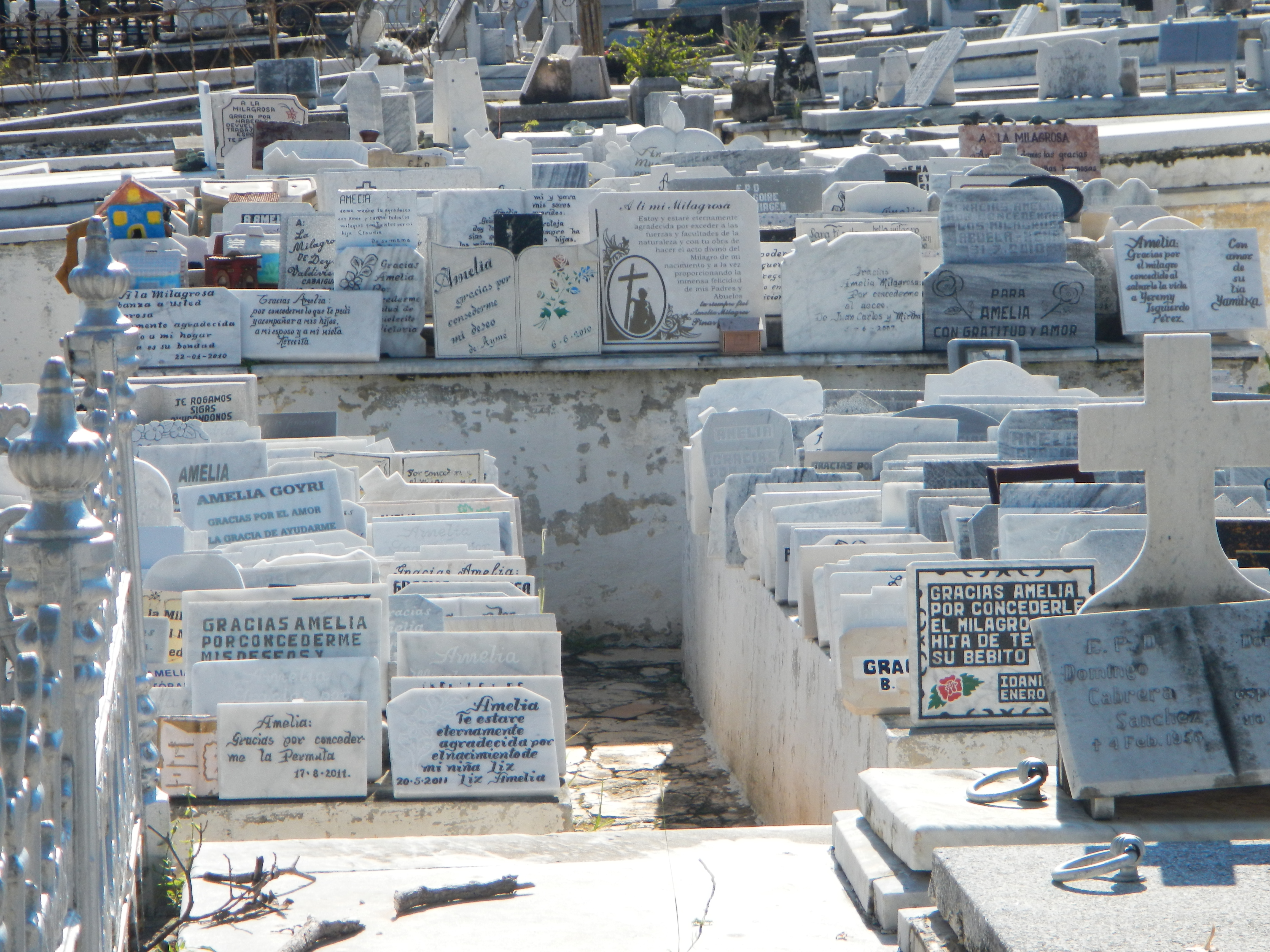
But the most intriguing was this tomb visited daily by hundreds, not only Havana residents, but folks from around the world.  It is the burial place of a young woman named Amelia and her infant child, both of whom died in childbirth.  Our guide told us a long story of how this woman and her husband overcame family disapproval and other obstacles to be together, and that they were very much in love.  When Amelia and the baby died, the baby was buried with her, lying at her feet.  The husband was inconsolably distraught, and insisted his wife and child were not dead but only sleeping.  He spent days on end at the grave tapping on the crypt with an attached ornamental brass ring, tapping to wake Amelia.  Finally, to prove to him she was indeed dead, the family opened the tomb, and it is said that the baby was not at Amelia’s feet where it had been placed at burial, but cradled in her arms.

Milagro Thank-you Notes

Word of this milagro quickly spread, and pilgrims began coming to tap on the crypt and ask for miracles in their lives.  In the 15 minutes or so we were at this site three women came along to tap and pray.  A great many flowers stood at the foot of the tomb.  It was not yet 10 in the morning, and our guide said these were flowers from just today.  Next to the crypt was an area of perhaps fifty by fifty feet filled with small flat marble plaques, each one thanking Amelia for a miracle in their life for which they had prayed.  The guide showed us several from the States.  There is a movement underway to have Amelia Canonized, and ultimately named a Saint.  It was a remarkable and moving place.

National Museum of Fine Arts

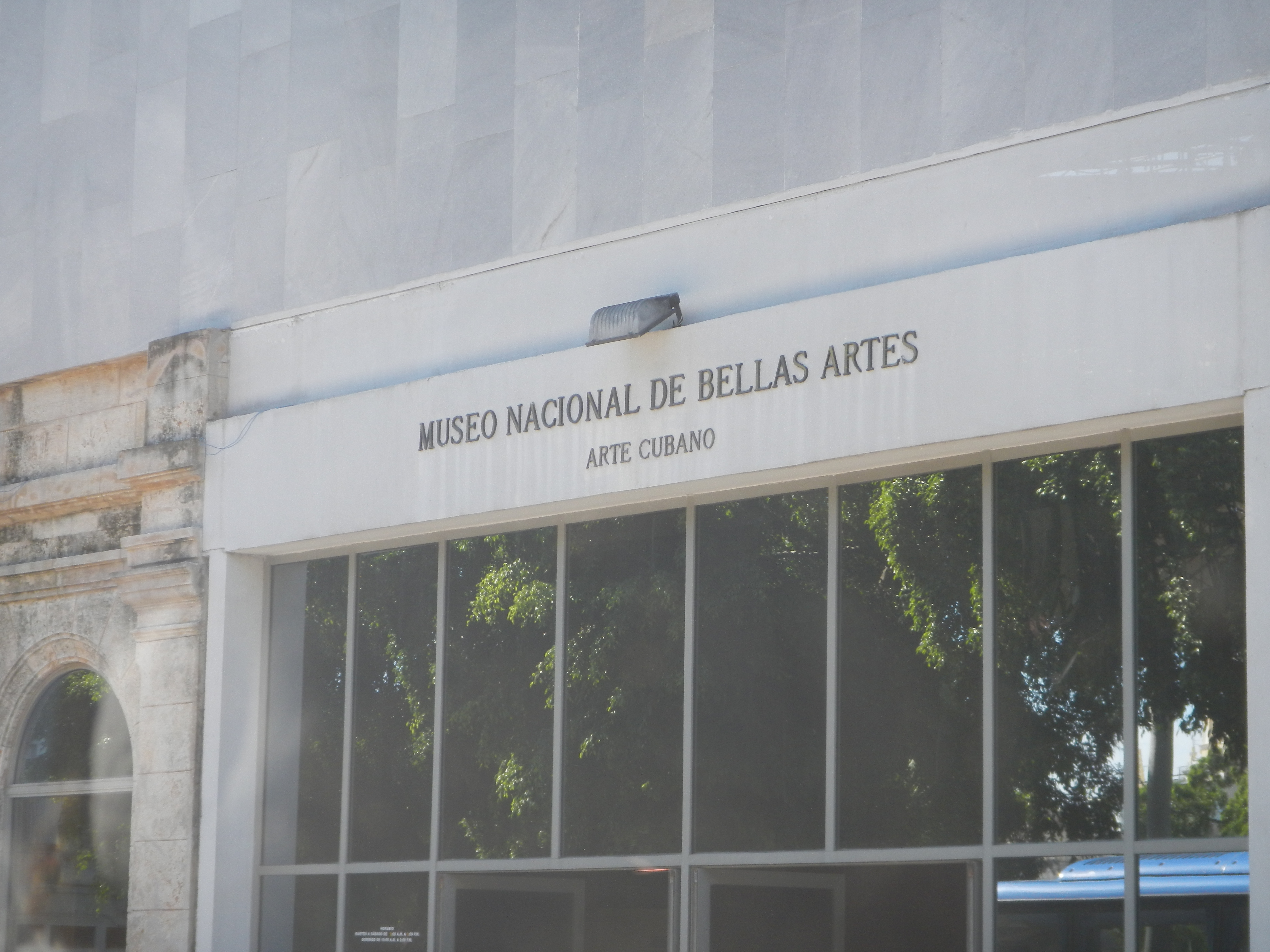
Back on the bus and off to another greatly anticipated stop, the Museo Nacional de Bellas Arts, (National Fine Arts Museum,) in downtown Havana.  A modern, spacious building with open courtyards and sculpture gardens on the ground floor, the museum was founded in 1913, and moved into its current space in 1954.  It contains paintings from the early colonial period to present-day.  We met out museum guide, English-speaking, of course, and accompanied him to the second floor where stood an elegant sculpture by noted Cuban artist Rita Longa, and several of her drawings.  The tour proceeded from the first paintings executed in country, most of a religious nature, to pastoral landscapes, and then a room devoted to works influenced by the Hudson River School.  It was very interesting to see that style depicting banana and palm trees.  Then it was on through Cuban history to the turbulent days of the Revolution, where we encountered several large, aggressively done works, some hopeful in tone, others dark and foreboding.  The closer we came to contemporary work, the more members of our group lagged, found places to sit, or talked loudly among themselves.  Amazing.  We didn’t care.  I wanted to see some contemporary Cuban painting.   After a period evoking the New York 70s, with heavy pop art influences, but featuring Cuban revolutionary figures, we came to the strength of the whole place, a room hung with recent works in hyper-realism.  They were stunning, especially one giant painting (10 x 20 feet,) of a cloud, a pond below, and a section of turf, the size and shape of the pond, hanging between, done in photographic detail.  Blown away.  Unfortunately, no photos allowed.

La Floridita

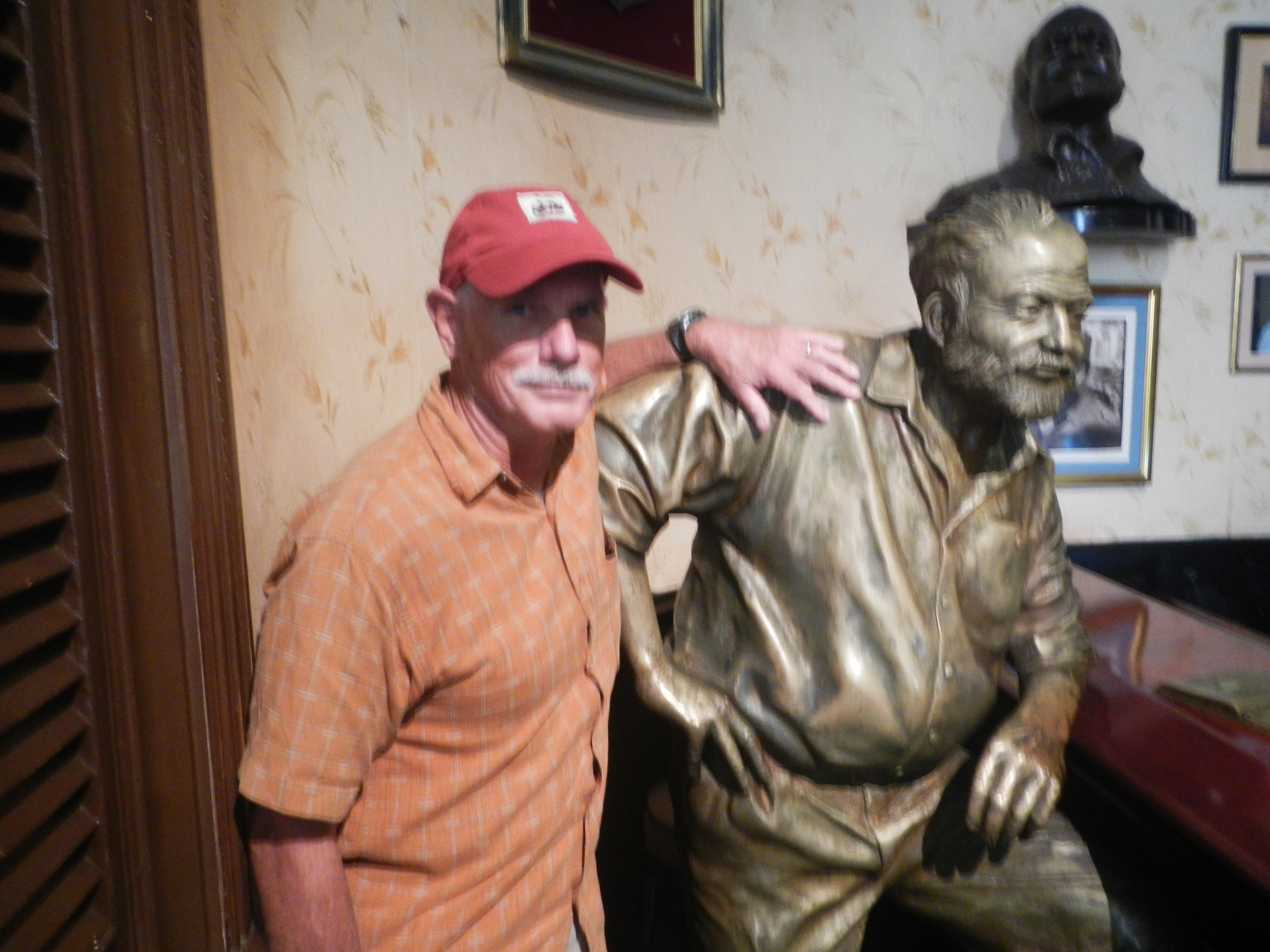
Off we went, at last, to La Floridita, Hemingway’s favorite bar, in Old Havana, and home of the daiquiri. Only 5 of the usual suspects accompanied Enedis inside, the rest of our increasingly weary group remaining on the bus.  Just after noon on a Sunday, and the joint was jumping, but we managed to order a daiquiri and some fried plantains.  For Barbara and me, this would be lunch.  Besides a life-like stature of Hemingway hunched over the bar in one corner, our bar-mates included two happy guys from Texas  We learned they had come in from St. Martin, and had a flight out in 2 hours for the States, but weren’t supposed to be in Cuba.  The Visas are all very strictly controlled.  They didn’t seem to be too concerned, however, and were certainly finding courage in a succession of daiquiri’s.

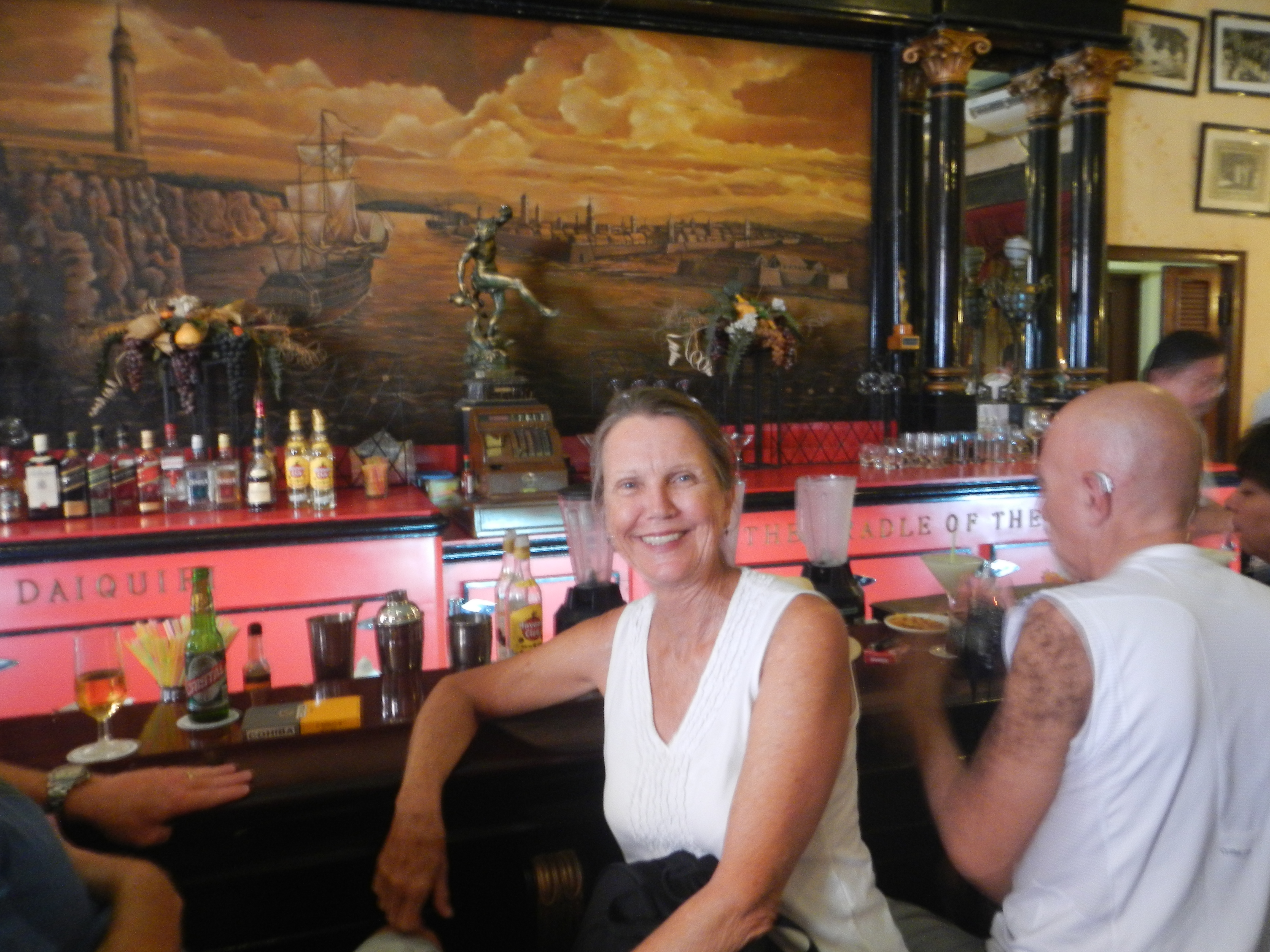
Barbara in La Floridita

Which were wonderful, by the way.  Here’s  Barbara enjoying the atmosphere. Floridita is a venerable old place; the daiquiri was invented there by a former owner, and it is said that Hemingway still holds the record for successive consumption of the tidy little drink at 17.  We wanted to stay a good bit longer, to soak up the wonderful history and ambience of the place, but the fuddy-duddies were waiting on the bus, and we had several other stops yet on the itinerary.  I bade my old pal Ernest farewell (hard to believe I’m 4 years older than he ever got to be,) and we emerged into the hot Havana sun.

Papa y Papa

Impromptu Dance

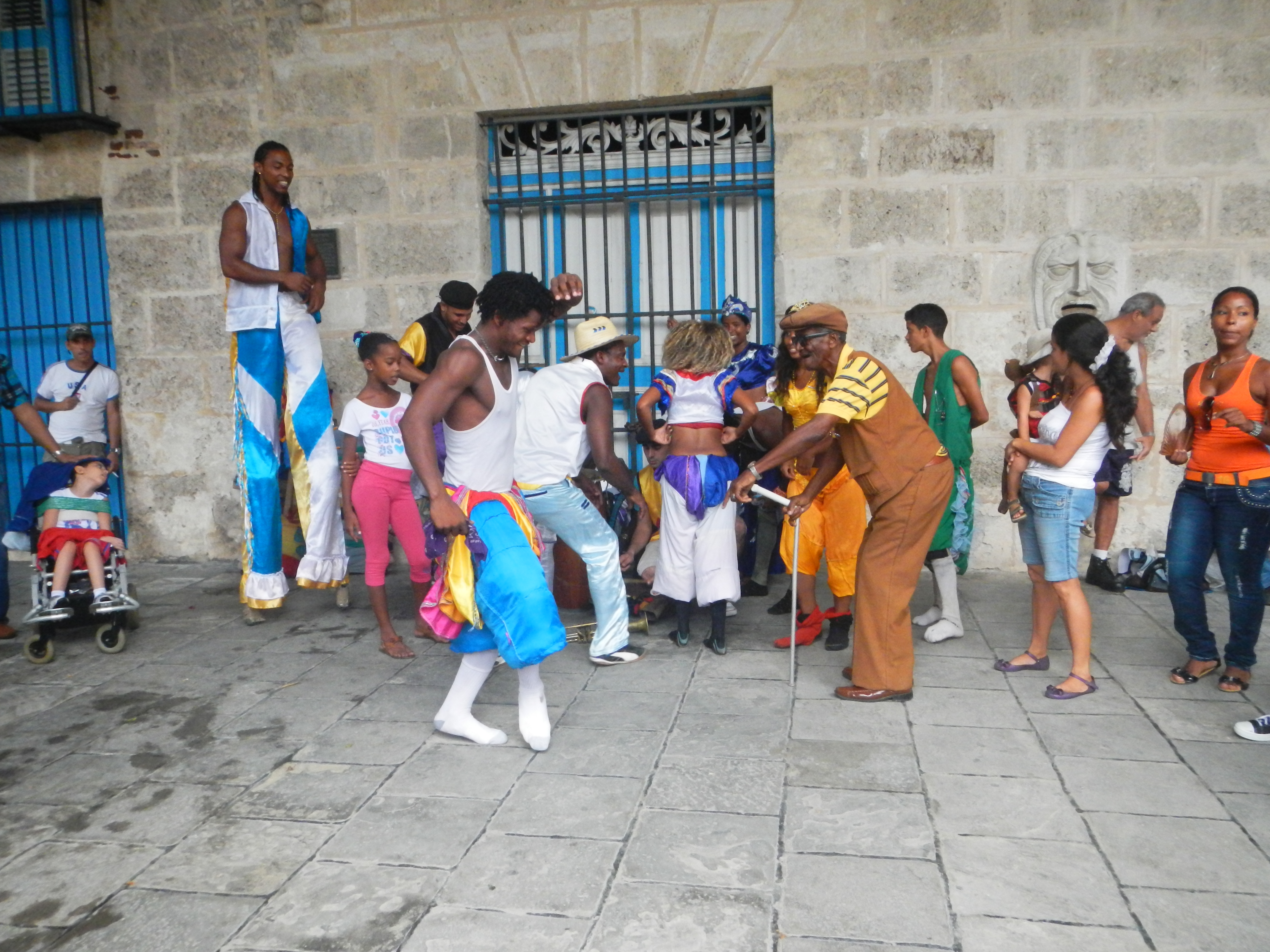
Lunch was on our own, so after being dropped near Cathedral Square, with instructions to meet in front of the church at a designated time, folks struck out on their own, several to a restaurant across the square, while Barbara and I ascended the portico with a view of the whole square and lit up.  We heard a street troupe coming down one of the side streets, trumpets, percussion, etc. and they came into view just as the rain began to fall.  They all ducked under the overhang with us, musicians, dancers, guys on stilts, all in brightly colored traditional Cuban costumes.

More Dance

After 20 minutes or so of conversation, they simply couldn’t help themselves, and the rhythm section started up.  That went on for a few minutes, and then an old man who had been walking around with a cane broke into dance, which stimulated the rest of the troupe, and we were treated to a full-on Afro-Cuban music and dance concert there on the veranda.  The rain wouldn’t let up and neither would the dancing.  Great fun.  At the appointed hour, no one from our group had arrived in front of the church, So Barbara and I employed our umbrellas and struck out in search of the bus.  We found it along the waterfront, Miguel let us on, and the others started arriving shortly.

Guide at Calle Hammel

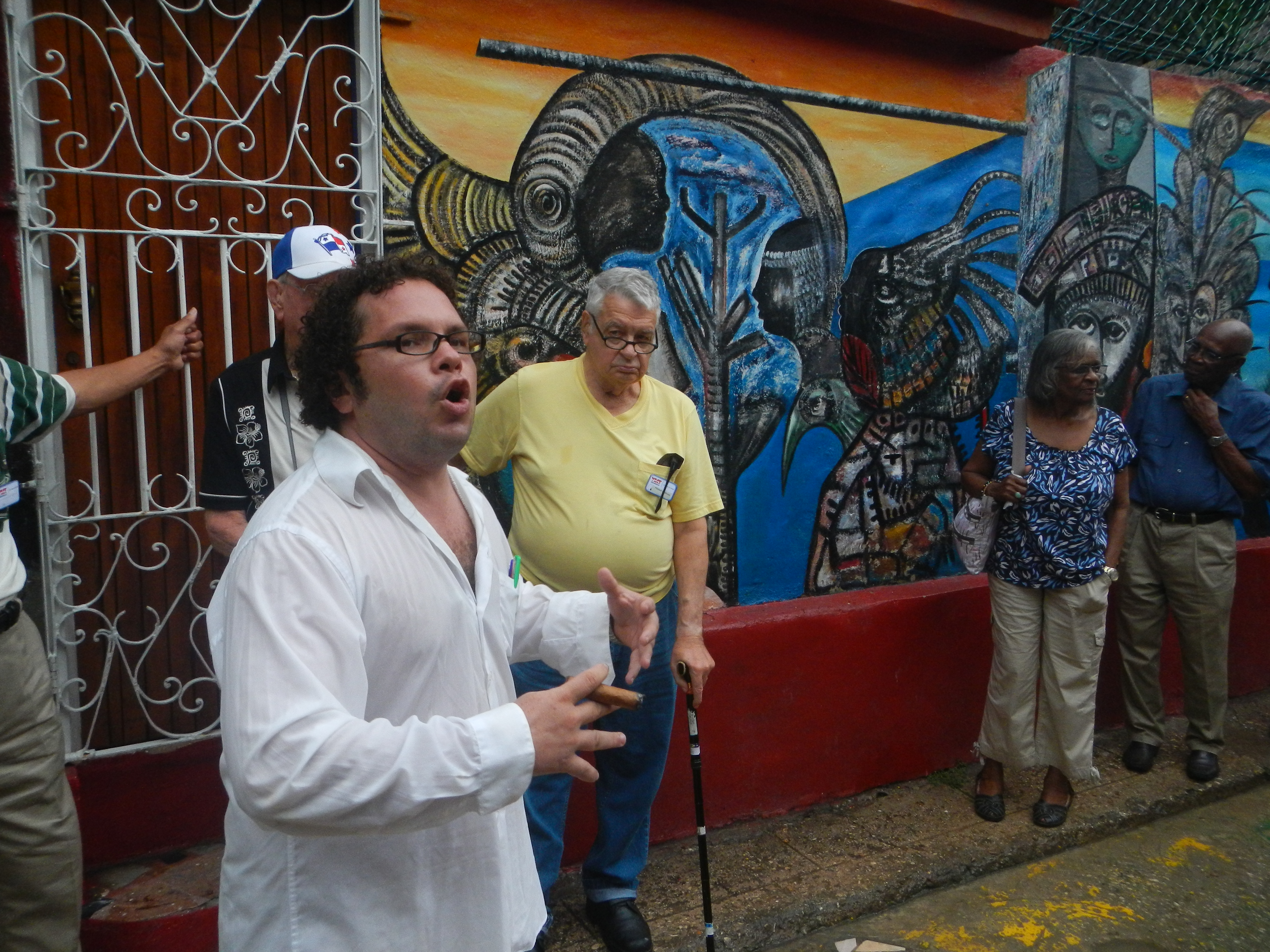
On to Calle Hamel, a neighborhood arts project in new Havana, the brainchild of a 60-year old, self-taught artist named Salvador Gonzales.  We were met by the project spokesman and guide, a short, round, excited man who, in nearly flawless English, welcomed us and took us on a tour of this incredible side street, after he had loudly admonished a handful of kids who had come begging.  We entered the cave-like studio/gallery of Salvador Gonzales, and there saw a number of his paintings, which were startling in their color and movement.

Calle Hamel

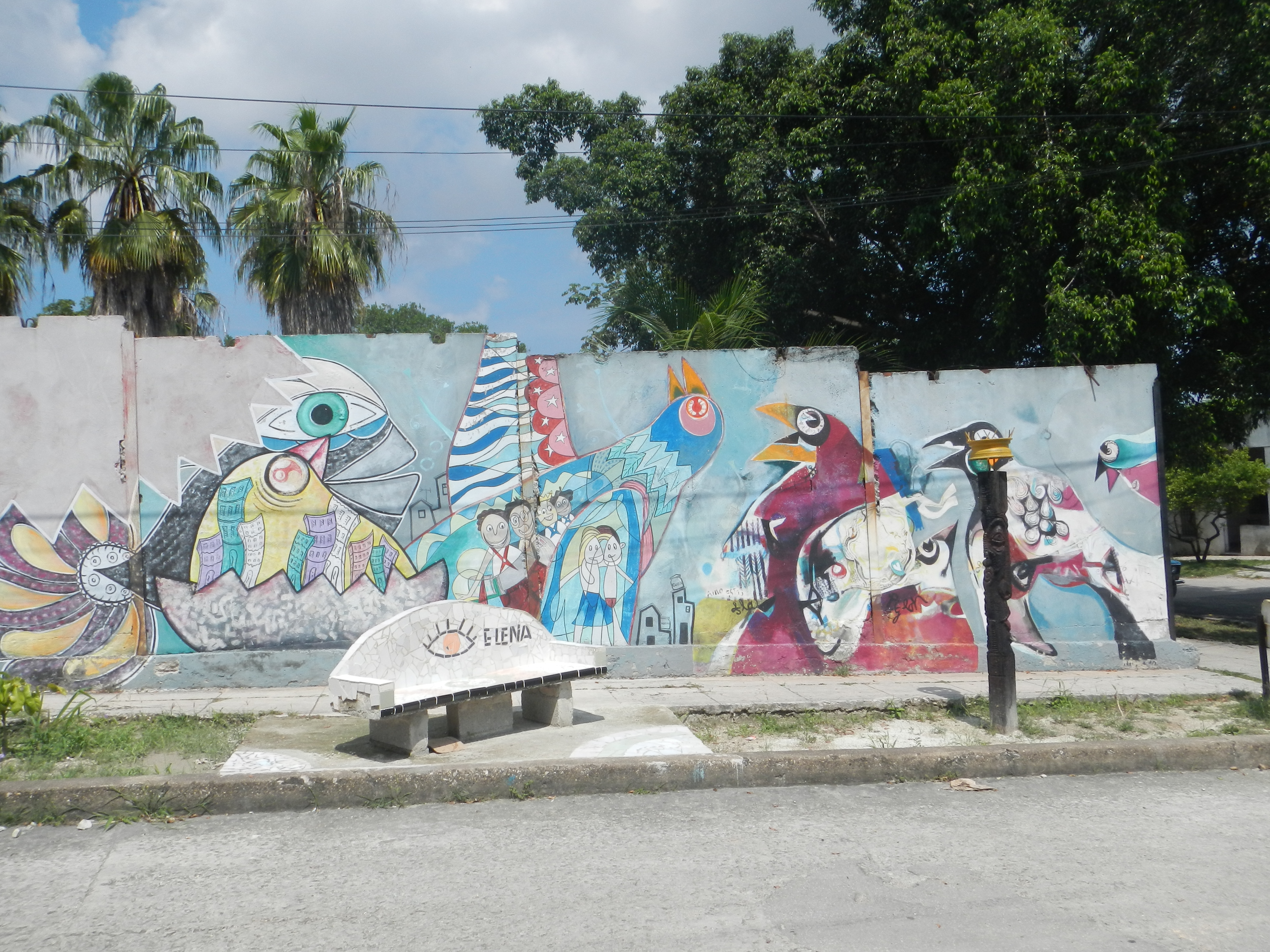
Outside, the walls of every building on the street had been painted with designs by Gonzales and his associates.  Found art pieces proliferated, including many more bathtubs.  On Sundays there are also singers until 3, but we had missed them.  Satisfied with our 30 minute tour of this vibrant, colorful, and unique street gallery, we made our way back to the bus in a light rain, with children tugging at us.  “Children shouldn’t have to beg anywhere,” Barbara said.

A block away, while conducting her head-count as she did every time we entered the bus, Enedis discovered someone was missing.  “It’s Edward,” someone shouted from the back.  Edward was a tall, quite elegant looking African-American man from Buffalo, who had nearly waist-length dreads tied back in a pony tail.  Miguel circled the rather long, wide block and we returned to Calle Hamel.  Enedis got out and went looking, but returned without Edward.  We moved on for another loop, everyone checking through their window, and Enedis on her cell phone.  Pulling back up near Calle Hamel she got a call.  It was the police, and Edward was safe with them back at the project.  We stopped, and a few minutes he appeared, and entered the bus to a welcoming cheer.  Noticing us gone, he had walked after us, and wisely asked for assistance from a policeman he found.

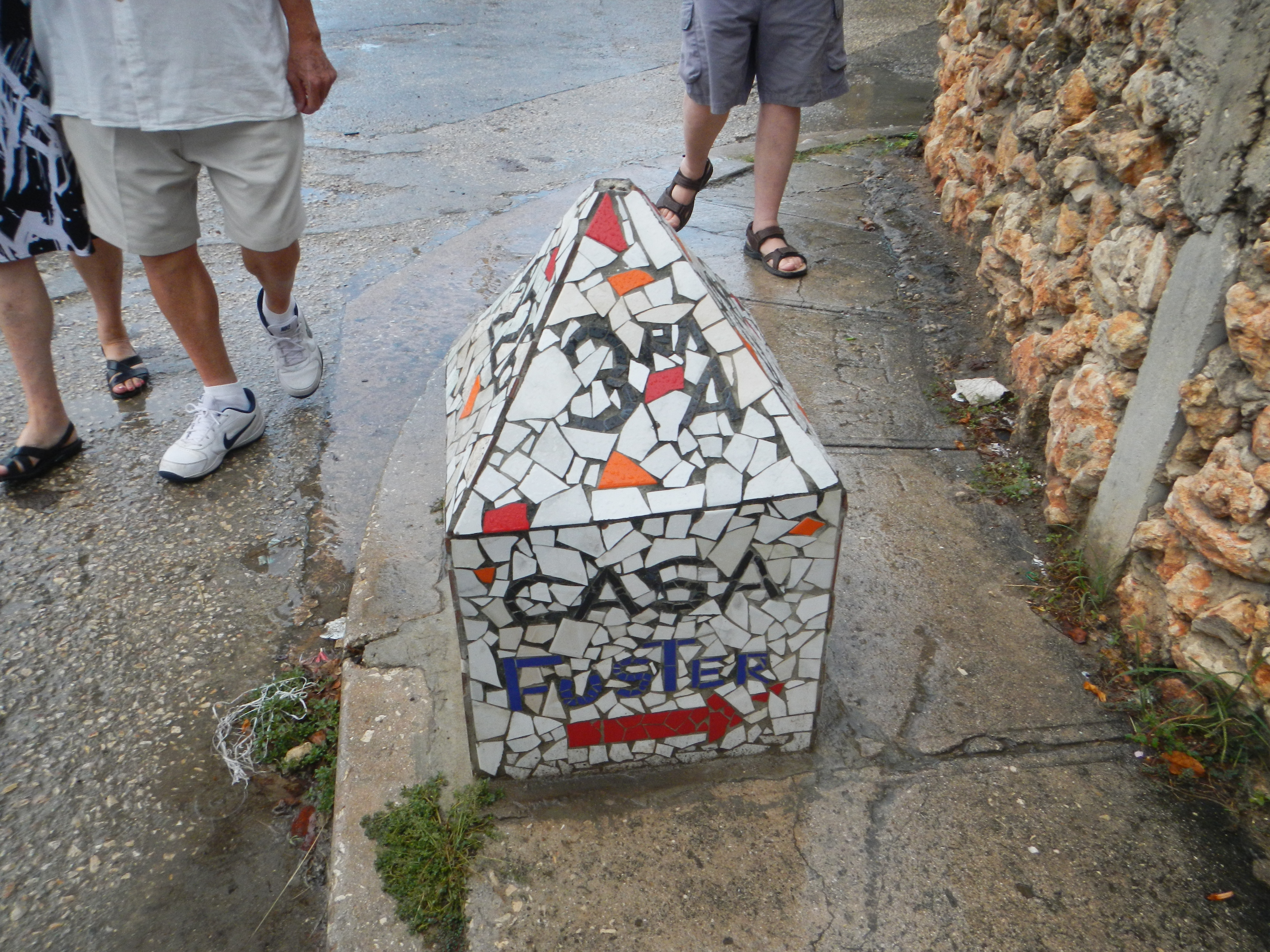
To the Fuster House

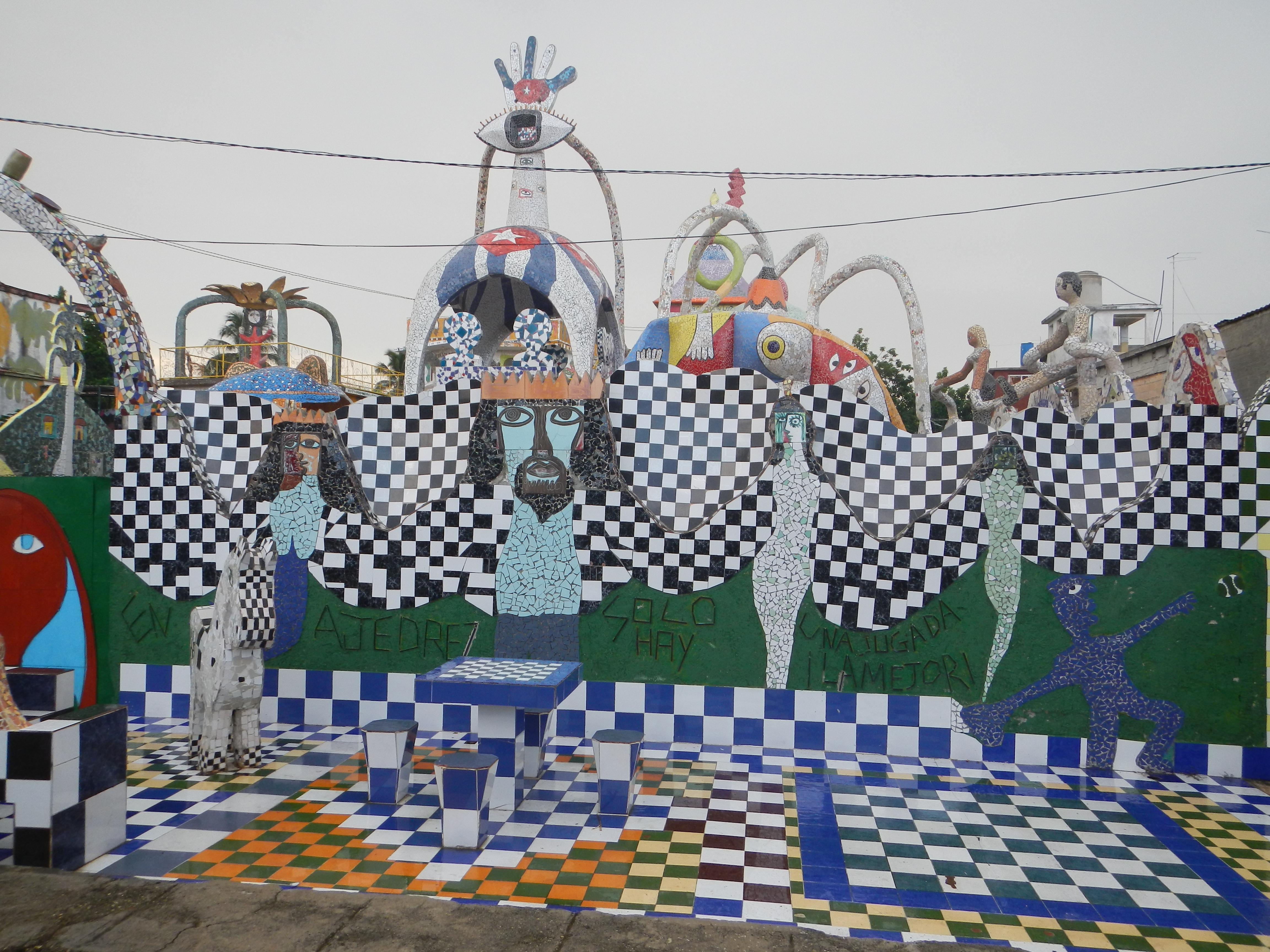
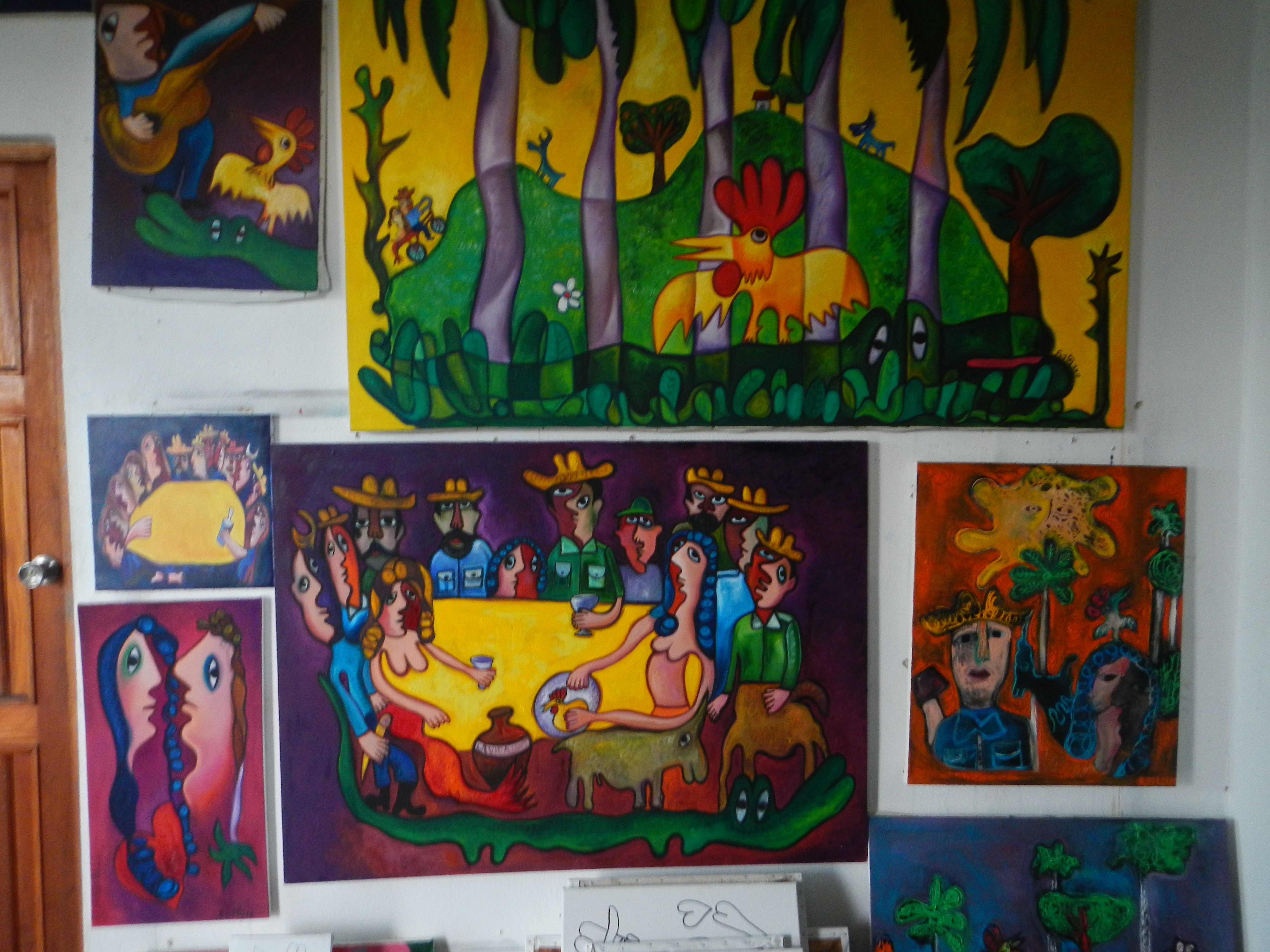
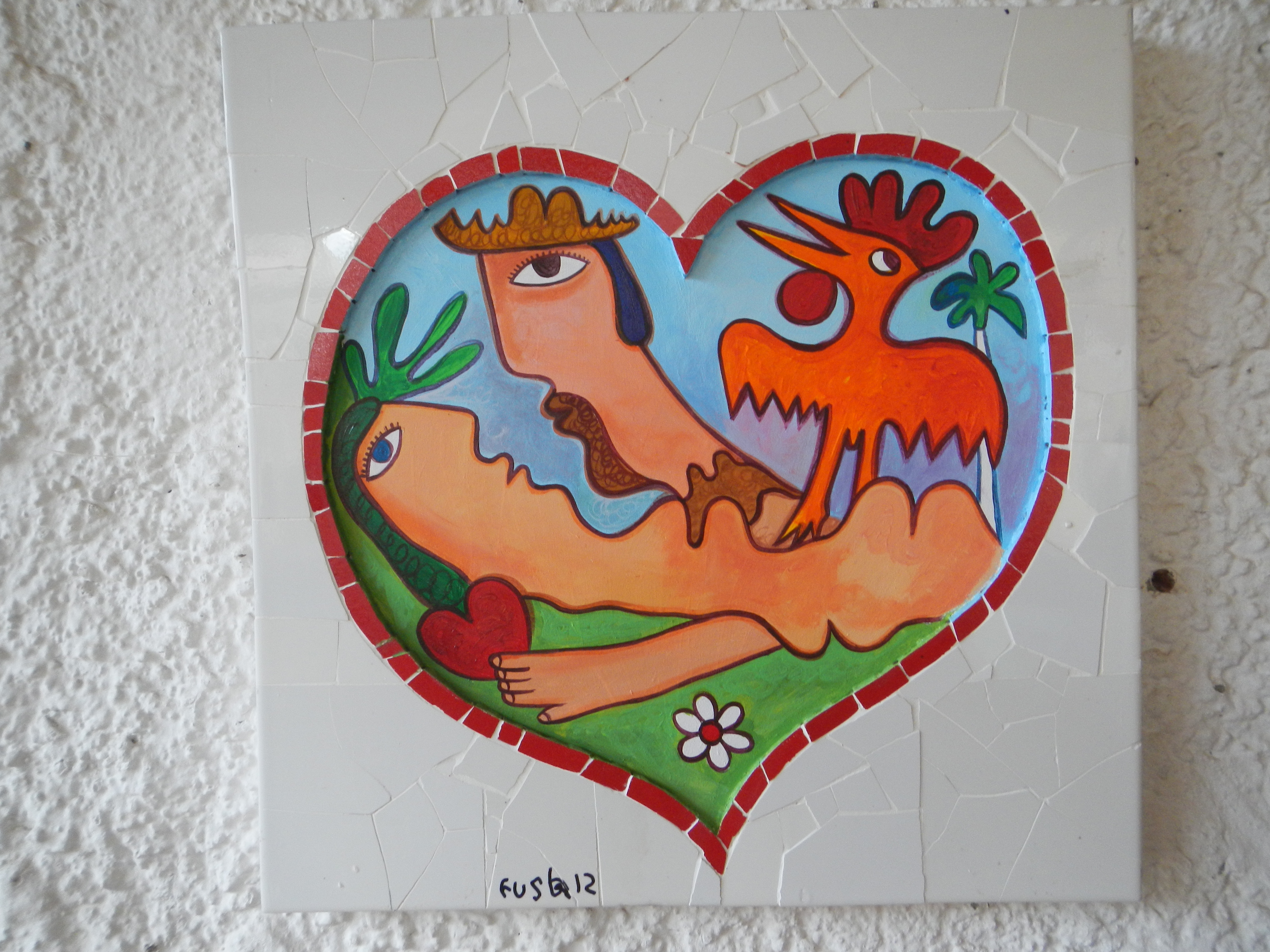
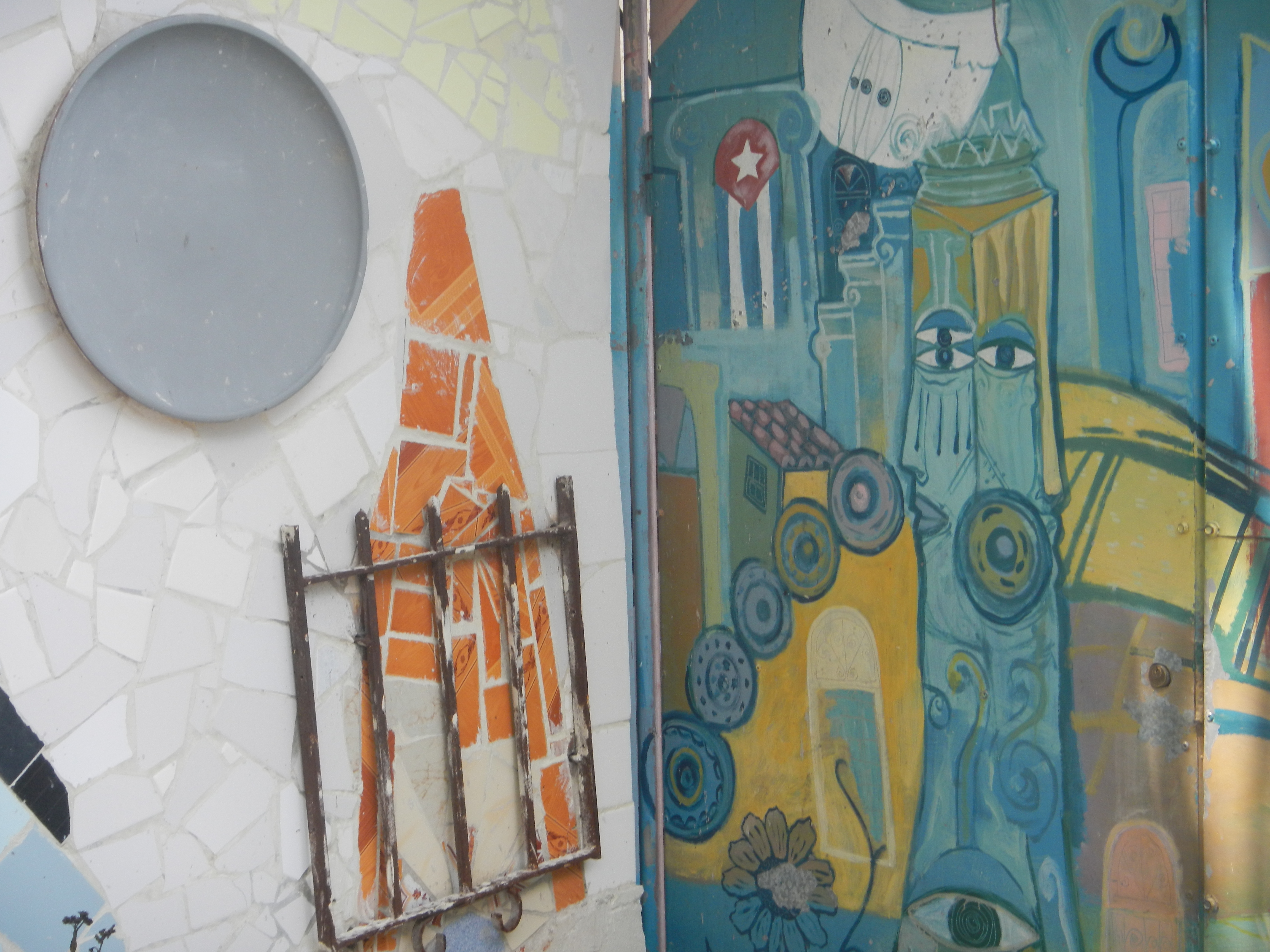
Intact, we went on to continue our street art theme for the day, with a visit to the little fishing village of Jaimanitas in the Havana outskirts, and not far from our hotel in Miramar. Virtually the entire town, some 80 houses, have been decorated with ornately tiled domes and murals, a process taking close to 13 years.  All of this has been the work of Jose Fuster, one of Cuba’s most prominent artists, and we were fortunate to visit his house and studio.

Fuster House

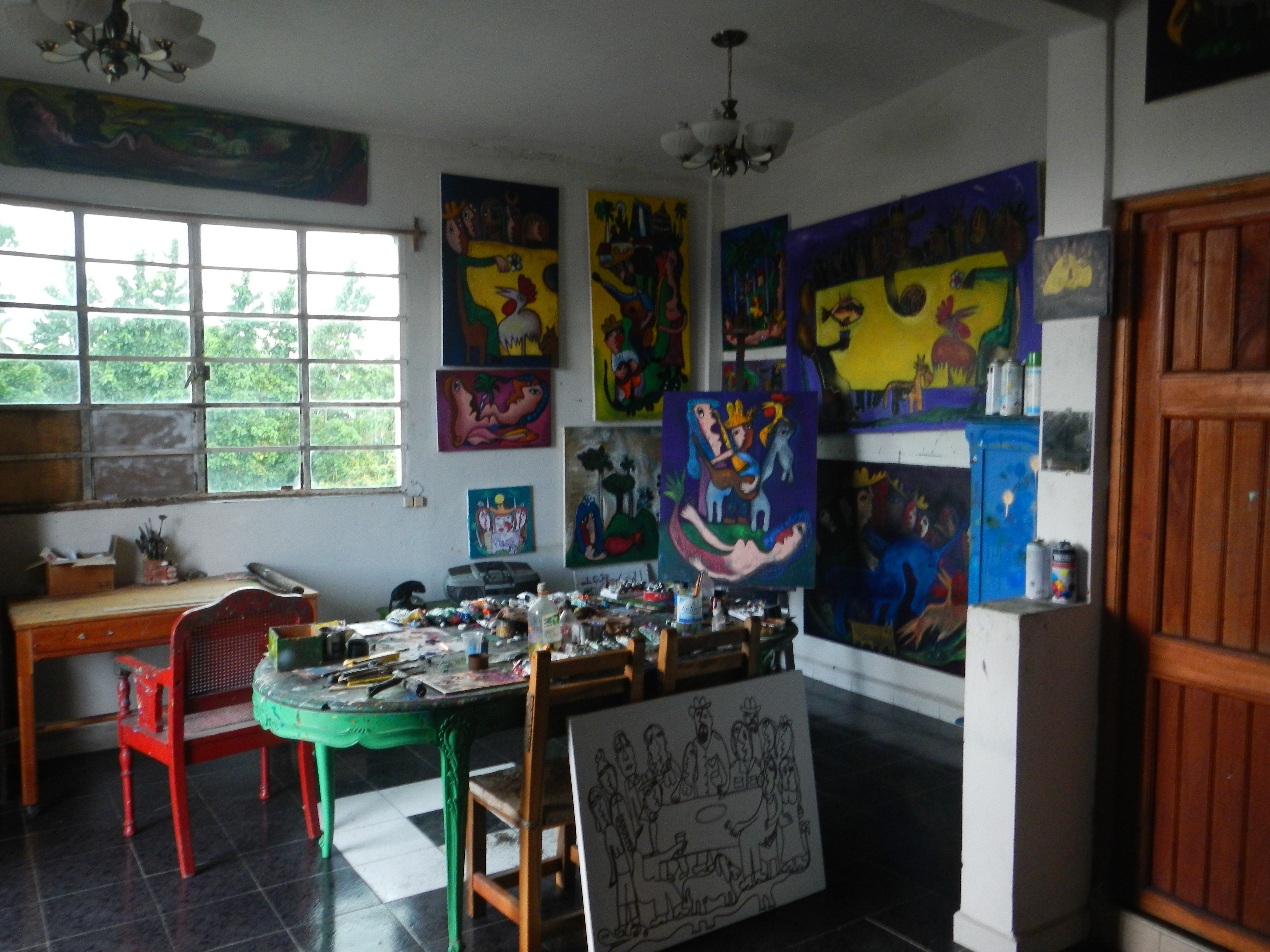
Courtyard, fountains, walkway, garage, every wall, every ceiling were covered in whimsical and jubilant designs by tiny tiles fired in Fuster’s upstairs studio.  The artist himself was apparently not home, but we were graciously given the run of the place by one of his sons.  We saw the pottery studio, where the tiles were made and fired in a big gleaming electric kiln, then went across a (tiled) elevated walkway to the painting studio, where a number of Fuster’s brilliant, tropical motif paintings were displayed.

Fuster Studio

Fuster Paintings

More photographs of Jaimanitas and Calle Hamel are up on Face Book.

Newly Made Fuster

By now we were pretty much suffering from sensory overload, and after a casual walk-through of the Fuster courtyard and down the decorated street, we were ready for the hop back to the hotel, a hot shower, and our last night in Havana, which we had decided to spend relaxing poolside.  Off to Santa Clara and Cayo Santa Maria tomorrow.

Posted in Uncategorized | 1 Comment

The Cuba Diaries: Day 4

El Prado

This was a long, full day.  We left the hotel at 0900 and went straight to downtown Havana, the “new” Havana, as compared to the old city we had seen the past few days.  We cruised along The Prado, a long, beautiful, tree-lined pedestrian avenue with street on either side.  Artists and food vendors were set up all along its length, and there were many people strolling and sitting in the shade on benches.  We were let off at a spot where Enedis said we would find some people she wanted us to meet and talk with, folks who were there to sell and trade houses.  Being able to sell one’s house is a recent phenomenon in Cuba.  It wasn’t allowed until just a couple of years ago.  Houses, and those vintage cars, by the way, were inherited.  But as part of Raul’s modernization policies, you can now sell both.  Trading was always allowed.  We met a woman who was selling her apartment in Old Havana.  She had a piece of cardboard on which she had written the specifications, and where she did and did not want to move.  An elderly gentleman next to her was only interested in making a trade.  They both said they had been coming to the Prado for days, but were patient.  Enedis told us some transactions take place very quickly, and others not.  I asked about paperwork, thinking about agents, lawyers, and escrow we have to deal with in the States, and learned the transaction was usually executed on a single sheet of paper, with both parties signing after agreeing on a price.  All perfectly legal and satisfactory to all.

Havana Capitol

A warm, clear, beautiful morning. We walked leisurely down the Prado, which was very reminiscent of the Ramblas in Barcelona, and saw some extraordinary paintings exhibited by artists.  Art and music were everywhere in Havana, very good art and music.  It is so much a part of the culture, and one of the reasons we were coming to love the place.  We continued on to the National Theater, where Enedis tried to get us in, but a very apologetic young woman said they were in a dance rehearsal and we couldn’t enter.  She begged us to come back later, but Enedis said our schedule was full.  So we moved on to the imposing Havana Capitol building, completed in 1929, and designed to reflect the U.S. Capitol.  It was the seat of government until the revolution in 1959, and how houses the Cuban academy of sciences.

La Finca Vigia

Back on the bus and off to one of our most anticipated stops, Hemingway’s Finca Vigia, (Lookout Farm,) on the outskirts of Havana.  Purchased in 1939 for $12,500, quite a lot of money in those days, Hemingway lived there off and on, with wives three and four, until 1960.  The place was found by third wife Martha Gellhorn, who wanted to get Ernie away from the evil influences of downtown Havana, and the Hotel Ambos Mundos, where he had rented a small room on the top floor.  After settling into the finca he wrote “For Whom the Bell Tolls,” and later “The Old Man and the Sea,” when not marlin fishing in the waters off the island.

Interior, Finca Vigia

Picasso Bull

It remains a beautiful, comfortable house.  We were not allowed to actually enter, since the place is full of priceless artifacts, all as Hemingway left it when he departed in 1960 for Idaho.  Books, magazines, typewriters, mounted animal heads, liquor bottles, all stand frozen in time, as does much of the rest of the island.  It was an extraordinary experience, made all the more haunting by viewing only through windows and doorways.  This Picasso ceramic adorns a wall near an arched doorway.  We have posted several photos of the place on Face Book, so won’t run those again here.  If you’re interested, find more there.  Just this: a running tally of Papa’s weight, written on the bathroom wall in his own hand, a poignant glimpse of a man who had become obsessed with his declining health and inability to continue the robust life he had invented.

The Weigh-In

Tower Studio

There is an interesting parallel with the Key West house, a kind of tower writing studio, this one also separated from the main house, and accessible by an outside stairway.  It is a wonderful space, but we were told Papa never used it, because he felt too removed from people.  It offers a sweeping view of Havana from its many tall windows, and gets the sea breezes more than the lower house.  I thought it was the best writing space I’d ever seen, but then I’m pretty anti-social.

Pilar

Hemingway’s treasured boat, Pilar, rests on blocks outside beyond the pool, (where Ava Gardner is said to have been seen swimming in the buff.)  It is a gorgeous piece of work, all wood, with abundant teak throughout, including teak down-riggers.  An elegant fishing machine, Papa used it in the Keys, Bimini, and all around Cuba, and during WW II, he outfitted it with a .50 cal. machine gun, and went hunting Nazi submarines!  That adventure along with some beautiful writing about his beloved cats, four of which are buried next to Pilar, can be found in “Islands in the Stream,” written mostly at the finca in the late 50s.

Pilar Stern

I could have stayed, of course, but we had to move on.  In the gift shop I bought an amazing poster, a photograph of Papa shaking hands with Fidel at a marlin tournament, which Fidel reportedly won! shortly before Hemingway left his beloved Cuba for good.  It is interesting not only for its uniqueness, but because Papa was not a supporter of the revolution, and one can perhaps see a little grimace in his smile.

Coloreando Mi Barrio

Leaving the finca we headed back into Havana, and yet another incredible assault of the senses.  This was a visit to Coloreando Mi Barrio, (coloring my neighborhood,) a community project teaching art to children.  We were met by our local guide, an effusive, committed artist and teacher, who showed us some of the street art, (which extended throughout the neighborhood; walls, windows, doors,) then led us into a pavilion where a small band had set us.  We sat in a semi-circle and heard first from a young man who told us he had “gone bad,” and had spent some time in prison, but had been rescued from that life by the project.  He was a rapper, and accompanied by the band, did one of his songs.

Rapper

I’m not much of a rap fan, but his enthusiasm was infectious and made it very enjoyable.  The band played; the girl singer sang.  Mango juice was passed around for all, and then we were invited to get up and dance, and those who were able, including yours truly, engaged in a little conga line.  All the people associated with the project were so up-beat, happy, and eager to share their art and experience, and the good they were doing for these very poor children.  We learned that the studio and gallery, just beyond the place where we were seated, had been a water tank, but had stood unused for years.  The project director told us he had gone to government officials and asked if the group could have it, and permission was granted.

In the Gallery

We went inside this remarkable space, the curved walls of which were themselves painted in explosions of color, with many works of art hanging and displayed on tables.  Back outside we took in more of the colorful neighborhood, accompanied by some of the children who lived there.  Besides the brightly colored decoration of the houses, there was a lot of found art, common objects that had been painted or manipulated in some way.  Old bathtubs made frequent appearances.  While we’re on kids we should say something about education.  School is free and mandatory for all until the age of 15, but since it is impossible to get a job at 15, further education is encouraged, and a virtual necessity.  Each level, elementary, middle school, and high school, have their own distinctive uniforms.  The elementary school kids dress in blue and white, with little red kerchiefs,  and are adorable.  In the yard of every school stands a bust of Jose Marti.

Virgin Mary at Coloreando Mi Barrio

Paella, Hostel Valencia

On to lunch, back in Old Havana, at a restaurant called Hostel Valencia, a place known for its paella. Delicious, hot Cuban bread came first, then our regular Cristal and Buccanero.  The house band, consisting of two guitarists and a vocalist/percussionist, appeared and began playing, and they were the best we’d yet seen.  Each voice was strong, clear and distinctive, their harmonies flawless, and the lead guitarist was positively stunning.  Two large pans of paella were then brought out, one seafood, and the other pork and chicken.  Barbara and I ordered the seafood.  Now, in the interest of full disclosure, I have to say that I make a pretty mean paella, with fish, shrimp, and scallops, cooked in saffron rice, so theirs had a certain standard to reach.  Though very good, we both rated our home paella a little better.  With ice cream and coffee to finish, some spontaneous dancing again took place, (not us this time,) and then we were back on the bus.

Happy Couple

A short drive to a spot near the harbor that housed a large indoor market, where we spent a half-hour browsing through an incredible array of arts and crafts.  We bought a few small items to take back, and admired another exceptional group of paintings.  I was becoming overwhelmed by how many very gifted artists there are in Havana.  Back on the bus we passed this happy couple getting into their car.

At the hotel we had a brief session with folks from the Cuban Institute of Music, which we had missed two days before because of our being trapped in the storm downtown.  More wonderful music, and then upstairs for a shower a short rest before readying for another dinner out and, for a hardy few of us, a show later at the Hotel Nacional, featuring the famous Buena Vista Social Club.

Vino

We left the hotel at 7, the restaurant was a good 45 minutes out of town in the country, and I was sure, by the time we found it, down a narrow road in a tiny little village, that we would never make it way across town to the Nacional by show time.  But it was out of my hands, so I let it go. Vino was astonishing, even when measured against the other amazing places in which we had dined.  Open-walled, it was at once elegant and homey, and the food was out of this world, truly gourmet.  A palador, Enedis allowed that there was probably some outside money invested in this place.  It was off the charts, and in the most unassuming place you could imagine.  We sat with a couple from Tampa, and had a most delightful meal, me, a perfectly cooked snapper with trimmings, and Barbara, roast lamb.

Mariachi

Racing the clock, we skipped coffee and climbed back aboard our bus in the rain.  Don’t know how he did it, but Miguel got us to the Nacional at 9:40, dropped the 8 of us and Enedis, and took the others back to our hotel.  Buena Vista wasn’t due to appear until 10, and, as it happened, the whole show was in honor of Mexico, and the opening act, which we were able to catch the last 20 of, minutes was a killer Mariachi band.  They rocked!  The old ballroom of the Nacional was full, including two long tables of folks who, from their singing and cheering, appeared to be Mexican Nationals.  A good time was being had by all.

Buena Vista Social Club

The Buena Vista Social Club band took the stage shortly after 10.  The original Buena Vista Social Club was a Havana venue where musicians gathered to play in the 1940s.  Some 50 years after its closing, American singer and guitarist Ry Cooder and Cuban musician Juan de Marcos Gonzales made a recording of traditional Cuban music featuring a group of musicians who had played the club.  The recording was a great success, as was a subsequent film, both titled The Buena Vista Social Club, and the group toured extensively in the late 90s.  Three original members, Compay Segundo, Ruben Gonzales, and Ibrahim Ferrer, died at the ages of 95, 84, and 78 respectively, in the early 2000s.  Several original members, and new replacements continue to tour internationally and play in Cuba.

Buena Vista Percussionist

Their show was professional perfection, trumpet, guitars, percussion, bass, piano, and four vocalists.  Ballads, Salsa, hot Afro-Cuban pieces lasting 10 minutes, it was incredible.  The last 20 minutes of the show were taken over by the beautiful lady pictured below.  I didn’t catch her name, but she was obviously an old pro, and wowed the remaining crowd, (our little group and the Havana folks; the Mexicans had left,) by cruising out among the tables, microphone in hand, getting up close and personal with her still sassy delivery, and amazing voice.

Lovely Mama

We stayed to the end, closed the venerable old ballroom, and accompanied our intrepid Enedis out into the night.  We had to wake Miguel, dozing on the bus, but he got us home safely again, and we hit the sack about 12:45.  Long day; wonderful day.  We were starting to like this crazy little country.

Posted in Uncategorized | Leave a comment

The Cuba Diaries: Day 3

Enedis, Informing

On the bus at 0830 for our first excursion into the countryside, a drive to Vinales in the Pinar del Rio province, west of Havana.    It was more than an hour’s drive, which gave Enedis an opportunity to fill us in on a little Cuban history and further customs.  Standing at her seat at the front of the bus, she faced us with microphone in hand, and between bits of edification, was likely to burst into song, usually “Guantanamera,” by far the most popular Cuban song.  With some lyrics attributed to Jose Marti, it is virtually a sacred piece, but always sung with great joy and gusto.  Enedis sang it frequently, every band and vocal group we heard did as well, and once, on our long drive to Santa Clara, our driver Miguel spontaneously let loose with it for a good twenty minutes.

Road Sign

Passing the road out to Mariel, a city on the coast about 25 miles west of Havana, the city closest to the U.S., and thereby the place where many Cubans began their exodus to the States, Enedis pointed out the heavy equipment on the road.  The government is widening and resurfacing the highway to Mariel as part of the Master Plan, which includes the renovation of Havana from the Old City out.  The plan is to build up the port at Mariel to make it capable of handling commercial ship traffic, leaving the narrow channel to Havana Harbor free for welcoming cruise ships.  The new highway will enable goods and freight to be more easily and quickly trucked from the Mariel port into Havana.  This billboard of Che was but one of many we saw in the countryside.  Some were just revolutionary slogans, but most depicted Che.  The tradition is to use deceased heroes in these communications, and since Fidel is still alive, there are very few showing his image.  That will come later.

We saw only a small number of cattle, and Enedis explained that the Cuban people ate very little beef.  The meats were chicken, pork and fish, and, in fact, the raising and killing of beef was tightly controlled.  We determined it was probably because of the great amount of grain a beef industry consumes.  It just isn’t efficient, (and there are no McDonald’s . . . yet.)  Ranging far and wide on the culture, likes and dislikes of the Cuban people, Enedis also let us in on a little slang, which would soon be put to use by some of our group, as it turned out.  An attractive woman was referred to as a “Mango.”  Handsome men, as well.  It seemed appropriate, as we were then passing many beautiful Mango groves.

Local Bus

Ah, transportation.  Our drive also afforded Enedis time to tell us about this most remarkable Cuban phenomenon.  Most of the cars, and a bus system, are in Havana, with very few private vehicles out in the country, and the ones you do see, of course are classics.  At every overpass and off-ramp of the freeway, (which was also in need of a serious do-over,) we saw people standing, as well as out by themselves along the highway.  Turns out hitch-hiking is the accepted way to get around in the countryside.  Everybody does it, including men and women in white lab coats Enedis said were doctors.  No Mercedes taking them to work.   Folks in all kinds of vehicles stop to pick up these riders.  We saw many trucks like this one, carrying up to twenty passengers to work in the fields or into the cities.  Also many horse-drawn carts with automobile tires.  An interesting related aside:  We learned there are four different colors of Cuban license plates: Blue is government; yellow, private; black diplomatic; and red for foreign workers.  It is illegal for a government vehicle– car, truck, whatever– to pass a hitch-hiker without stopping to pick up. There are agents at intervals along the highways to monitor this.  Everybody rides.

Horse Taxi

Enedis and the Grower

Our first stop was the home and farm of a tobacco grower, near Vinales.  Pinar del Rio is a very lush area with perfect soil and rainfall for growing tobacco.  It is supposed to be the best in all of Cuba.  The crop was already in so we didn’t get to see it in the fields, but our stop was absolutely wonderful.  We dismounted the bus and were ushered right away in the drying barn, in which row after row of tobacco leaves were curing on the walls and suspended from rafters.  We were joined by the grower himself, who looked straight out of Hollywood casting!  A very handsome man, with a big, robust personality to match.  “Mango!” the ladies all exclaimed.

Rolling

He sat down before us with a wide board in his lap, and taking a handful of leaves, deftly rolled two cigars in a matter of seconds.  Lighting one for himself he sat back and puffed while flashes flashed, and the he went around offering smokes to any who wanted them from a stash in his shirt pocket.  Many of the gals, who had probably never smoked a cigar in their lives, or better, had probably given hell to any man around who did, partook, and then had their pictures made with this gentleman.

Lighting Up in the Drying Barn

He then escorted us into his nearby house, a small but utterly comfortable place, where his wife served us potent Cuban coffee from a tray.  We were allowed to tour the house and grounds, and the gentleman had some cigars for sale as well.  I asked him who bought his product and he told me Cohiba, Partagas, and Romeo and Juliet, makers of some of the best cigars in the world.  To smoke a premium Cuban cigar you have seen rolled by the man who grew the leaves is a bit staggering for a cigar aficionado, but I survived.

The house and grounds were equally fascinating.  Everything was simple, but efficient and

Farm Kitchen

practical.  The kitchen was three times larger than our little in The Little Hacienda, and I would love to throw together a paella in there.  Outside, many chickens strutted, there was a pen with geese and ducks, and in one of the out

Classic!

buildings a cage with two large rodents, destined for the dinner table.  Not to be outdone by city folk, he also had this little red beauty parked in its own shed.

Papa’s New Best Friend

Mural de la Prehistoria

Back on the bus and off to lunch at a most unusual place, a state restaurant in a National Park, the site of the Mural de la Prehistoria, a mural painted onto the rock face in a beautiful valley between the low mountains.  Commissioned by Fidel in 1961 to depict evolution, it stands 300 feet long and 200 feet high.  It was pretty much impossible to get in one photograph except from this distance, but trust me, it was a unique work of art.  In giant figures,  it showed the development of man from the Pleistocene period on.

Lunch

Lunch was exceptional, in another thatched-roof, open-air pavilion, and featured a pina colada to start, then salad, roast pork, vegetables and potatoes. Once again, we were treated to traditional Cuban music by a trio consisting of two guitars and a percussionist.  Excellent, again. Stuffed, we wandered around the grounds of this beautiful place, taking photos of the mural, the mountains, and a thunderstorm moving up the valley, then climbed back on the bus for the drive through the small town of Vinales and on to our next destination.

Vinales

Vinales is a small town with a population of about 30,000.  This photo shows a typical house, one-story, with a sitting porch.  We stopped at the square in the center of town for a brief walk-about.  There was a small church of one side of the square, and outside that vendors selling food and trinkets were set up.  Our last stop in Pinar del Rio was at a Finca, a farm, this one a small organic operation just outside Vinales, and for Barbara and I this was one of the highlights of the whole trip.  Significantly, in some way, my camera batter died as we were walking up the dirt drive to meet the farmer, so words will have to suffice here.

He was a tall, thin man wearing a broad straw hat, and he welcomed us effusively, with a shy smile, gesturing for us to climb the hill to his little house. The house was literally one room, with a table and bed, and a deep covered porch on three sides, one side offering a commanding view of a rolling green valley and the mountains in the near distance.  Large, screenless windows also afforded a stunning view.  It was simple, practical, unassuming, and spectacular.  There were benches and a few chairs on the porch, but the farmer and another man brought out more chairs and made sure we were all seated before he began telling us about his farm.  With Enedis translating, he told us of the many herbs, vegetables, and fruits he grew, as we looked down on the terraced, raised beds.  I cannot enumerate all there was, but I’ll throw out all I remember: tomatoes, squashes, onions, herbs and peppers of all kinds, corn, guavas, limes.  A skinny dog constantly patrolled the beds.  Using only chicken manure and compost, he sold his produce in Vinales and to the nearby obstetrics hospital.  A few feet from the house stood the kitchen, essentially a roofed portico with cook stove, table and sink.  The man exuded an unassuming, genuine grace, obviously in tune with his surroundings and his work.  They were all inseparable.  With Enedis translating, I told him how wonderful his place was, and that I envied him.  He took my hand and smiled broadly.

Pretty pooped, we rode back to the Havana hotel, had a dip in the pool, and rather than head off into town for dinner (not included,) we stayed in the room, had crackers and beer, then went out to the portico where we had breakfast every morning and smoked.

Posted in Art, Music, Photography, Travel, Uncategorized | Tagged | 14 Comments