
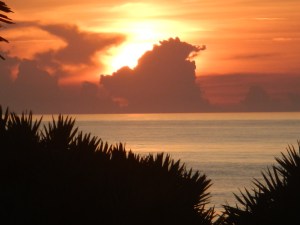
 It’s been a crazy summer thus far on Skinny Island, and not just because of health issues and lost friends. I’m talking weather now. A lot of pieces have come together to make this happen, probably not the least of which is climate change, but that’s a subject for another day. Except to say that our weather has changed over the last couple of years, and while that is a long way from announcing any climate change here for Skinny Island, it is the first step. We have yet to break 90 degrees; we’ve had a record-breaking amount of rain; and we’re covering up with sheets at night! Unheard of for mid-July.

Rain
The first thing I look at to begin explaining this is the ocean temperature. The Atlantic moderates all weather in one way or another here on Skinny Island, and this year its behavior has been quite pronounced. Dropping into the 50s by late winter, it usually breaks 70 by mid-April at the latest, a harbinger for increased fish activity and shore bird foraging. Things come to life. We didn’t see 70 until late May and as of this date, July 16, it has still not broken 80. By contrast, the Gulf temperature today at St. Pete Beach was 85. Very interesting. When the ocean stays cool, we stay cool. And then there’s the rain. As I have related before on these pages, the way we are situated, out on the edge of the continent, on a barrier island, generally precludes us from receiving the afternoon showers that ramp up down the spine of the state and roll toward both coasts. The reason for this event is the sea breeze, caused by heating of the land mass between the two great bodies of water through the morning and early afternoon hours. This air rises, of course, drawing in air from the cooler water bodies, and where these sea breezes collide, storms develop. This has occurred, as usual, but we’ve also had numerous systems, large and small, drawing moisture up from the south, and both the Gulf and Atlantic, that in conjunction with a very southerly dip of the Jet Stream, had kicked off an abundance of rain. Even for us. We’ve had a number of long dry spells, but a lot more rain, from all directions, than I can remember here.

Beach Sun Flowers
Meteorological lesson aside, the upshot of all this rain has been a rather pronounced growth and advancement of vegetation around The Little Hacienda which, accompanied by my relative incapacity both before and after heart surgery to cut, whack, and otherwise control, threatens to take over the house. Words like verdant and fecundity come to mind. With the vegetation, not surprisingly, has come a significant increase in the numbers of green and brown anoles, several species of snakes, and a mother and baby Florida Box Turtle, who have taken up residence in the compost pile, which itself has encouraged a rather wild growth around its perimeter. On the plant side, beach sunflowers, sea grapes, Bougainvillea, and aloe, to say nothing of the ubiquitous saw palmetto, have begun a slow march across the tenuous and diminishing clear zone around The Little Hacienda.
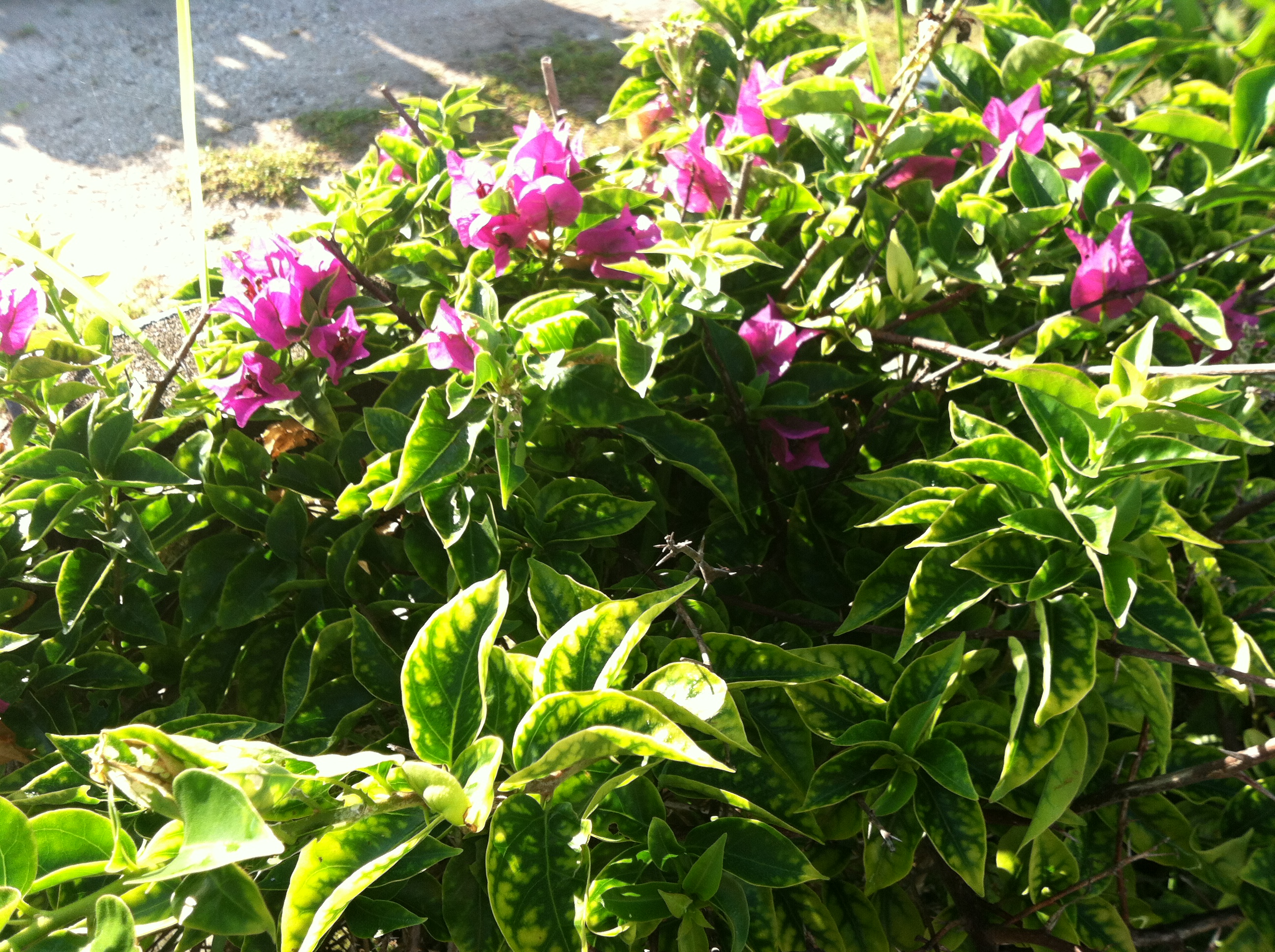
Bougainvillea
All of which should, but does not, cause me some alarm. Rather, I have been inclined, perhaps because of my prolonged inactivity, to entertain a rich, if eccentric little fantasy of the house actually being consumed by the encroaching vegetation. Things growing through the windows, across the floor and up the walls. Imagine the light. I think it would be like living in a Magic Realism novel, all hot, steamy, strange and very, very green. The Bougainvillea would be first, I believe, owing to its ability to send out long, thorny tendrils– of astonishing tensile strength, by the way– the advance team, if you will, breaking out glass, scouring plaster, the beauty of its flowers disguising an underlying, relentless intent that one would simply have to let go and accept, ultimately. The beach sun flowers would be next, finding root sustenance in throw rugs and wood floors; then the aloe, inching across the Mexican tile (they require so little.) the palmettos would be last, I think, but being the most muscular, the most damaging. Walls would not be immune.
The creatures would follow, led by the smallest: snails, Rolly Pollies, crickets and cicadas (for sound effects.) Then the lizards and snakes and, hardest to accommodate, raccoons and opossums. Still, it could all be accepted, and even embraced, with the proper attitude. It’s all about letting go. boundaries are so artificial. Think of the possibilities.

Sea Grapes

 The Skinny Island Post