
Last full day in Cuba, We depart for Miami tomorrow morning. We had a great breakfast in the buffet dining room where we had eaten last night. There were cooks to prepare omelets to specifications, and a huge variety of fruits, meats, cheeses and the like. Great coffee as well. While we gathered in the hotel lobby before boarding we learned that two of our ladies had become pretty ill, one of whom had been taken in to the local clinic with severe diarrhea. We saw her later at the day by one of the pools, sufficiently recovered, and she said she had received medication and IV fluids, was weak, but feeling much better, and the experience at the clinic was professional and efficient, no waiting. The other lady striken was the one who had offered the negative comment about Fidel at Santa Clara.

Hand Feeding
Back across the causeway to Remedios, a fishing village of 18,000 folks, stopping first at another place frozen in time, a print shop in which stood a half-dozen presses from the 1880s and 1890s, all still in working order. This was a commercial print shop, and we saw a young man working a machine that was printing bus tickets, hand-feeding the small pieces of paper. Back in the typesetting room there were trays and lead type strewn about everywhere, and I was sure someone there knew the exact location of each and every letter. This amazing old linotype machine dominated the room.

Old Linotype Machine
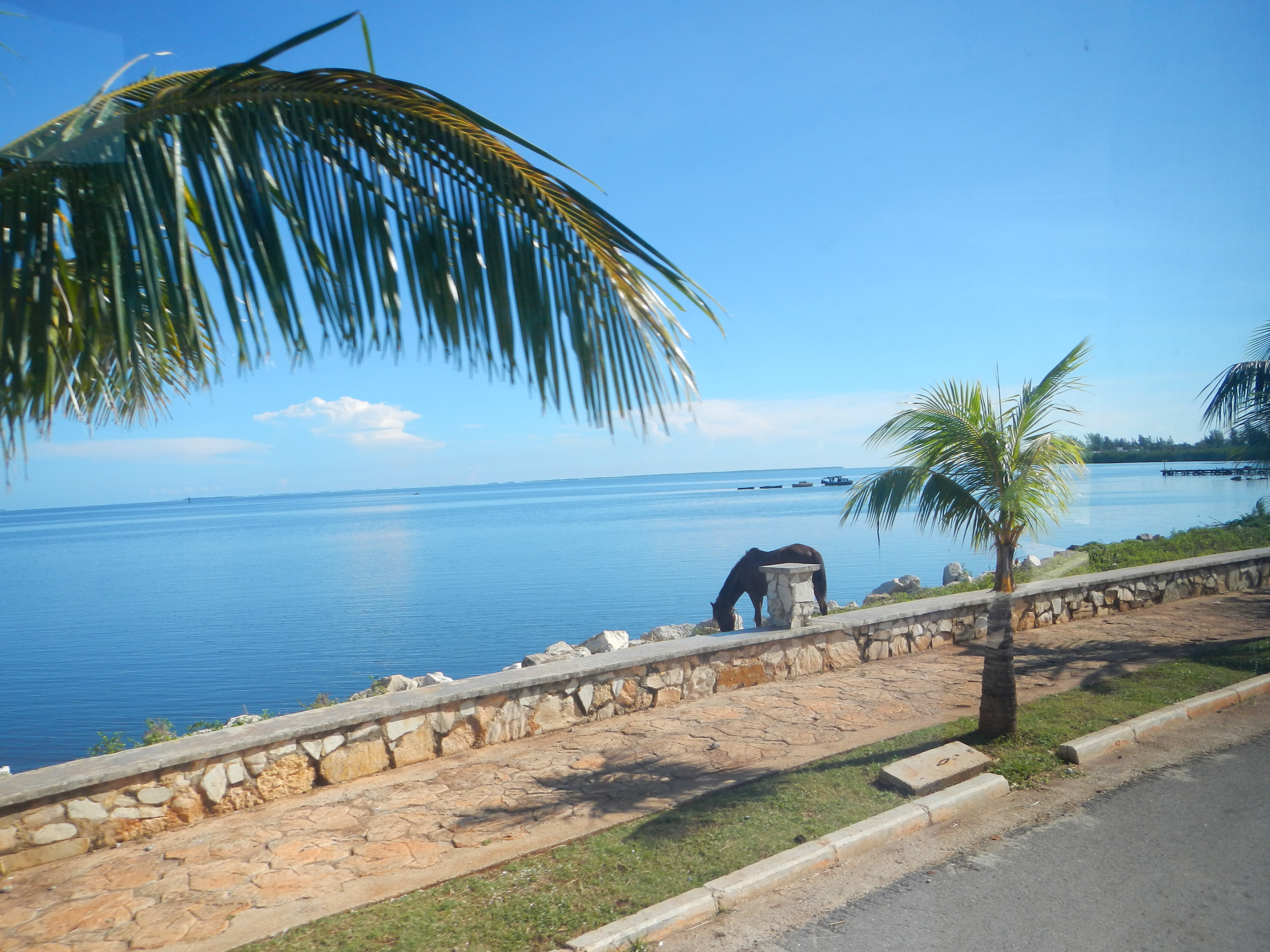
Remedios Malacon
In perfect summer weather, we then drove along the Remedios Malacon, with beautiful views of the ocean, some fishing boats, and grazing horses, of all things. The sea there, protected by the many mangrove islands offshore, was incredibly placid. It was a lovely place. On the landward side, which I could not get decent photos of, were some buildings and walls that had been decorated by a local artist whose home and studio we were heading to visit.

Artist’s Home and Studio
This is the home and studio of the renowned Remedios artist, Madelin Perez Noa, a charming and colorful place, where every inch of space was utilized for art production. As with the other prominent artists we met, their living spaces and studios were home to cottage industries, employing assistants and craftspeople to carry out a lot of the repetitive production tasks. Now, that’s what I’m talking about. We can’t pay here at The Little Hacienda, but we could sure use some help on occasion.
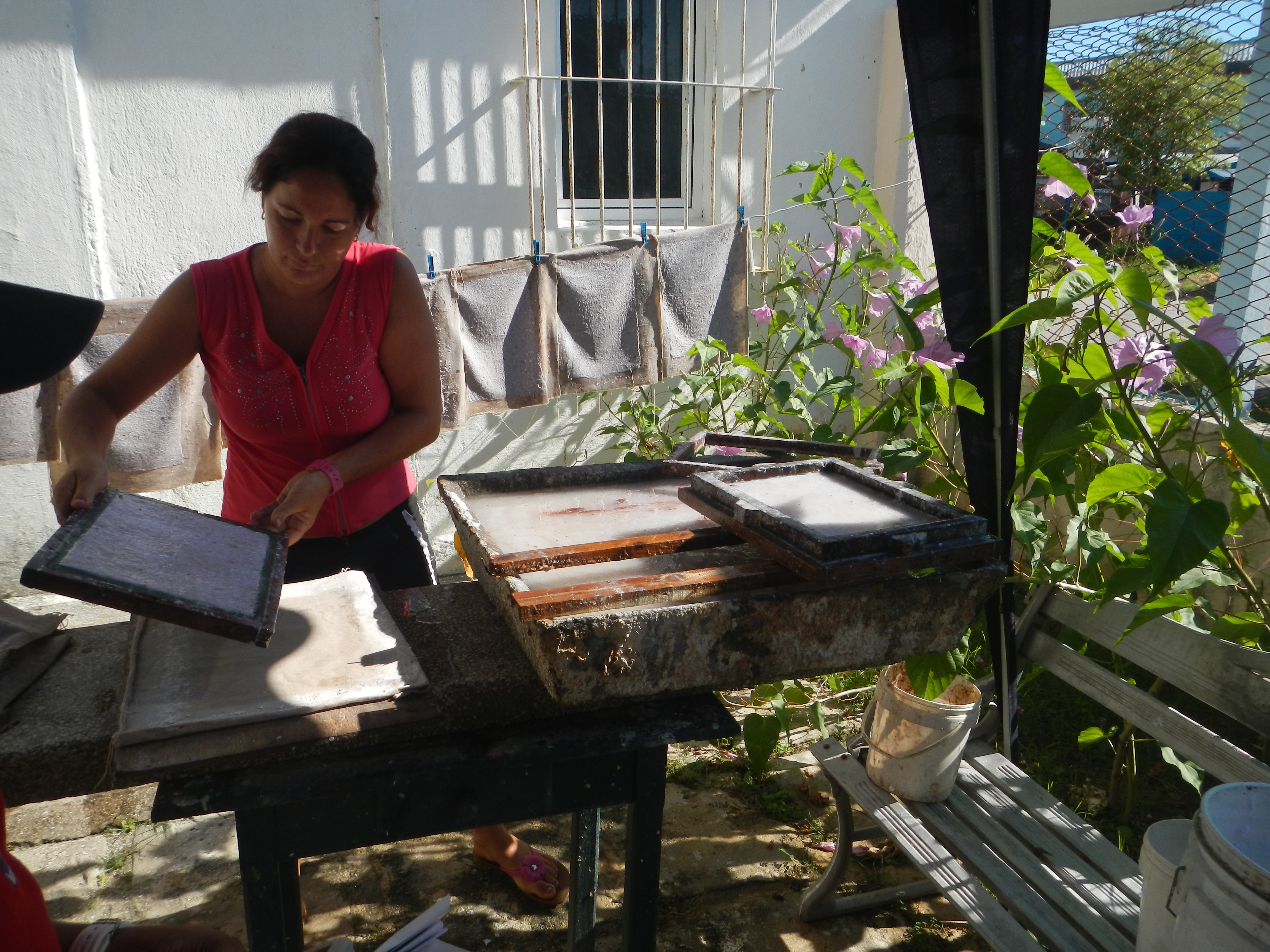
Paper Making
For instance: this is a young woman outside in front of the house engaged in making paper to be used in print making. I have been learning this process and was pleased to see that I am on the right track, with my set-up being nearly identical. Scraps of old paper- newsprint, stationary, whatever -are ground with water, (I use an old blender) to make a wet pulp. You can add flowers, leaves, threads, etc. to give it all kinds of character. You add the pulp to a deep pan of water, making the mush thicker or thinner to your liking, then dip a rectangular frame covered with screen, lift it out to drain, then transfer the drying pulp to a waiting cloth, like canvas scraps. You then hang these on a line to dry, peel off the paper and there you have a wonderfully textured surface perfect for block and press printing.
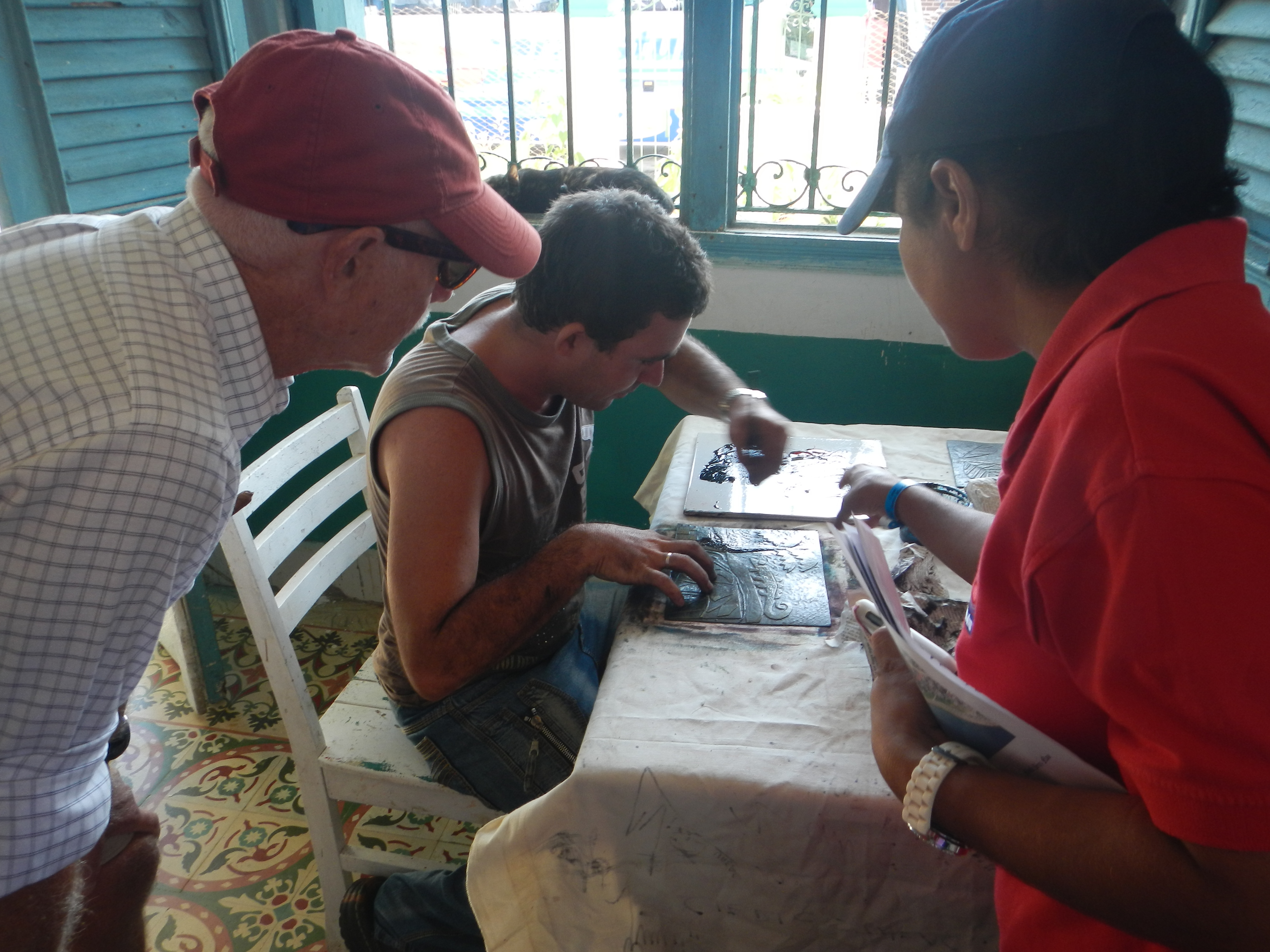
Inking the Plate
Inside, another assistant was inking plates and printing the art work. A design by the artist is transferred to a wood block, or a softer material, like linoleum, by carving the image. The raised parts of the finished piece, when covered by ink, will print on the paper, the carved out sections will not. You can run the process as many times as you want, using different colors each time. This man is inking sections, and wiping off where he does not want it to print.
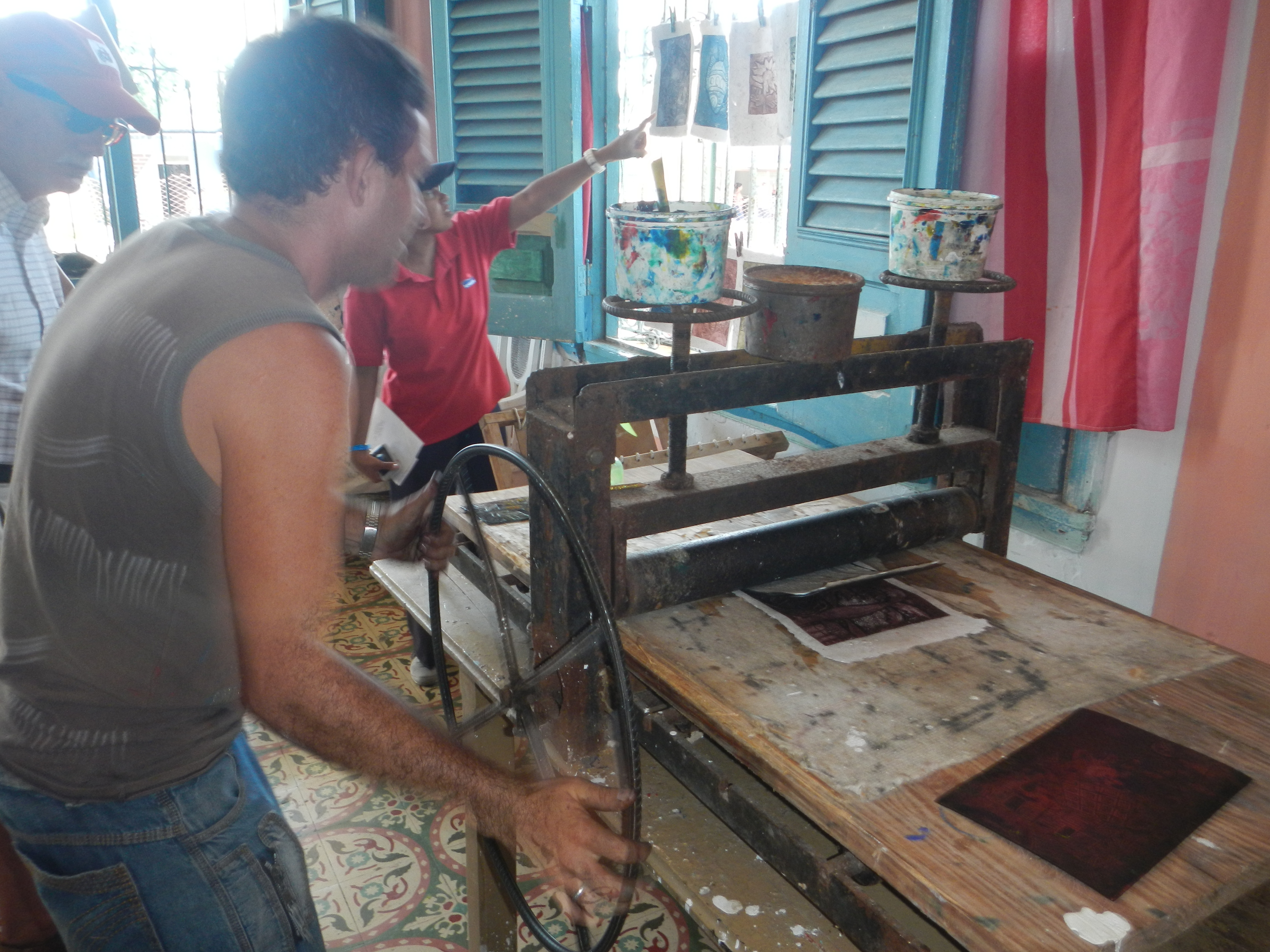
Making a Print
There are a number of different presses for this kind of work, but the idea is all the same: exerting sufficient pressure to transfer the image from the block to the paper. This one uses a wheel to move the press bed, plate and paper under a roller which is stationary and has great downward pressure exerted. Very effective prints can also be made applying pressure by hand or with the use of a rolling-pin. In the right hands, the results are amazing. We bought a beautiful, multi-colored print of a fish.
We then met the artist herself, and toured the rest of her studio and the grounds around the house, lush with flowers.

Noa’s Work

Jesus Under Glass
Back on the bus and into the center of Remedios, where we were to meet another artist, this one in charge of several projects in town, including the restoration of the cathedral. We got a look inside before he arrived, and found it a repository of some strange and wonderful religious artifacts, such as this reclining Jesus under glass. Our local guide arrived, yet another engaging, personable young man, whose name I failed to write down, and he told us about the efforts underway to completely renovate the cathedral.
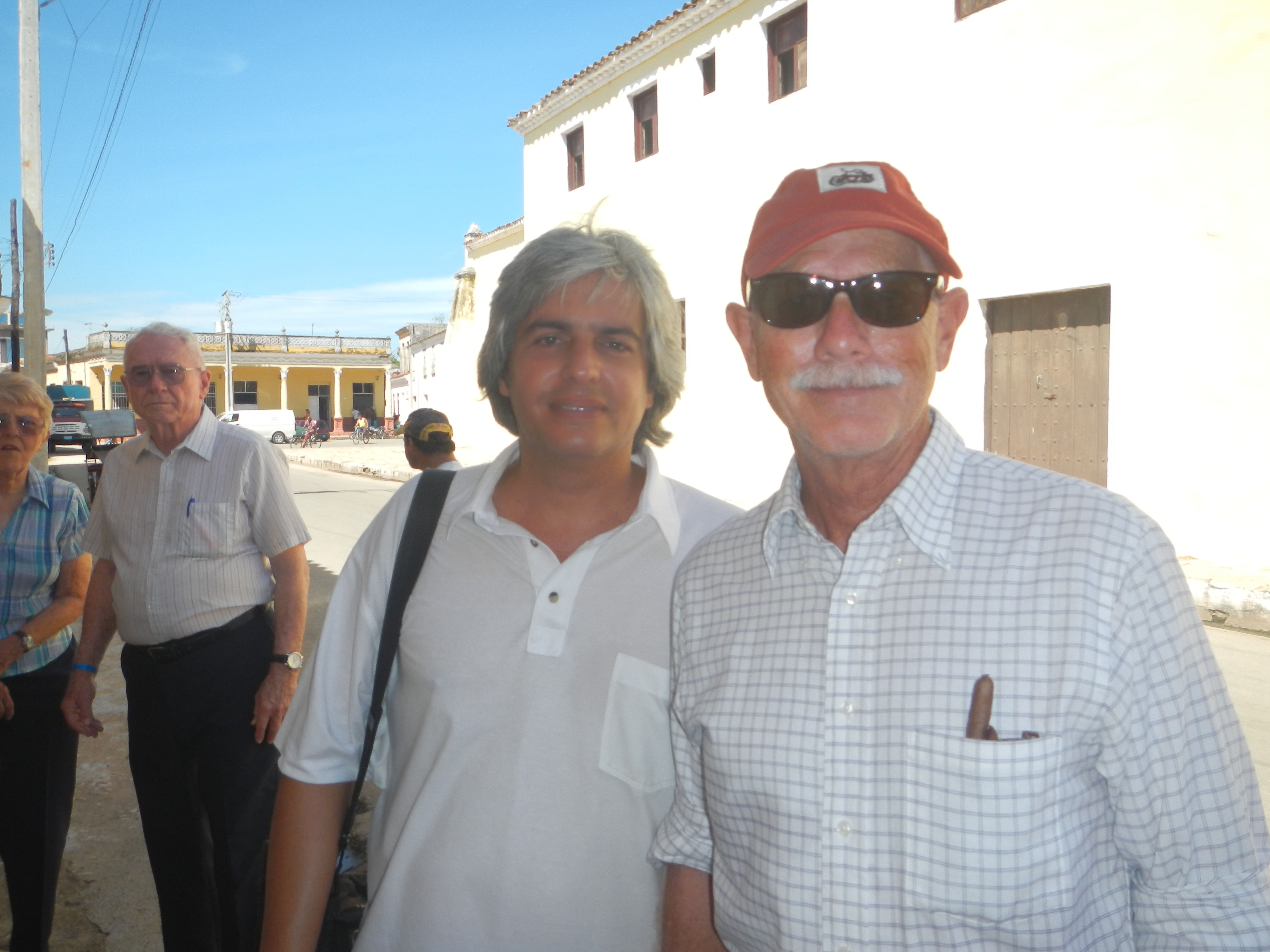
Papa and the Remedios Artist
A very busy chap, he also told us of two other projects of which he was justifiably proud, the restoration of an old town bar just off the square, called the “Drivers’ Bar,” and the huge annual Remedios Christmas Festival called the Parandas. We walked to the bar first, an airy, bright space consisting of a long bar and just a few tables. He had done a great deal of research, piling through old photographs and interviewing descendants of the original owners, to achieve an authentic recreation of the 40s era landmark it had been.
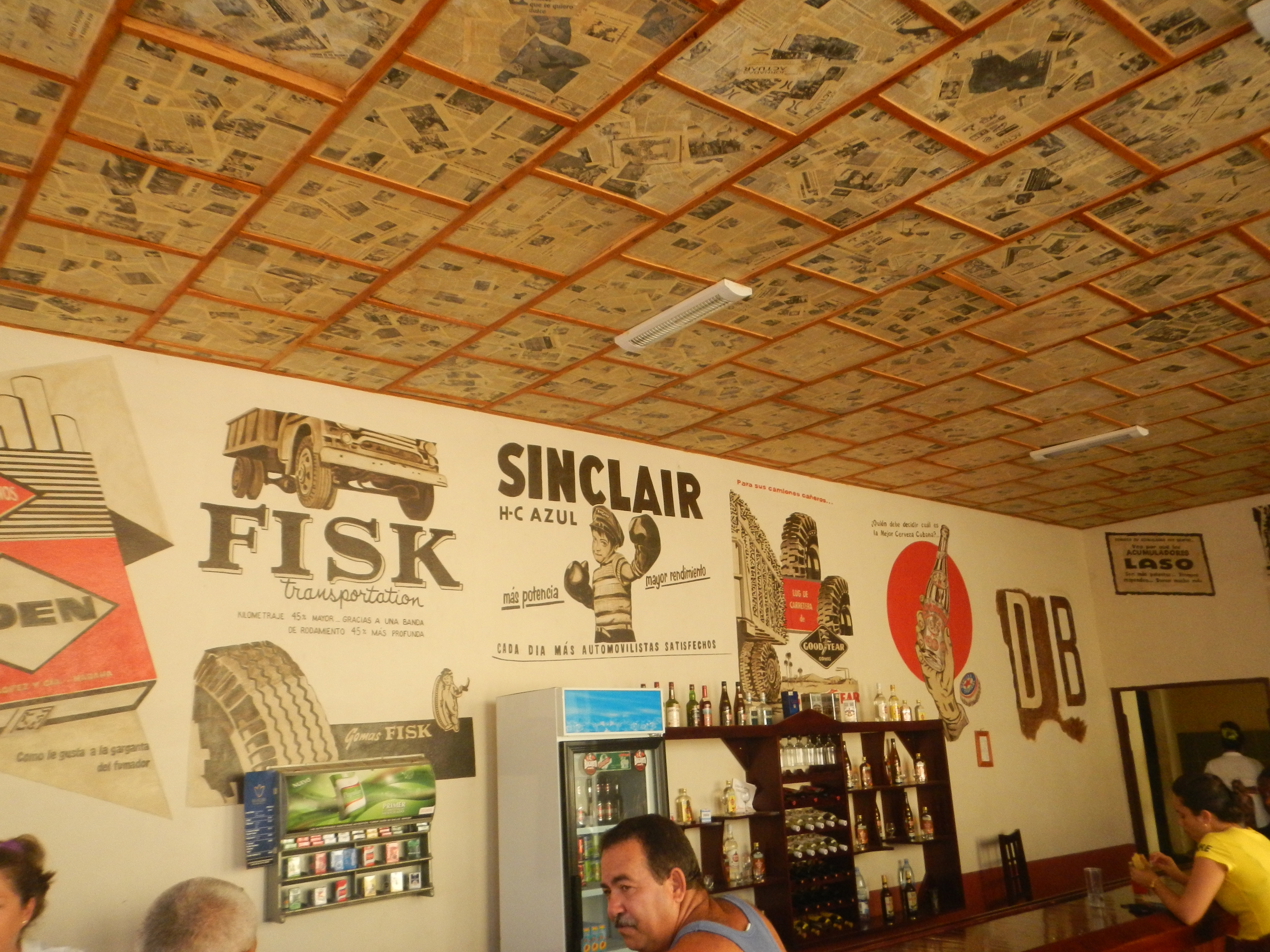
Inside Drivers’ Bar
From the outside the place is quite reminiscent of Sloppy Joe’s in Key West. Taking its name from the bus and truck drivers who used to stop there on the way back and forth between the eastern and western provinces, the walls have been painstakingly covered with hand-painted advertisements of the period, and the ceiling covered with period newspaper pages. Quite impressive. On our walk back to the bus the artist told me he had visited the U.S several times, as a guest of the Cleveland Museum of Art, which had brought him in for conferences with other

Drivers Bar
artists from around the world because of what he had done with the Parrandas festival. He said he loved the U.S., and then remarked to me that we were making history in this coming together of our people and cultures. I told him I agreed, and added that I hoped this integration, while good for both countries, would not result in a proliferation of Wal-Marts and McDonalds in Cuba. He smiled, but I wasn’t sure he agreed. I had wanted to express my hope that the good things of the revolution, (and there are many things, also, of a depressing, negative nature,) not be lost in or swallowed by the rush to commercialism that will inevitably result in our descent upon this island when the barriers come down. I didn’t say it well, and anyway, they want what we have, and that is completely natural.
Next was a tour of the warehouse where preparations for the great annual Christmas festival take place. Every Christmas Eve since 1820, Remedios has hosted a cultural event considered the oldest in Cuba: Parrandas, or Popular Revels. This celebration confronts the El Carmen and El Salvadore neighborhoods of the city. All their work is kept a secret until opening day, when floats and fireworks fill the square. Thousands, from all over Cuba attend, swelling the little town to 10 times its normal size.

Parrandas Warehouse
In the preparation warehouse of the El Salavadore group, a young woman spoke, interpreted by Enedis, and showed a short video of last year’s festival. Each year has a theme, and last year’s was Hollywood! A representative of the El Carmen neighborhood, which won last year’s shin-dig, was also present, and gloated enthusiastically. The competition is fierce,and preparations last all year. We didn’t see what was afoot for this year’s festival– it’s all a secret– but with only 3 months to go, we could feel the excitement, even in translation.
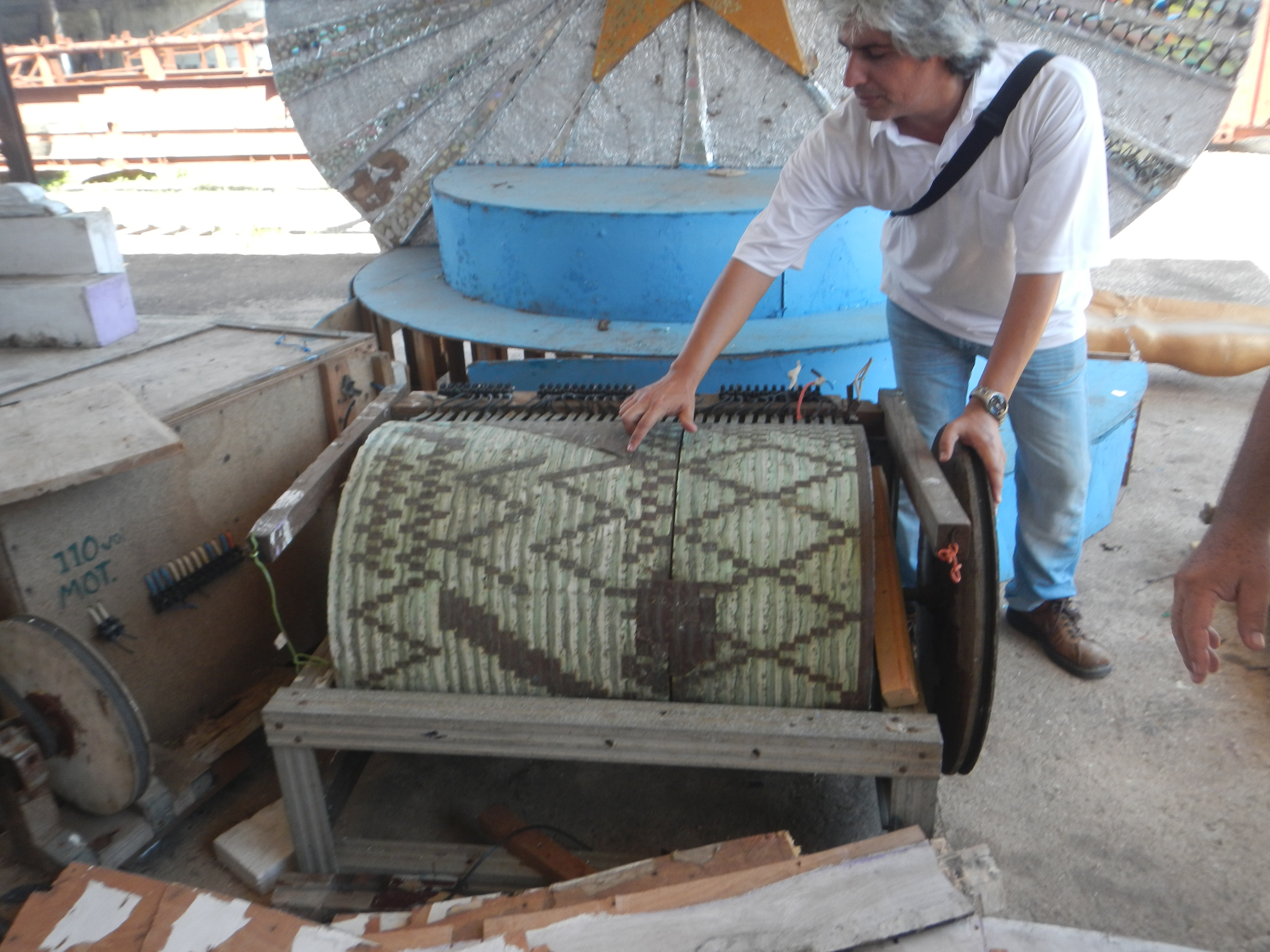
Fireworks Computer
We toured the warehouse then, and saw this absolutely incredible device, a rudimentary but thoroughly efficient computer, actually, that controls the ignition of the elaborate fireworks that end the festivities. It is a drum, wired to both a generator and the fireworks, which, when rotated, ignites the fireworks in an order specified by the pattern of electrical contacts laid out on the drum. I hope that makes sense. Describing it is almost as intricate and complex as the device itself. It was the most beautiful and sublime example of ingenuity I think I’ve ever seen, and will forever stand as a symbol, for me, anyway, of the amazing ability of the Cuban people to make something out of nothing. It was truly awesome.

El Salvadore Neighborhood Symbol
We said farewell to our new friends in Remedios, as extraordinary and resilient and happy a people as we’ve ever encountered, and headed back to Cayo Santa Maria for our last night in Cuba.
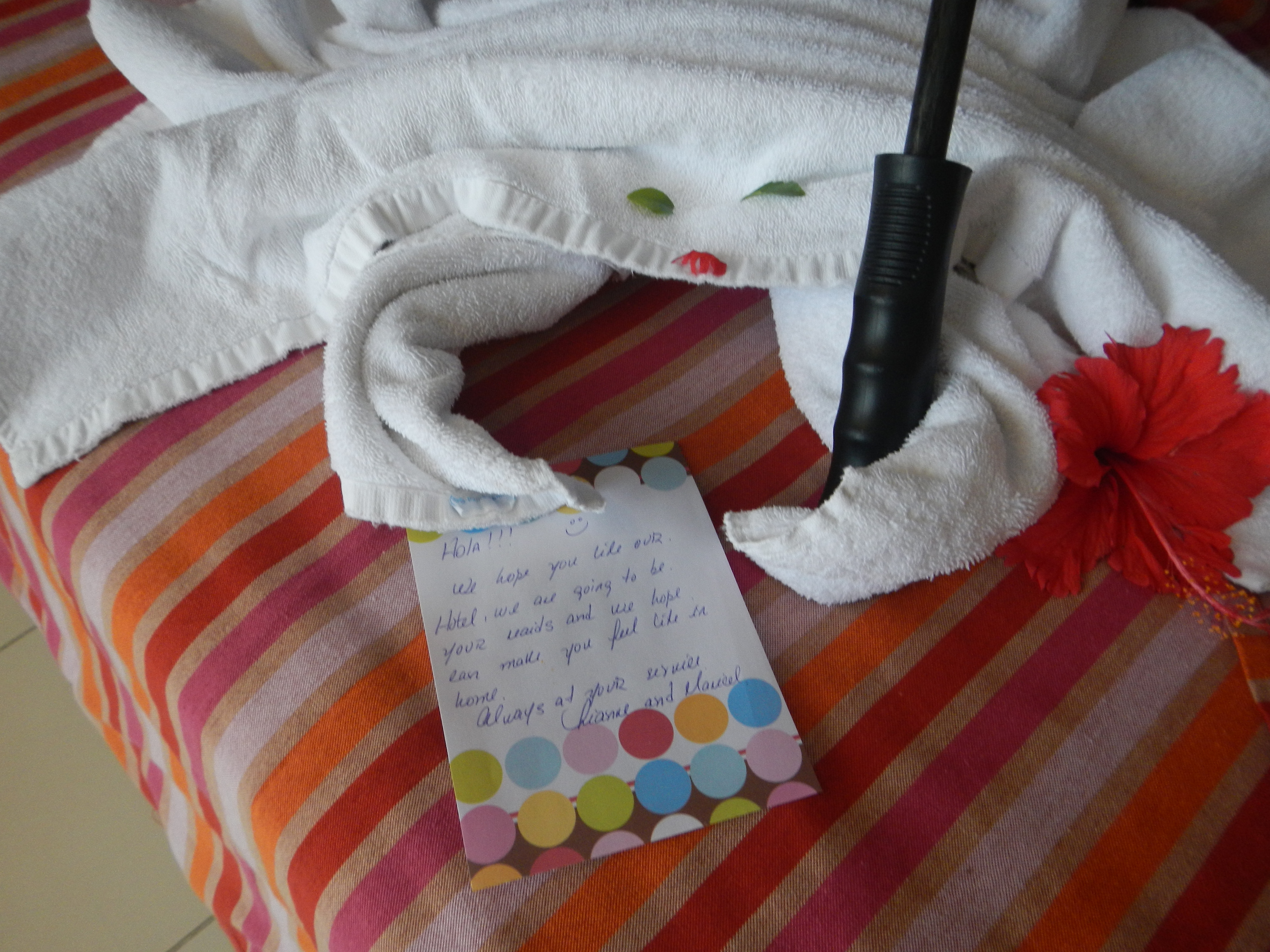
Towel Display
We found this lovely towel display and note from our hotel maids when we returned, and another of a swan in the bathroom. The note reads, “Hola! We hope you like our hotel. We are going to be your maids and we hope we can make you feel like in home. Always at your service, Dianne and Mariel.” The staff in this place were gracious, efficient and always friendly. We left a good tip for these ladies. There was time for a little more beach and pool time before our farewell dinner at the beach restaurant, and we took full advantage. Lunch first at the snack bar by the main pool, then a dip in that pool, in which we tried out some creative underwater photography.
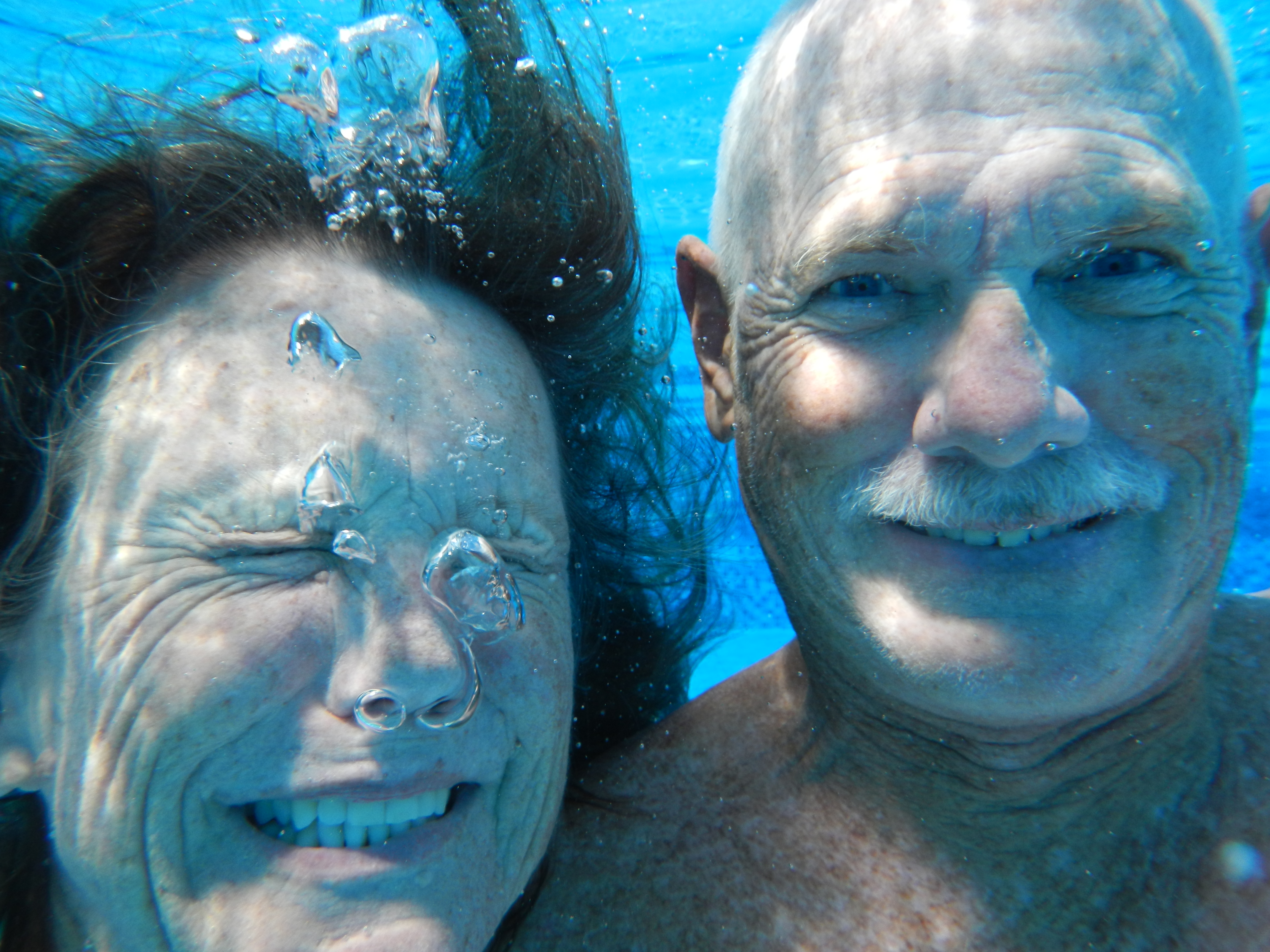
Loving It!
A few hours at the beach and some more pool time, and we headed for the lobby bar for a final drink before going to the beach restaurant for the final extravaganza.
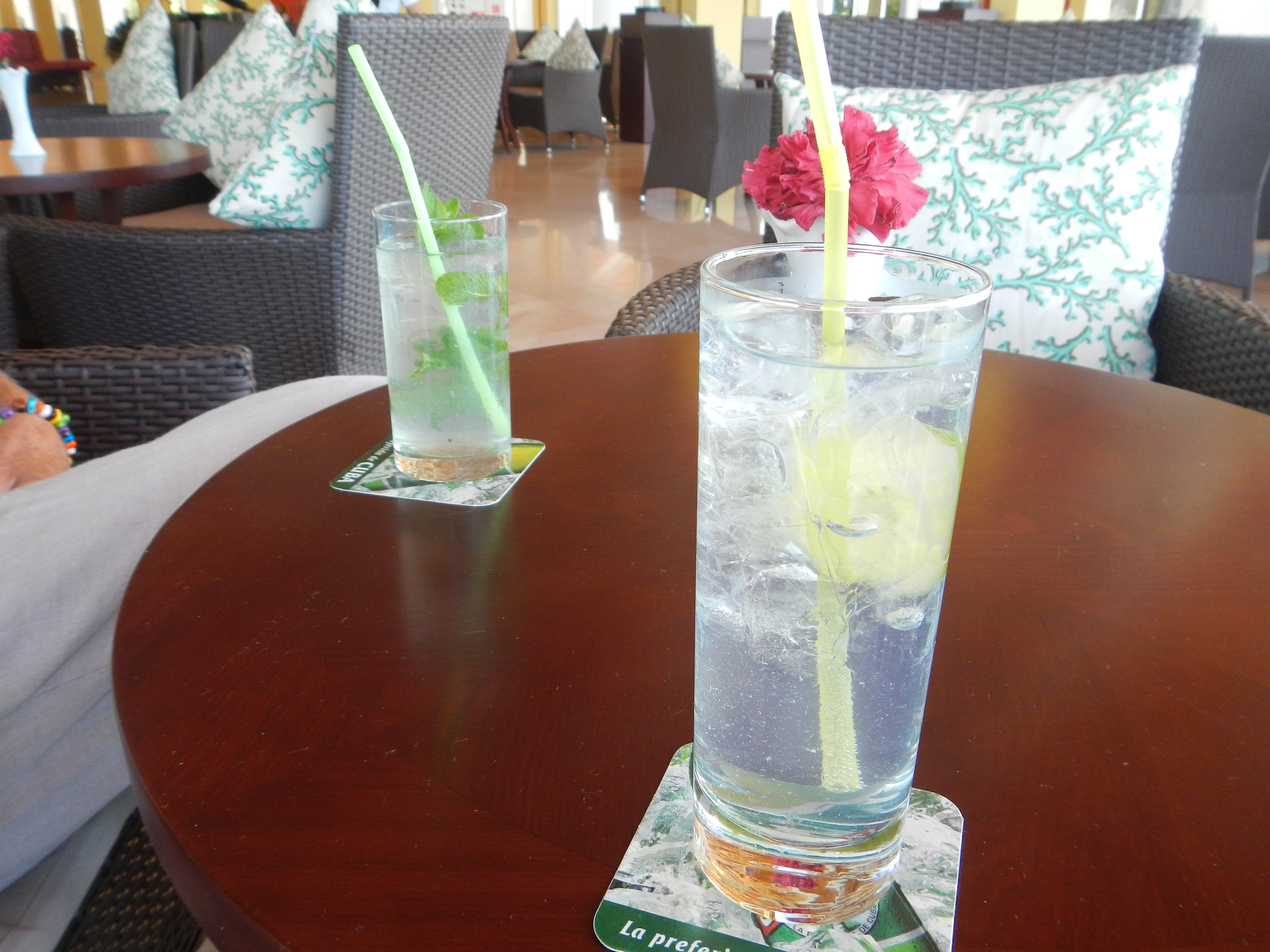
Gin and Tonic
We enjoyed a long, quiet gin and tonic and reflected a little on this extraordinary adventure. Our impressions will be summarized in tomorrow’s departure narrative, but we’ll say here that, for a variety of reasons, this will resonate as perhaps our most precious and fondly remembered trip. Cuba! A place so near and yet so far, a place we have longed to visit all our lives, in no small part due to the impossibility. Many emotions, many lasting impressions.

Farewell Champaign
At the restaurant, we were greeted with Champaign and music. Of course. Some among us, including our friends from Sonoma had spent the afternoon bar-hopping, so the atmosphere was indeed festive. We found a table with our friend Debbie from Pinellas Park who was travelling alone, and I ordered another bottle of Champaign to see us through. I made a toast to the group: “May the wind be always at your back; may you have safe travels; may you find the place you seek; and Viva Cuba! Viva Cuba! Viva Cuba!”

Papa Learning Salsa
The meal was amazing. Shrimp and peppers in a crusty bread bowl, then surf and turf, with lobster and steak. The steak was a little tough, (hey, they don’t do beef in Cuba,) but the lobster was superb. And then the band and dancers took the stage, and there was nothing I could do, when approached by this lithe, cafe con leche skinned beauty, but get up and learn to salsa! And learn I did, to the best of my limited ability. 1, 2, 3; 1, 2, 3. I nearly had it. There are those in the States, and we will go into this tomorrow, who think doing salsa, listening to Cuban music, and smoking Cuban cigars is not what a “People to People” excursion should entail, but they are dead wrong. This is the culture, and I know of no better way to break down barriers than to do what the people do. We are forever graced and humbled by this opportunity.
And to our dear new friend and guide Enedis, may you live long and prosper, and travel to all the places you desire. You embody all that is good, and beautiful, and special of the country you love so deeply.
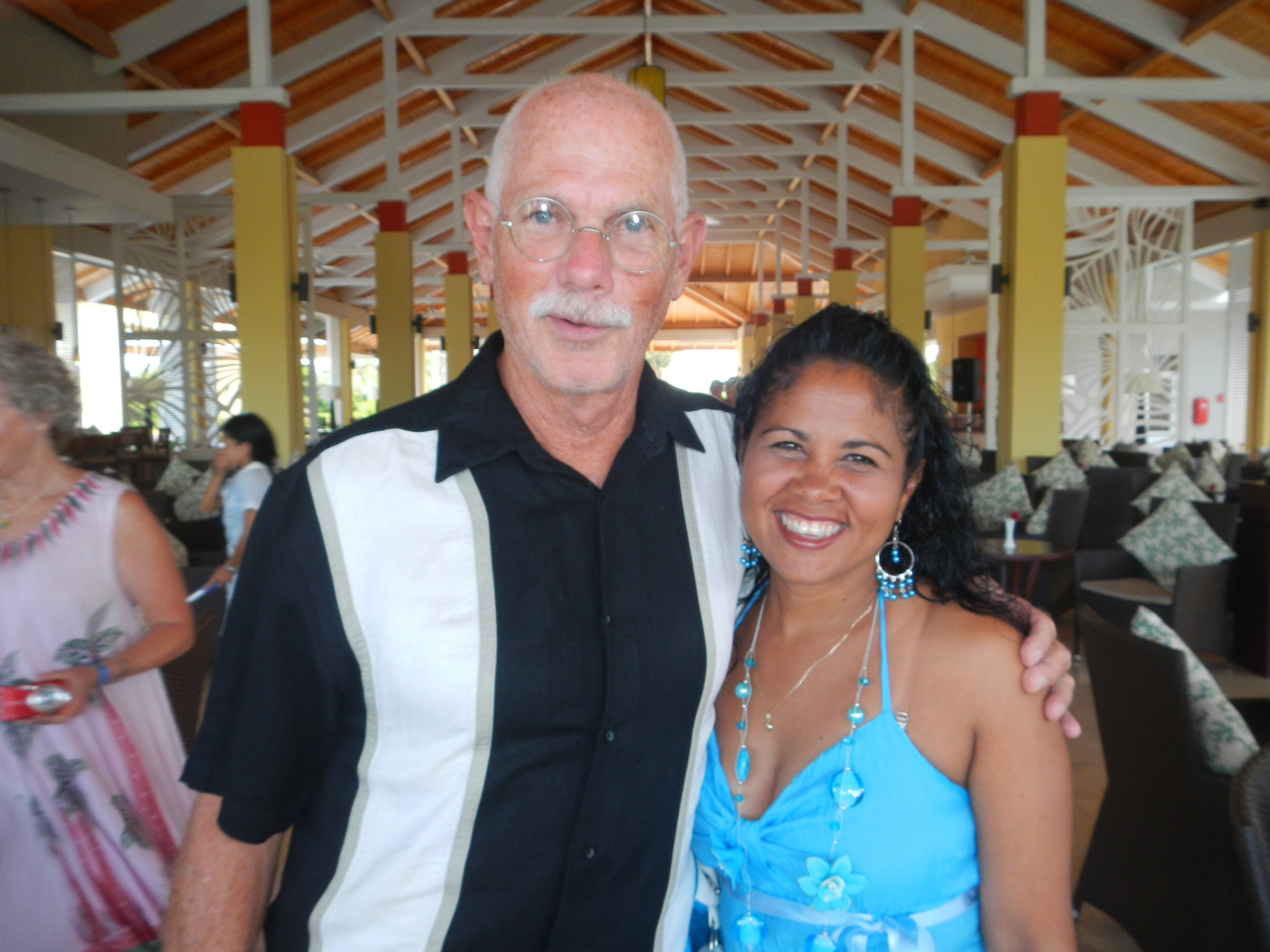
Papa and Enedis

 The Skinny Island Post
Finally caught up! We have much to discuss. Next time, we go together…
Yes!
Likewise, on your next “final farewell tour” let us show you the ‘Double-D’ version of Sonoma County.
I am sad. I did not want this to end. Sam, thank you so much for sharing your trip so concisely and eloquently.
That underwater shot is an album cover… !
Thank you for the thorough recap and thoughtful reflections on a most amazing once-in-a-lifetime experience. We will always be able to refresh our memories of this trip by reviewing your blog. Your friends from Sonoma (Douglas & Dianne)
Thanks, guys. It was great getting to know you. Give us a holler the next time you’re in Florida. Sam & barb