
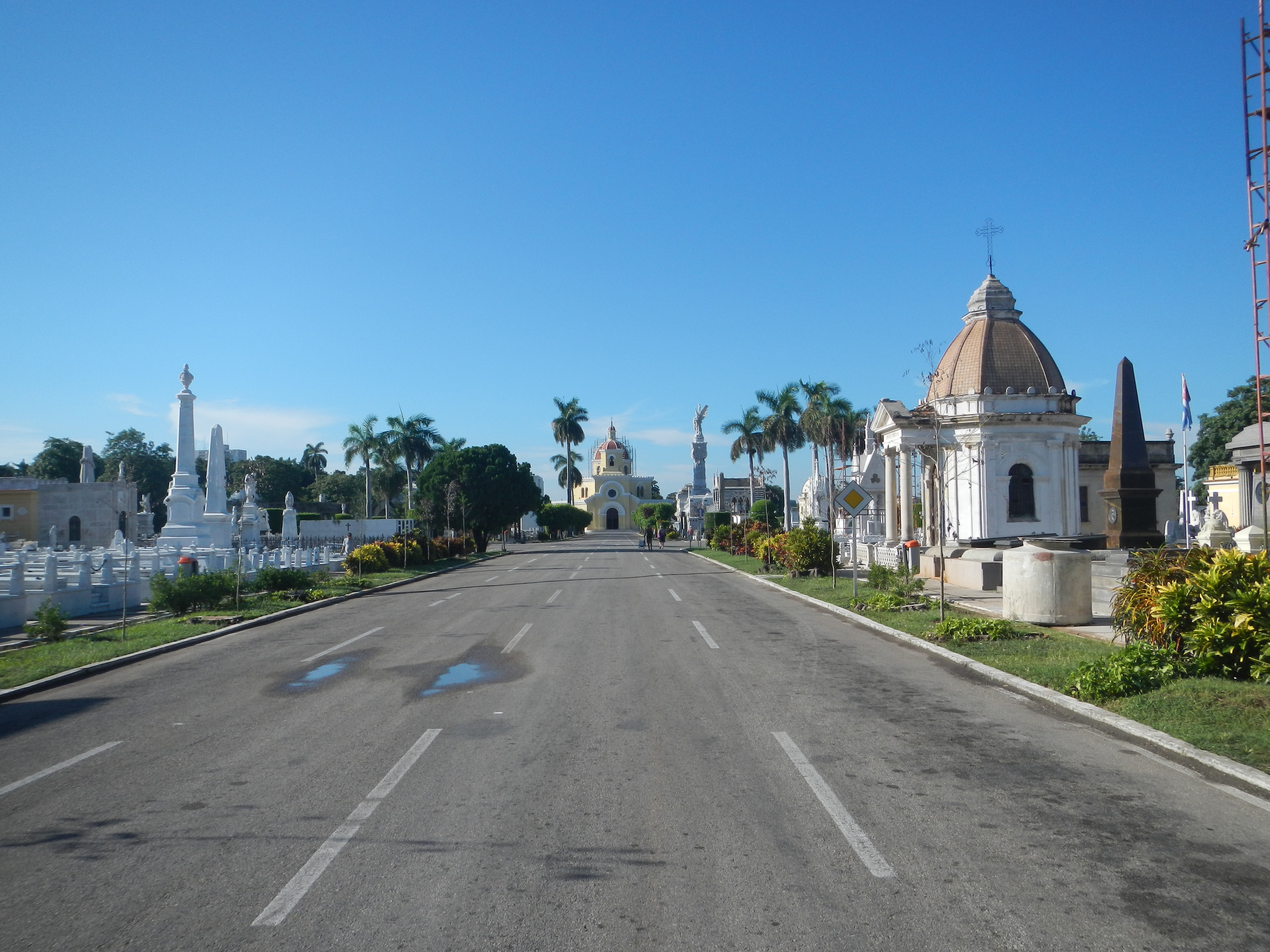
Cristobal Colon Cemetery
This was a full day of street art, starting with a tour of the Cementario de Cristbal Colon, which is as much outdoor museum as boneyard. We arrived early on a clear, warm, humid morning that promised to be a scorcher, and bring on the inevitable afternoon thunderstorms. Our guide was a feisty little woman employed by the cemetery, who had an opinion on just about everything, and wasn’t afraid to express it. We learned that the 140 acre cemetery, in the Vedado section of Havana was founded in 1876. It contains 800,000 graves and over 1 million internments, with 500 major mausoleums, chapels, and family vaults. The supposed bones of Christopher Columbus were at one time interred there, before being moved to the Cathedral in Seville, which we saw last year.
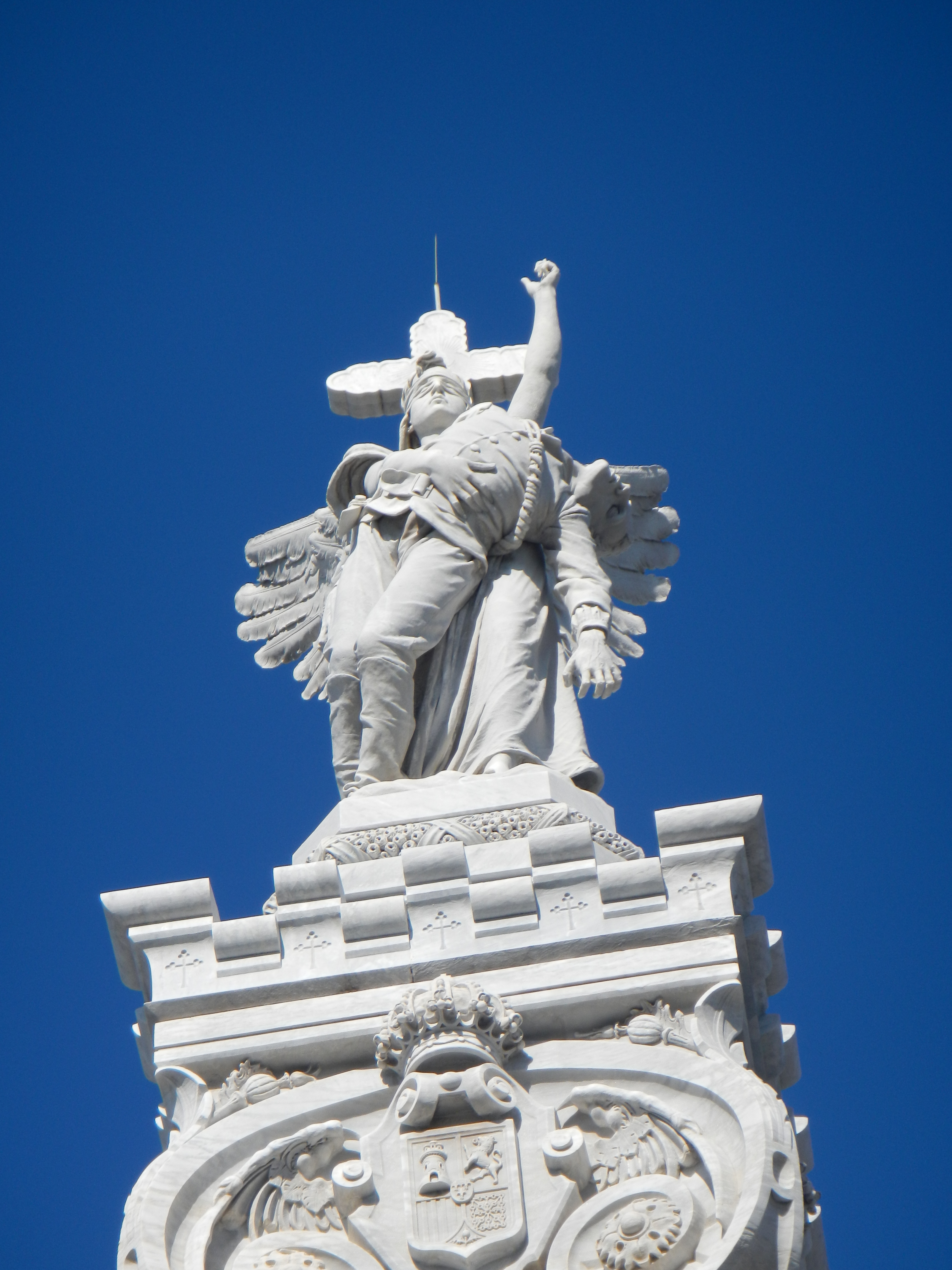
Firefighter Memorial
There were many elaborate monuments in the cemetery, including this one dedicated to firefighters killed in a late 19th century warehouse fire. The owner of the building, a corrupt city official, was storing ammunition and explosives in the warehouse, but he told firefighters there was nothing inside. Twenty were killed in the ensuing explosion, but the official got off with a slap on the wrist. Incensed citizens raised the money for this memorial.
There were chapels and tombs of all shapes and sizes, and several sturdy mausoleums in which generations were entombed.
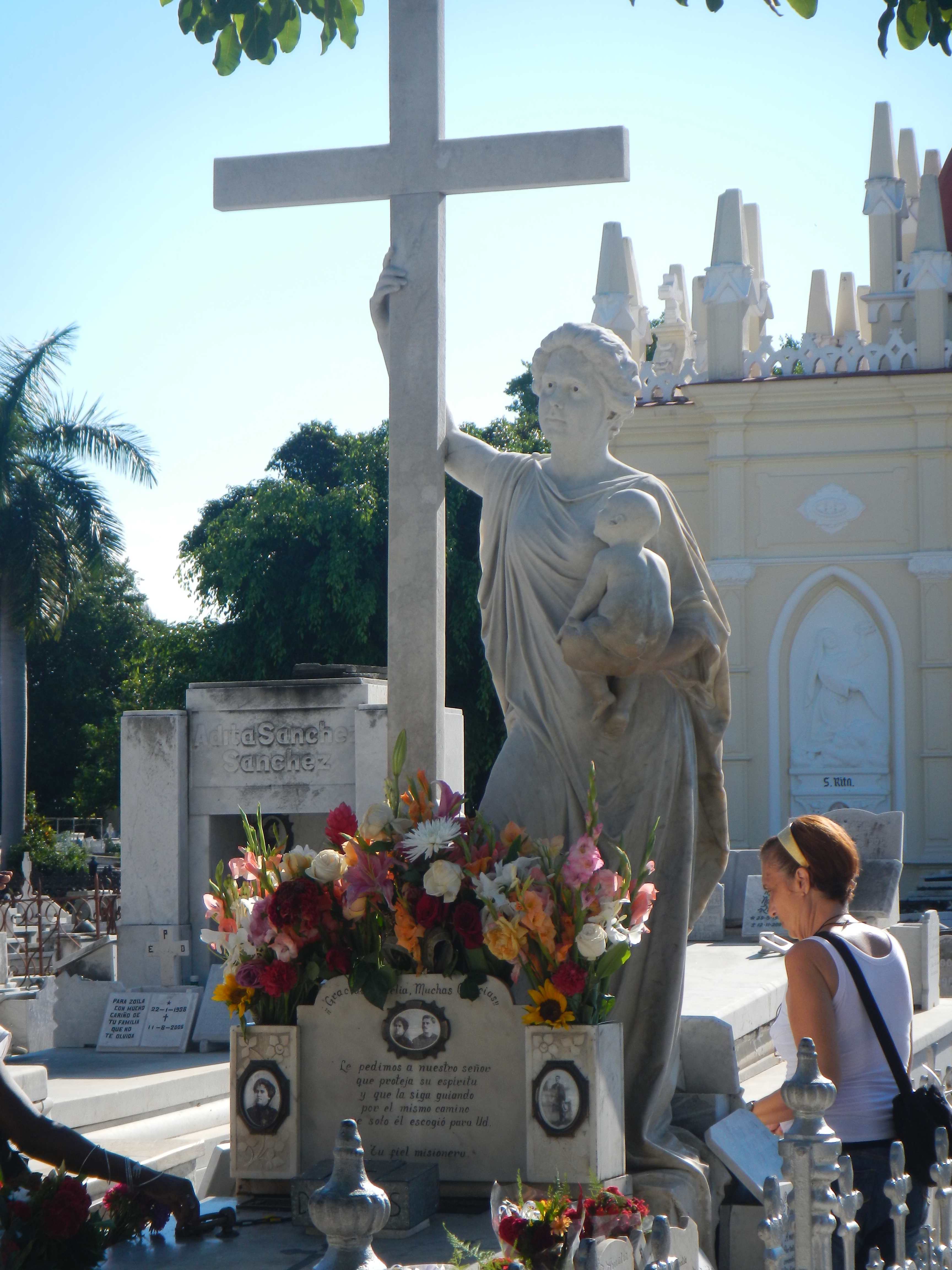
Amelia’s Tomb
But the most intriguing was this tomb visited daily by hundreds, not only Havana residents, but folks from around the world. It is the burial place of a young woman named Amelia and her infant child, both of whom died in childbirth. Our guide told us a long story of how this woman and her husband overcame family disapproval and other obstacles to be together, and that they were very much in love. When Amelia and the baby died, the baby was buried with her, lying at her feet. The husband was inconsolably distraught, and insisted his wife and child were not dead but only sleeping. He spent days on end at the grave tapping on the crypt with an attached ornamental brass ring, tapping to wake Amelia. Finally, to prove to him she was indeed dead, the family opened the tomb, and it is said that the baby was not at Amelia’s feet where it had been placed at burial, but cradled in her arms.
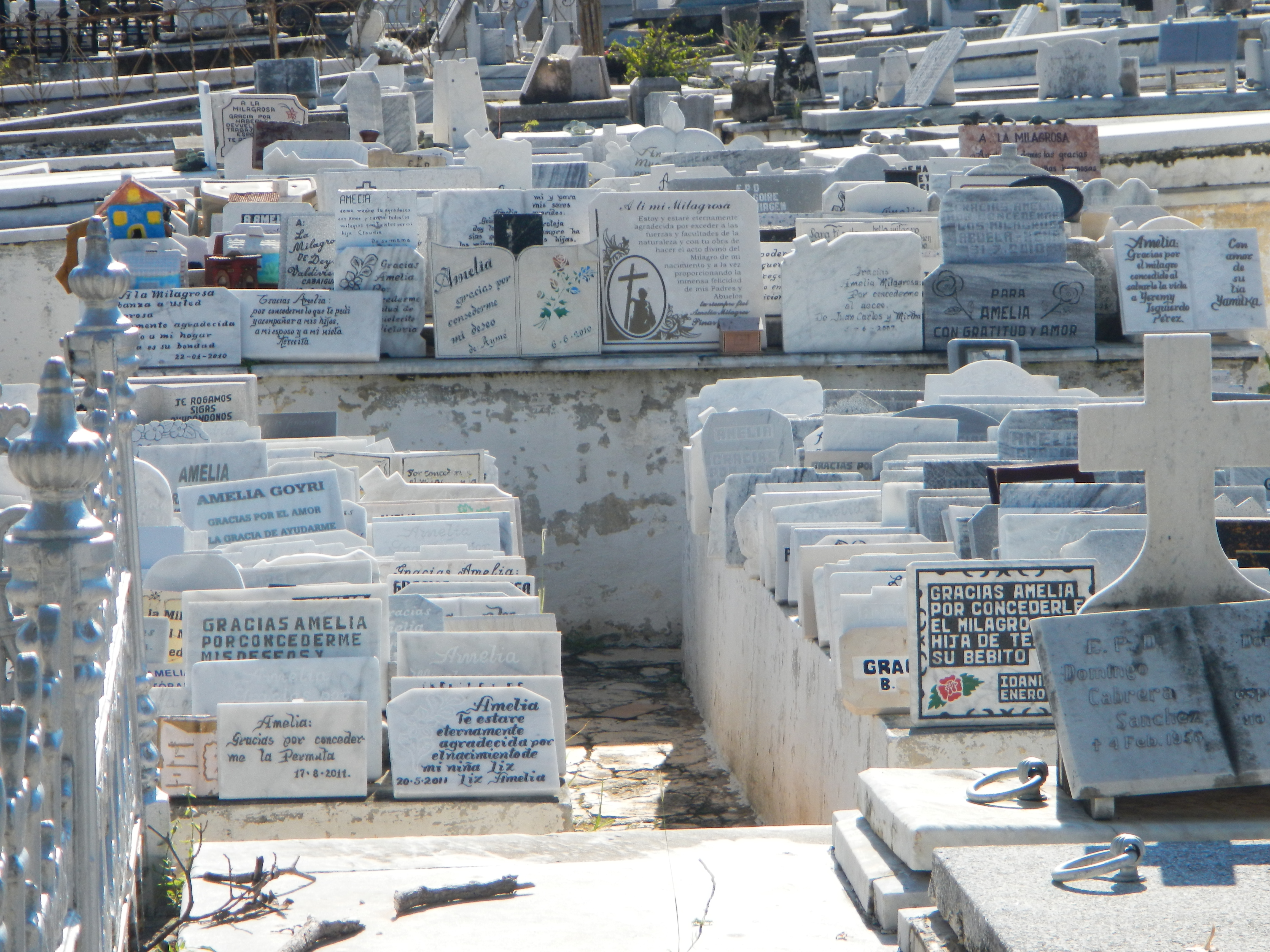
Milagro Thank-you Notes
Word of this milagro quickly spread, and pilgrims began coming to tap on the crypt and ask for miracles in their lives. In the 15 minutes or so we were at this site three women came along to tap and pray. A great many flowers stood at the foot of the tomb. It was not yet 10 in the morning, and our guide said these were flowers from just today. Next to the crypt was an area of perhaps fifty by fifty feet filled with small flat marble plaques, each one thanking Amelia for a miracle in their life for which they had prayed. The guide showed us several from the States. There is a movement underway to have Amelia Canonized, and ultimately named a Saint. It was a remarkable and moving place.
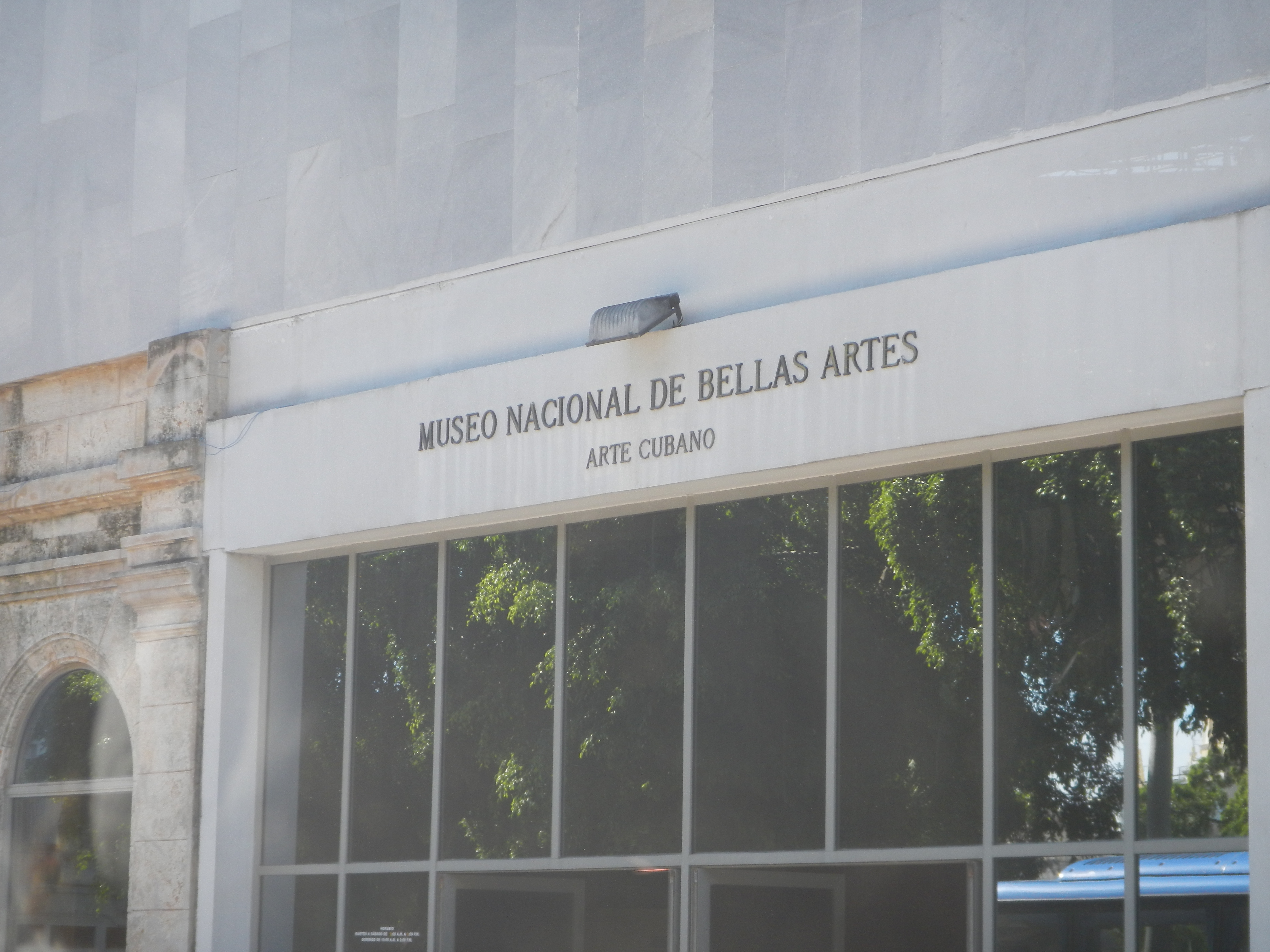
National Museum of Fine Arts
Back on the bus and off to another greatly anticipated stop, the Museo Nacional de Bellas Arts, (National Fine Arts Museum,) in downtown Havana. A modern, spacious building with open courtyards and sculpture gardens on the ground floor, the museum was founded in 1913, and moved into its current space in 1954. It contains paintings from the early colonial period to present-day. We met out museum guide, English-speaking, of course, and accompanied him to the second floor where stood an elegant sculpture by noted Cuban artist Rita Longa, and several of her drawings. The tour proceeded from the first paintings executed in country, most of a religious nature, to pastoral landscapes, and then a room devoted to works influenced by the Hudson River School. It was very interesting to see that style depicting banana and palm trees. Then it was on through Cuban history to the turbulent days of the Revolution, where we encountered several large, aggressively done works, some hopeful in tone, others dark and foreboding. The closer we came to contemporary work, the more members of our group lagged, found places to sit, or talked loudly among themselves. Amazing. We didn’t care. I wanted to see some contemporary Cuban painting. After a period evoking the New York 70s, with heavy pop art influences, but featuring Cuban revolutionary figures, we came to the strength of the whole place, a room hung with recent works in hyper-realism. They were stunning, especially one giant painting (10 x 20 feet,) of a cloud, a pond below, and a section of turf, the size and shape of the pond, hanging between, done in photographic detail. Blown away. Unfortunately, no photos allowed.

La Floridita
Off we went, at last, to La Floridita, Hemingway’s favorite bar, in Old Havana, and home of the daiquiri. Only 5 of the usual suspects accompanied Enedis inside, the rest of our increasingly weary group remaining on the bus. Just after noon on a Sunday, and the joint was jumping, but we managed to order a daiquiri and some fried plantains. For Barbara and me, this would be lunch. Besides a life-like stature of Hemingway hunched over the bar in one corner, our bar-mates included two happy guys from Texas We learned they had come in from St. Martin, and had a flight out in 2 hours for the States, but weren’t supposed to be in Cuba. The Visas are all very strictly controlled. They didn’t seem to be too concerned, however, and were certainly finding courage in a succession of daiquiri’s.
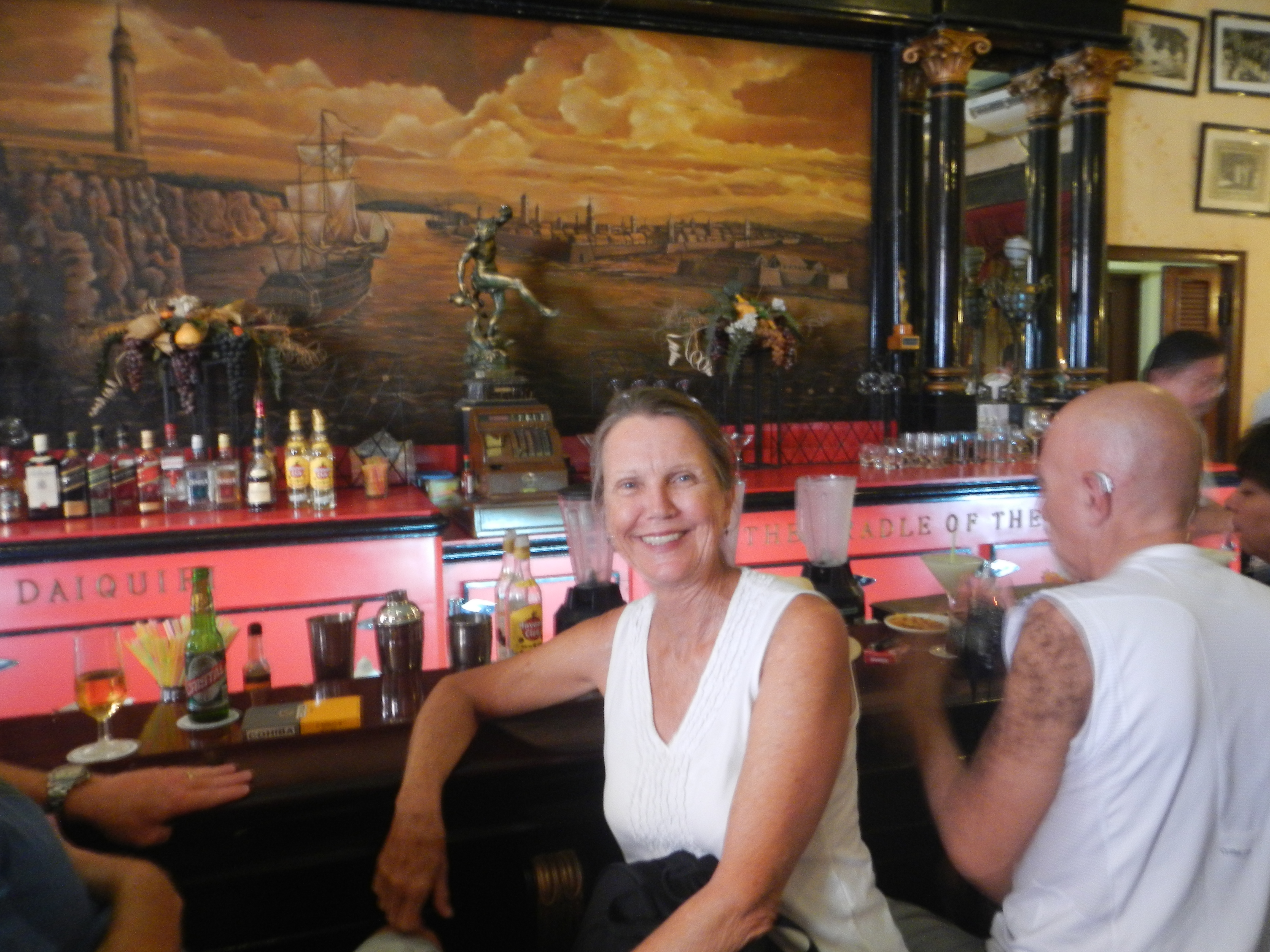
Barbara in La Floridita
Which were wonderful, by the way. Here’s Barbara enjoying the atmosphere. Floridita is a venerable old place; the daiquiri was invented there by a former owner, and it is said that Hemingway still holds the record for successive consumption of the tidy little drink at 17. We wanted to stay a good bit longer, to soak up the wonderful history and ambience of the place, but the fuddy-duddies were waiting on the bus, and we had several other stops yet on the itinerary. I bade my old pal Ernest farewell (hard to believe I’m 4 years older than he ever got to be,) and we emerged into the hot Havana sun.
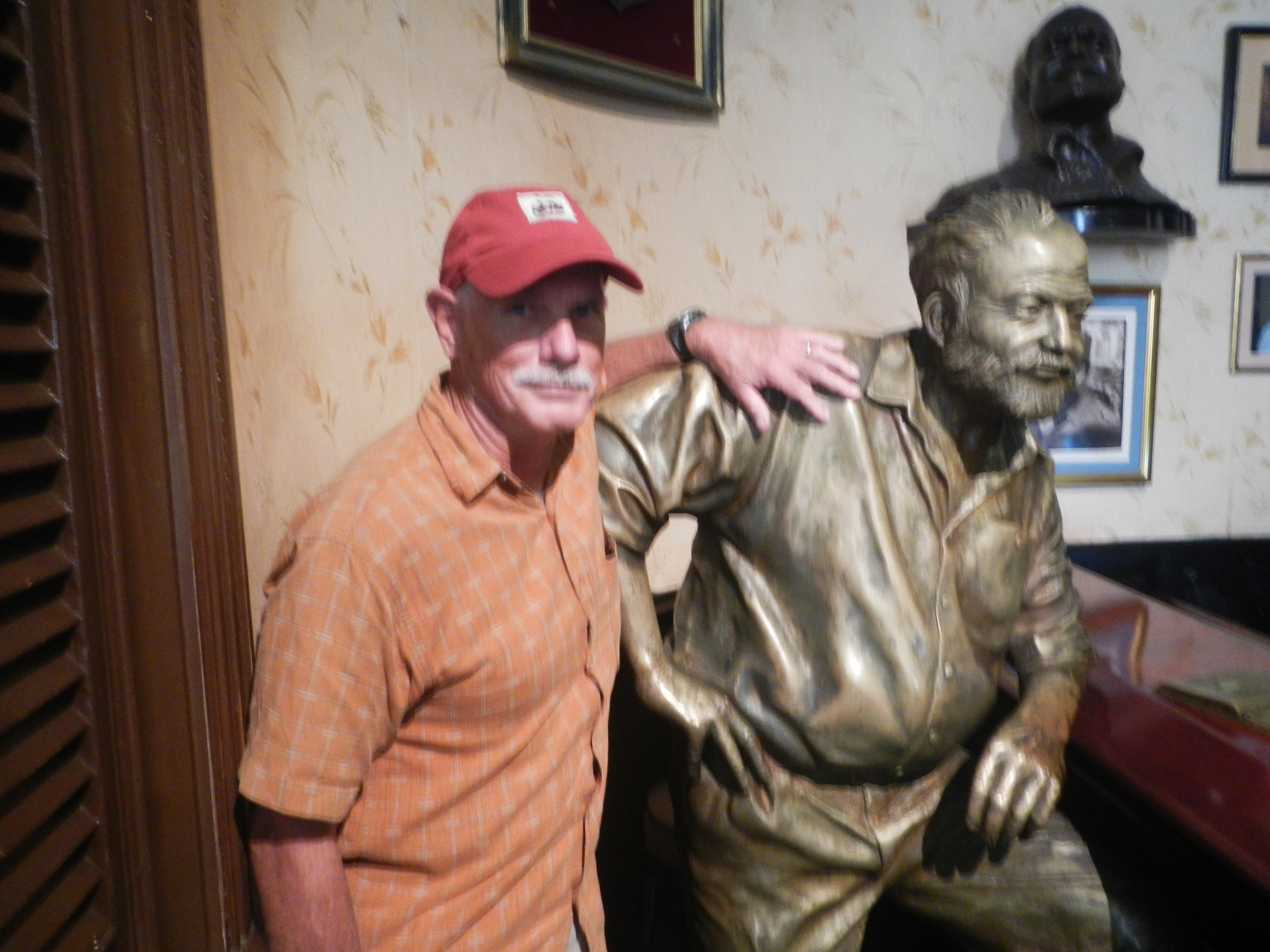
Papa y Papa
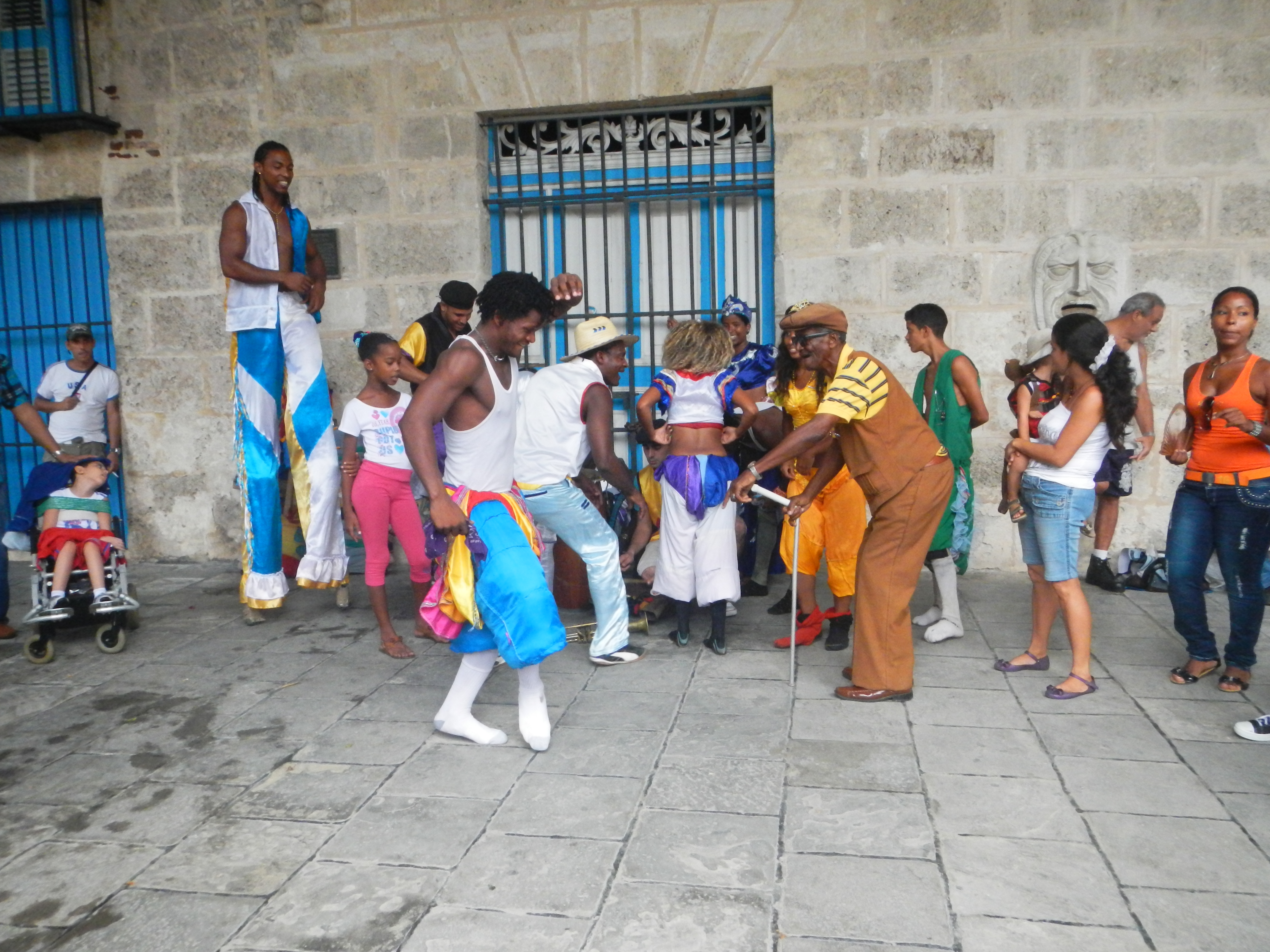
Impromptu Dance
Lunch was on our own, so after being dropped near Cathedral Square, with instructions to meet in front of the church at a designated time, folks struck out on their own, several to a restaurant across the square, while Barbara and I ascended the portico with a view of the whole square and lit up. We heard a street troupe coming down one of the side streets, trumpets, percussion, etc. and they came into view just as the rain began to fall. They all ducked under the overhang with us, musicians, dancers, guys on stilts, all in brightly colored traditional Cuban costumes.

More Dance
After 20 minutes or so of conversation, they simply couldn’t help themselves, and the rhythm section started up. That went on for a few minutes, and then an old man who had been walking around with a cane broke into dance, which stimulated the rest of the troupe, and we were treated to a full-on Afro-Cuban music and dance concert there on the veranda. The rain wouldn’t let up and neither would the dancing. Great fun. At the appointed hour, no one from our group had arrived in front of the church, So Barbara and I employed our umbrellas and struck out in search of the bus. We found it along the waterfront, Miguel let us on, and the others started arriving shortly.
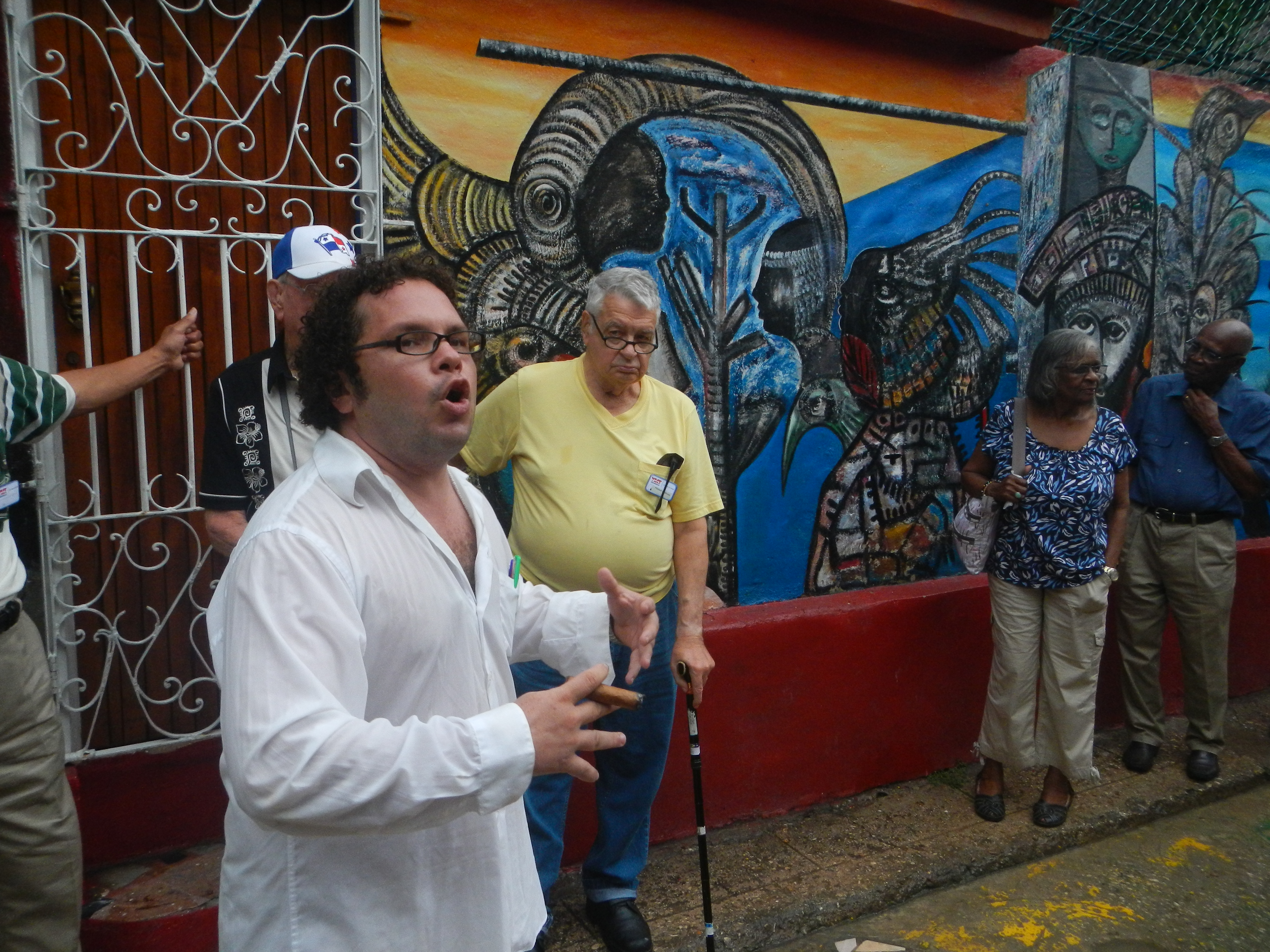
Guide at Calle Hammel
On to Calle Hamel, a neighborhood arts project in new Havana, the brainchild of a 60-year old, self-taught artist named Salvador Gonzales. We were met by the project spokesman and guide, a short, round, excited man who, in nearly flawless English, welcomed us and took us on a tour of this incredible side street, after he had loudly admonished a handful of kids who had come begging. We entered the cave-like studio/gallery of Salvador Gonzales, and there saw a number of his paintings, which were startling in their color and movement.

Calle Hamel
Outside, the walls of every building on the street had been painted with designs by Gonzales and his associates. Found art pieces proliferated, including many more bathtubs. On Sundays there are also singers until 3, but we had missed them. Satisfied with our 30 minute tour of this vibrant, colorful, and unique street gallery, we made our way back to the bus in a light rain, with children tugging at us. “Children shouldn’t have to beg anywhere,” Barbara said.
A block away, while conducting her head-count as she did every time we entered the bus, Enedis discovered someone was missing. “It’s Edward,” someone shouted from the back. Edward was a tall, quite elegant looking African-American man from Buffalo, who had nearly waist-length dreads tied back in a pony tail. Miguel circled the rather long, wide block and we returned to Calle Hamel. Enedis got out and went looking, but returned without Edward. We moved on for another loop, everyone checking through their window, and Enedis on her cell phone. Pulling back up near Calle Hamel she got a call. It was the police, and Edward was safe with them back at the project. We stopped, and a few minutes he appeared, and entered the bus to a welcoming cheer. Noticing us gone, he had walked after us, and wisely asked for assistance from a policeman he found.
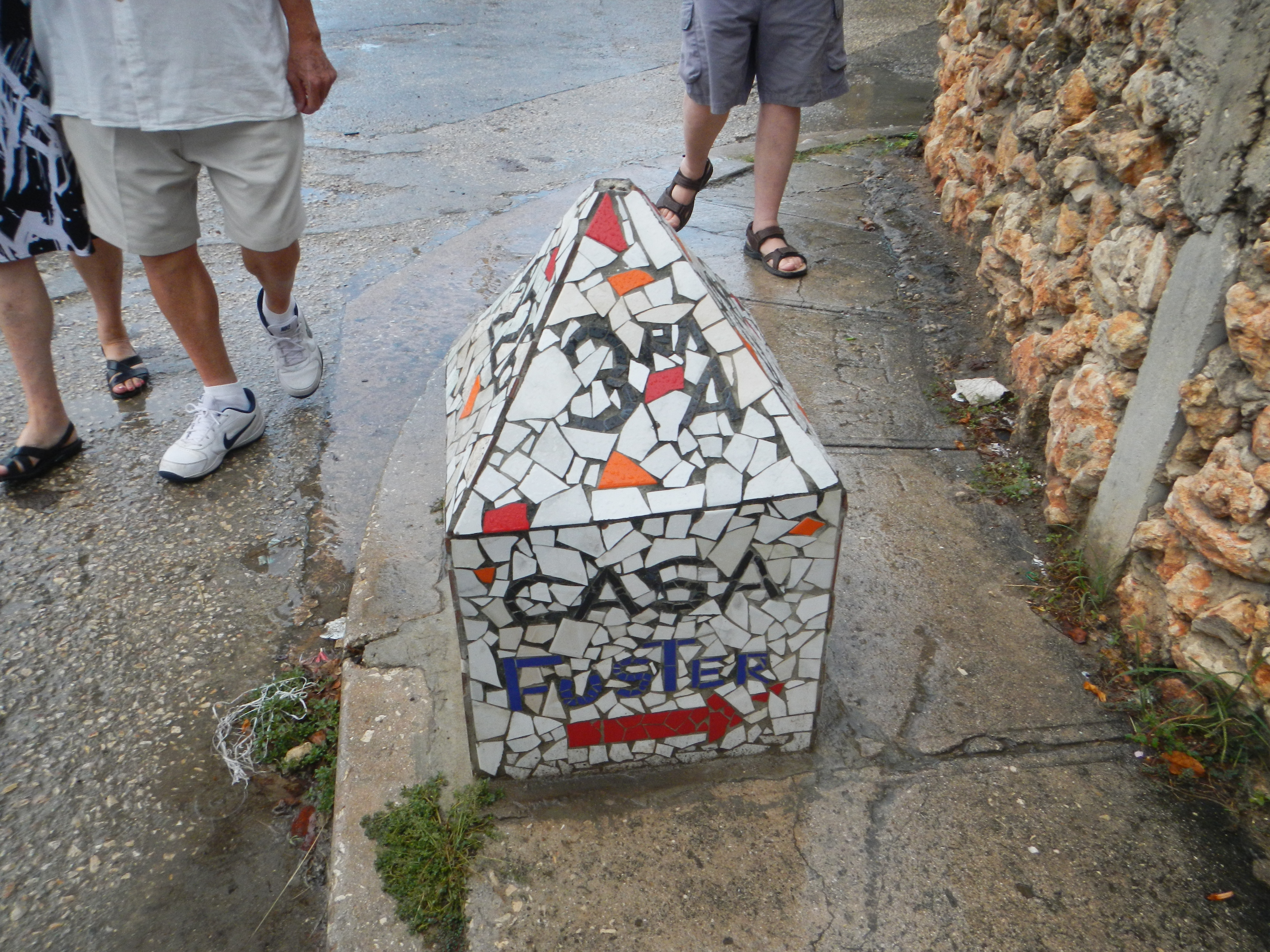
To the Fuster House
Intact, we went on to continue our street art theme for the day, with a visit to the little fishing village of Jaimanitas in the Havana outskirts, and not far from our hotel in Miramar. Virtually the entire town, some 80 houses, have been decorated with ornately tiled domes and murals, a process taking close to 13 years. All of this has been the work of Jose Fuster, one of Cuba’s most prominent artists, and we were fortunate to visit his house and studio.
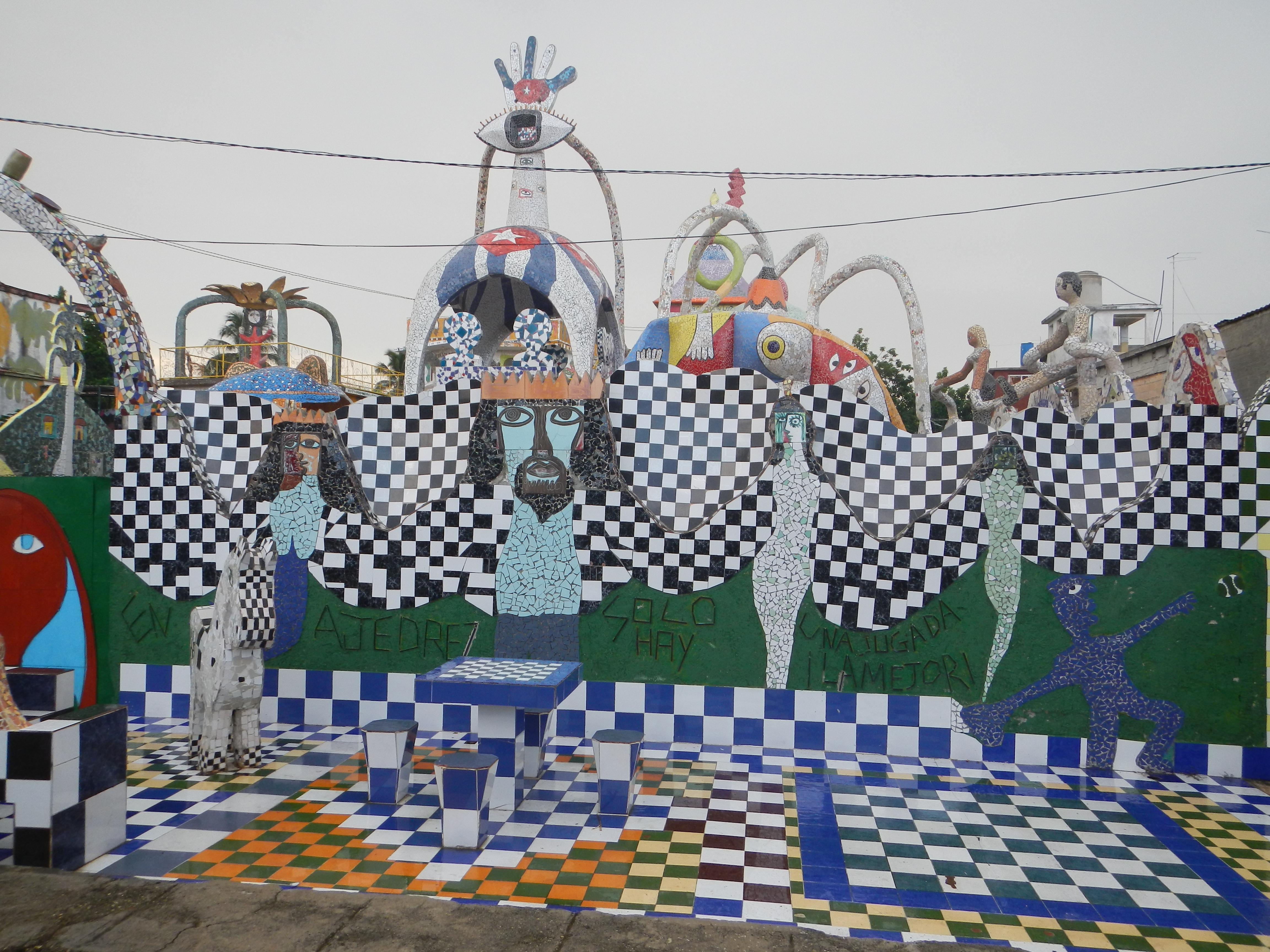
Fuster House
Courtyard, fountains, walkway, garage, every wall, every ceiling were covered in whimsical and jubilant designs by tiny tiles fired in Fuster’s upstairs studio. The artist himself was apparently not home, but we were graciously given the run of the place by one of his sons. We saw the pottery studio, where the tiles were made and fired in a big gleaming electric kiln, then went across a (tiled) elevated walkway to the painting studio, where a number of Fuster’s brilliant, tropical motif paintings were displayed.
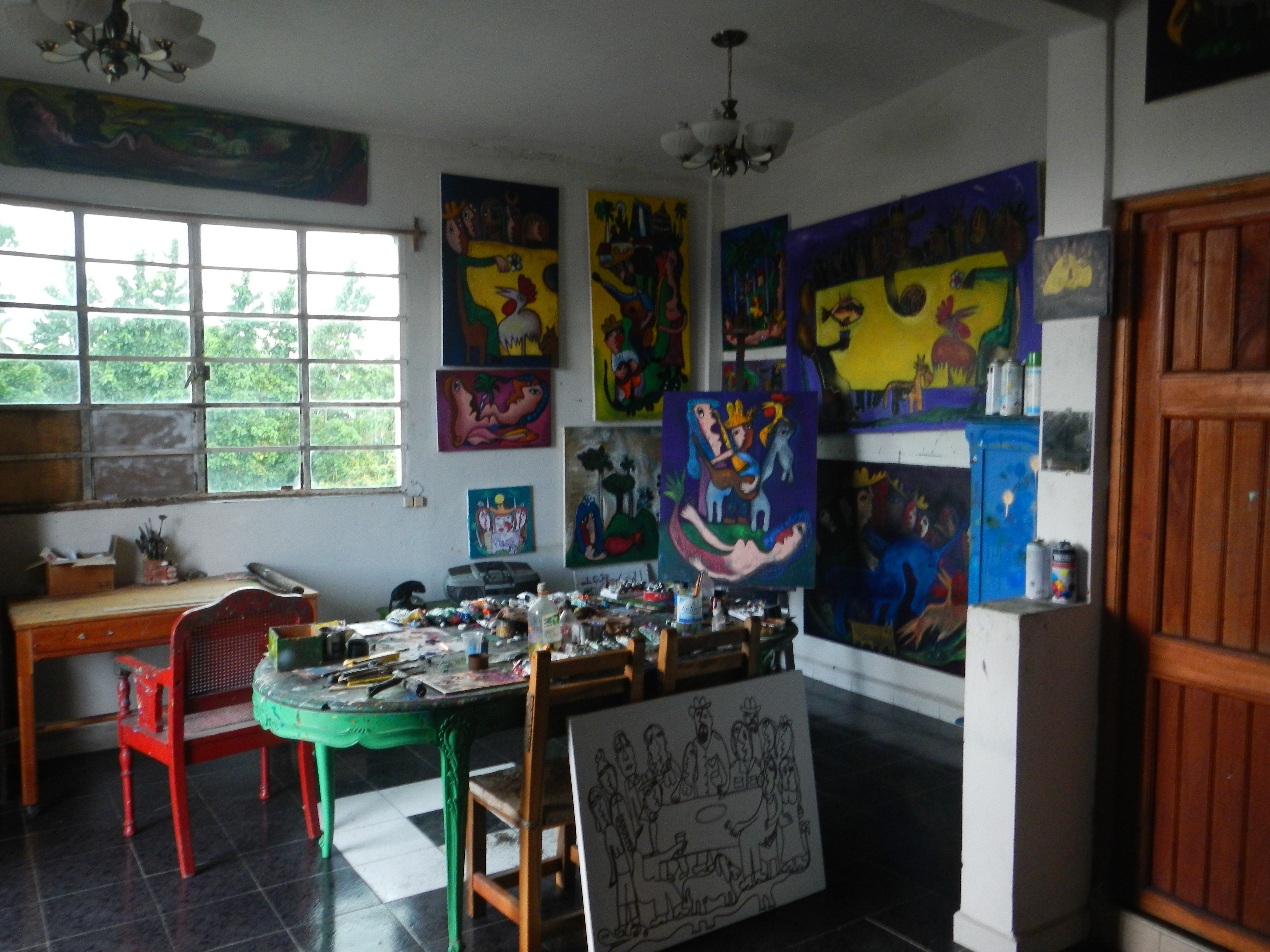
Fuster Studio
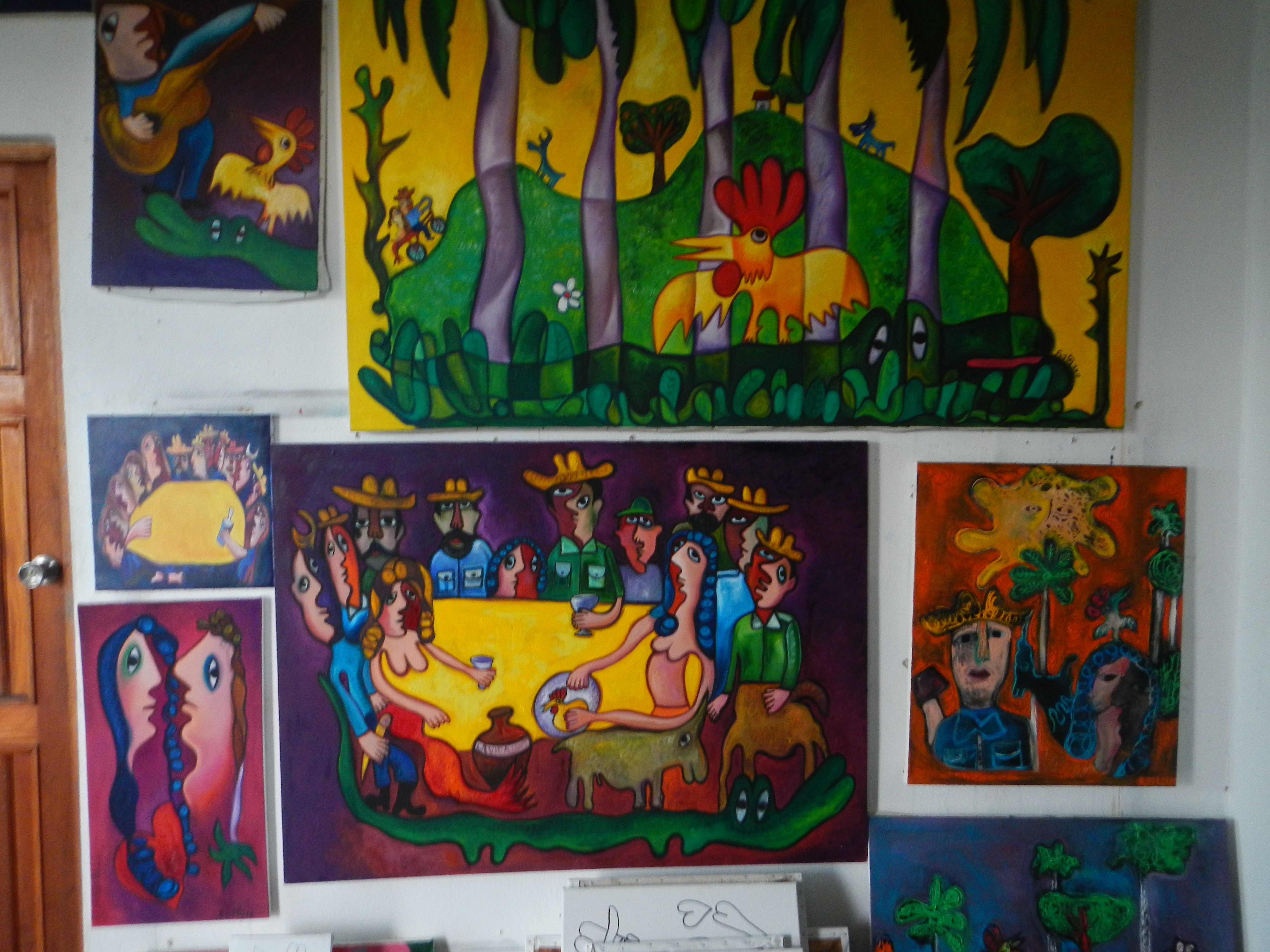
Fuster Paintings
More photographs of Jaimanitas and Calle Hamel are up on Face Book.
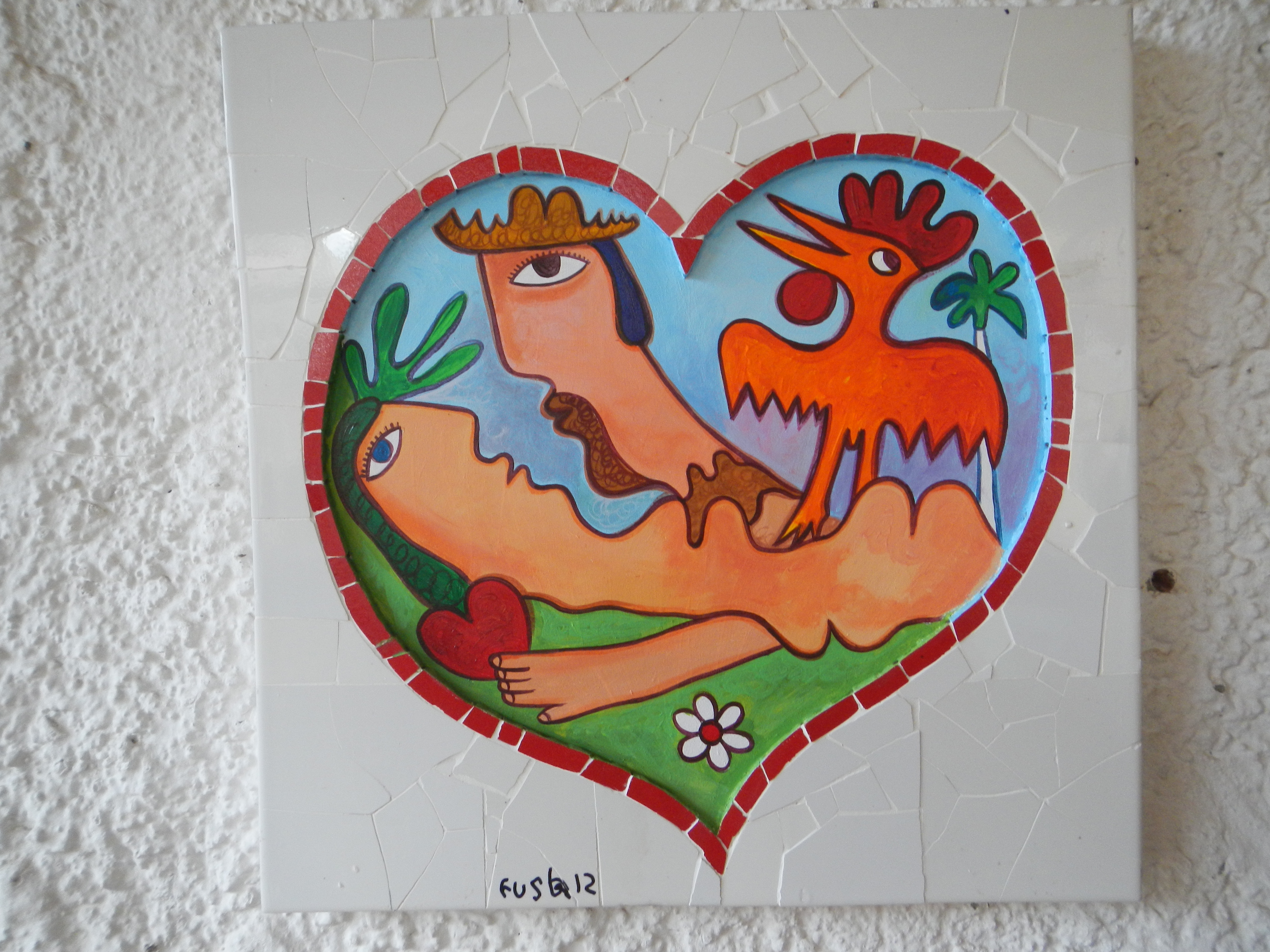
Newly Made Fuster
By now we were pretty much suffering from sensory overload, and after a casual walk-through of the Fuster courtyard and down the decorated street, we were ready for the hop back to the hotel, a hot shower, and our last night in Havana, which we had decided to spend relaxing poolside. Off to Santa Clara and Cayo Santa Maria tomorrow.

 The Skinny Island Post
The Fuster paintings and tiles are amazing!