
We apologize for the lengthy absence of The Skinny Island Post. We took a long walk and are just now getting back.
It’s been an unusually mild winter here on Skinny Island. If memory serves we’ve only had a couple nights down into the mid-thirties; no freezes; and an abundance of spring-like weather since October. January, especially, was one for the books, with a big majority of days topping out in the upper seventies or low eighties, with pleasantly cool nights. No complaints here, but it has disturbed the natural balance of things. The anoles, for instance, our little brown lizards, think its spring, and are out in full force and full combat gear, flaring their red throat sacks, and doing their menacing little dance for competitors. 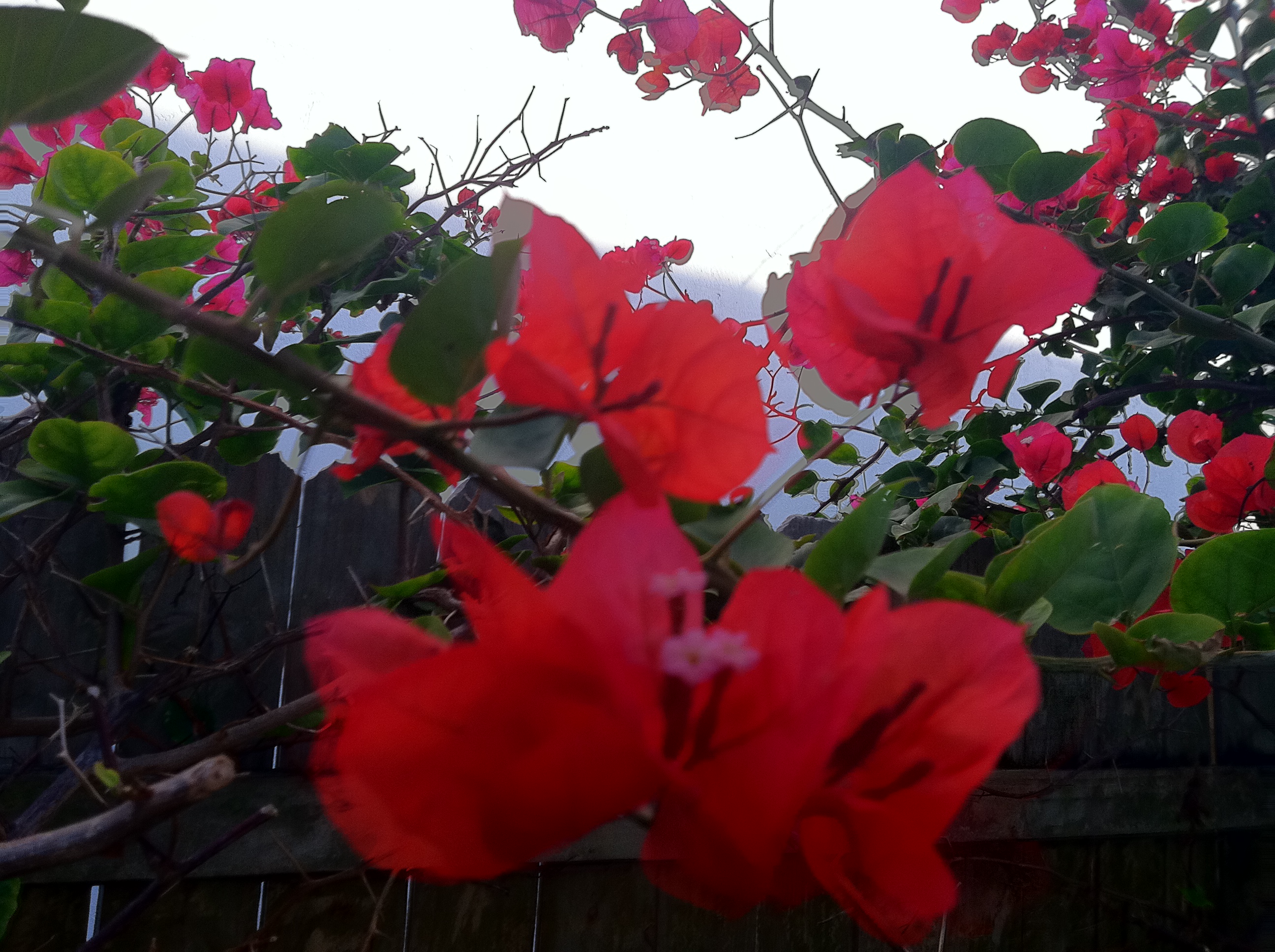 The Bougainville is blooming madly, and we are going around in shorts at seven in the morning. Most unusual. We have some nice lettuce up, along with the old, persistent rosemary, and some dill, parsley, and cilantro, and we are tempted to plant the whole spring garden, but there lurks the memory of February and even March freezes, so we will hold off. There is no rush, after all.
The weather has been so grand, in fact, that we have become enthused about surf fishing again, after many years of not so much as wetting a line. We have gotten all the gear out, reorganized the tackle box, and made new leaders, but the same balmy, tropical winter that has provoked the itch again is responsible for our greatest impediment, Snowbirds. There is a nasty little group of four or five of these invaders who reside in a nearby condo from October to April, and led by a gangly ex-commercial fisherman from Michigan, whom they follow and admire as if on a playground, (and that is what Florida is to them, after all,) they have literally taken over the beach. The few attempts we have made to stake out a small section of beach, directly in front of the little hacienda, I might add, have been thwarted by a phalanx of rods, chairs, and $300 rolling, fat-tire carts. They each set up a minimum of four rods in tubular holders, then sit and talk, while occasionally glancing at the rod tips for any tell-tale action, and they actually manage to catch fish in this despicable way. We view fishing as a solitary, meditative experience, a focused, mindful endeavor with finger to line, but they have to make it a casual social event, like everything else they do. Why is that? A section of beach seventy-five to a hundred yards wide is thereby effectively out of play, and I’ll be damned if I’m going to walk a hundred yards out of my way to set up when it’s essentially my beach. Well, technically not. It is down to the mean high water mark, but they are generally ocean-ward of that. We’ve been thinking of going all Local (not necessarily loco, but close) on them like surfers do at their home break, and running them off the beach, but we have so far refrained, guided by the deep breath recognition of the impermanence of this situation. They will eventually return north, and all will be well and right again. There will be plenty of good fishing weather come spring, better, actually. It is a cyclical thing, and if we have learned anything here on Skinny Island, it’s the cyclical, impermanent, but interrelated nature of everything.
For example: the yearly cycle dictates that the beach be full of shore birds this time of year, but it’s not. There are maybe three kinds of gulls, but far fewer, a scattering of terns and black-bellied plover, and almost no willets. That’s because the winter overall has been mild in the north, from where these guys migrate. And it’s probably no coincidence that we saw four willets just this morning, a couple of days after a big snow system moved across the plains and into the Maritimes.
We have always seen the ocean as the one constant, but that, too, is wrong thinking. Oh, it is always out there, and provides a kind of enduring comfort for that, but in truth it changes not only seasonally, but daily, hourly, and moment to moment. Early this past week, for three days, it was flat calm, clear and green, with just a slight west wind grooming. Then the wind swung around through the south and back out of the east, and the whole mood and character of everything nearby changed. 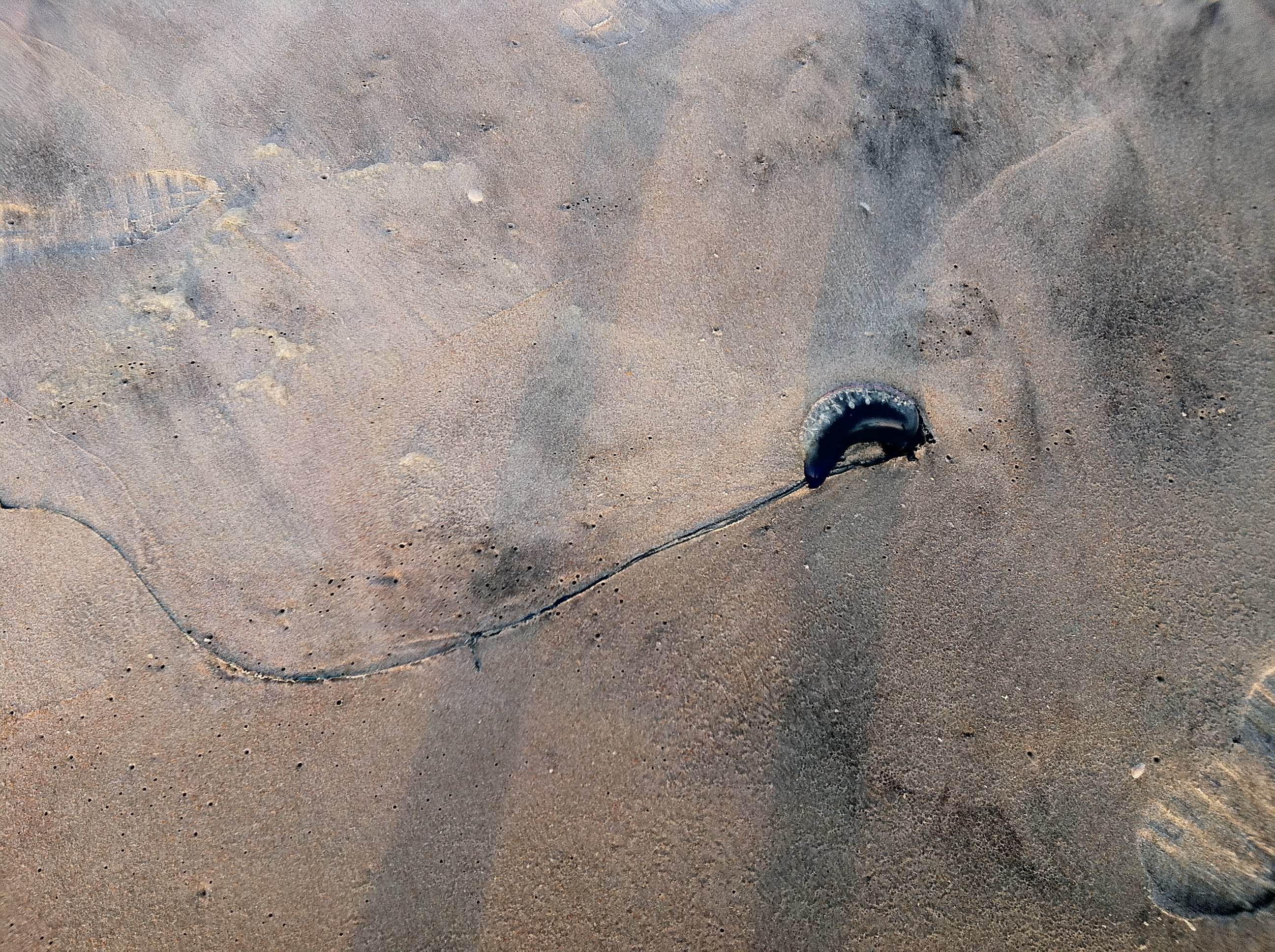 On one of our morning walks we saw many of these small Portuguese Man O War washed in. This was actually one of the biggest; the majority were tiny– two-inches or less– with a single tentacle of two feet or more, their perfect little gas-filled sails an iridescent indigo. They have no independent means of mobility; the bag acts as a sail in the wind, but it is a craft without a rudder, and when an east wind blows long enough, they blow ashore. That’s they way it is.

 A day later there was this Loggerhead turtle, quite dead, having been deposited by a retreating tide early in the morning. It’s hard to determine age just looking, but the barnacles say it had some years on it. They can live two-hundred years and more, so who knows. Of great fascination to me is the fact that the females always return to the beach on which they were hatched to lay their own eggs. We didn’t learn the gender of this one, but assuming it’s a female, it could have been depositing eggs on this stretch of beach beginning in the Second Spanish Period. A long time, but still the blink of an eye.
 Closer to home, both literally and figuratively, we were treated to a further lesson of the certainty of impermanence in the realization that our extensive system of wooden decking is dangerously deteriorating. We moved into the little hacienda sixteen years ago this month and, after knocking out a few walls, framing doorways, tiling and painting everything inside, we built a wooden walkway around the perimeter and out to the road, and a large deck down the slope behind the house, all of high quality pressure-treated lumber, which we treated at least once, as I recall. We also built 10 by 10 foot deck across A1A on the dune. About a year ago we started noticing some of the boards were coming up on the ends, and when we checked we learned that the nails were corroding through, while the lumber itself, though severely weathered, was holding up well. Since then we have gone about periodically, and as discovery dictates, putting in new nails. It has become hard to keep up. Sixteen years of salt air has done a job. Now we are seeing that some of the wood is decaying, especially on the ends, but only in certain places. On the beach deck, and on the sections around the house that get full sun and little to no shade through the day, the wood is holding up nicely. But on the back deck, under the Florida Bay trees that shed leaves year-round, more and more deterioration of the wood itself is showing up, along with more nail decay, and we attribute this to the acidity of the leaves we constantly have to remove, many of which fall through the spaces between the boards. The vulnerable sawed ends, though butted end to end, are being affected in places. A full-on replacement at this stage seems impossible, from both a financial and energy-expenditure standpoint, so we are looking to just patch and repair as needed for as long as we are able. I remember thinking it would last a lifetime. It’s going to be close, I think. From this, and all the aforementioned, we are learning.
* * *
And now a few words from the Feral Poet, who tells us he’s going to sit facing a wall for nine years, or until he figures things out, whichever comes first.
Conjugation
whatever is, is right
whatever is, is
whatever is
whatever
No Noise
the noise
abates
on listening
finally,
there is
nothing
to say
* * *

 The Skinny Island Post
I miss you.
Miss you, too. You’re far away out there.