
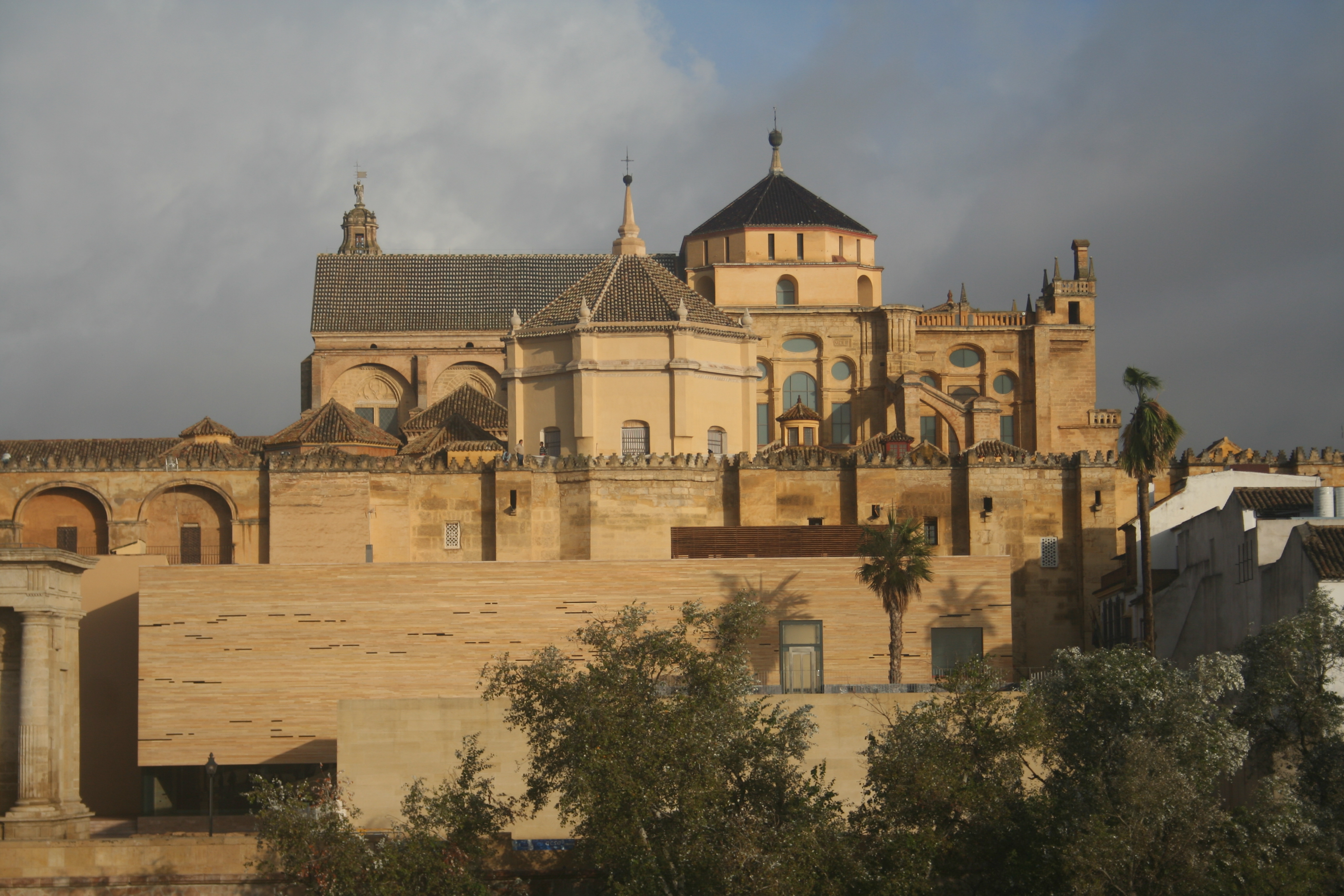
 Pushing north now after a huge hotel breakfast, first stop, Cordoba, which, historically and visually, is one of the most interesting places we’ve ever visited. It is very old; pre-historic remains have been discovered there; and the Romans, Visigoths, and Moors all established thriving cultures. In the late 10th and early 11th centuries, Cordoba was believed to be the most populous city in the world, a center of culture, literature, art, and philosophy. During
 this time it was known as the intellectual center of the world. You approach old Cordoba from across the Guadalquivir River, the same river that flows through Seville, and you access the town by means of a spectacular Roman bridge, complete with fortress tower. Much of the old city walls remain, including an impressive arched gate. The most imposing structure, and the most
 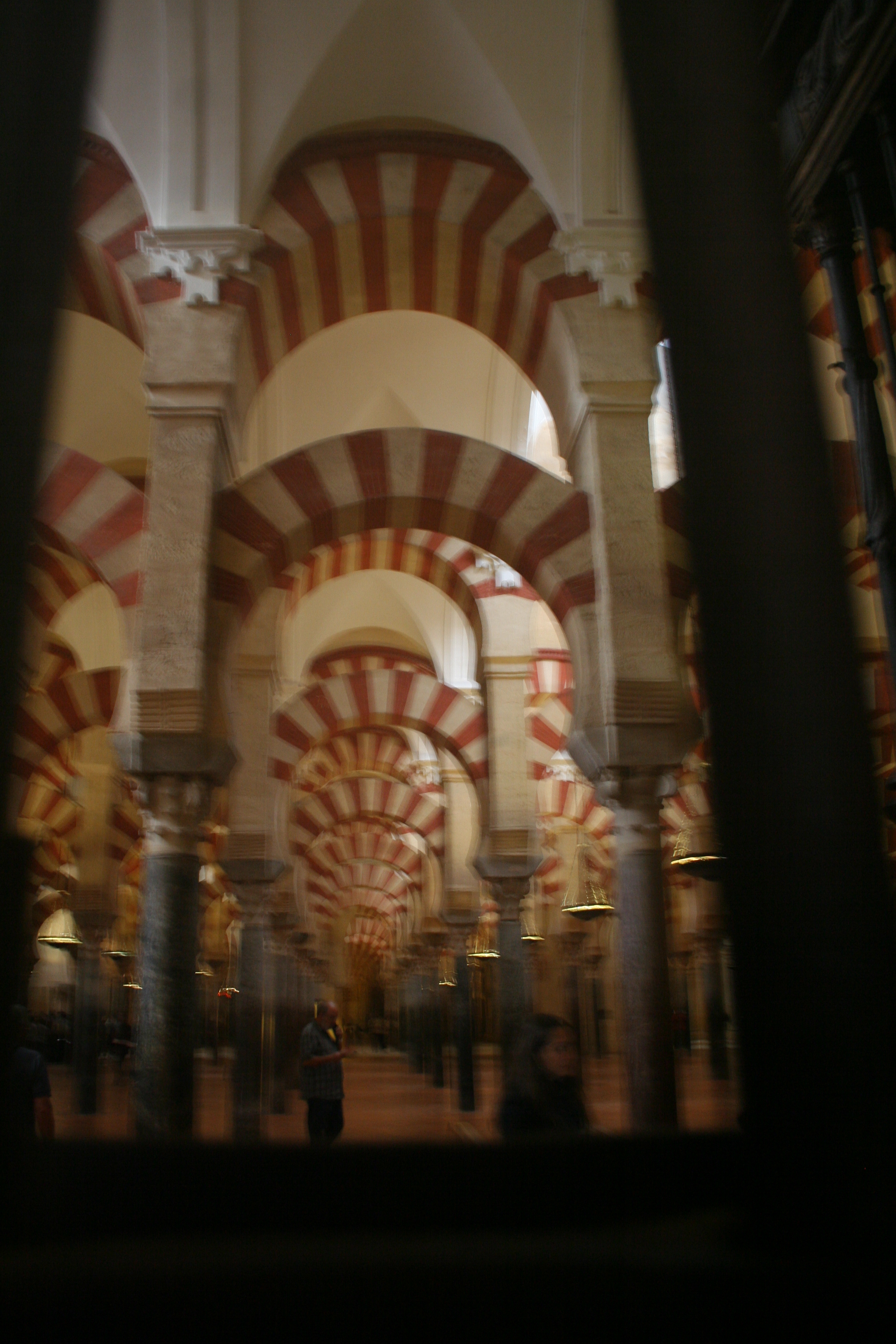 famous, is just inside the old city gates, the Great Mosque of Cordoba, which is also a Cathedral. The site was originally a pagan temple, then a Visigothic Christian Church, and then a Moorish Mosque, and finally a Catholic Cathedral, actually inserted in the middle of the Mosque. It is a remarkable building architecturally, and quite huge, with large open garden areas, multiple Moorish and Gothic arches, and enormous gold-plated doors. Since 2000, a concerted effort by Spanish Muslims to be allowed to pray in the Mosque has been underway, but has been rejected multiple times by both Spanish Authorities and the Vatican. In 2010 there was a violent incident over the matter. We saw no violence or any petitioners, just several Gypsy women outside the Mosque, hustling tourists.
Further evidence of Cordoba’s long and storied diversity is the Jewish quarter, near the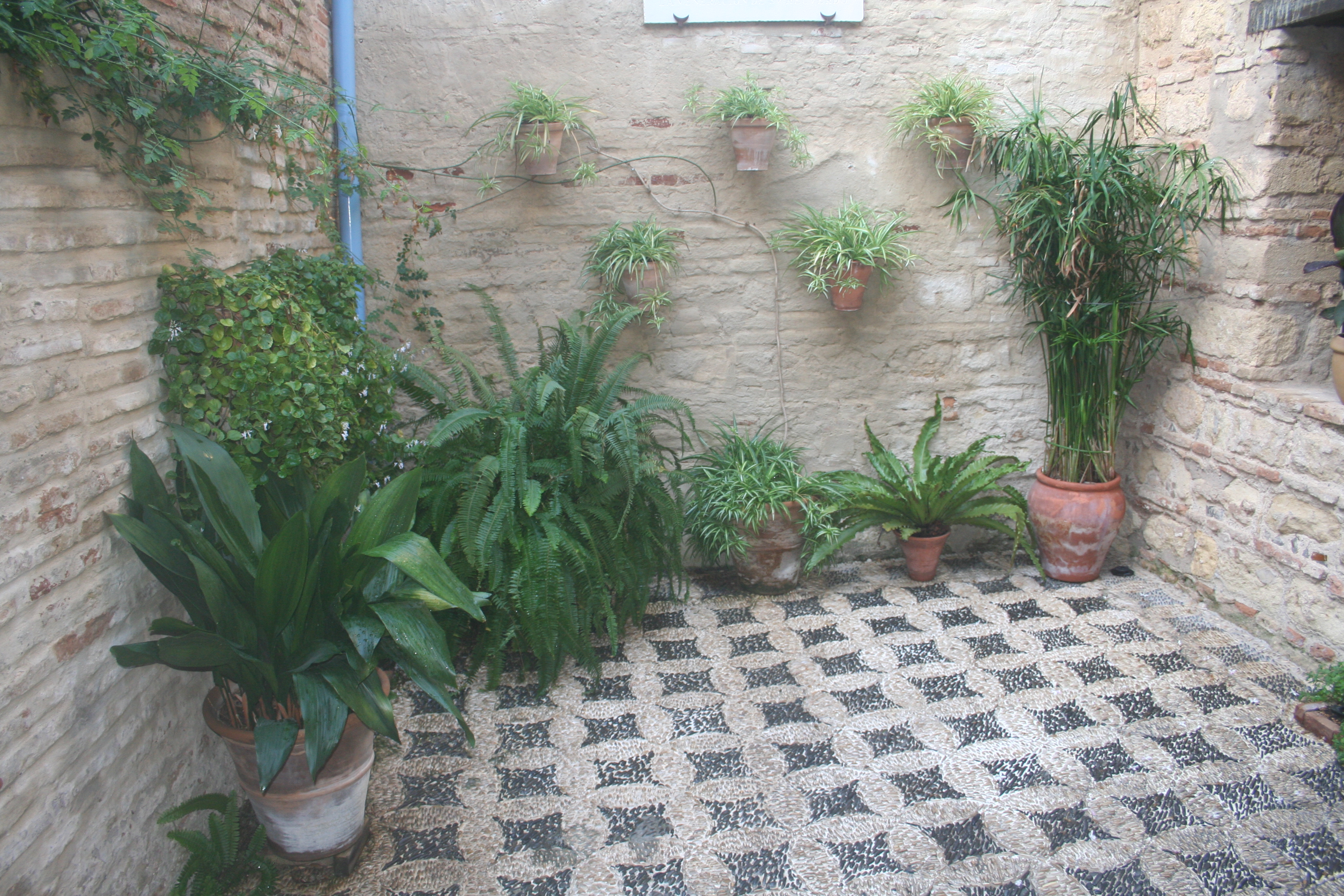 Mosque, which includes a Synagogue, built in the Mudejar style in 1315. It consists of a courtyard accessed from the street, a hallway, and a prayer room with three decorative arches, over which are faint inscriptions from the Psalms. It is a beautifully simple, quiet, reverential place. We explored some of the streets and shops in the Jewish quarter, then went looking for
  the famous Calleja de las Flores, or Street of Flowers, which we almost missed because there weren’t many flowers in evidence. It is famous for its shops and views down its narrow length of the Mosque. The street ends in a small square surrounded by shops catering to tourists. We entered one to ask where we might find the famous Cordoba guitars we’d heard about, and happened on a most gregarious shopkeeper, who spoke fairly good English. Between our mangled Spanish and his better English we made known our wish to see some guitars, and he asked how much we were willing to spend. We were hesitant, so he whipped out a calculator, entered some numbers, and showed it to us. It read 25000. “Euros,” the man said. “The best players in the world come here to buy.” Yeah, and a little over our head. He went on to say there were places in the newer part of the city where we could get one for about 400 Euros. Better, but still too much. He then asked if we were Americans, and when we replied we were, he motioned us to follow him into the back of his shop, where, there in a hole in the tile floor was a deep shaft, down which we could see water and a patch of fern growing. “A well,” he said. “22 meters deep, and 1200 years old!” Very proud, he was, and with good reason. It was amazing, and we were the only ones in our excursion to see it.
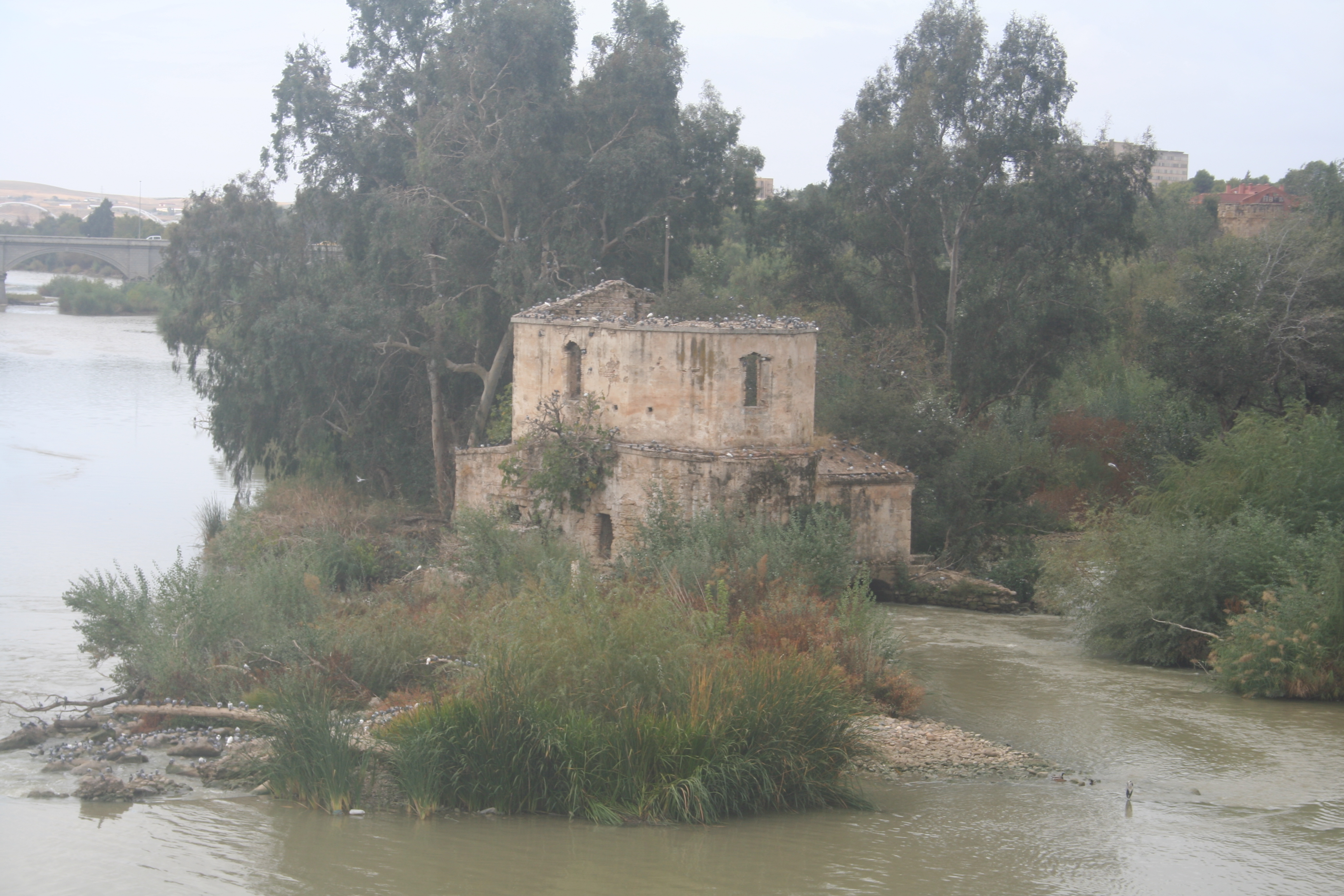 Leaving the Street of Flowers, we did a circumnavigation of the great Mosque and found a sidewalk cafe for a Cafe con Leche, then did a little people watching before starting back to the bus and our appointed departure time. From the Roman bridge water mills from Moorish times can be seen on both sides of the river. Very sturdy structures, these, to have survived so long,
 and ingeniously designed, with openings at the base channeling and accelerating the river’s flow to turn a wheel inside, which turned a stone for grinding grain. Looking back on the town from the middle of the bridge we were struck by how it was now lit against advancing storm clouds. The ancient walls were golden, a truly remarkable sight.
 We had to wait a few minutes for some stragglers from our group, but soon departed for the drive back to Madrid, our last stop. On the way, Luis said, we would be passing through the province of Castille de la Mancha, made famous by Cervantes in his novel Don Quixote. We would see several of the windmills dating from that period which were integral to the story. It
 wasn’t long before we saw our first one, near the highway, and now serving as a restaurant. Several more appeared on the hills, an amazing sight. We saw this guy several time, too, on the way to Madrid, and earlier in the trip, heading to Coimbra. Luis explained that years ago the bull was the advertising image for a liquor company, and the signs were everywhere, along with the
 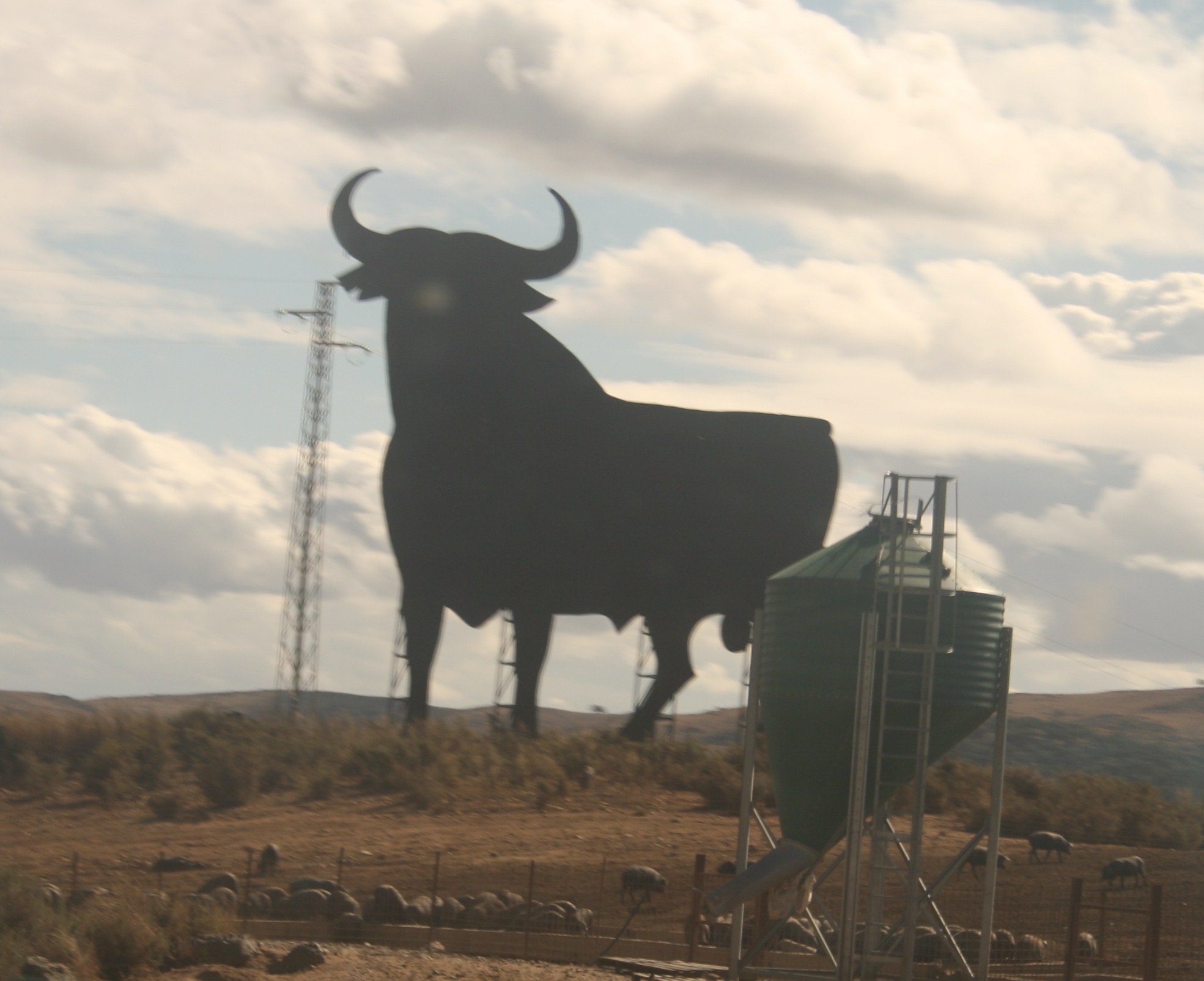 name of the company. At one point the government decided liquor should not be advertised on the highways, kind of a mixed message, I guess, so the company name was painted over, while most of the bulls remained standing. Of course, Luis said, everybody remembers what the bull stood for, so when they see the sign they instantly think of the liquor. Pretty good bang for the buck, I’d say.
We rolled into Madrid in late afternoon and checked into the Hotel Praga, in the south part of the city. Big night planned. Our farewell dinner, a true Spanish Tapas dinner in the old city. After a brief clean-up and rest we were off in the bus for the Plaza Mayor, where we had started a week ago. Luis was a bit chagrined at first because a giant tent had been erected in the square, blocking all views, but when he saw what was going on, he grew animated, and suggested we have a look before the short walk to our restaurant. What had him so excited was a Ham Fair! Told you they
 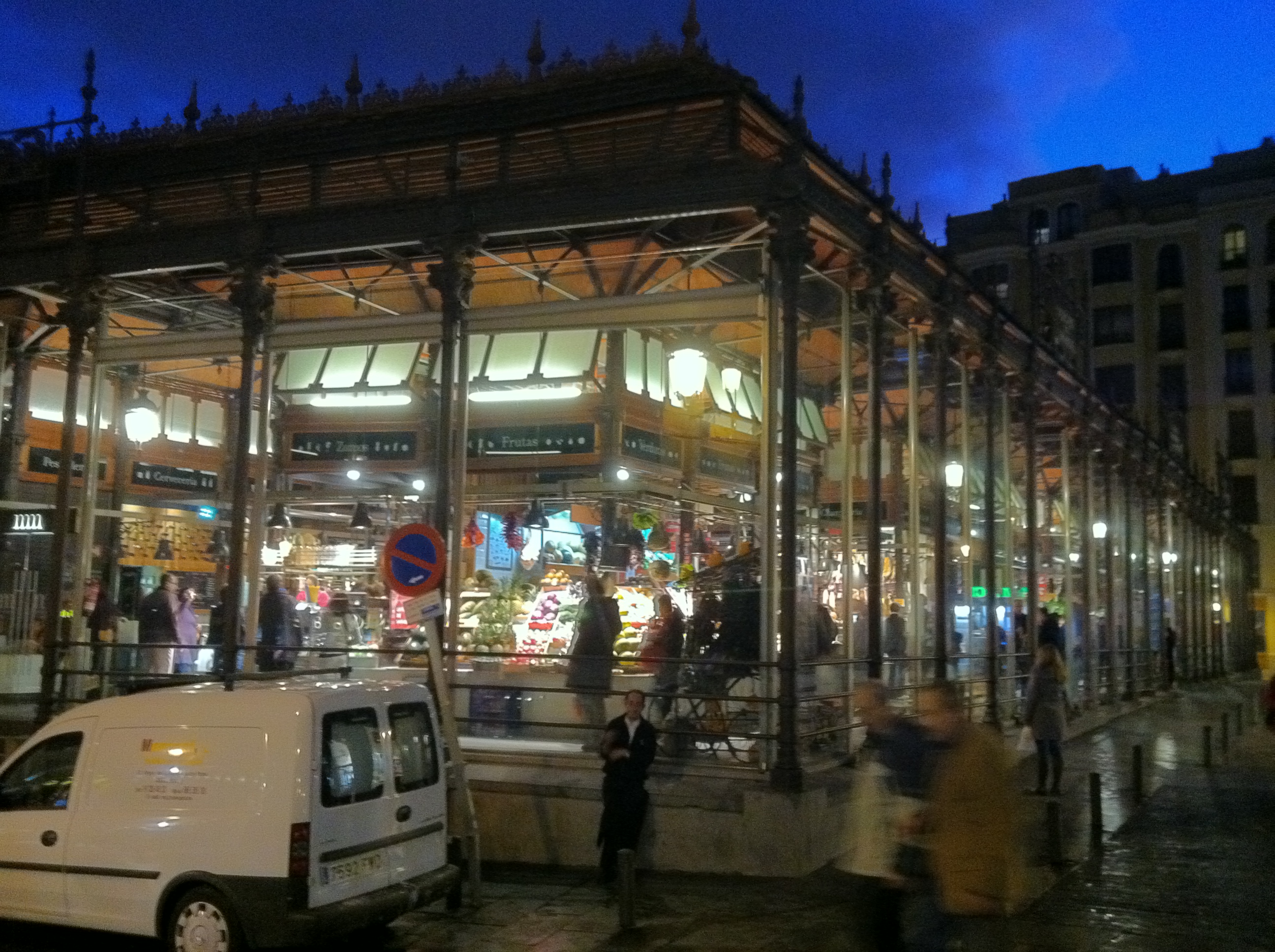 loved their ham in Spain. Inside, the walls of the tent were lined with ham purveyors, and in the center, a giant beer dispensing operation. I think Luis wanted to stay, but after fifteen minutes he dutifully herded us toward the Plaza de San Miguel, and the many tapas bars within where we had taken our first lunch in Madrid. A quick walk around, then into the restaurant right behind San Miguel. This time the place was ours, and we were seated at tables of six and
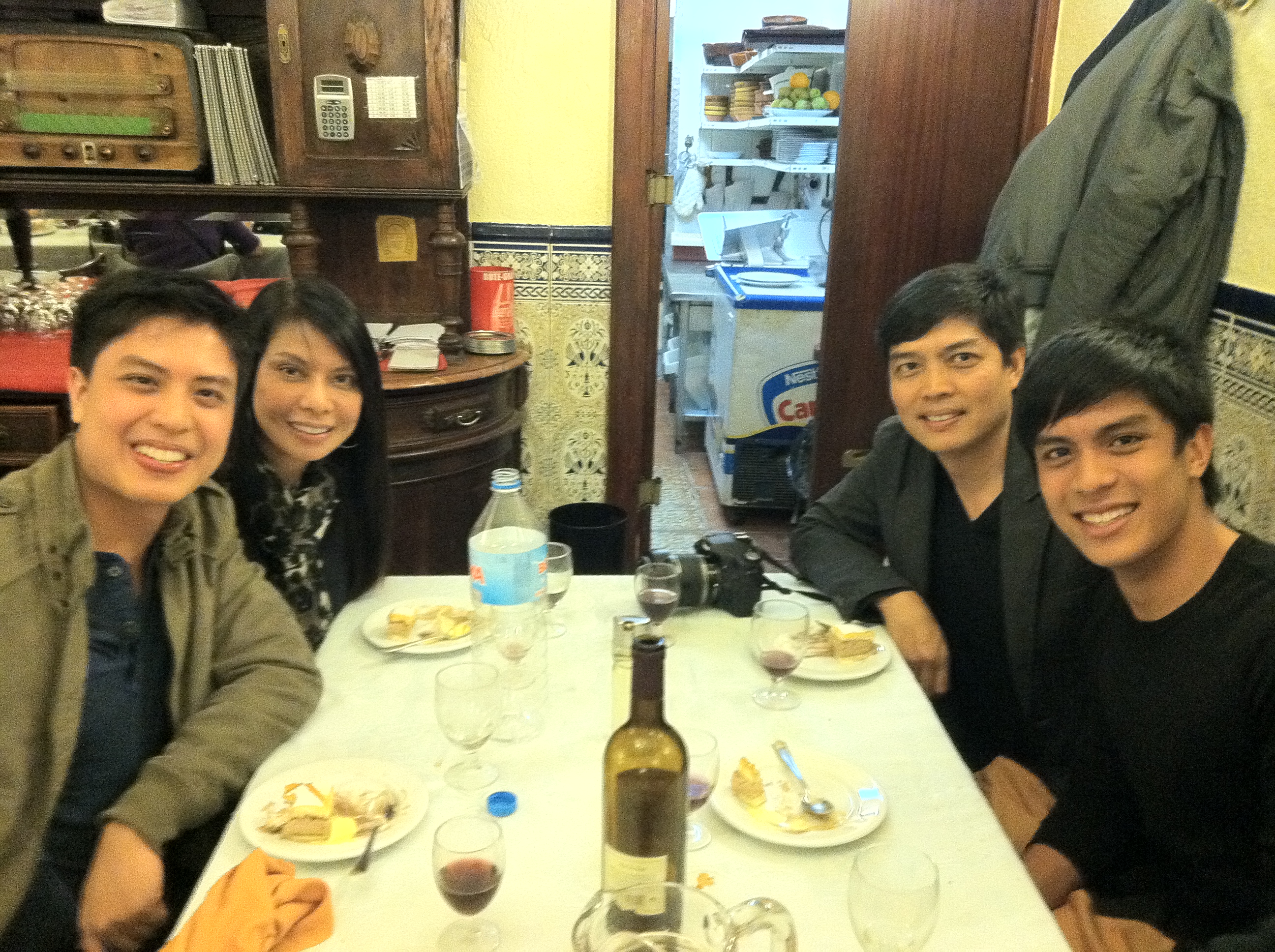 eight, and served dish after dish of wonderful Spanish tapas– ham, chorizo, cheese, calamari, potatoes and hot sauce, Spanish omelet, all washed down with great wine, and finished off with Sangria! A great time was had by all, and the bus was once again rocking on the way back to the hotel. Luis admitted we were an unusually happy and animated group.


 The Skinny Island Post