
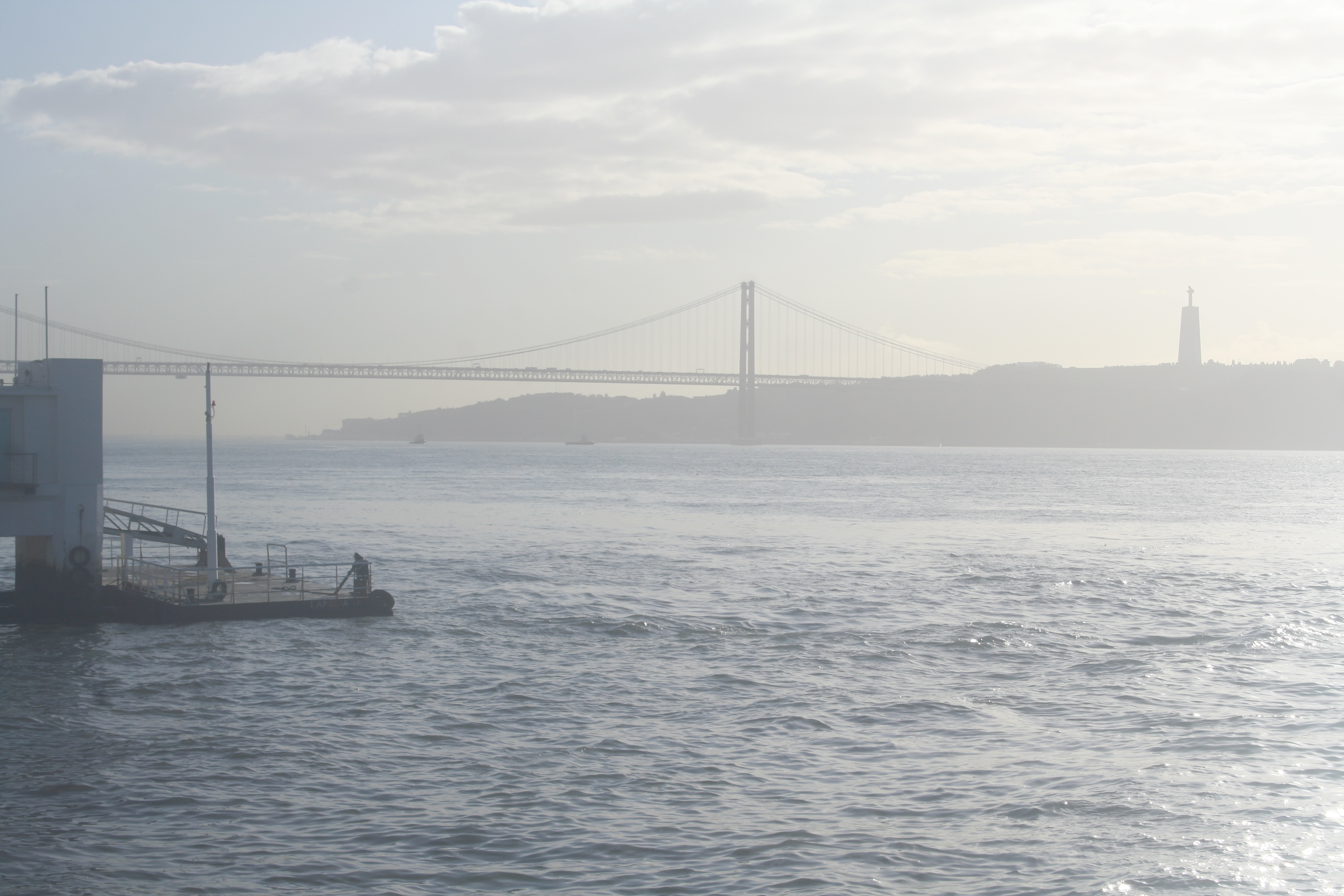
 Excursion day with local Lisbon guide, Marina. Luis took the day off. We began down on the waterfront, the banks of the river Tagus, where it empties into the Atlantic. The “April 25th Bridge” crosses the river near the mouth, connecting Lisbon with Almada on the south bank. The bridge is a smaller replica of the Golden Gate, but was constructed by the company that built the Oakland-Bay bridge, not the Golden Gate. Like the Bay bridge it has two decks. Built in 1966, it was renamed in 1974 to commemorate the day the revolution overthrowing dictator Antonio Salazar began. Nearby was Belem Tower, a fortified structure at water’s
 edge dating from the early 16th century, which was part of the early defense system for Lisbon. It was apparently originally situated in the water, but a devastating earthquake in 1755 changed the geography of the waterfront, along with much of Lisbon, and now the tower sits on the bank. Much to see on the waterfront, including this beautiful monument to Henry the Navigator, (1394-1460) one of Portugal’s most famous heroes, who ushered in the great era of Portuguese rule of the seas. Henry was the third child of King John the First of Portugal, and as a young man fought with his father and brothers to expel Barbary pirates from the
  northern coast of Africa, leading to further exploration and development of trade on the west African coast. Henry was responsible for redesigning the heavy slow sailing vessels of the day to the lighter, faster, caravel, which led to greater expansion. In 1420 Henry gained appointment as head of the very wealthy Order of Christ, the Portuguese successor to the Crusades Knights Templar, a position he would hold the rest of his life, which would fund his ambitious plans. Henry sponsored many expeditions of commerce and exploration, including slave trade. A lifelong bachelor, he was believed by his contemporaries to be entirely celibate, but recent historians indicate Henry may have had other inclinations. Not that there’s anything wrong with that.
Evident in the sidewalks and open spaces on the waterfront, and indeed throughout Lisbon,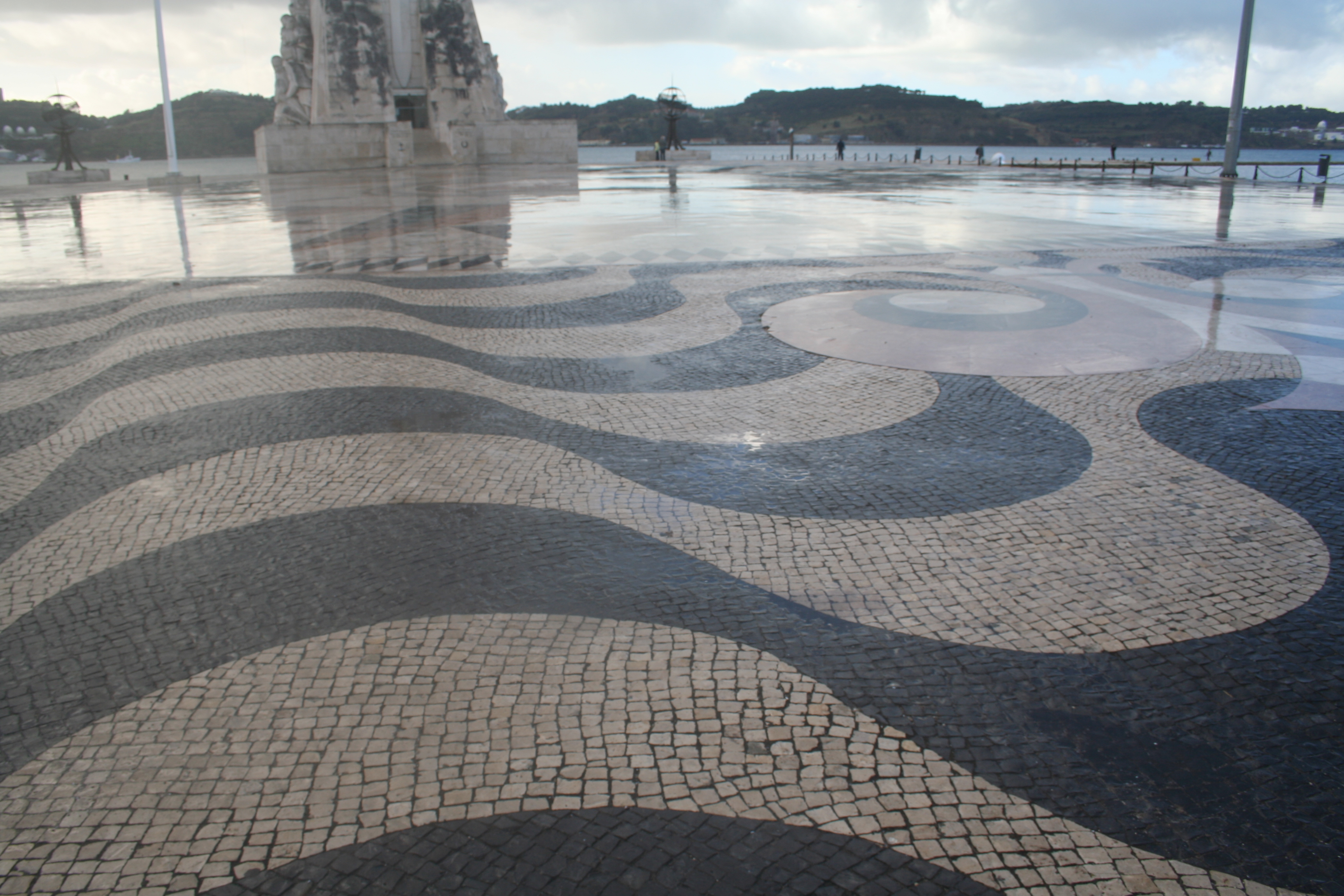 were these wonderful tile patterns. They are literally everywhere and, according to Luis, a matter of national pride. They have existed for centuries, and when they break up they are carefully restored. We saw patterns like this, of various tiles and stone, everywhere we went in Portugal, from city center to tiny villages, some, like the tiles we saw in 700 year old walls, quite psychedelic in design.
 The St. Jerome Monastery, an enormous structure near the waterfront and a Lisbon landmark. Begun By Henry the Navigator in 1459, the existing structure was started in 1495 and took a hundred years to complete. It no longer houses monks, is home to the national Maritime Museum, the Archeological Museum, and some government offices. Being Monday it was
 closed for tours, but even from afar we could tell something was going on. There was a large contingent of mounted Government Guard outside. Our intrepid guide, Marina, led us closer for a look in intermittent showers. She suspected some foreign dignitary was coming to present credentials, and that proved to be the case. We didn’t see who it was, but we did snap some photos of these snappy dudes.
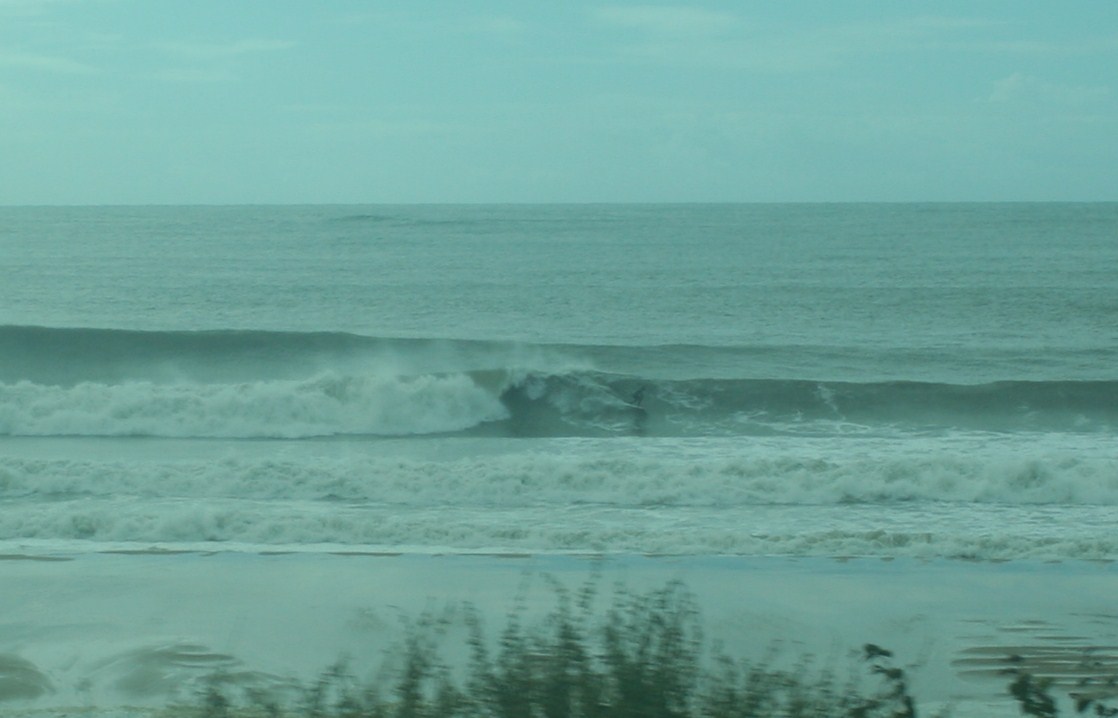 Back on the bus then for a scoot down the coast, the Portuguese Rivera, to Estoril and Cascais. As we drove along the Atlantic we could see a good south swell was pumping in, cleaned by light off-shore winds, and a good number of surfers were out, charging a big beach break. Further evidence of a strong Portuguese surf community was this quaint and colorful surf shop outside Estoril. Very
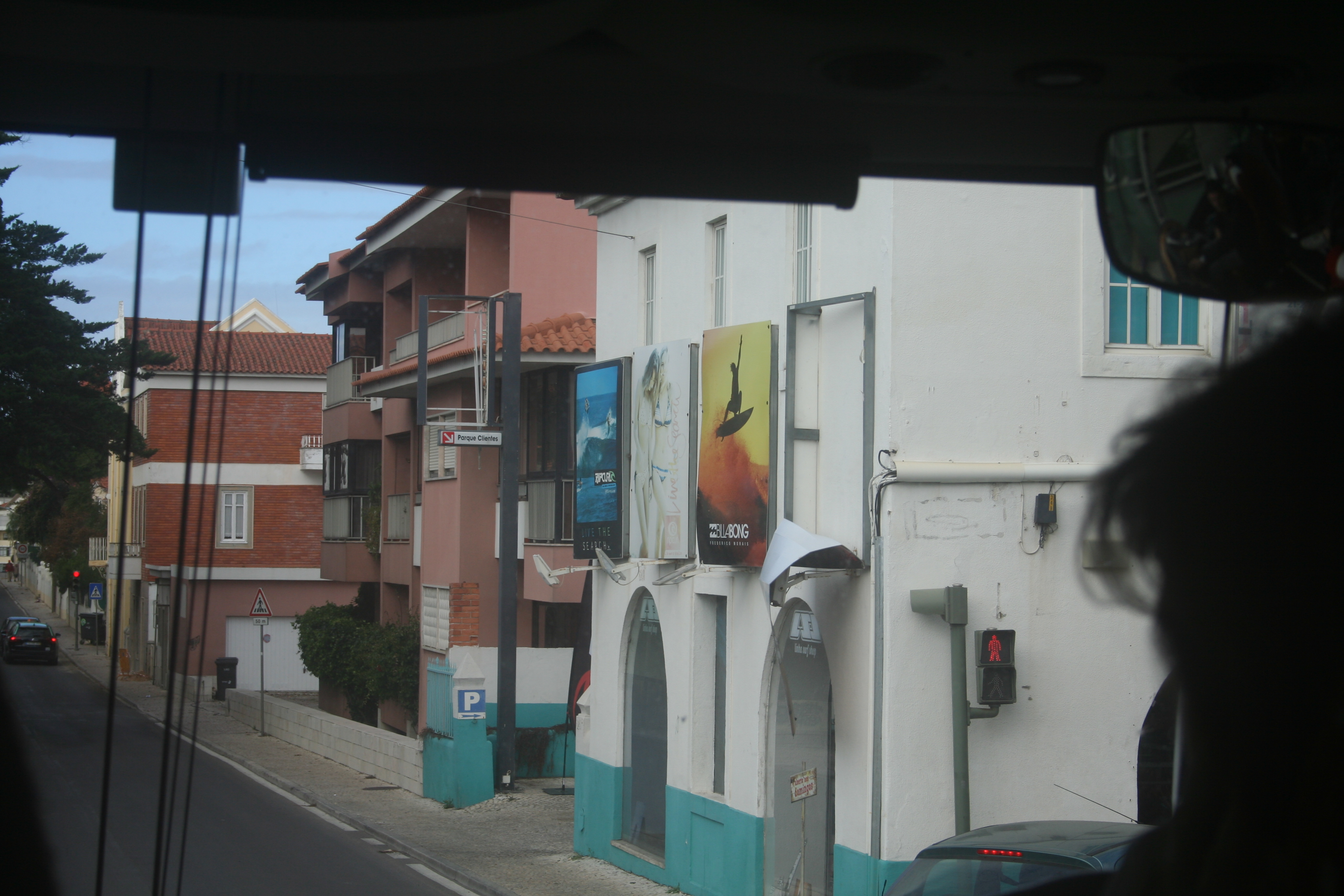 good to see. Estoril has long been an upscale coastal getaway for the Portuguese, and during WWII, because of Portugal’s neutrality, it became the temporary home of many folks of royal lineage from throughout western and eastern Europe. Many of the fine villas there are now occupied year-round.
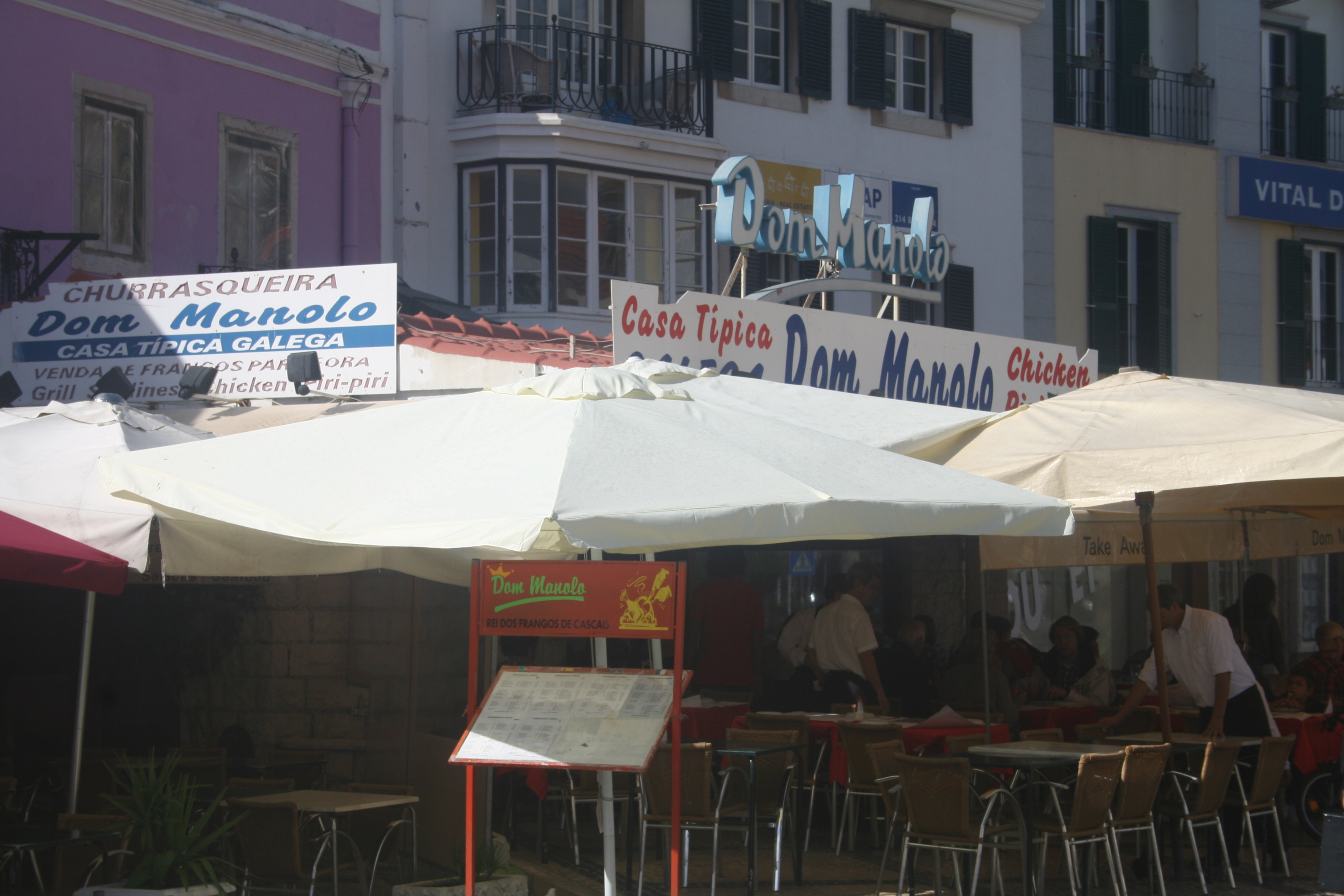 On to Cascais, a seaside fishing village, still functioning in that capacity, but also a tourist destination. Even in the off and on rain we could see why. It wraps around a neat little harbor, and there are hilly cobblestone streets lined with shops and restaurants. Very colorful and picturesque. It was lunch-time, so we quickly found a table outside at a place Marina had recommended, Dom Manolo, where the local favorite, grilled sardines was reported to be the best. We
 were joined by the Hungarian graphic artist and the hipster. Others from our tour found the spot as well, setting up at a big table near the sidewalk, but were driven inside by a sudden squall. Further in under the awning we stayed dry, and thoroughly enjoyed the sardines, roast chicken, and Portuguese beer. The sardines were surprisingly huge; covering a large plate. We had expected the kind we get in the states, cigarette-sized, in a tin. These were delicious, skin and all.
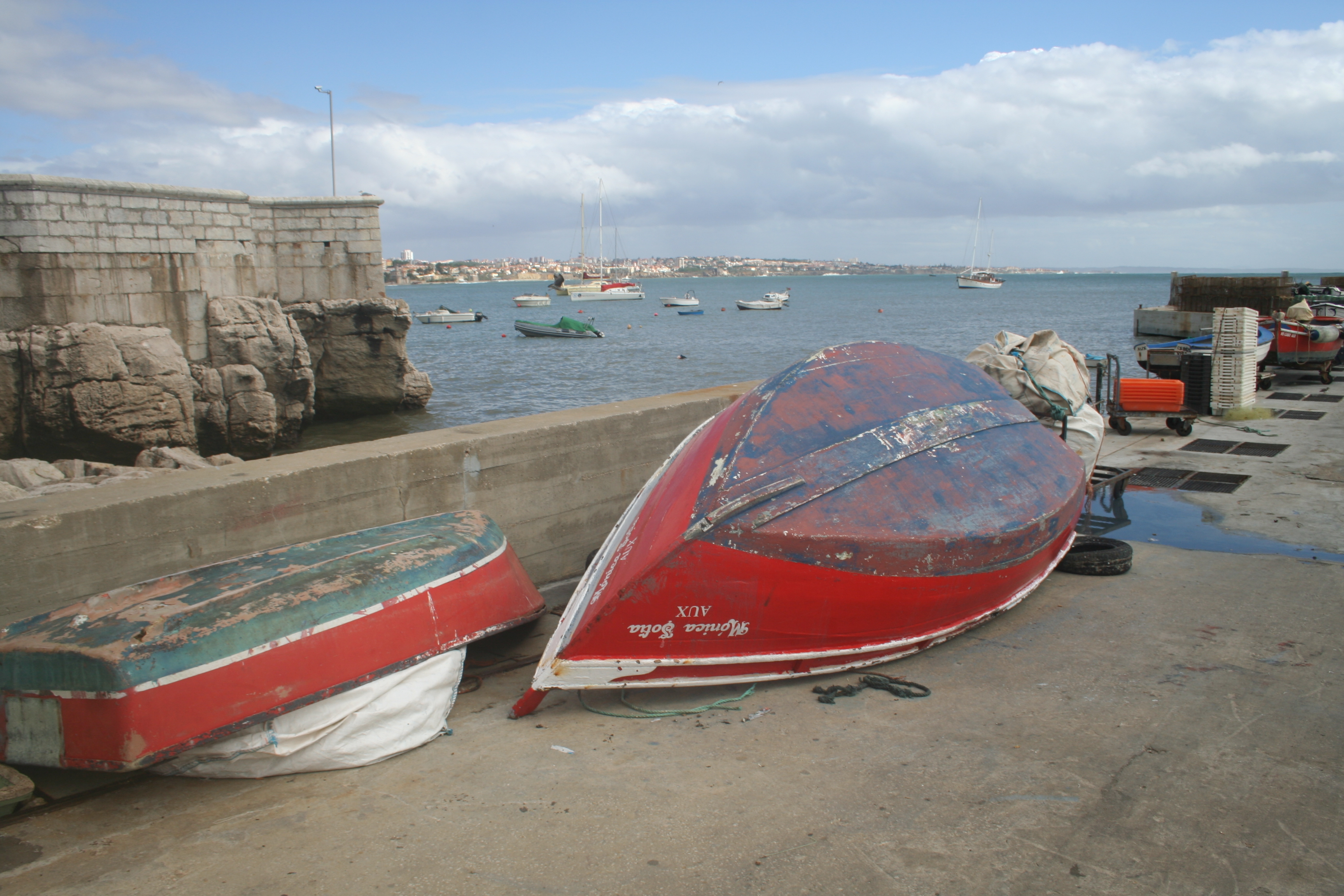
 A leisurely walk through Cascais, and then we met Sergio and Marina and the rest of the gang and drove away from the coast and up into the hills to Sintra. We might as well have been transported to a medieval fantasy land. Sintra dates from the 8th century, and is home to no less than 6 castles, constructed in various periods. The town itself is perched precariously on a steep hillside,
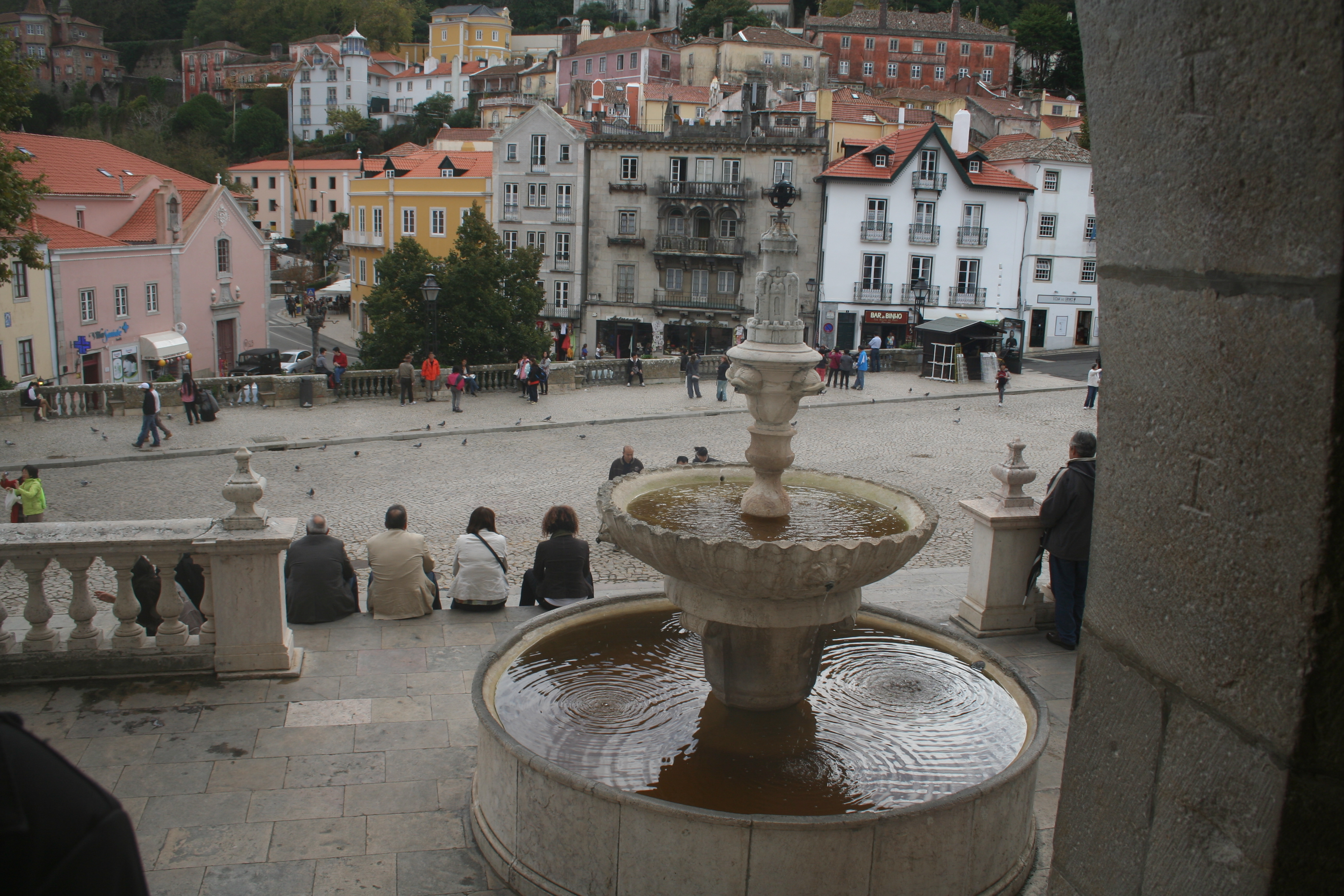 (very reminiscent of Jerome, Arizona, travelers,) and is so photogenic, you hardly know where to begin. Limited by time, we were only able to tour one of the castles, the Sintra National Palace, but it is the best preserved medieval palace in Portugal, and was continuously occupied from the 15th to the 19th centuries. Its origins go back to Moorish occupation in the 10th century, with additions and revisions occurring primarily in the 15th and 16th centuries. Nothing of the
 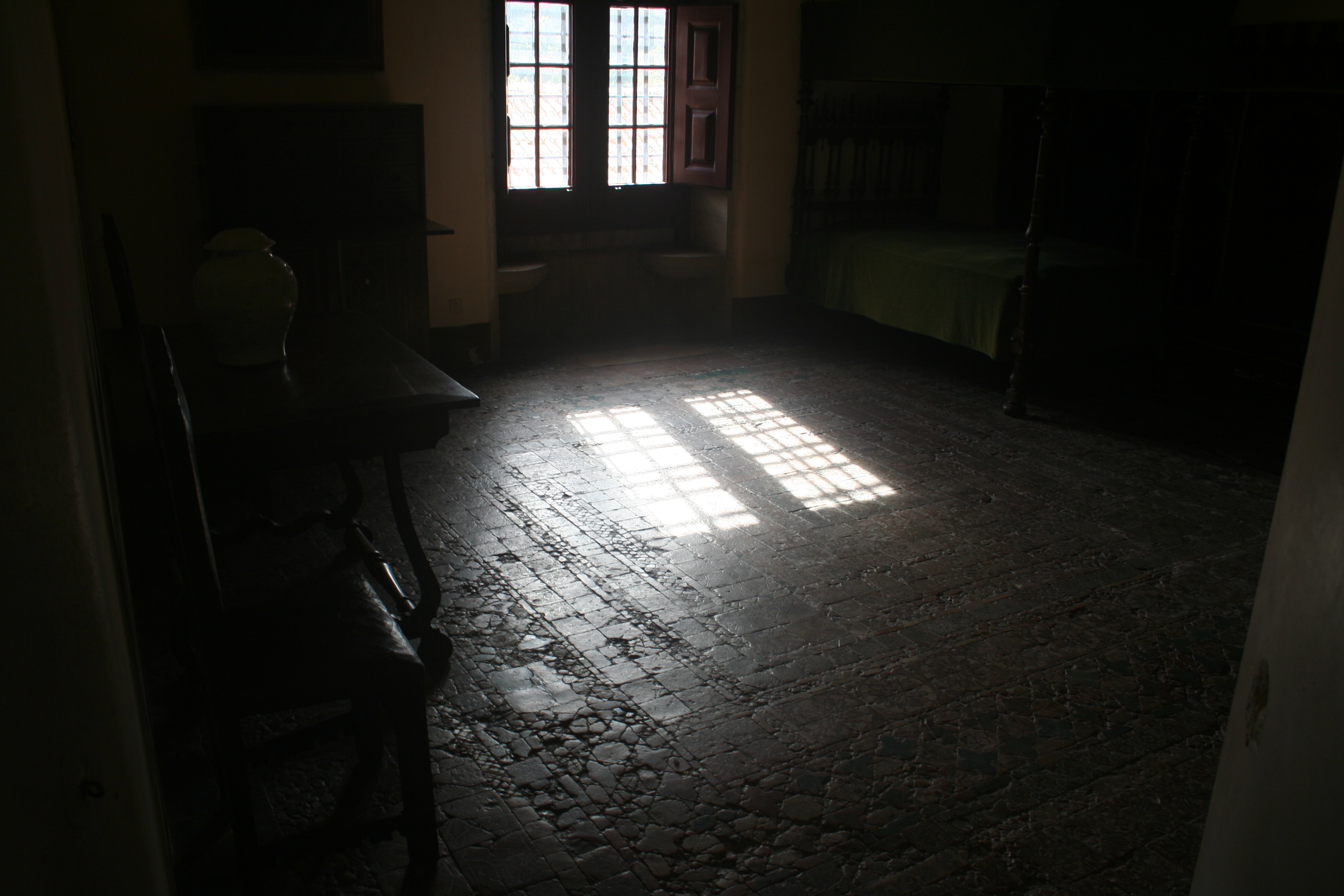 original Moorish construction remains but a section of floor in one of the rooms, but Moorish influence abounds throughout in the tile work and many arches. It is a truly grand and beautiful place, rivaling Versailles, we thought. Generations of Portuguese royalty lived here, and much of their furniture, art works, and accoutrements remain. There are mullioned windows in the
 Moorish style; the Swan’s room, with swans painted on the ceiling; and the magpie room, with, you guessed it, magpies painted on the ceiling, and a story goes with that. Seems King John I was caught kissing a lady in waiting by his wife, Queen Philippa. To put a stop to all the gossip the king had the room decorated with as many magpies as there were women in court. Other ceilings, while perhaps not as revealing, were no less ornate and beautiful.
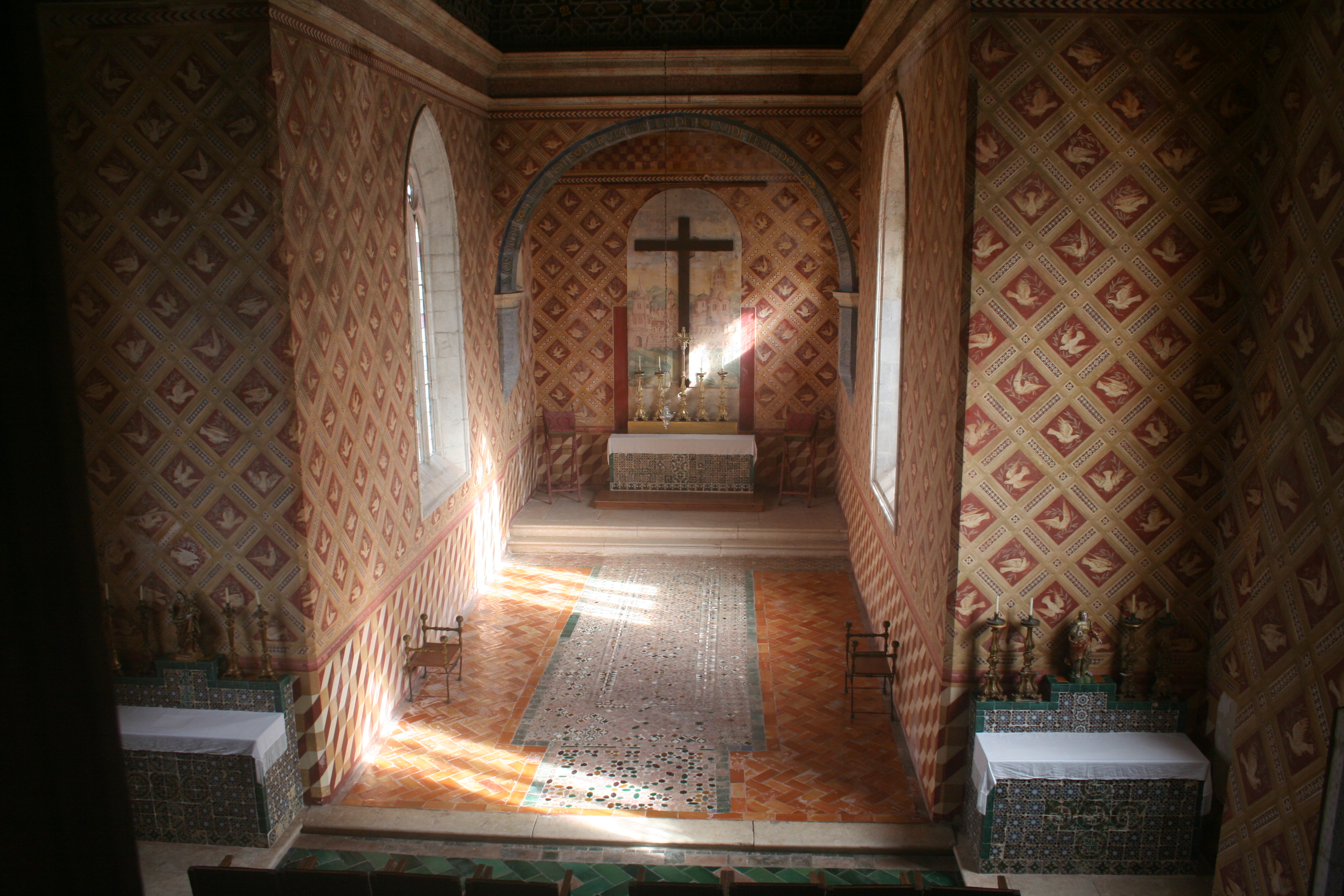 Perhaps most stunning was the oldest surviving section of the palace, the chapel, constructed in the early 14th century. It is a simple, quietly reverential space. Finishing the tour we went back out in the streets of Sintra for a little shopping before climbing back on the bus for the drive back into Lisbon and the Hotel Roma. We had planned on taking a bus back downtown to see another old castle there, but we were too beat. Instead, we took a walk near the hotel and had a small dinner of cheese, bread and fruit in a small park on narrow street of elegant apartments. Back into Spain tomorrow.

 The Skinny Island Post