
Before we hit the road again, a little word about breakfast. As we mentioned earlier, this jaunt very quickly became as much about food as beautiful sights. Several dinners were included in the package, but every day there was a breakfast buffet in each of the hotels. Some were better than others; there was a consistent effort to undercook the scrambled eggs; but the breads, meats, fruits, and coffee were wonderful. In fact, along about now, we, and many of our traveling companions, started taking a few of the rolls, hams, and cheeses, wrapping them in napkins, and whisking them out to have for lunch later. Somewhere, I forget where, there were some food police who busted some girls from another group for stuffing their handbags, but we got away clean. Don’t know the statute of limitations on this crime, but we’re laying low until the whole thing blows over.
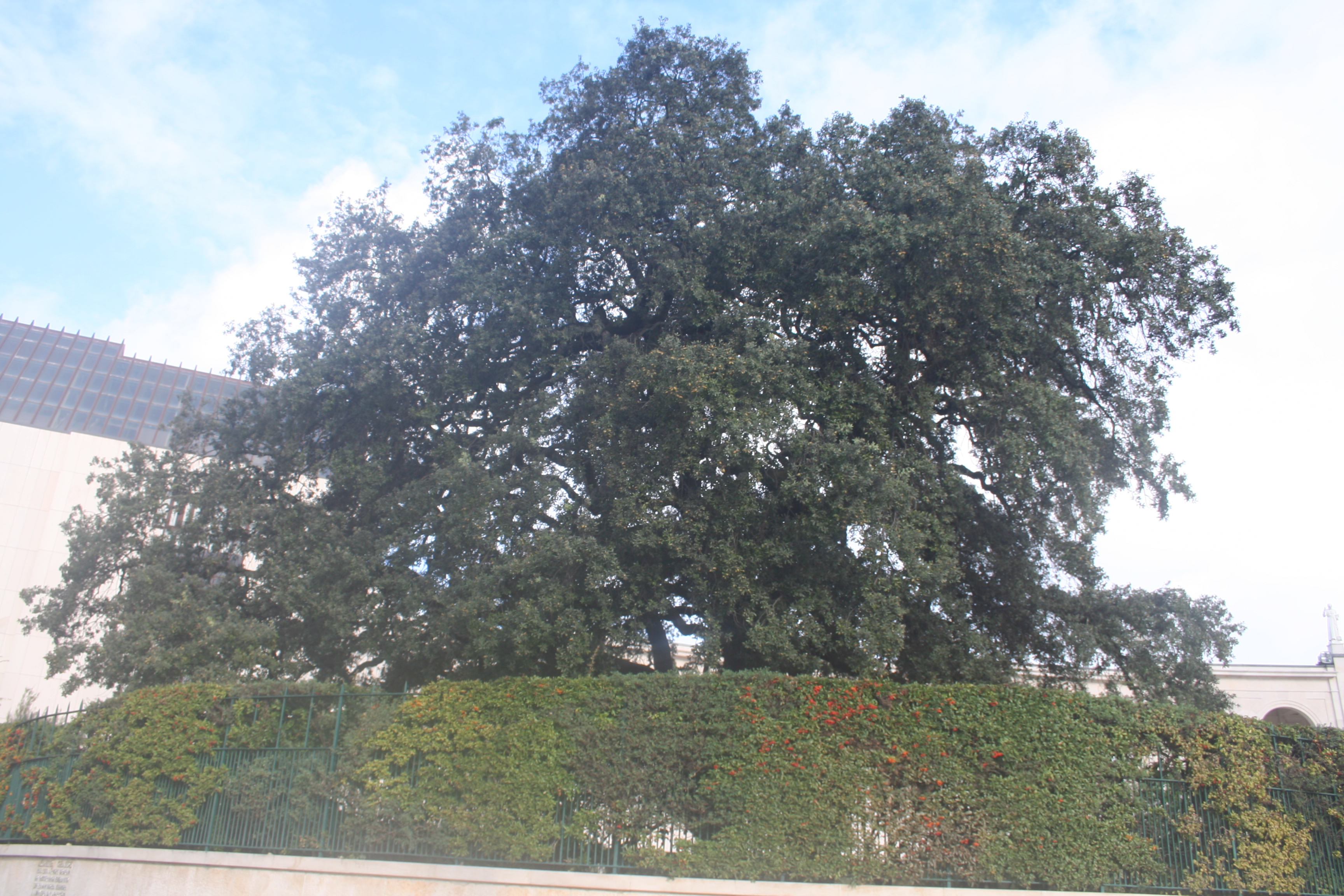 This was a long and full day. On the bus at 0830 for the relatively short drive to Fatima, Luis filled us in on the history of this unique place on the way. For those who aren’t familiar with the story, here’s a brief summation. On the 13th of May, 1917, three Shepard children reported seeing an apparition of the Virgin Mary in the top of an oak tree outside the quiet little town of Fatima, Portugal. This is a photo of what many in Fatima claim to be the original oak. The vision appeared on the 13th of each month thereafter for six months. Thousands of people flocked to Fatima in the months following the first apparition, and on October 13th, some 70,000 were in attendance for what was termed “The Miracle of the Sun,” in which, on an otherwise cloudy day, the sun shone brightly but could be looked upon, and seemed to change colors, among other things. The children also said they had been told three secrets by the Virgin. What followed is a somewhat long and amazing story. Check it out. Lucia Santos, who not surprisingly became a nun, was the last of the children to die, in 2005 at age 98.
Fatima quickly became a destination of pilgrimage for believers all over the world, but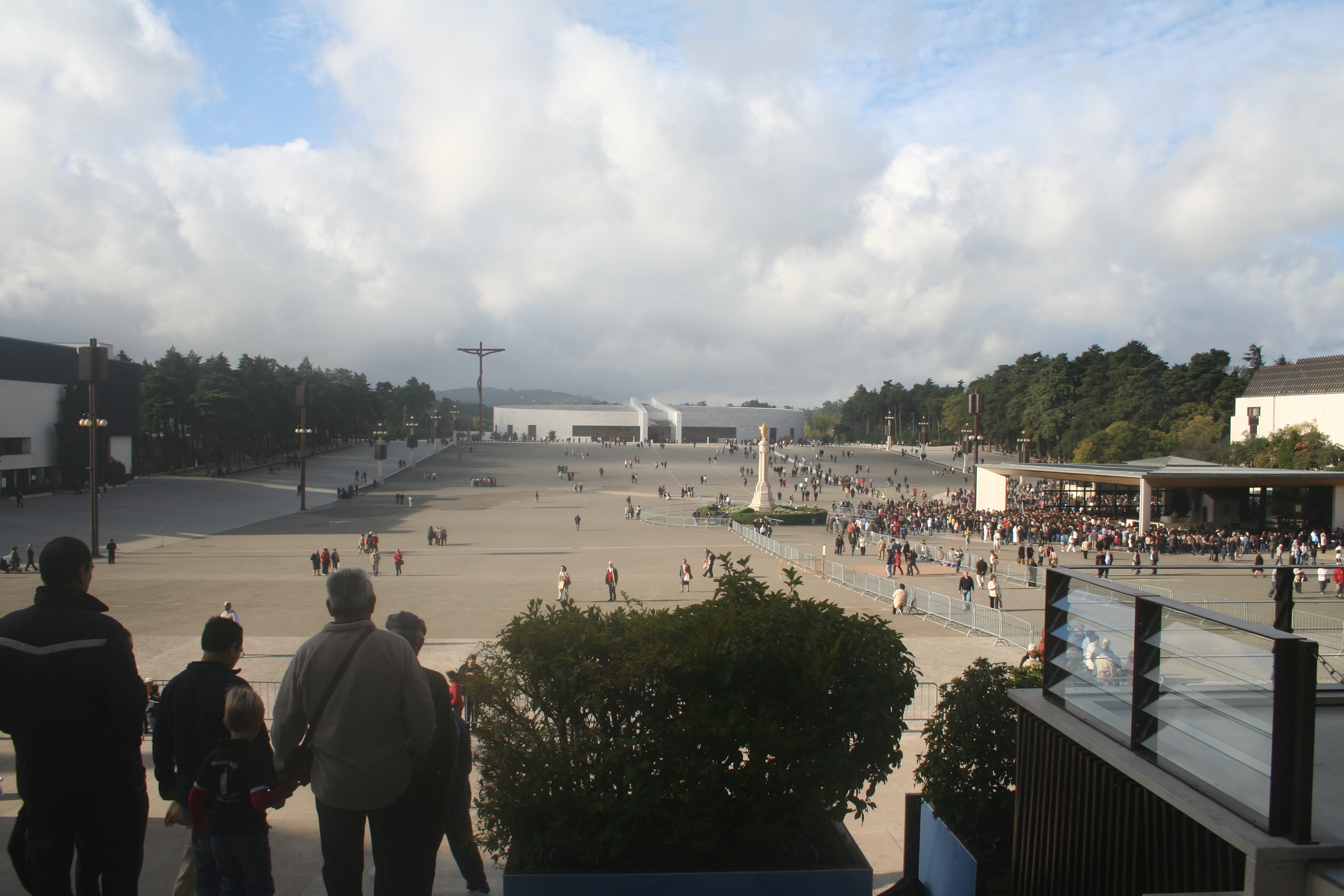 especially the Portuguese faithful. Various shrines and accommodations were built over the years, including a large Cathedral, and in the last few years, a modern mega-church building constructed at the opposite end of a giant square capable of holding more than a thousand worshipers. We have been to St. Peter’s square at the Vatican in Rome, and we believe the square at Fatima is larger. A
 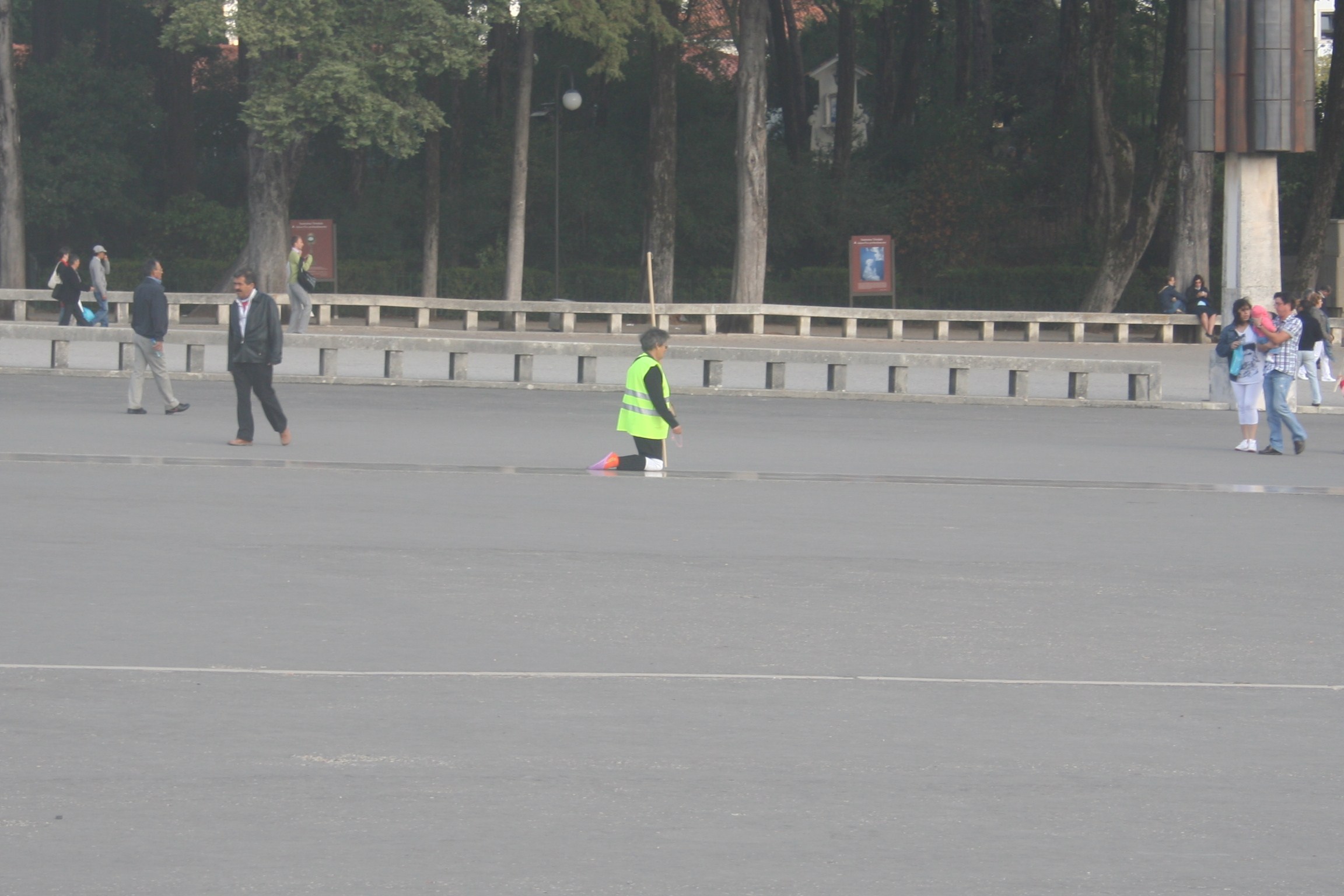 tile path runs down the center of the square, which pilgrims traverse on their knees, some of whom have walked for hundreds of miles. In May and October, the main significant times of pilgrimage, 500,000 people fill the square.
Surrounding the giant square are hundreds of small shops selling religious trinkets, and in those closest to the square you find candles used to offer prayers. Most are normal tapers, though they may reach lengths of six feet, but there are also candles which almost defy description. These can be found in the shape of just about any body part you can imagine– legs, arms, hearts, stomachs, livers, even whole small children– and are purchased by those with some affliction or other in those parts, which, after saying a prayer for a cure, are then tossed into a large fire burning at the edge of the square. The shops and scale of the place were uncomfortably crass to us, but seemed not to deter the masses, which is again, I suppose, a testament to the power of faith. We found a nice cafe off the square and had a coffee and the national custard of Portugal, a Nate, which was quite delicious.
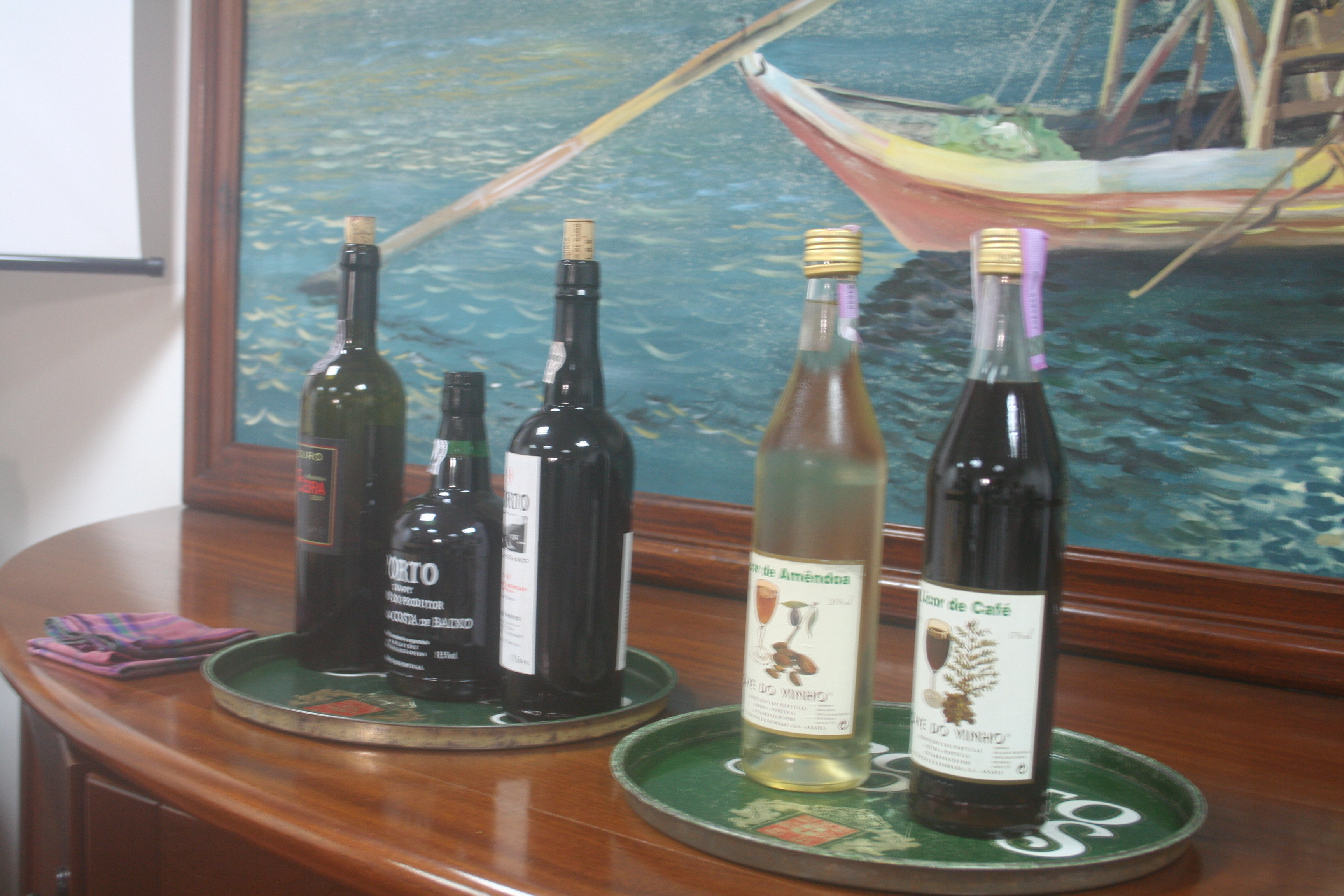 A sweetly ironic twist in the schedule then occurred. We piled onto the bus at the appointed hour and drove, essentially two blocks, where we were deposited at a wine shop for a video and talk on the making of Portuguese Port wine, and a tasting! Port is one of Portugal’s chief exports, second only to cork! More on cork in a while. A fun and informative stop, and we left with a bottle of fine Port. Back on the bus then for a short drive just to the edge of town, where we were
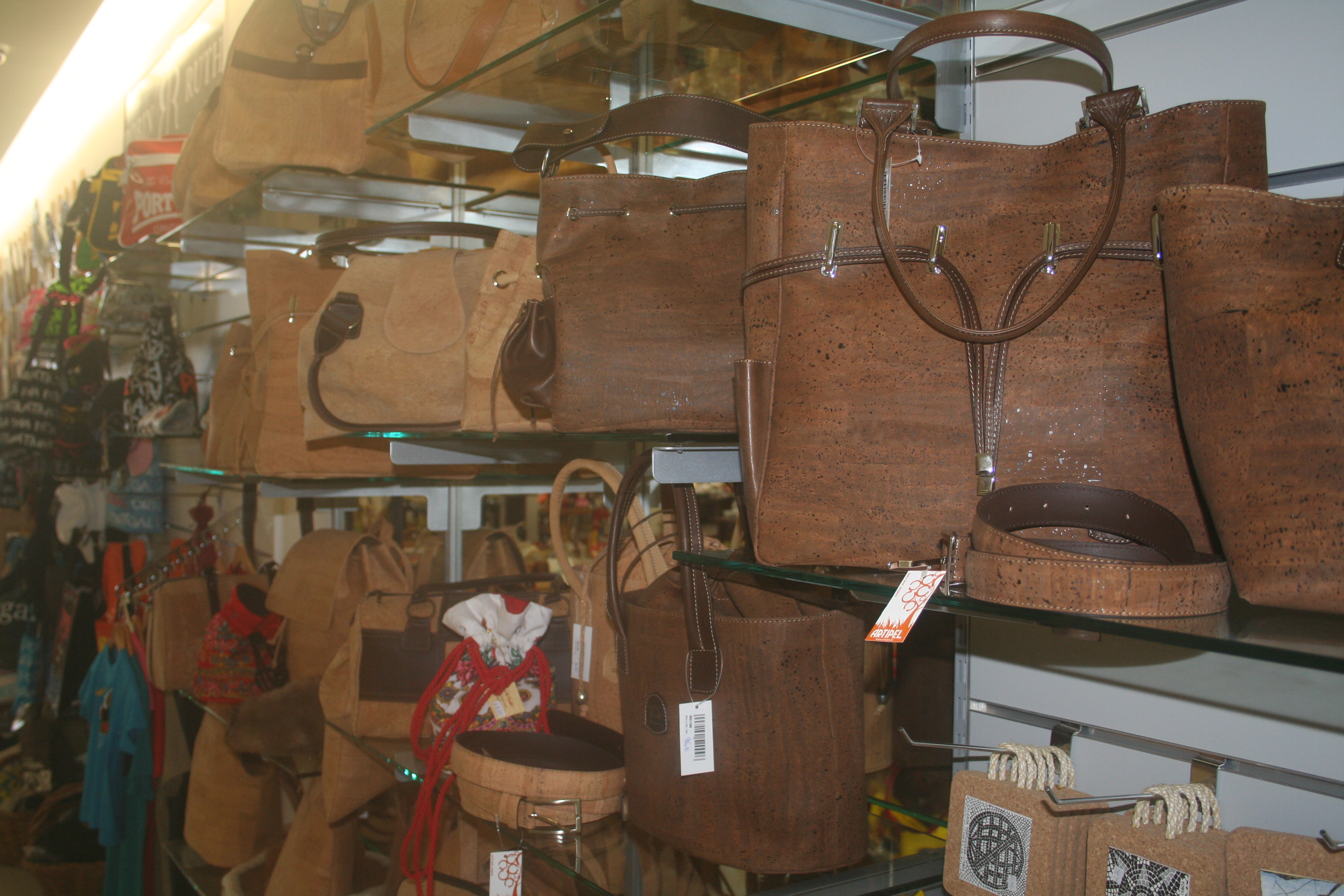 deposited at a shop and cafeteria for lunch. We bought a couple of apples, (the price of which was contested by the good wife, and compensation rendered,) to go with our pilfered jamon and queso, then went through the gift shop downstairs from the cafeteria. Being still in the relative confines of Fatima there were a lot of religious items displayed, but also these handbags, aprons, and hats
 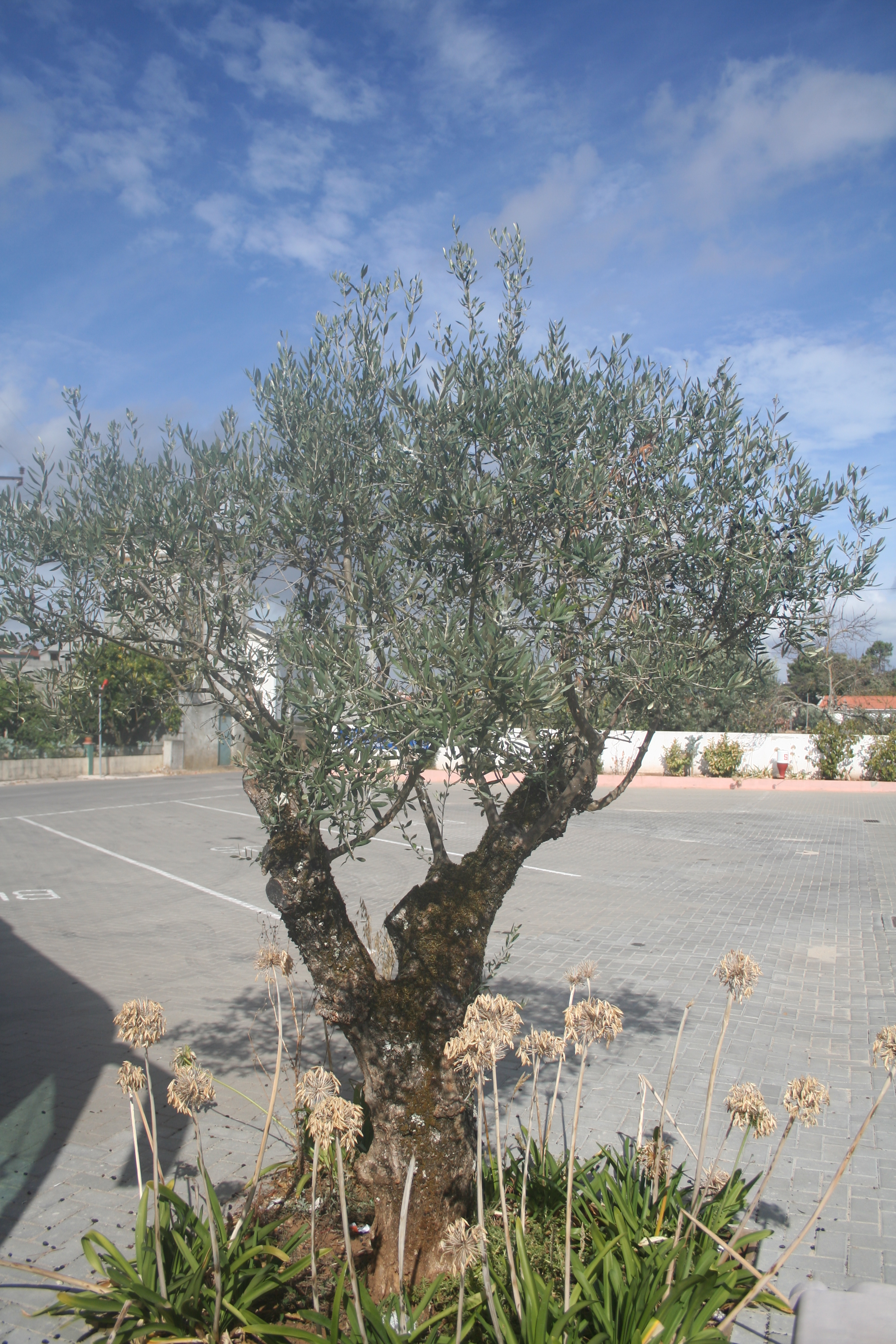 made of cork! Quite amazing. There were even umbrellas. Who knew? We went for a walk outside, where we encountered this lovely little olive tree growing smack dab in the middle of the parking lot. Portugal grows a lot of olives, but not as much as Spain. We were to see huge olive groves later in the trip.
Back on the coach, through driving rain now, to the little hill town of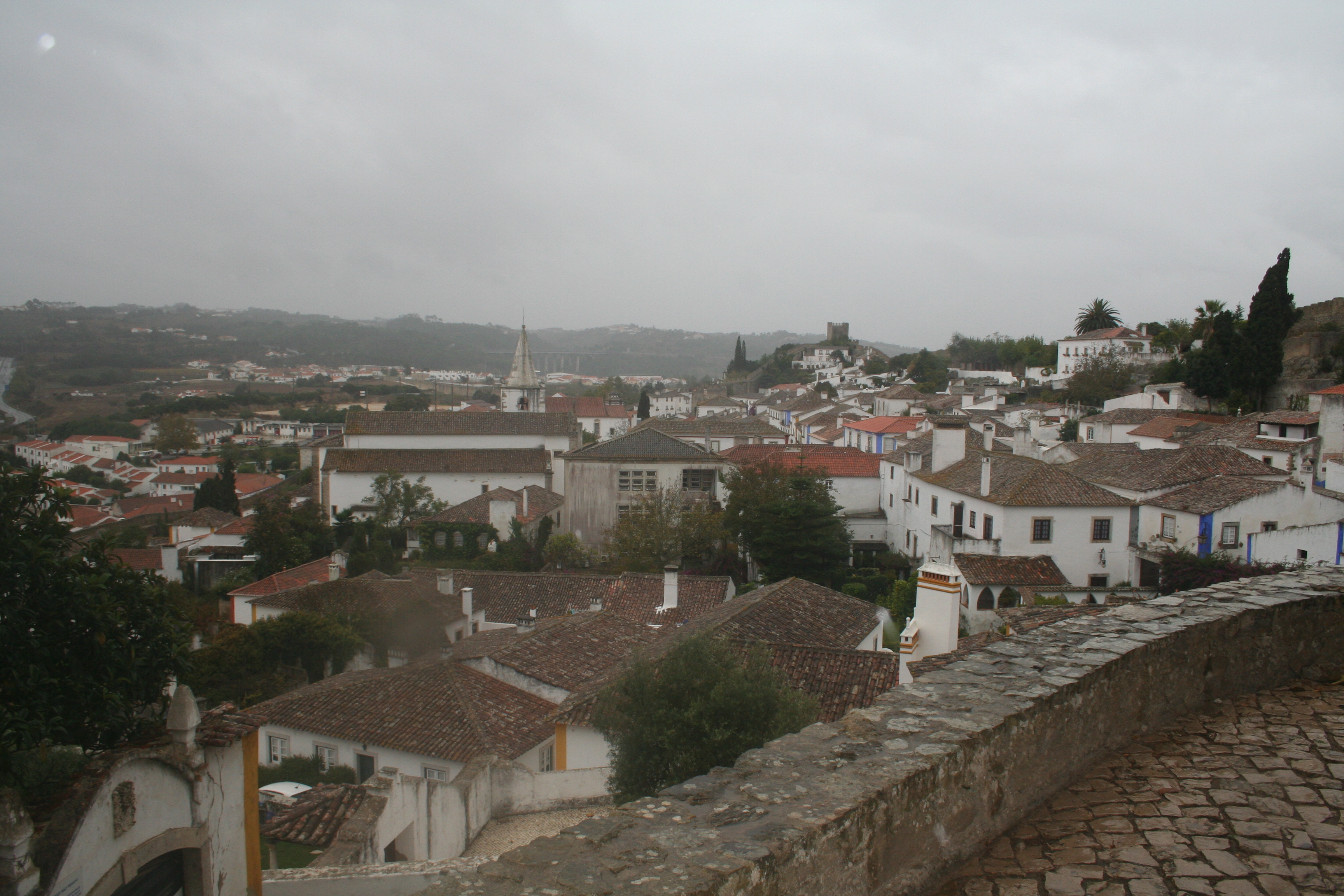 Obidos, perhaps the loveliest of all the places we saw. A village of one kind or another has existed on the hilltop of Obidos since Roman times. It became a fortified city, with castle and walls sometime in the 700s, and was liberated from the Moors by Alfonso Henriques, the first king of Portugal, in about 1148. Much of the old castle and walls remain intact, and it’s winding, steep cobblestone streets are a popular tourist destination. We arrived in intermittent rain and
  right away encountered a sight Luis had told us to be on the lookout for, students in traditional dress. Upperclassmen in the old Universities of Spain and Portugal wear an outfit of all black, including a black cape, when the new students arrive in late October to begin the term. A group was inside the old walls at Obidos, serenading with guitars and voices. Most impressive. We made our way up the slick streets to the castle at the top of the hill, stopping many
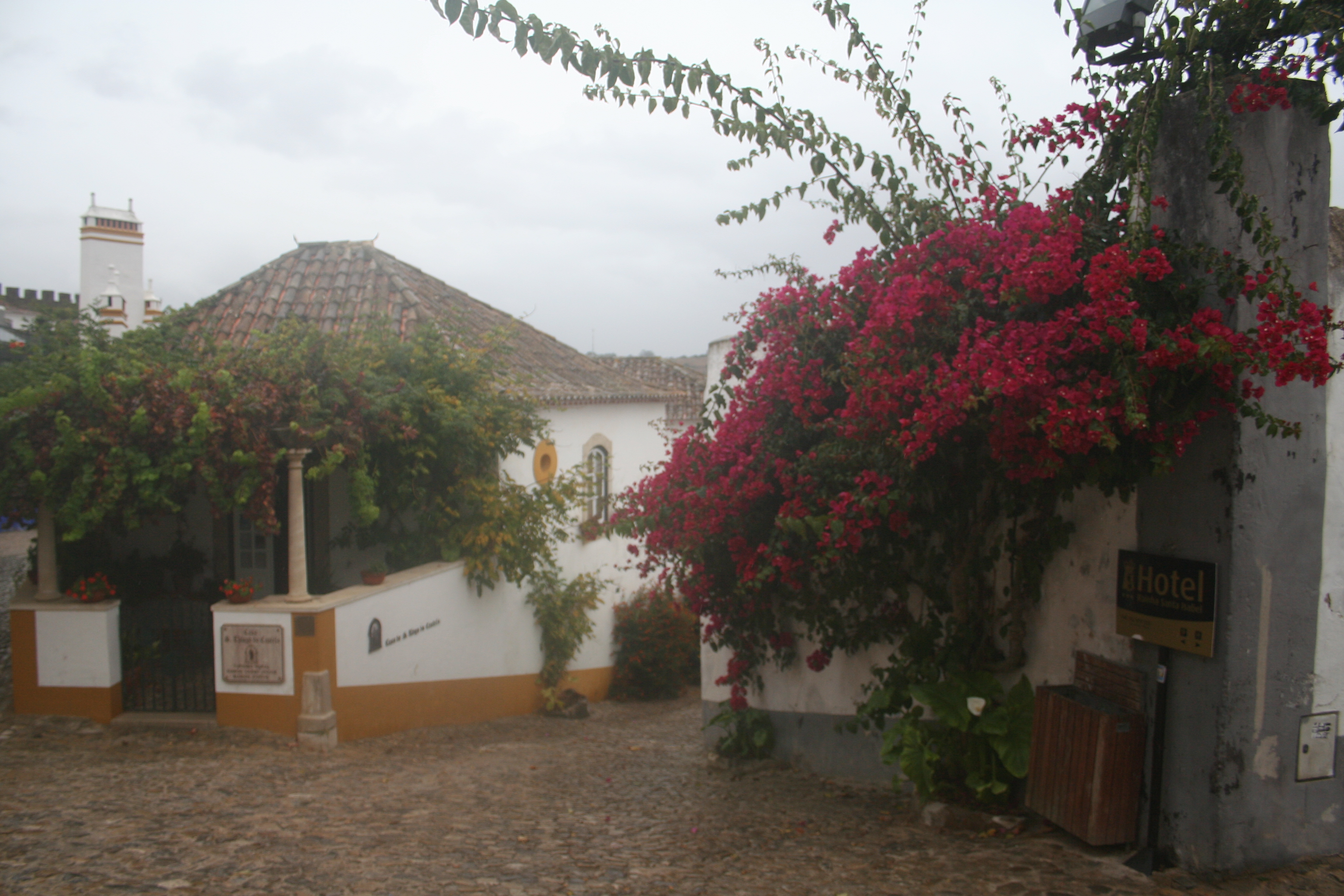 times to prowl through shops and admire the beautiful stone streets and blooming Bougainvillea. A small church was ancient patina facade occupied a central square, and the walls at the top of the hill offered a wide sweeping view of the valley and village. On the way down we stopped in a cafe for another unique Portuguese treat Luis had told us about, a cherry liquor called Genji,
 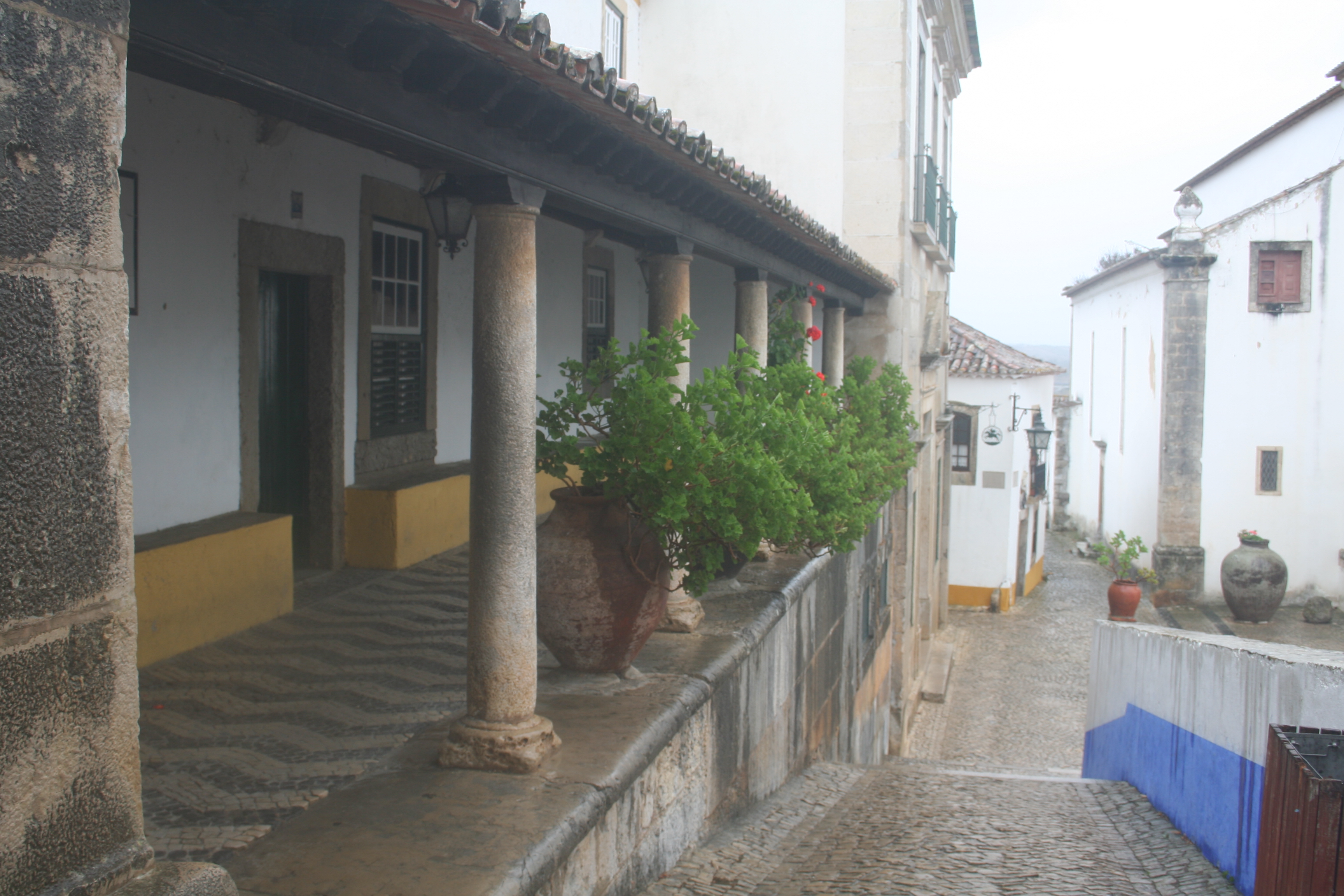 which, in many places, is traditionally served in a small chocolate cup! You drink the liquor, then eat the cup! Very cool. Another interesting bit of information: all the houses in Obidos are white, by law! You can’t paint any other color. Most also had a strip of blue or yellow, about a meter wide, at the bottom of all exterior walls, and all had tile roofs. It was an extraordinarily lovely place, and we could have stayed much longer. It is what we will always think of as old Portugal.
We pressed on to Lisbon, or Lisboa, as the Portuguese spell it, in rain, informed by Luis along the way about some of the differences between the Spanish and Portuguese people. He made an interesting point about language. Looking at the two languages, Spanish and Portuguese, in print, one is struck with the obvious similarities. But listening, Portuguese sounds very little like Spanish. The Portuguese have taken the same letters and word construction, and made them sound different. Luis said a Portuguese can make the transition to Spanish easier than the other way around. He also said many more Portuguese speak English, than do Spaniards. This he attributed to the fact that in Spain, English language TV is always dubbed with Spanish, while in Portugal, the original English is broadcast, with Portuguese subtitles. The people learn English watching TV. We did see the difference.
We arrived at the Hotel Roma in Lisbon, and dashed in through the rain. Barely enough for a shower and then we were off again in the coach for a brief evening tour of Lisbon with its proud son, Luis, and then on to the main event of the day, a night of dinner and Fado, at the famous Luso in downtown Lisbon. Luso is a name the Portuguese have for themselves, and this place was well-known as a top-line Fado establishment. Fado, we learned, is a very old musical genre, unique to Portugal, consisting of mournful, or melancholy songs.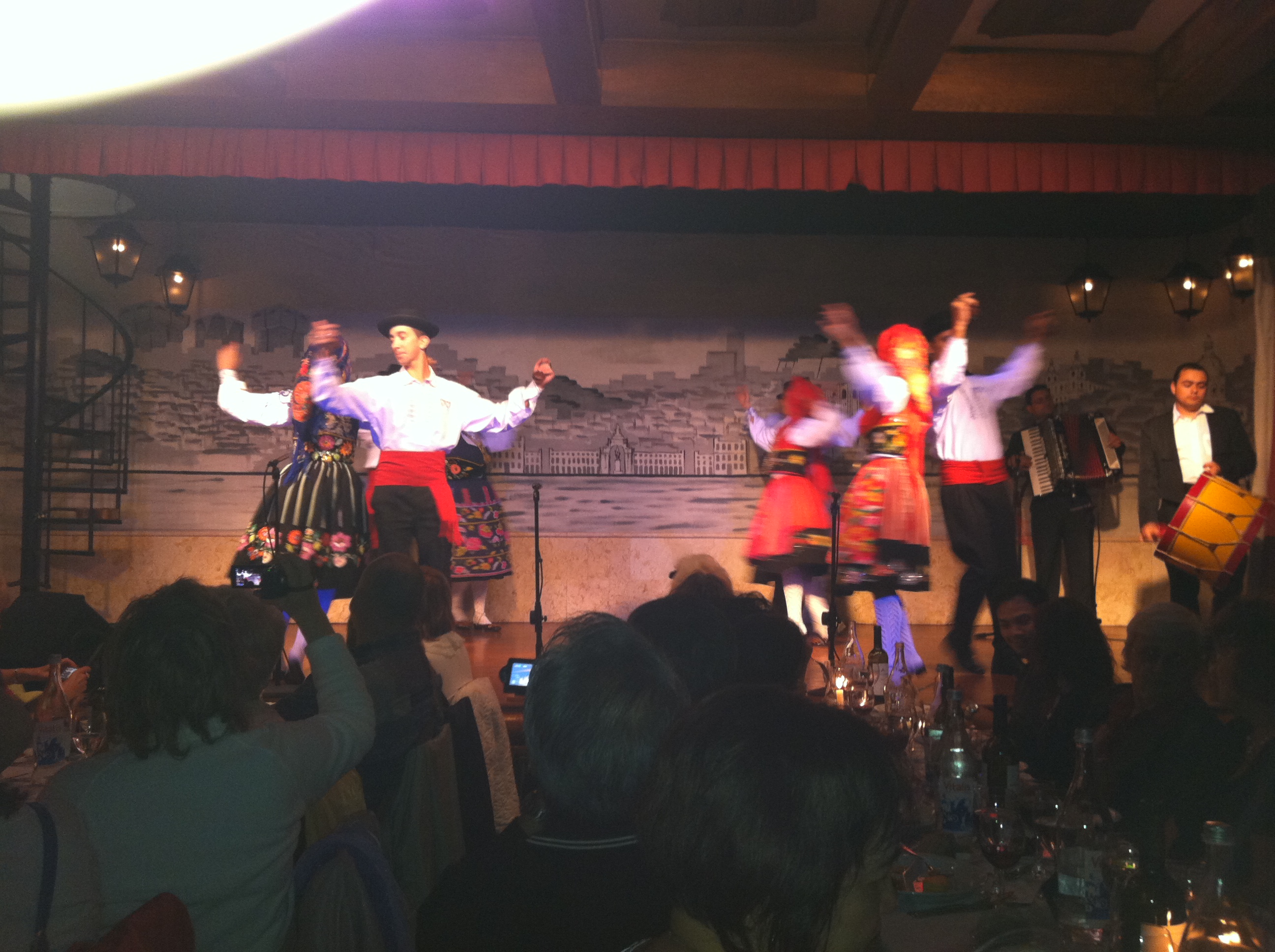 Luis explained that there would be dancers, and then the Fado singers would come out, usually one at a time, accompanied by Spanish guitar and a 12-string Portuguese guitar, that turned out to be a cross between a mandolin and a guitar. Sometimes two or more Fado singers would sing at the same time, actually trading licks, as it were, in an effort to outdo the other. The festivities started with a wonderful Portuguese meal of cabbage soup, followed by cod, the national fish dish, and both red and white wines. We sat at long tables, ours in the middle of the room perpendicular to the stage, with other groups seated on either side. The show began with dancers in traditional Portuguese costume, and then a series of marvelous Fado singers performed, including the owner of the restaurant, a very famous Fado singer, who, before he took the stage, was seen bussing tables. The show culminated in three singers engaged in a rotating sing-off, the owner on stage, and two others in the audience. Wonderful! An extraordinary evening of food, friends, song, dance, and wine, and it was, shall we say, a very happy and animated bus on the way back to the hotel. Lisboa, and the Atlantic coast tomorrow.


 The Skinny Island Post