
The Brits were a few minutes late getting on the bus but Luis declined to make them sing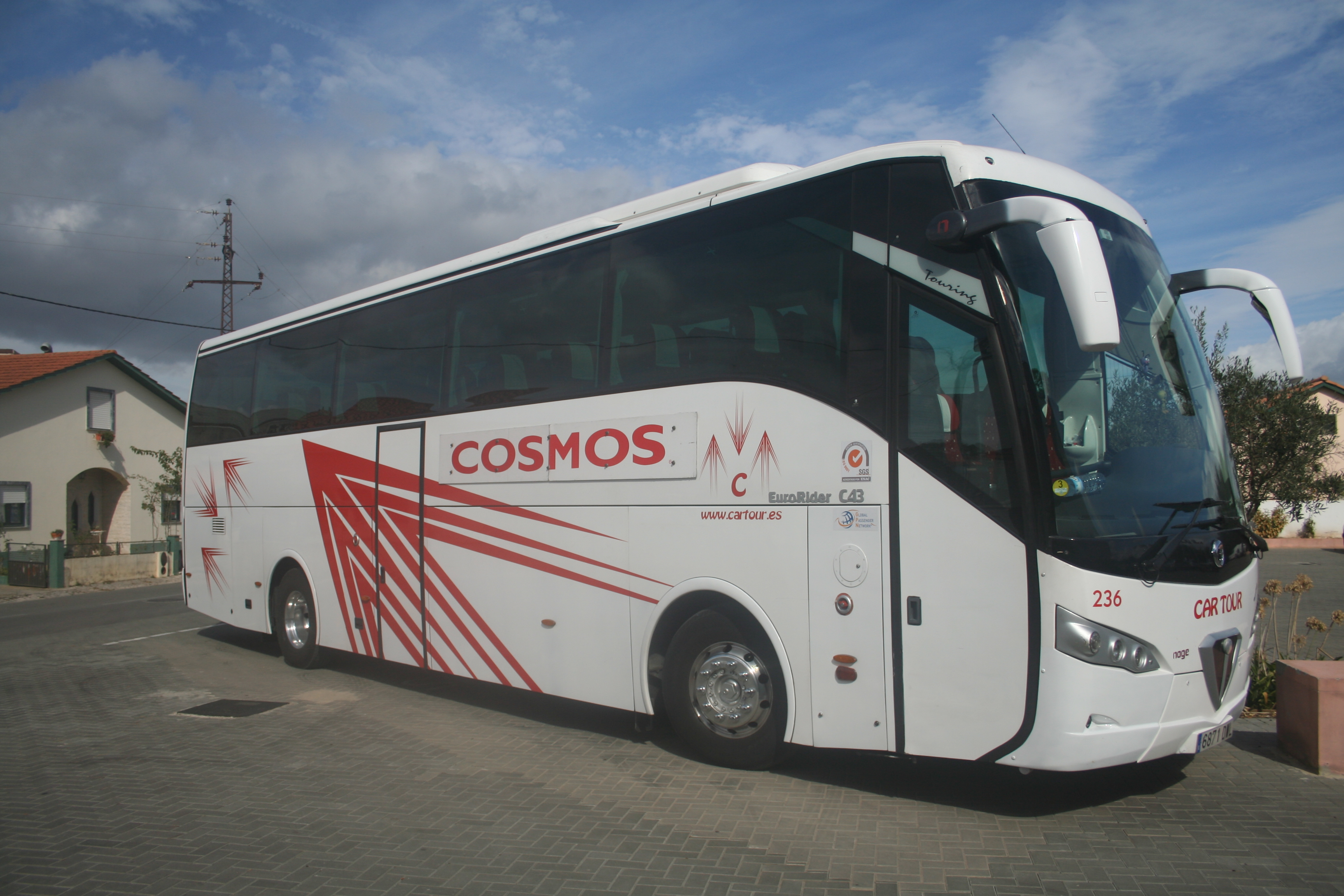 and we came to love them down the road for their uniqueness and extraordinary goodness anyway. Luis introduced us to Sergio, our driver for the duration, a tall, slender Spaniard of about Luis’ age, who spoke no English. “Hola! Sergio. Buenos Dias,” we were coached to say, and did so every morning from then on. It was like a school field trip; Luis our affable, patient teacher; we, students of diverse age and background, giddy to be out of the classroom, and about to learn in spite of ourselves. Luis sat in the front seat, right side of the coach and detailed another rule by microphone before we left. In order that we all see as much as possible of the countryside and each other, we would rotate seats on a daily basis. Those on the left side would move two seats forward every morning we boarded, those on the right, two seats back. Luis’ seat did not count in the equation. That established, we left Madrid on a cool, cloudy, blustery morning and headed northwest into the hills.
On the way to our first stop, Avila, Luis delivered a brief, concise, but thorough lesson in Spanish history, including the convoluted relationships and marriages of the old royals with the Hapsburgs and Bourbons of Europe, the Basque independence movement, the Civil War, Franco’s rule, the return of the Monarchy, and the current economic situation, as we passed through brown, hilly country reminescent of northern California, with great open spaces dotted with gnarly oaks. We saw black fighting bulls in the fields, great, shiny, confident creatures, and some bull calves, and Luis talked about the bull fights and the differences between the Spanish and Portuguese approaches.
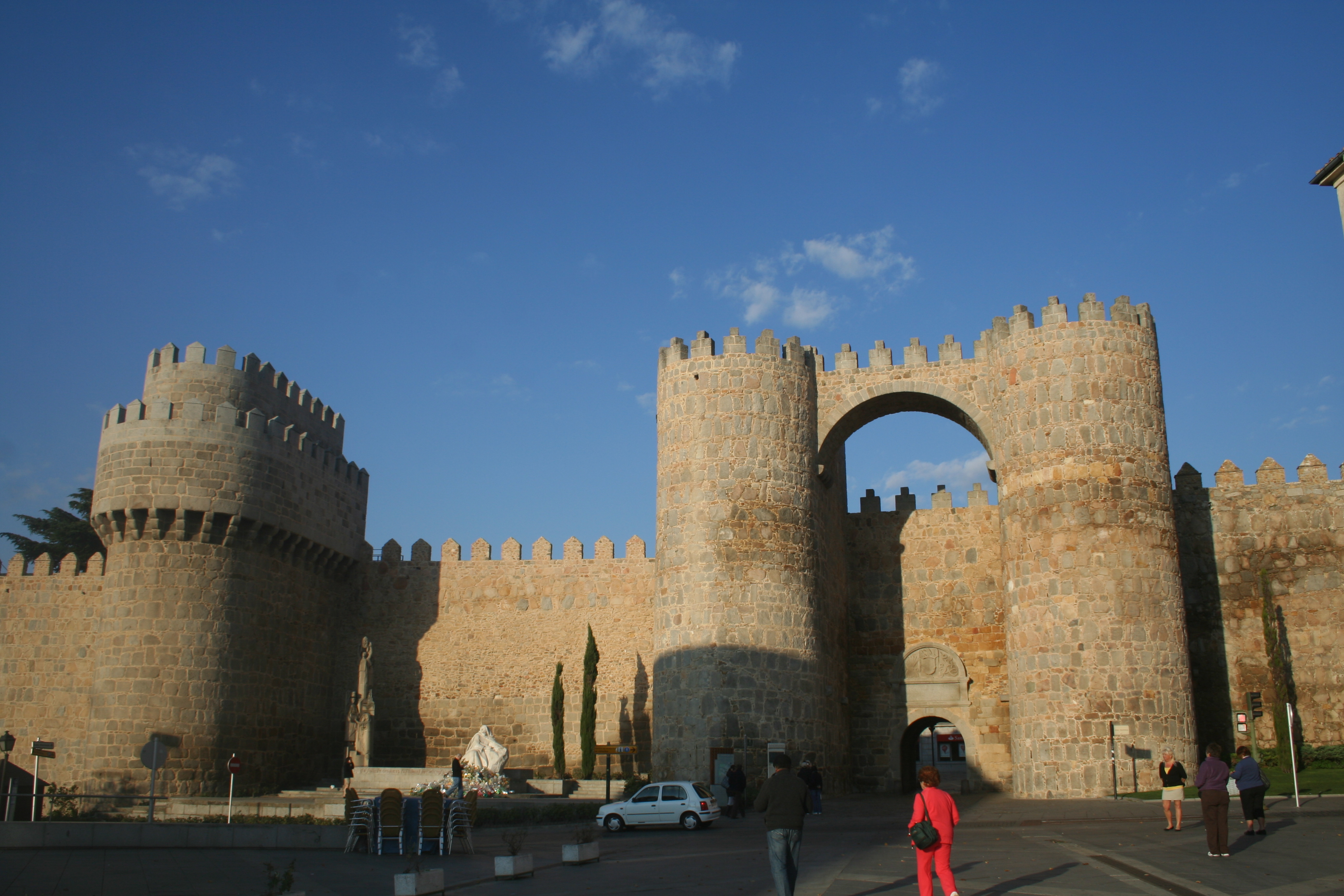 Nearing Avila, Luis outlined the history of that ancient town, the birthplace and residence of St. Teresa, one of the great Christian mystics, and inspiration for St. John of the Cross. Avila probably dates from the early settlement of the Iberian peninsula, but its heyday was during the time of the Catholic Monarchs. It is built on top of a hill jutting up off the plain, and much of its ancient wall with towers remains intact. It is said there are more churches per capita in the old town than anywhere else in Spain. The same is said of Key West, I am reminded,
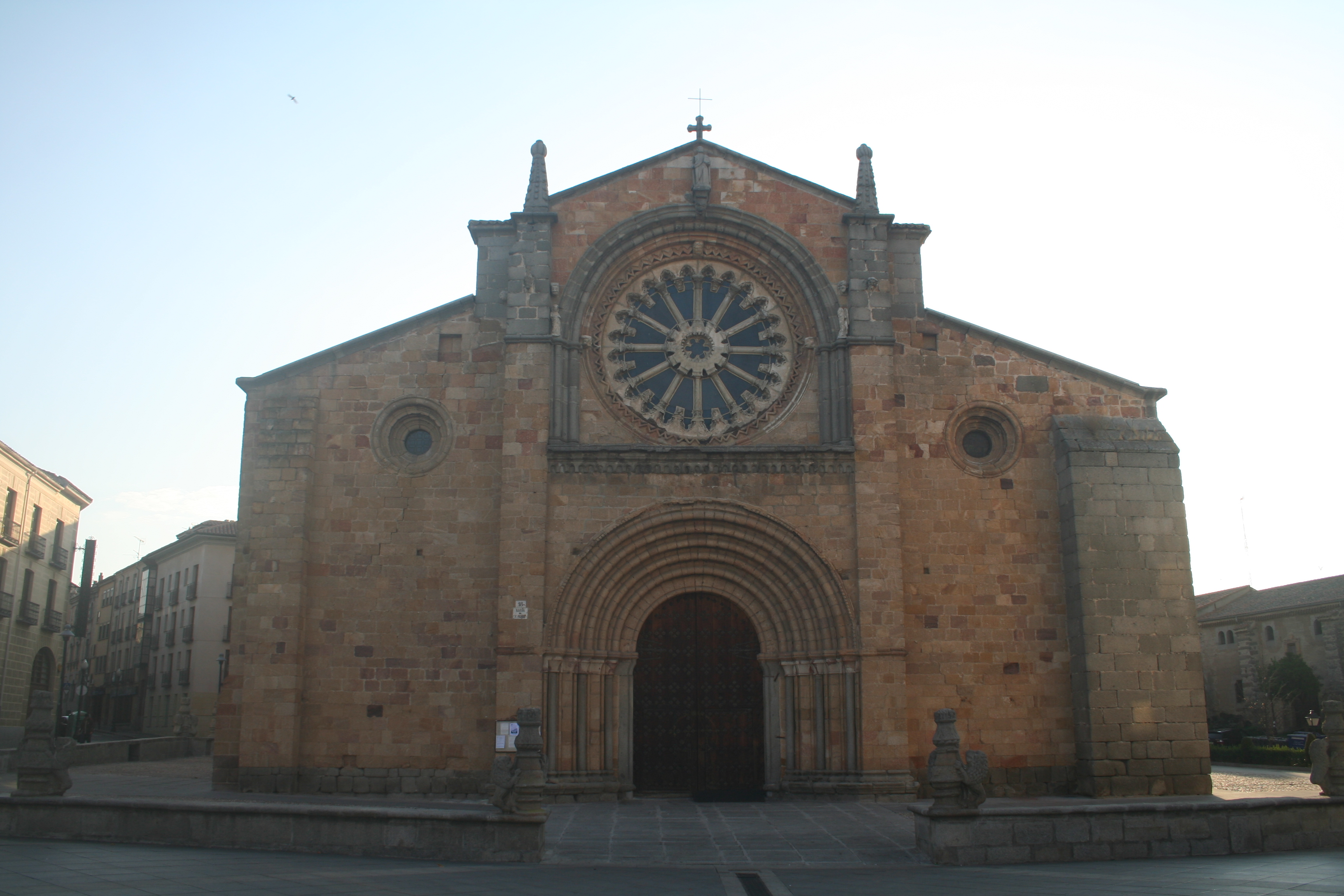 which leads me to believe that is an indicator of a high level of sin rather than piety, in both cases. We dismounted just outside the old city walls, and after an admonishment from Luis to remember where the bus was going to be, we climbed the narrow streets to find the old Cathedral.
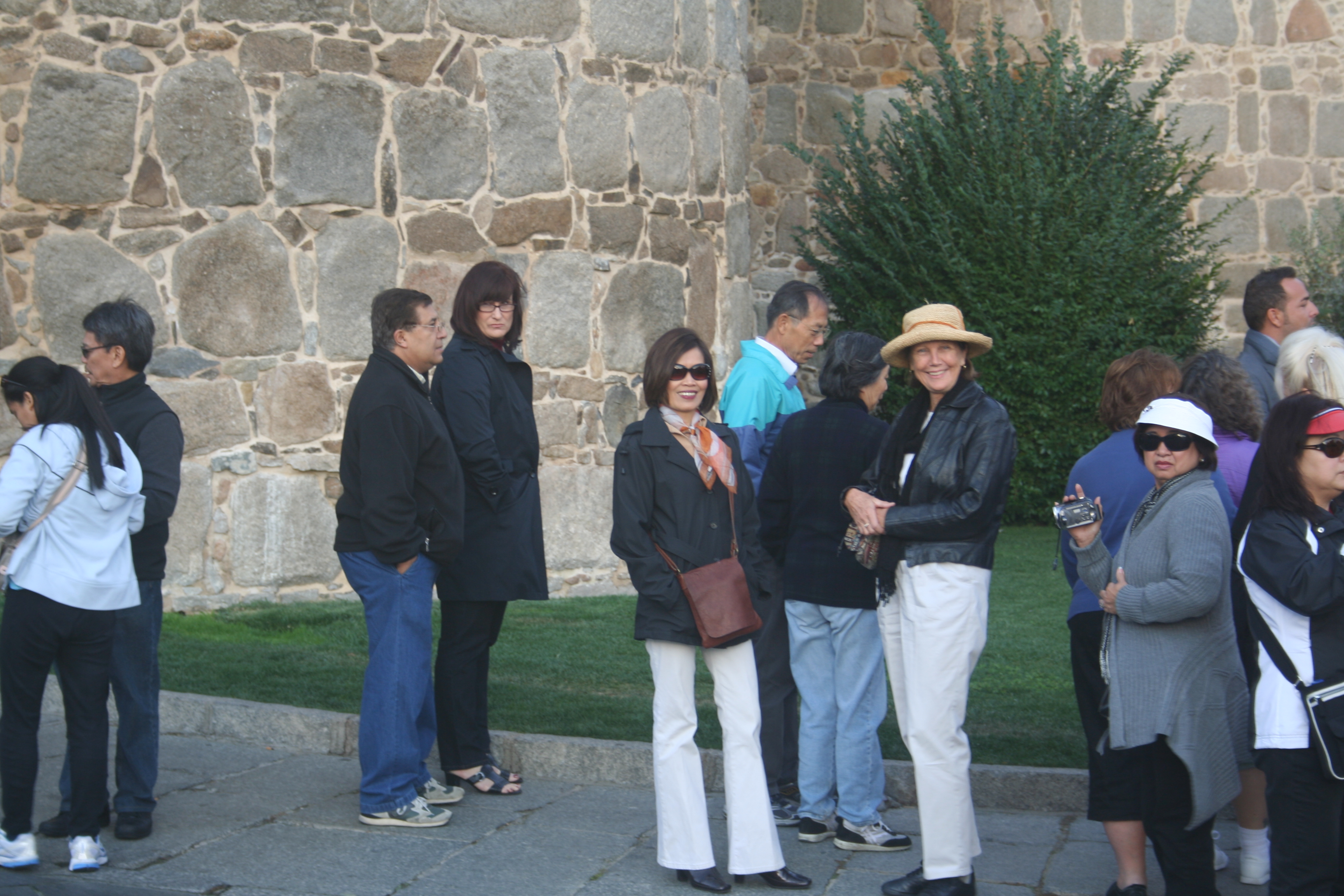 Already some familiarity with our group of fellow travelers had developed, and they appeared to be an interesting lot. Besides those I have already mentioned, there was a group of five women traveling together I early on pegged as nurses; a couple our age from Pittsburg; three Filipino women I believed were also nurses; some eight more folks of Philipines extraction; two gentlemen apparently traveling alone; a pharmacist and his wife, also from San Francisco; an older Chinese couple; and a bright young couple who couldn’t have been out of their twenties. At the statue of St. Teresa I was approached by one of the five women, who said they needed to know if I was a professor or a doctor. “Retired hospice nurse,” I replied. “Oh,” she said. “We’re nurses, too.” Bingo!
We won’t go into too much detail about St. Teresa, (1515- 1582) but suffice it to say, she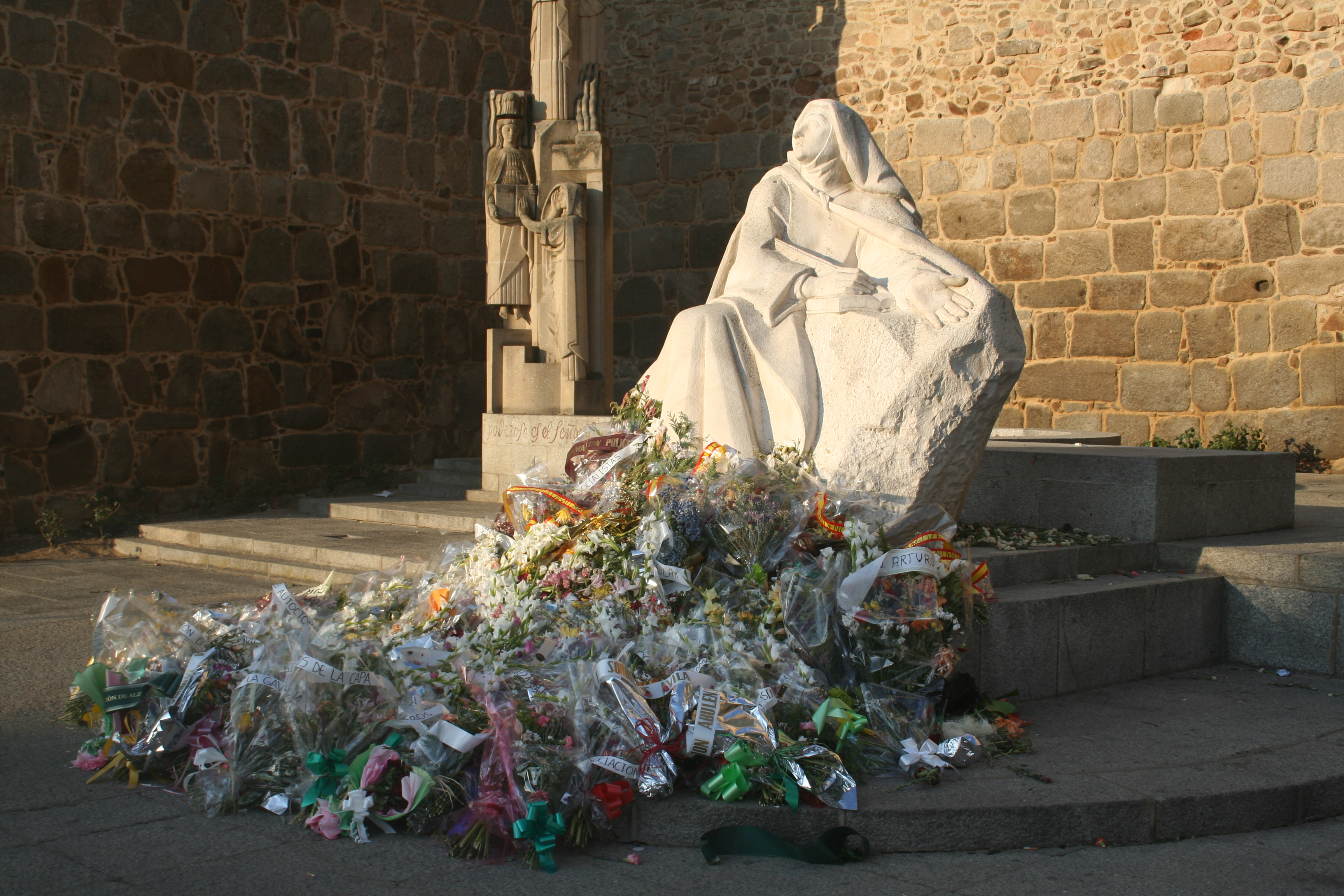 was a most interesting and controversial figure during her life, and after. A mystic, reformer, and prolific writer, (her works are an integral part of Spanish Renaissance Literature) she was also responsible for the establishment of some seventeen convents, and as many men’s cloisters. But she is best known for her ecstatic visions of Jesus, which continued virtually uninterrupted for two years, and the mortification to which she subjected herself in imitation of the Christ. Assailed and venerated during her lifetime, she was canonized forty years after her death.
 The Cathedral of Avila was the highlight of our brief visit. It is not clear exactly when construction was begun, but most of the work was apparently done in the 12th and 13th centuries. Typical of many of the Cathedrals of that time, work continued for centuries. Avila was completed sometime in the 15th century. It is ornate, soaring, beautiful, and inspiring. The craftsmanship
 and detail are astonishing. As with all the other ancient structures we saw on this trip, one comes away with a deep sense of awe for the design, dedication, and power of these buildings, whatever one’s beliefs. That they still stand is testament enough. And the Avila Cathedral, as all the others, are still in daily use. Tour groups mingle daily with locals attending Mass. Spain, we were learning, has a long and deep religious history, and remains a strongly religious people.
 We wandered down through the town from the Cathedral, and enjoyed the first of many, many, cafe con leche’s at a busy cafe with outdoor tables, then boarded the bus and were back on the road to Salamanca, about an hour away, which would be our lunch stop.
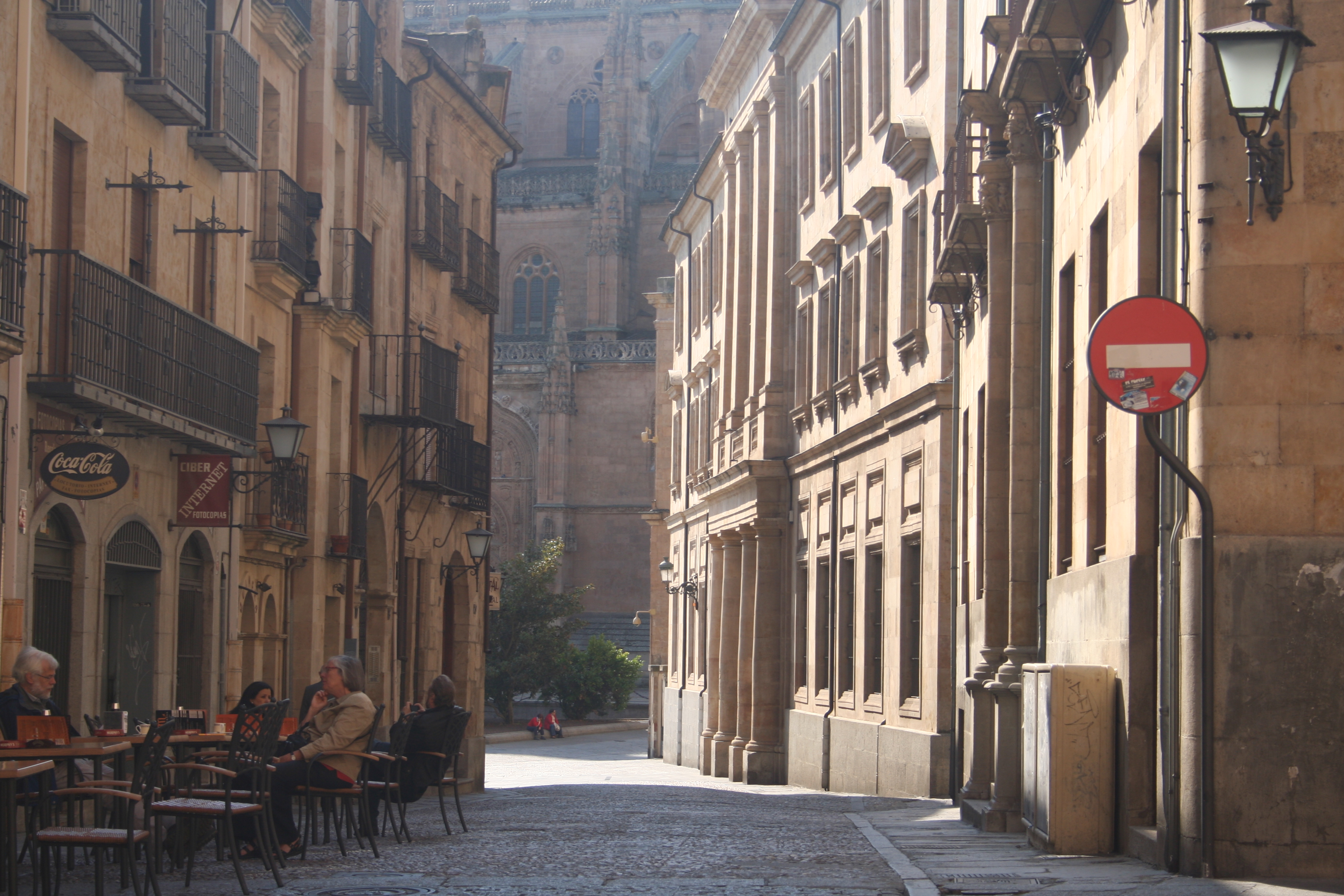 Salamanca is an ancient city dating from pre-Roman times, founded by a Celtic tribe, and then ruled by Romans, Visigoths, and Moors, until the Moors were expelled in the late 11th century, and the Catholic Monarchy took over. It has been the home of Spain’s oldest university since 1218, but formal teaching had existed since 1130. The university at Salamanca still flourishes, and only the best and brightest Spanish students attend. Luis gave us a run-down of what to see in the town, and the best place to have lunch, and turned us loose. We started at the
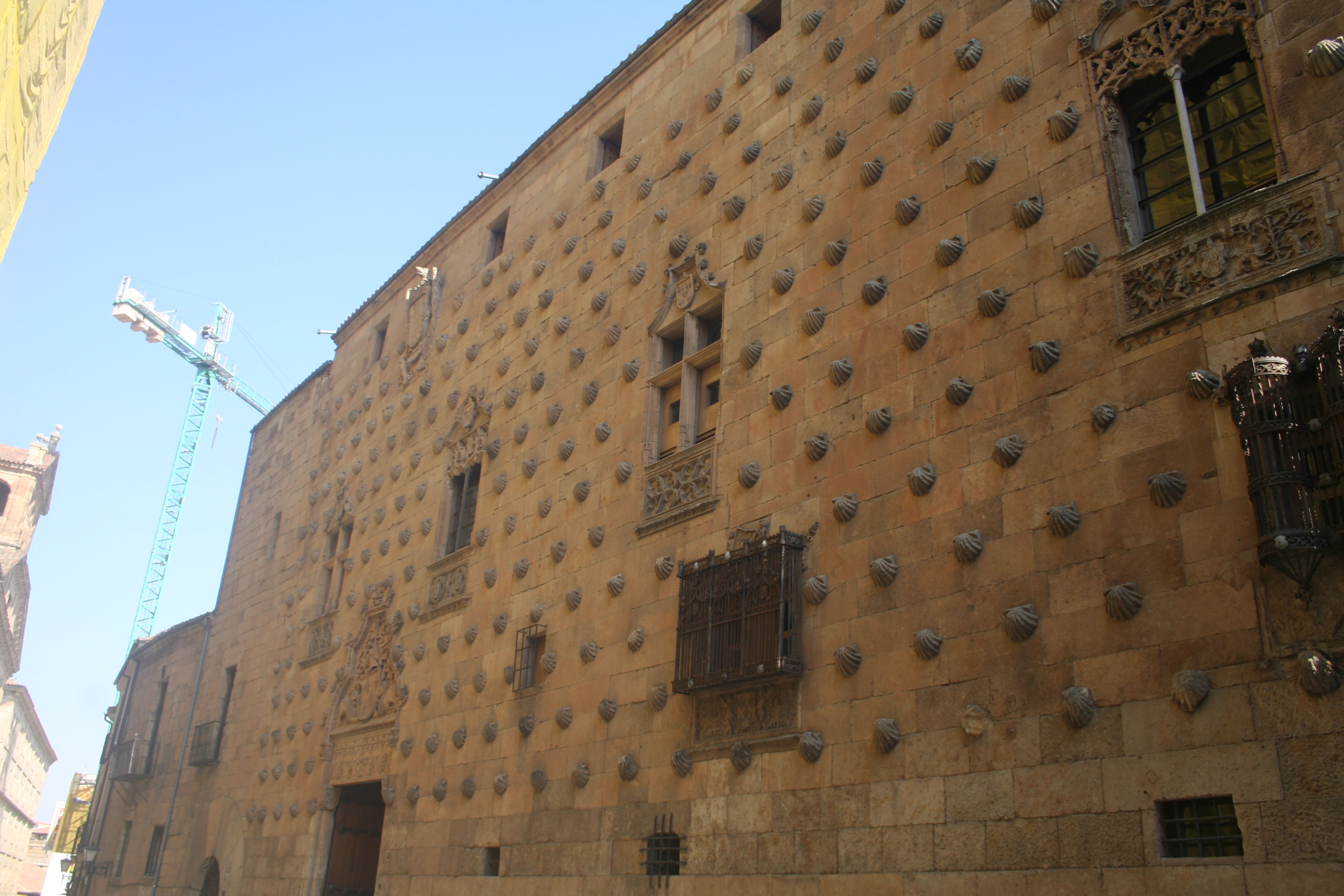 main square, busy with tourists and locals, then went in search of a famous landmark, the wall of shells, a facade dating from the 12th century, and decorated at intervals with carved shell formations. Next was to participate in a traditional challenge. Luis had explained that there was a building in the old university section, with an elaborately decorated stone doorway. Somewhere in the decoration was hidden the figure of a frog. Each student, upon entering the university was challenged to find the frog in the facade. If he did, it meant his
  university career would be a success. It has since become a tradition for every visitor to find the frog, and frogs have become the symbol of Salamanca. You see frog figures, large and small in every shop window, as well as t-shirts, aprons, etc. We found the old, impressive university section, and didn’t have to be shown the building in question. Hundreds of people stood staring up at the formidable facade, decorated with a seemingly infinite variety of animals, shells, and skulls. After some ten minutes, we actually found the damn frog, though it looked to us like a rat, perched atop one of the skulls. If you enlarge the accompanying photograph, locate the skull in the center of the column on the right, then find the skull a little to the left, and there you will find the frog. Ha!
Victorious and full of ourselves, and now quite hungry, we went looking for the tapas bar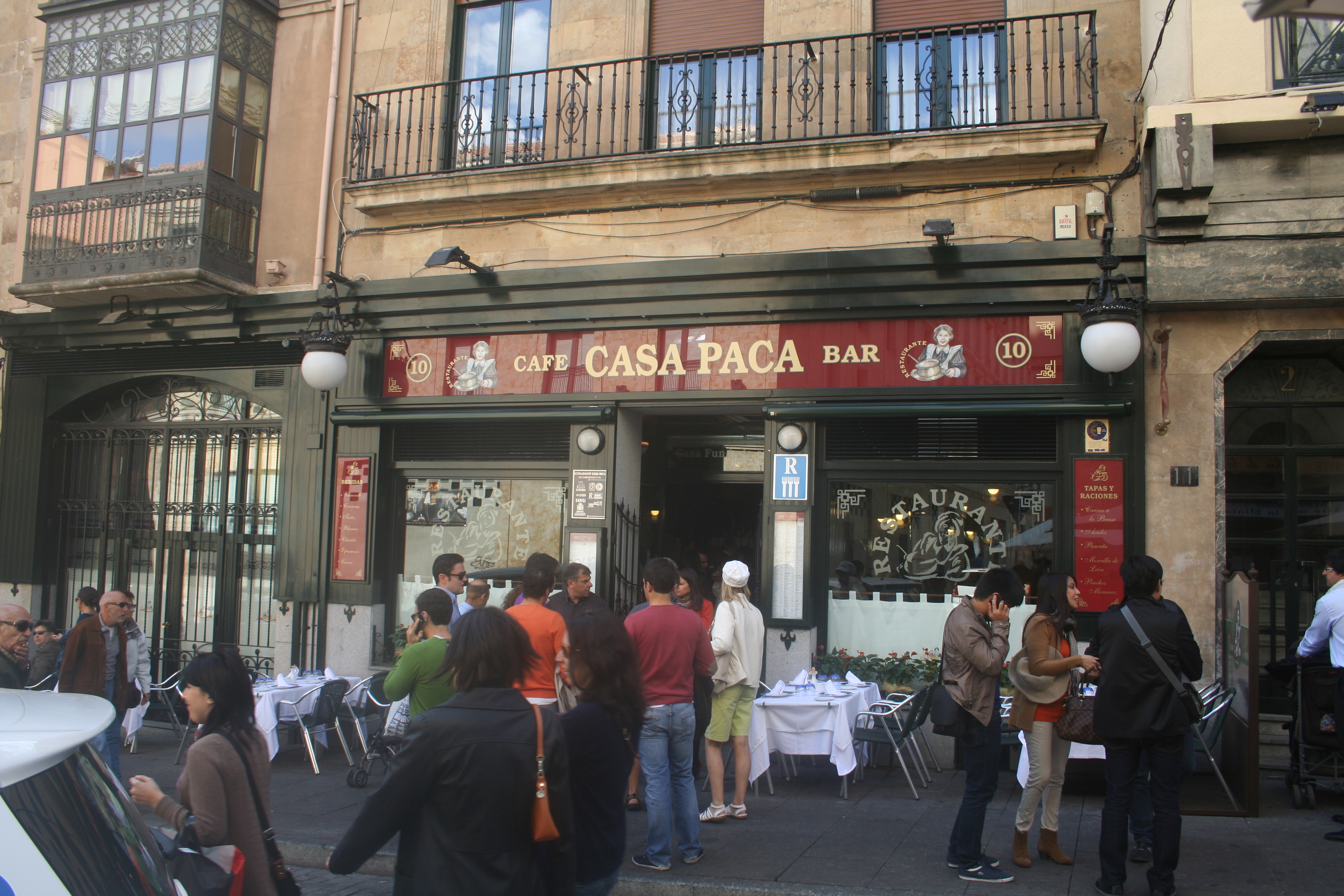 Luis had recommended, Casa Vaca. Turns out everyone else had found it too, and we had to struggle, standing several people deep, at the counter to be served. We wrangled a wonderful bowl of spicy arroz, some delicious fried shrimps, and beer, and ate standing. Outside, we came across the nurses from Michigan, who had commandeered an outside table at a place
  across the street, and we took this great photo. We were all starting to get into the flow of things, but the best was still yet to come. Back on the bus, and off into the hills again, west now, for the Portuguese border and our stop for the night, Coimbra. While Salamanca is home to Spain’s oldest university, Coimbra is home to Portugal’s oldest university, dating from 1308.
We were dropped off the bus at the old city, and given an hour and a half to explore, while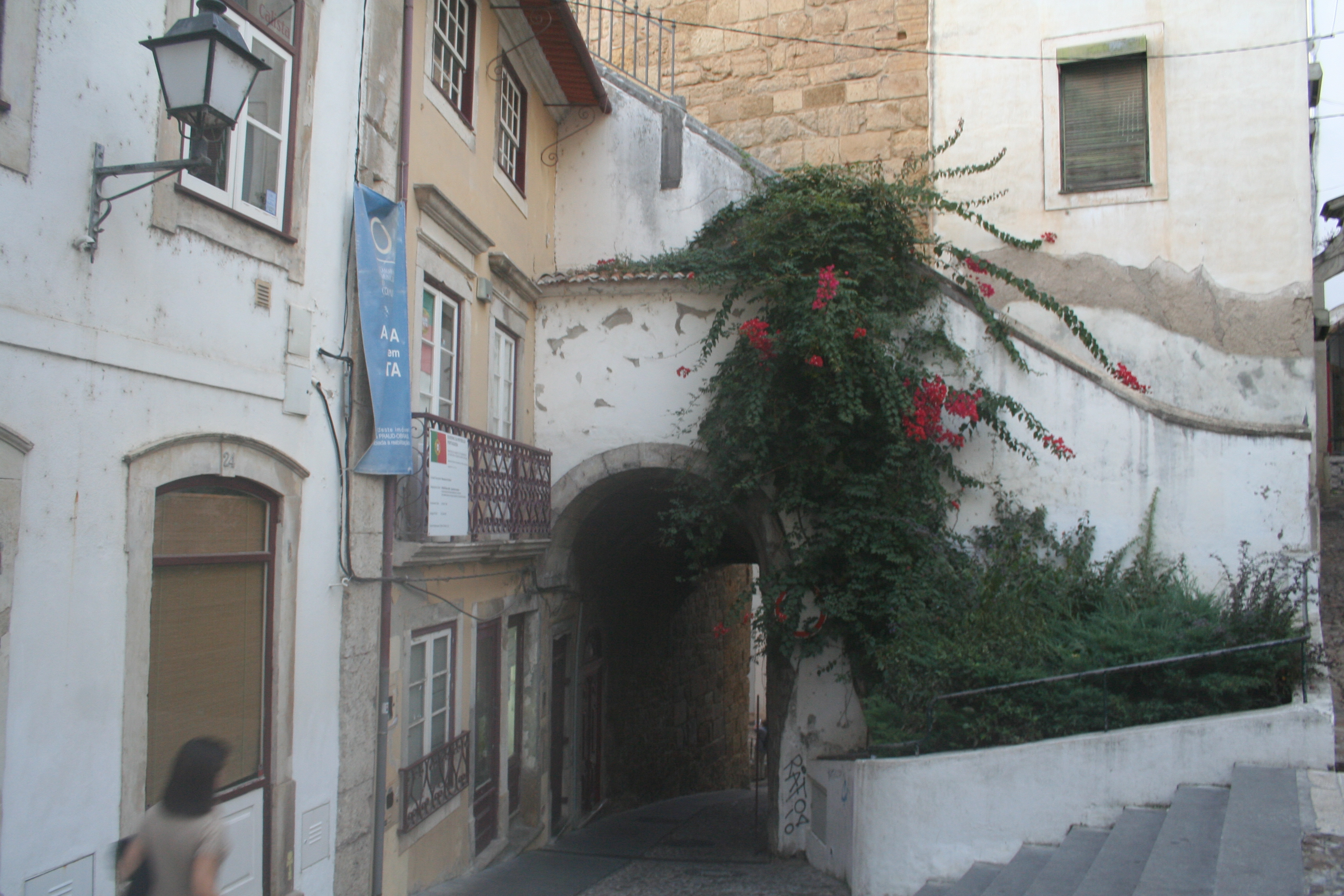 Luis and Sergio took our bags to the hotel. We walked down lovely cobblestone pedestrian street lined with shops to the old Coimbra Cathedral and saw amazing mural of blue and white tiles. A mass was in progress so we didn’t get to look around too much. Took off from there up strenuous winding streets to top of the hill, where the old university is located. Huge square at top with great views of river town is built on. Slowly made our way back down and went out
 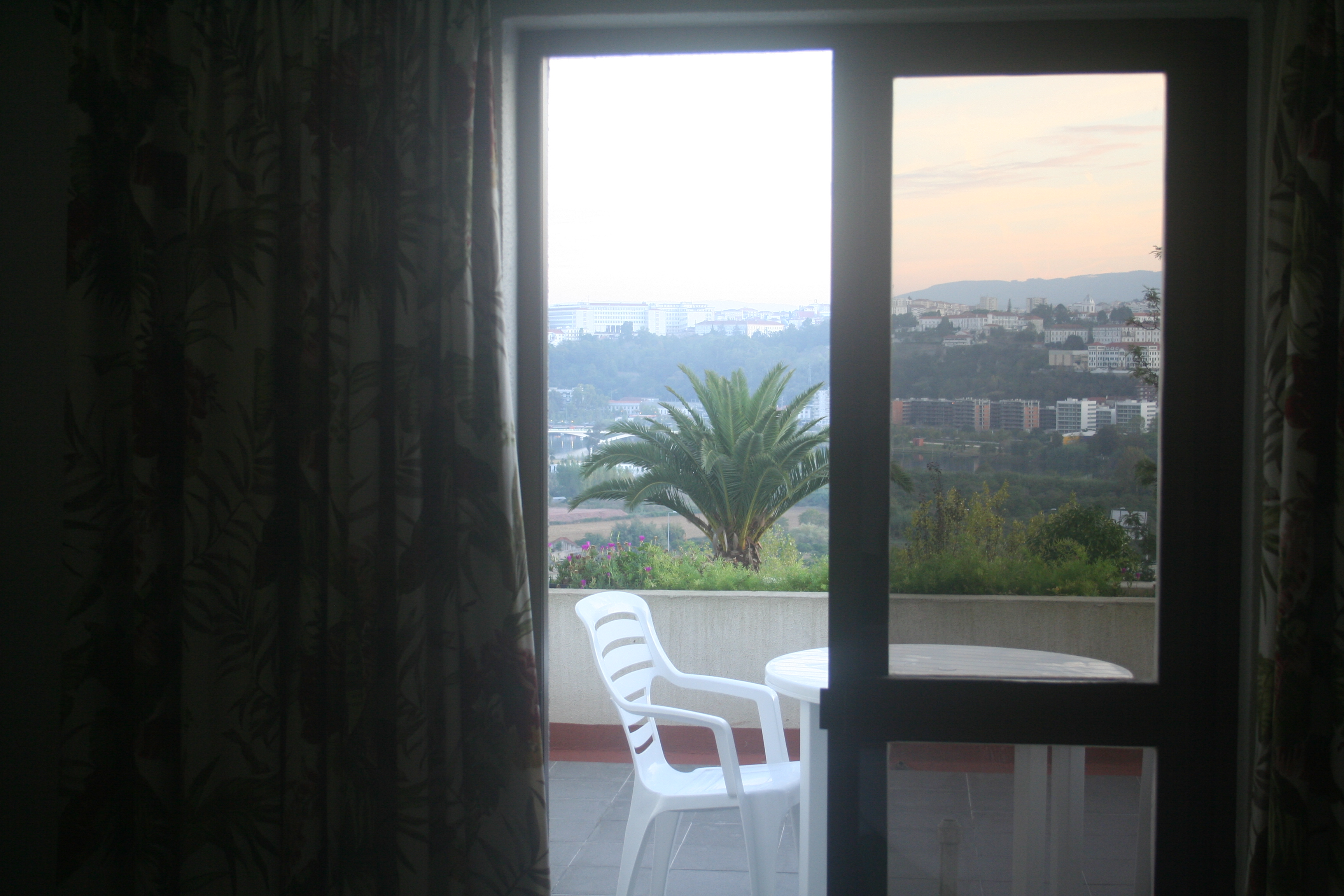 on river bridge for pictures, then met bus and drove five minutes across the river to the Hotel Dom Luis. My, oh my! This was the best yet. Lovely, bright room with all amenities, and a balcony overlooking the city of Coimbra! Unbelievable. Time for shower and dressing, then down to dining room for one of our group meals, this one featuring a variety of Portuguese dishes. Absolutely delicious. Off to Fatima, Obidos, and Lisbon tomorrow.


 The Skinny Island Post
Sounds like a wonderful trip! Tour buses always seem to have the best tourists, or maybe people just try harder when they are on such great expeditions. We went all over Israel with complete strangers, two buses of us in tandem, and never a cross word for two whole weeks!
“Finally finding the damned frog… Priceless!”