
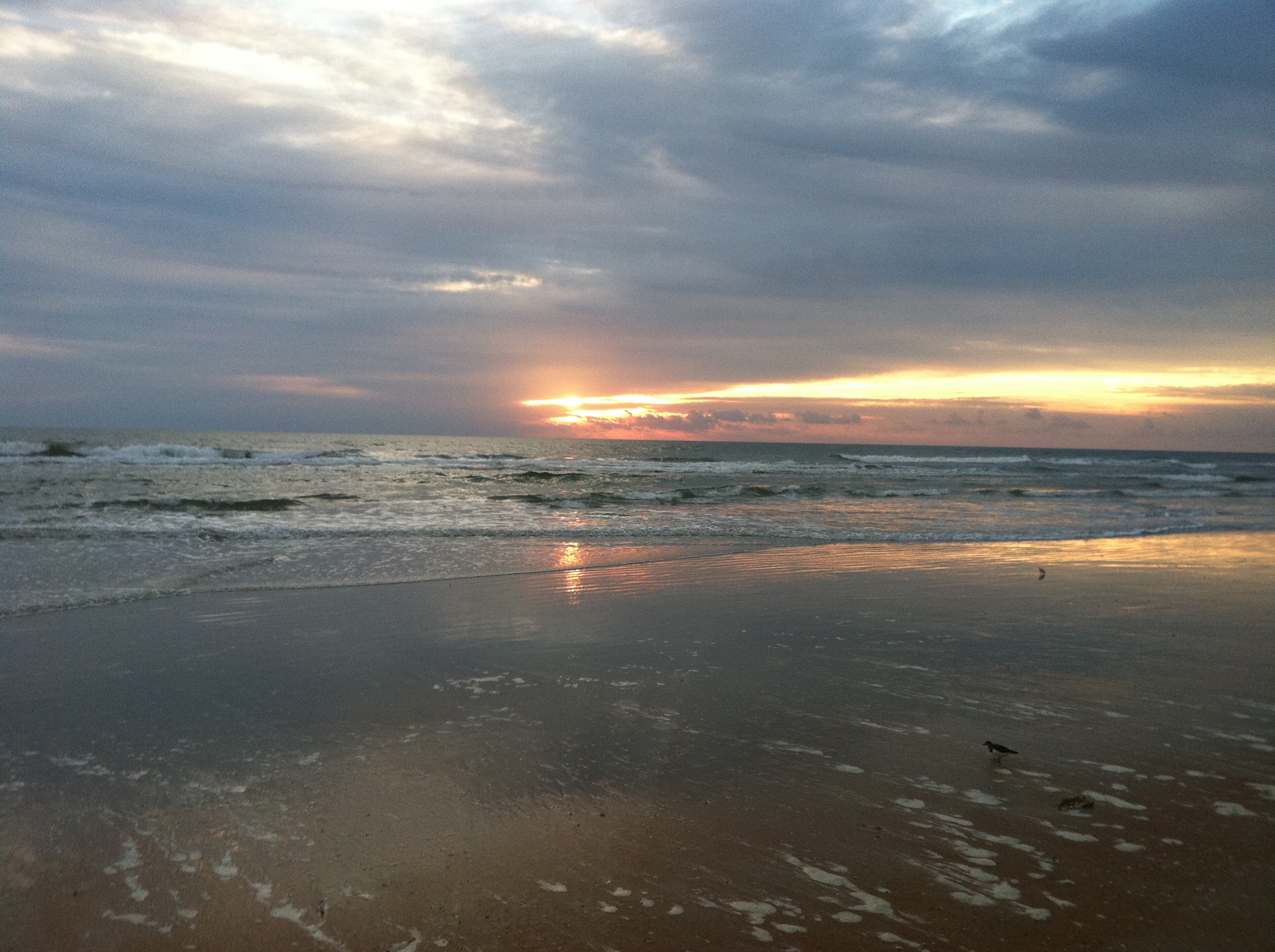
 OK, so we haven’t cooled the presses just yet. A little bike ride this morning with the sky closing in from the south and the beach littered with a variety of stuff, both natural and human inflicted, generated a little mind wandering. A variety of recent weather systems, with on-shore winds and rough water, have washed in a lot of flotsam and jetsam, including a great deal of Gulfweed again, these seemingly containing a good bit of animal life, judging from the poking interest of sandpipers, plover, and willets.
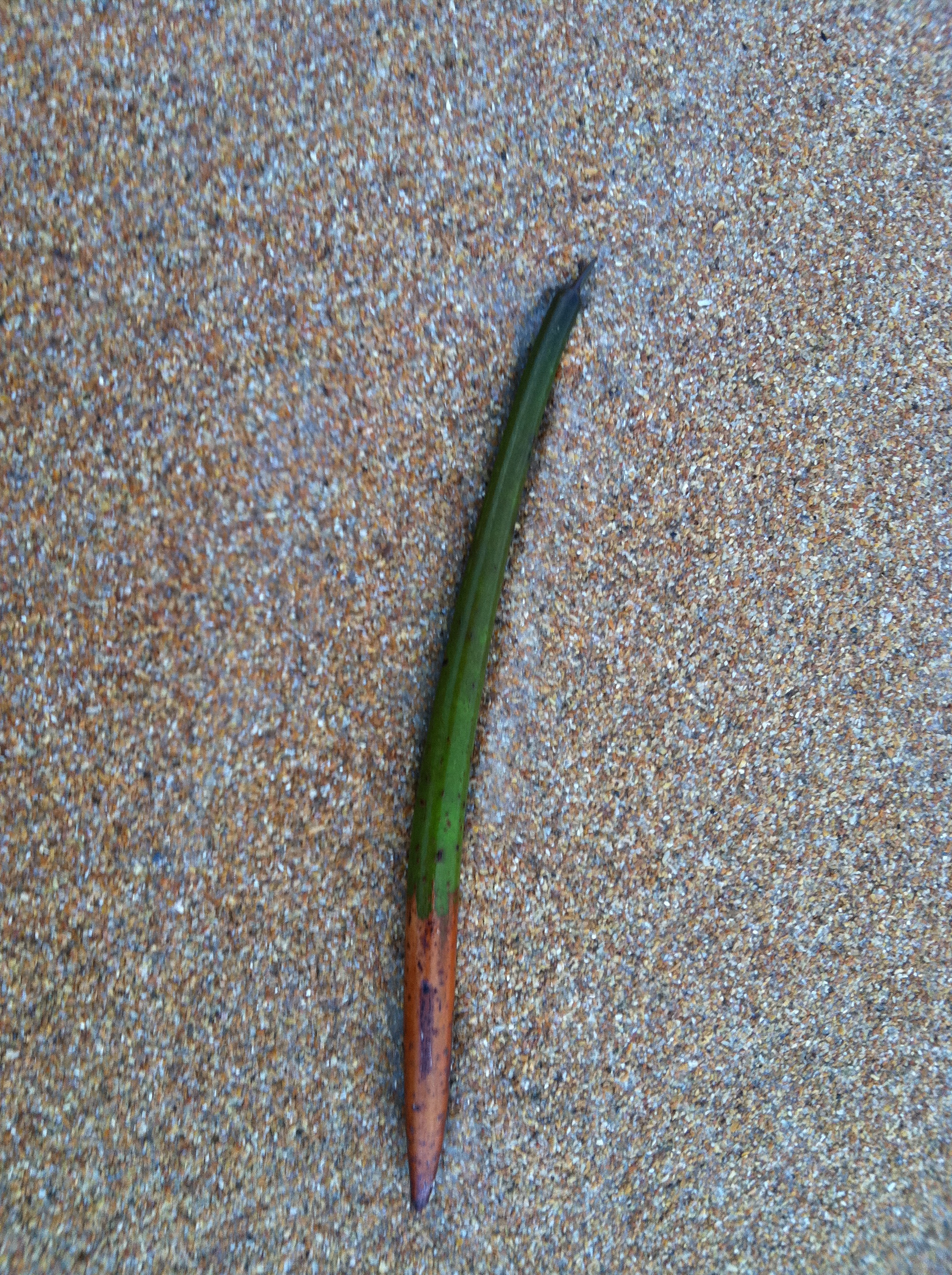 And for about two weeks now, hundreds of these mangrove seed pods have been present every morning. We call them seed pods, but they are actually called propagules, and are not seeds at all but fully mature plants. They are, in essence, little mangrove trees. They develop and hang like dangling ornaments on living mangrove plants in estuarine shallows, eventually dropping off to float away with wind and current. In water, they float vertically, with the fat end down, much like a fishing bobber, and, in fact, can be used as such in a pinch. When one reaches suitable shallows, it embeds and starts growing.
These that wash up along our beach will never put down and develop. The shoreline of the Atlantic is just too rough. But some get carried by tides up into the various inlets and further into estuaries, where conditions of still, brackish water are favorable. Seeing all the mangrove propagules on this beach, wasted, in a sense, invited a brief reflection on the astonishing width and breadth of selection and propagation in nature, and how similar it all is while being so incredibly diverse. Millions of mangrove propagules dispersed with just a tiny fraction ever taking root; millions of thistle seeds scattered on the wind; millions of spermatozoa swimming in all respects, upstream. It seems inefficient, but what grabs me is the enormity, and it works. Well, it has so far, anyway.


 The Skinny Island Post