

Deposited Gulfweed
We’ve had east winds the past five days, light in the morning, then building to 15 to 20 in late afternoon, resulting in copious amounts of Gulfweed, (Sargasso) blown in from the Gulf Stream. Much of it gets left in a line on the beach at high tide, as seen above, but a lot remains in the water. This happens several times a year and it takes weeks for the natural clean-up to occur, which leads invariably to complaints by folks who find it unsightly on the beach and an inconvenience in the water. Then there’s the smell. This stuff starts emitting a pretty strong odor after a few days of being piled up like this. I believe that’s called decomposition. This too, of course, is offensive to some, the final indignity, you might say. I rather like it. It’s a healthy ocean smell. Especially at night, when the traffic has stopped, and all you hear are the waves on the beach.

Gulfweed
We’ve talked about Gulfweed before. Alive in the water, and when it is first deposited on the beach, it is a luminous golden yellow, with hundreds of little globular vesicles in each clump that help keep the mass afloat. After a few days it assumes a deep brown color. The birds love it because it contains lots of little critters that have hitched a ride. In the water a few days ago we handled a clump and discovered a small, soft-shell crab. then watched as three tiny little startled crablets split from the weed, only to do a u-turn and sprint back to the clump. Delightful. But the stuff can also harbor tiny, nearly invisible jellyfish organisms, which can leave you with a nasty itch if handled. This experienced through research, of course, not necessarily just to wear a lengthy wreath as a lei.
* * *
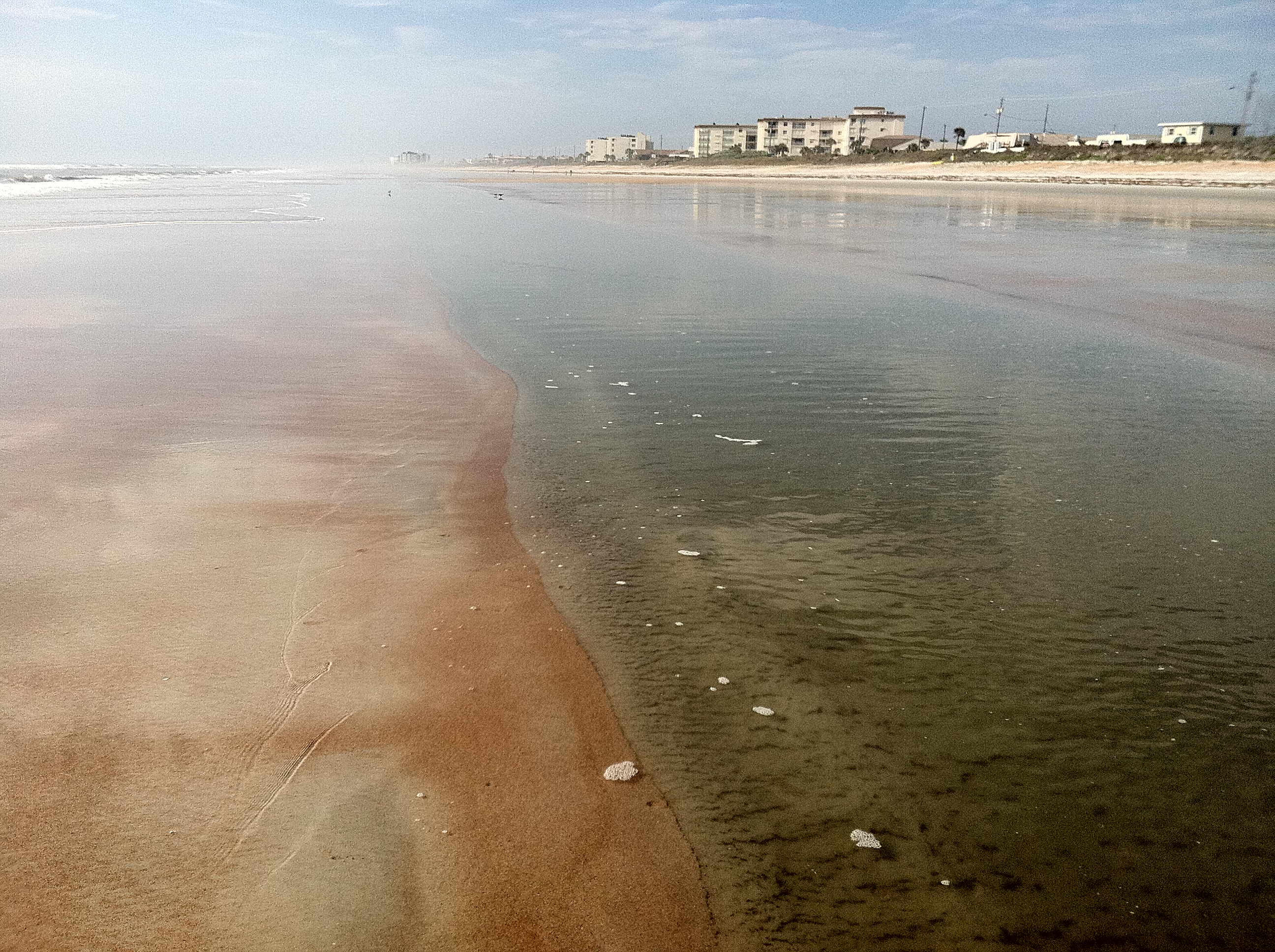
Tidal Pool
Another interesting result of several days of wind-driven rough water are tidal pools. These are formed by pounding water where the wave lasts breaks, leaving a hollowed out depression in the sand which remains full of water as the tide retreats. Being shallow, they warm up fast, the water is still and clear, and they are great for young folk (and old) to play in. It’s like a natural infinity pool. They are also great little laboratories, often containing small fish, crustaceans, shells, sunglasses, and snorkeling gear.
* * *
All the wintering and spring holdover shore birds are gone, the willets, plover, skimmers, the migrating terns. Yet one Royal Tern remains. Just one, mingling with the resident gulls. Don’t know if he missed the memo, or just likes it here with his new friends. They don’t seem to mind his being among them, but it is a little sad to see. He looks so out of place.

 The Skinny Island Post