

Egret in Flight
Love to see this in the morning. A Great Egret (Common Egret) stalking small fish in the shallows. This one took off when I asked him to pose. They are never on the beach in great numbers, but we see one or two at a time all summer. Their normal habitat is back in the estuaries and marshes to the west of us, where the water is still and they can wade and stalk more lethally. When the ocean’s flat, though, they do well in the tidal pools on the beach. I love to watch them hunt. They turn their heads so one eye is pointed down, and they stealthily move, long neck partially coiled, lifting their feet very carefully one at a time from the water, then, like a dart, the neck fully extends and the beak stabs like a flash into the water and, nine times out of ten, they have a fish. A member of the Heron family, they are a beautiful, elegant bird, with several sub-species, including the Snowy Egret and the much smaller Cow Egret, or cow bird, you see in great numbers in cow pastures, feasting on grasshoppers the cattle rustle up for them. Along with the other herons, the egret seems to have adapted well to the over-development of Florida. You find them everywhere. They seem to have a particular affinity for golf course water hazards. We used to bemoan the proliferation of golf courses, but then we realized they became great bird sanctuaries, and since, in Florida at least, it is much easier to fund a golf course than a wildlife habitat, we’ll take it.
* * *

Star Fish
Found this specimen on the beach this morning as well, just known as the Red Starfish in these parts. They’re called a star fish or a sea star, but they’re not a fish at all, of course, but an echinoderm, which includes sea urchins and sand dollars. There are more than 2000 different species of these critters around the world. Besides the well-known ability of many species of starfish to regenerate arms, (and some, completely new starfish) they have, like other echinoderms, a pretty gnarly way of feeding on clams, oysters, and other shellfish. With their suction-cup lined feet they pry open the shell, and then a stomach thing emerges from it mouth, enveloping and ultimately digesting the tasty mollusk, then withdraws back into the star. Talk about eating out. You think about what’s going on out there too much, it’ll keep you up at night. We see a lot of this red one, and another that mostly black, with white striping around the star edges, but rarely any other species.
* * *
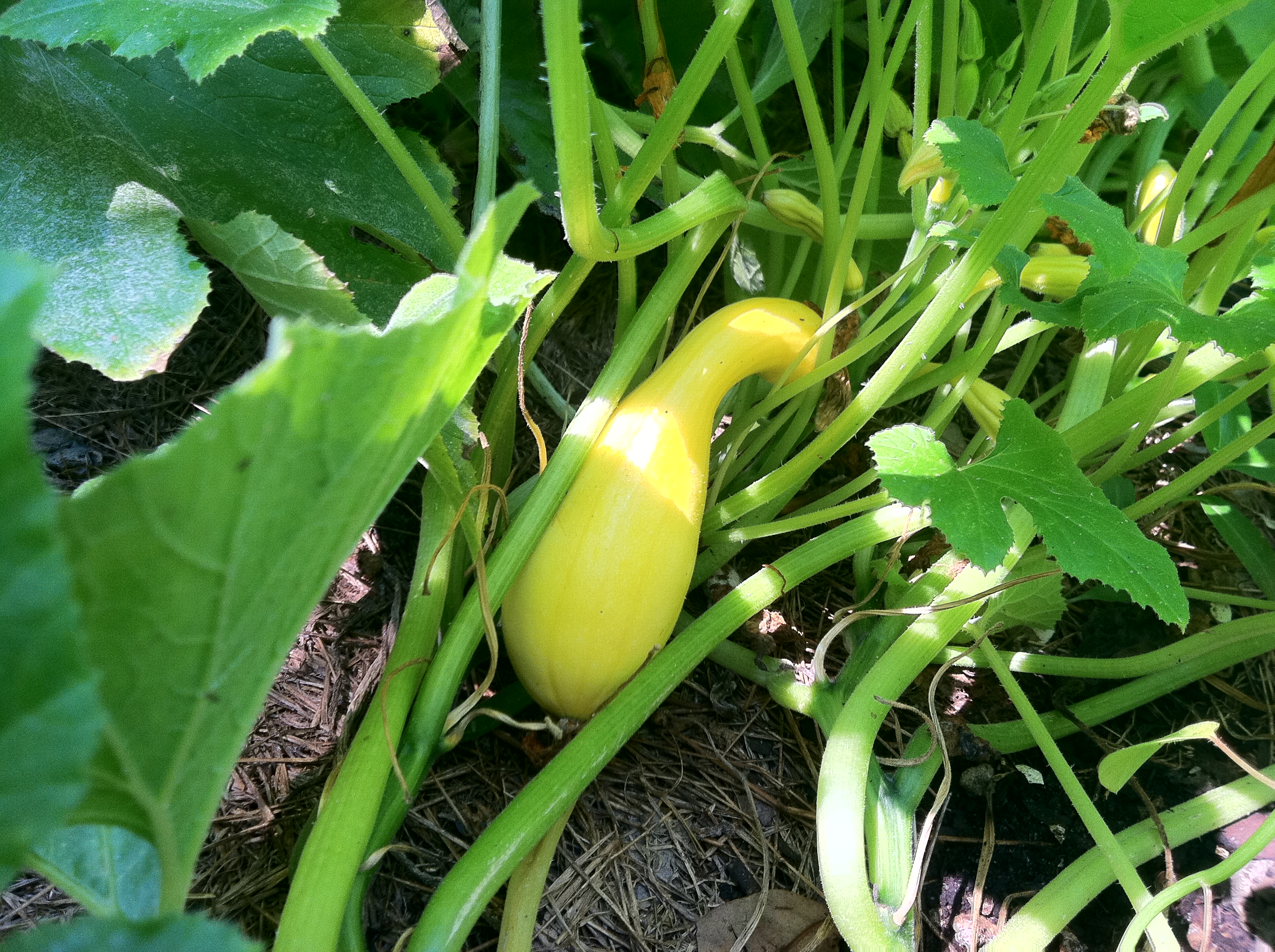
Squash
We’ve done well with green beans and bell peppers so far this spring, but this is the first of the summer squash that’s ready. We’ll pick this one and several others later today for dinner tonight. When these are done, they’re done, which is why we start early. The heat just gets to be too much for any of these plants growing into June and July. The herbs keep going well, but not much else. It’s pretty much a spring garden. Jalapenos, Habaneros, and more bell peppers just about ready. Tomatoes big and green, a few days from ripening. Need rain bad. Weather guys say better possibility through rest of week.

 The Skinny Island Post
Beautiful, beautiful creature to see this morning, even if only photographically and in your description. What a treat.